YugSamvad · Sanskrit & Shastra
Sanskrit & ShastraA Great, Living, Ancient Tradition – The Kumbh Mela
Maria Wirth · 22 October 2019 · 3 min read
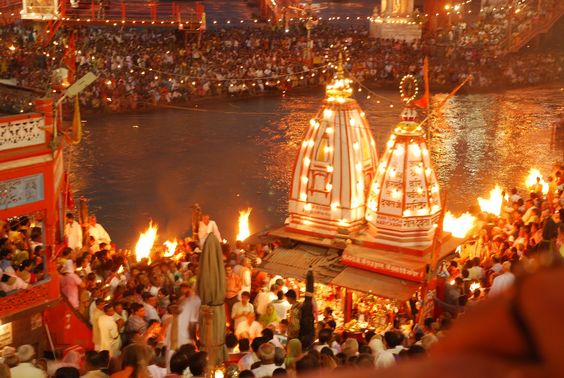
During the Kumbh Mela in Haridwar in 2010, a young Frenchman exclaimed, “Oh, it must have been so different than” when he came to know that I was in 1986 at the Kumbh Mela already. “No, it was not”, I realized. It was very much the same. It may have been the same for centuries.
Here is my description of the Kumbh Mela in 1986:
Luckily I don’t get afraid when I am stuck in a crowd; otherwise, India would be the wrong country for me. I actually enjoy the atmosphere, so incredibly colorful and diverse, a wave of human beings that carries everyone along, innumerable pair of eyes meeting my eyes, fleetingly, friendly – for a short while thrown together at the same place.
So when I heard that the full Kumbh Mela will be celebrated in Haridwar in April 1986, I wanted to be there, for surely there must be a reason, when millions of pilgrims from all corners of India undergo a lot of hardship to reach this festival on the Ganges. In fact, there are even two reasons.
Number one, a bath in the Ganges at the auspicious time of the Mela is a big attraction because it is supposed to be very powerful, purifying internally and giving a boost to one’s spiritual development.
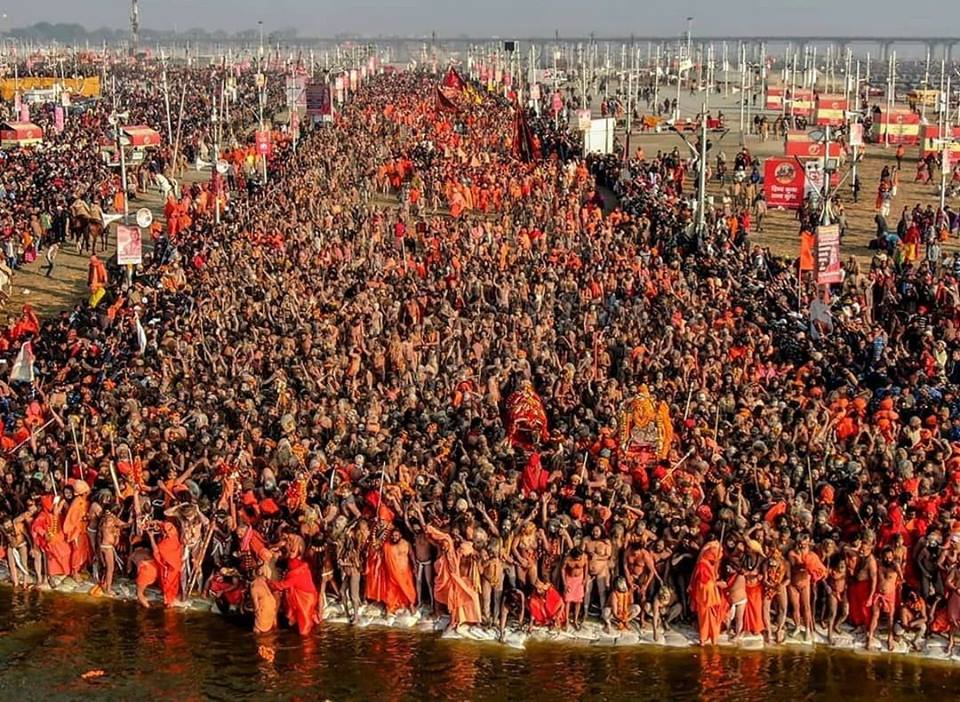
And number two, there is the prospect of benefitting from the presence of great Rishis, the successors of the ancient wise women and men from Vedic times.
Traditionally, the Kumbh Mela is the meeting place for those pillars of Indian spirituality, who have dedicated their whole life to the search for truth. Even today the hermits who are usually hidden in caves in the Himalayas and the Sadhus (wandering monks) who wander all over the country with a begging bowl and a staff in a handstand for an ideal. They embody the dream of freedom and independence for those who feel tied down in the world.
The reason why during the time of the Kumbh Mela bathing in the Ganges is especially helpful for spiritual growth is given in a story of Indian mythology which is since ancient times connected with existing locations in northern India.
Long, long ago, at the beginning of our present world cycle, gods and demons tried to release the lost nectar of immortality by vigorously churning the milk ocean. When the jar (Kumbh) full to the brim with the nectar finally emerged, a wild chase started. The son of a god had seized the vessel with the precious content and the demons followed at his heels in hot pursuit. Sun, Moon, and Jupiter played the role of protectors for the gods and influenced the outcome in their favor from certain positions…
…. Sorry, I had agreed to truncate those articles on my blog which are covered in my book. There is a chapter on Kumbh Mela in my book, so please, if you want to know more, read my book “Thank you India”.
– Maria Wirth is a German Hindu blogger, and author of the book, “Thank you India”. Click here to buy her amazing book on a German Woman’s Journey To The Wisdom of Yoga.
Also read,
Know the Mathematics of the Kumbha Mela.
What Signifies the Triveni in Prayagraj?
क्यों और कब लगता है प्रयाग, हरिद्वार, उज्जैन, नासिक में कुंभ?
Cite this article
Maria Wirth. “A Great, Living, Ancient Tradition – The Kumbh Mela”. YugSamvad, 22 October 2019. https://yugsamvad.com/articles/a-great-living-ancient-tradition-the-kumbh-mela
https://yugsamvad.com/articles/a-great-living-ancient-tradition-the-kumbh-mela · accessed
Related reading
Vidhi-Vidhan and Niyam of Vrata during Chaturmasya
Chaaturmaasya-Vratavidhaana (Rules and Observances of the Chaaturmaasya Vow) Author: Pandit Gangadhar Pathak 'Vedaadyacharya' Chief Acharya: Shriram Janmabhoomi Shila Pujan, Ayodhya Shri Vrindavan Dham Acharya Shri Gangadhar Pathak, the chief priest who had Prime Minister Shri Narendra Modi perform the foundation stone laying ceremony (shilaanyaas) for the Shriram Janmabhoomi temple in Ayodhya, is, along with a healthy body, of mind
18 October 2026 · 9 min read
Propaganda Against BHU Founder Mahamana Malaviya
I draw the attention of scholars affiliated with Kashi Hindu Vishwavidyalaya who are conducting research on the persona and works of Mahamana Malaviya Ji, as well as history enthusiasts, toward a matter of utmost importance. That matter is this: for some time now, it has been repeatedly observed and read that the Darbhanga royal family and Mithi...
18 October 2026 · 6 min read
Determining the Jati of Shabari – Acharya Gangadhar Pathak
'Shri Ram's Devotee Shabari Was Not a Bhilni, But a Brahmani' Author: Pandit Gangadhar Pathak ‘Vedadyacharya’ Chief Acharya – Shri Ram Janmabhoomi Shila Pujan, Ayodhya Advisor: Shri Sarveshwar Jayaditya Panchang (traditional almanac), Jaipur Conducting the shilanyas (foundation stone laying) of the Shri Ram Janmabhoomi Temple in Ayodhya with Prime Minister Shri Narendra Modi m
18 October 2026 · 1 min read