Sanskrit & ShastraTesting Acharya Jagannatha’s literary understanding, "रमणीयार्थ-प्रतिपादक: शब्द: काव्यं" (poetry is that word whose sense is delightful), against the touchstone of modernity, it can be said: "Literature is the chained presentation of thoughts yielding a beautiful meaning, encompassing the sentiments of lokakalyana (universal welfare) while realistically portraying social dimensions." Viewed from this perspective, jyo
23 October 2026 · 3 min read
Sanskrit & ShastraThe World Health Organization has warned that by 2050, one in four people in the world's population will suffer from hearing problems. The first global report on hearing capacity states that the causes of many problems—such as infections, diseases, birth defects, noise, and negative lifestyle changes—
23 October 2026 · 2 min read
Sanskrit & ShastraThe connection between heat and bad behavior has long been assumed theoretically, and is now being supported by science as well. And this is truly not very good news. Most scientists agree: the world is getting warmer every year. This means not only greater difficulty for individuals p
23 October 2026 · 3 min read
Sanskrit & ShastraVery few people are aware that while Akbar had mandirs (temples) demolished in his kingdom, he did not permit the construction of mandirs. Even Sant Tulsidasji was not granted permission to build a Hanuman mandir. When Tulsidasji constructed a Hanuman mandir within the precincts of the palace in Varanasi, Akbar issued orders for its demolition as well—
23 October 2026 · 14 min read
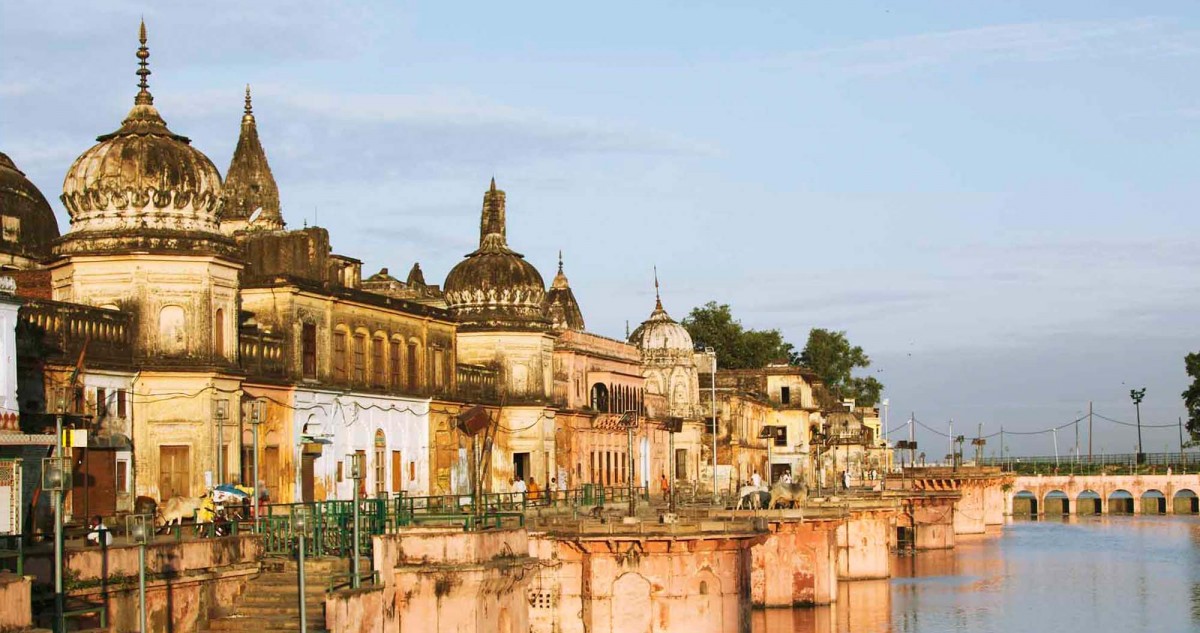
Sanskrit & Shastra“Ayodhya” means that which cannot be conquered through war. Babur attacked, demolished the temple, and built a mosque; Aurangzeb demolished three other ancient temples there, yet until 1858 it remained under the control of armed sadhus who never permitted any Muslim to offer namaz at the birthplace of Ram Lalla. Queen Vict
23 October 2026 · 8 min read
Sanskrit & Shastra“Should today's youth do strength exercises like push-ups, squats, etc., in addition to pranayama (breath control) and asana (yogic postures) to maintain physical strength?” Answer — Strength exercises like push-ups, danda-baithak (traditional Indian push-ups and squats) or weight training increase pressure, which indeed increases muscular strength.
23 October 2026 · 6 min read
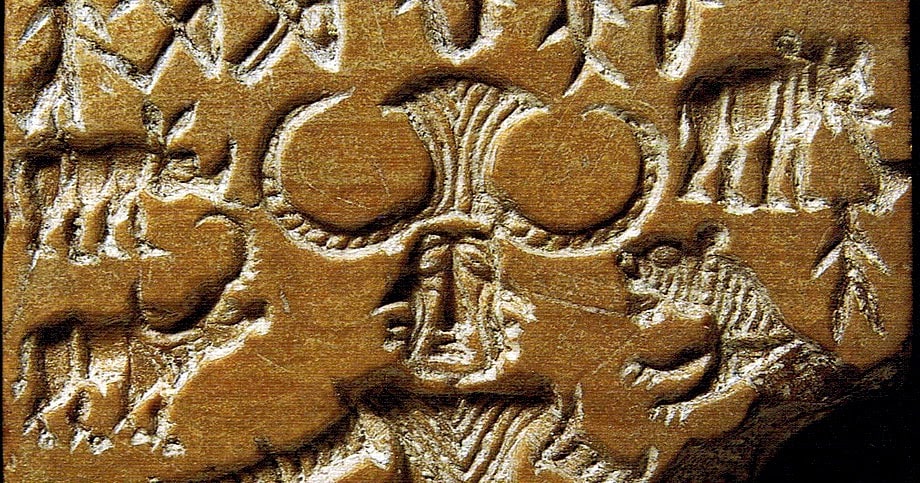
Sanskrit & ShastraThe so-called 'scholars' of Europe characterized the Mohenjo-daro and Harappa 'civilization' as the oldest foundation of Indian civilization and declared it to be more advanced and ancient compared to the Vedic (pertaining to the Vedas) pastoralists—a view that our policy-makers and so-called intellectuals, especially leftist historians, continue to accept to this day. Th
23 October 2026 · 25 min read
Sanskrit & ShastraGeorge Orwell has two significant books—*Animal Farm* and *1984*. I read *Animal Farm* a long time ago, but have only recently finished *1984*. This book was published in 1949, and *Time* magazine included it among the 100 best English-language books from 1923 to 2005.
23 October 2026 · 7 min read
Sanskrit & ShastraJust recently, I read Raj Thapar's book *All These Years*. Compiled from her diaries following Raj Thapar's (1926–1987) demise, this memoir was published in 1991. The book contains a total of 24 chapters, and the final chapter remains incomplete, owing to Raj Thapar's untimely death from cancer
23 October 2026 · 5 min read
Sanskrit & ShastraBelgian scholar Koenraad Elst wrote a book in 1992 titled *Negationism in India: Concealing the Record of Islam*. Its expanded edition appeared in 2014 and was republished in 2016. This book is primarily Sita Ram Goel's book *Hindu Temples: What Happened To Them* in
23 October 2026 · 6 min read
Sanskrit & ShastraChennai, February 5: A video clip of DMK leader Stalin has surfaced on social media in which he is criticising the Vedic rituals of marriage. In this video, Stalin has insulted Hindu customs and, in particular, the Brahmins chanting the Vedas. Over the past week on social media
23 October 2026 · 6 min read
Sanskrit & ShastraShri Ram resides in the very veins of this nation. He is permeated in every single atom. Ram is in every heart. Ram dwells in every breath. Ram is in every pore of the land of Bharat. Ramlala (infant Ram) plays in the courtyard of every home even today. Where all will you cast a veil? How long will you defer the hearing? Ram manifested in Treta (the second cosmic age). Ram is manifesting even today...
23 October 2026 · 7 min read
Sanskrit & ShastraIn India, since ancient times, there has been a tradition of selecting specific stone for the vigrahas (consecrated deity forms) of temples. From antiquity until perhaps around 150 years ago—ever since the market of sculptors developed in Jaipur—white marble murtis (consecrated images) began to be installed in temples across nearly the whole of North India. Earlier
23 October 2026 · 4 min read
Sanskrit & ShastraThe Prime Minister has fallen victim to anti-India propaganda. The Tamil language is once again the subject of debate. The reason: in 'Mann Ki Baat', PM Modi stated that Tamil is older than Sanskrit. Prior to this as well, during an interaction with students in February, the exact same claim was made by PM Modi. Knowingly or unknowingly, the Prime Minister
23 October 2026 · 4 min read
Sanskrit & Shastraमाता गुरूतरो भूमेः (The mother is weightier than the earth)—in the Mahabharata, when the Yaksha asks Dharmaraja Yudhishthira, ‘Who is heavier than the earth?’, Yudhishthira replies, ‘माता गुरूतरा भूमेः’ (The mother is weightier than the earth). Yudhishthira’s affirmation of this exalted preeminence of the mother is by no means casual; if you study the Vedas (revelatory canonical scriptures), the Veda, extolling the glory of the mother, proclaims that the mother...
23 October 2026 · 5 min read
Sanskrit & ShastraIn the fourth chapter of the Chandogya Upanishad lies the narrative of Jabala, Satyakama, and Maharshi (great sage) Gautama, son of Haridrumat. Jabala represents that Bharat where woman in every form is Narayani (the Goddess); Satyakama stands as that sentinel of truth who proclaims that the steadfast person who never deviates from the path of truth is alone a Brahmana.
23 October 2026 · 4 min read
Sanskrit & ShastraRecently, an emerging writer on Facebook, Vijay Singh Thakurai, wrote a book on science titled *Bechain Bandar*. *Bechain Bandar* was warmly received on Facebook, especially within that segment which had remained distant from science. A controversy also erupted over the book hurting dharmic sentiments. Because in a book on science, dhar...
23 October 2026 · 5 min read
Sanskrit & ShastraIf, by fortune or misfortune, you have ever stepped into those cacophonous din-houses of Indian justice—which under delusion we often call 'temples of justice'—you would frequently have had darshan (beholding of a deity) of the blindfolded goddess of justice. By fortune, should you be an established advocate or a judge; and by misfortune, should you be a beleaguered litigant—
23 October 2026 · 3 min read
Sanskrit & ShastraIt was in 1999 that my elder brother developed bleeding piles. Despite undergoing every level of treatment, these piles took the form of Hemorrhoids (gudachir). In this condition, the anal canal becomes excoriated. One can well imagine how agonizing an affliction this is. A definitive cure for all manner of anorectal disorders at Delhi’s Unani Tibbia College
23 October 2026 · 5 min read
Sanskrit & ShastraAnupam Mishra – Father of ponds, wells, and stepwells. Seeking the musk hidden within its own navel, the deer keeps running hither and thither, yet it never finds contentment. In the same way, man keeps running after development, yet his ambition remains unfulfilled. In this frantic race, that very navel in which development lay hidden, man...
23 October 2026 · 5 min read
Sanskrit & ShastraAbout six months ago, I read an article on Gita Press published by the BBC. The piece concocted the specious argument that the printing press known as Gita Press was working on a mission to forge a Hindu India. Subsequently, I read yet another article titled "Gita Press's Talibani Thinking on Women." Having read both articles, my mind...
23 October 2026 · 7 min read
Sanskrit & ShastraThis was a time when food was eaten at home and bowels were relieved in the open fields; to say nothing of ‘Sheila’s youth’ or ‘Munni’s infamy’, neither had even been born yet. It was during such times that one day, two brothers, Babban and Daddan, set out on a bicycle with a sack of harad (myrobalan) to sell. The whole day passed, and not even a single paseri (traditional measure of five seers) of harad was sold. Night was
23 October 2026 · 8 min read
Sanskrit & ShastraIt is asserted by some that no matter how wicked a woman may be, she must be respected, even if she is a prostitute. To substantiate this, they even advance arguments drawn from Hindu texts. One argument is that Hanuman Ji honoured Surasa and Trijata, who were rakshasis (demonesses), by addressing them as 'Mother'; then Bollywood act...
23 October 2026 · 6 min read
Sanskrit & ShastraAmong those devoted to the study of *vedavidya* (knowledge of the Vedas), Panditji’s name alone serves as a sufficient introduction. He accomplished the monumental task of bringing Vedic literature and Sanskrit within reach of the common populace, much as Swami Dayanand had once aspired to do. By making Hindi the language of *vedabhashya* (commentary on the Vedas), Swami Dayanand had
23 October 2026 · 4 min read