YugSamvad · Sanskrit & Shastra
Sanskrit & Shastra1984 and Animal Farm: A Specimen of a Leninist Deaf and Mute Society
Shivpujan Tripathi · English edition 23 October 2026 · Hindi original 19 September 2019 · 7 min read
There are two momentous books by George Orwell—Animal Farm and 1984. I had read Animal Farm long ago, but finished reading 1984 only recently. Published in 1949, this book was included by Time magazine among the 100 best English-language novels from 1923 to 2005. There is considerable resemblance between this book and Arthur Koestler’s Darkness at Noon regarding character and plot. In Koestler’s book, a senior communist is arrested by the state authorities and subsequently put on trial. The interrogation and trial scenes are bone-chilling. Following the trial, the arrested Rubashov is shot dead.
1984: A Terrified Society Devoid of Freedom of Expression
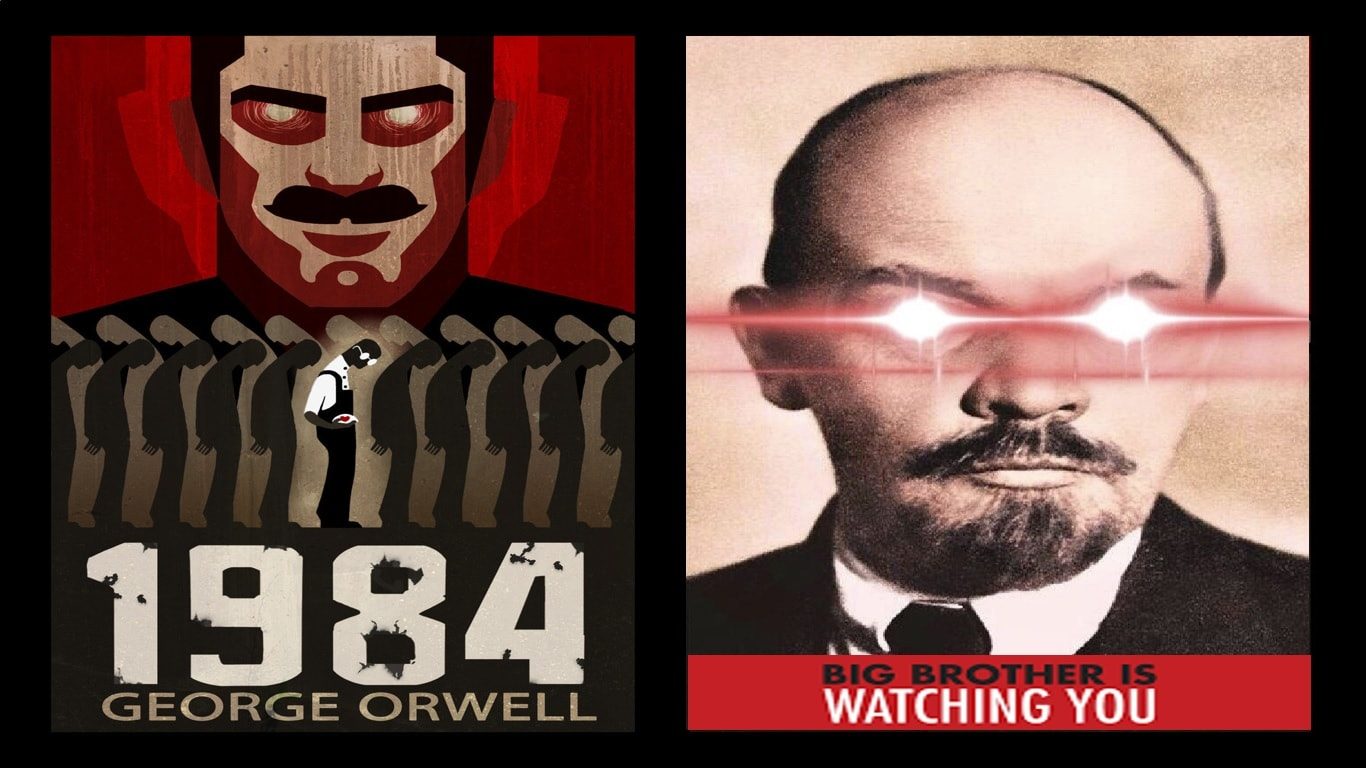
1984 is a scathing satire on totalitarian governance. Both the aforementioned novels appear to draw inspiration from Soviet totalitarianism. The protagonist of 1984 is Winston Smith, and the state is named Oceania. Its two contemporary rival states are Eurasia and Eastasia. All three superstates know that no two allied together can defeat the third; yet Oceania constantly shifts alliances, allying with one to declare the other an enemy, and then reversing the pact to proclaim the former the foe. In any case, there is perpetually some external enemy, and the foremost enemy is Emmanuel Goldstein, who bears an unmistakable resemblance to Leon Trotsky. The head of the state is termed Big Brother, and every citizen is incessantly reminded that Big Brother is Watching.
The state comprises primarily three classes. First is the Inner Party, constituting 2% of the population, which forms the ruling oligarchy; second is the Outer Party or the middle class, making up 13%; and the remaining 85% belongs to the Proles (proletariat). The machinery of the state is administered by four ministries—Peace, Truth, Plenty, and Love—whose actual functions are, respectively, War, Lies, Starvation, and Torture; that is, to perform actions precisely contrary to their names. Smith is a member of the Outer Party, employed in the Records Department of the Ministry of Truth.
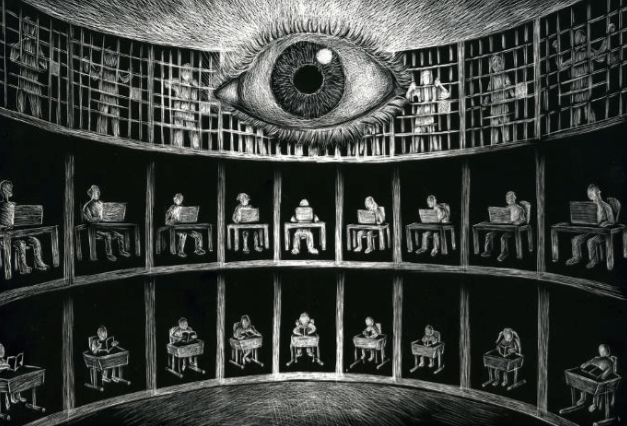
Throughout the state, with the exception of the Proles, telescreens are installed in every room, workplace, and public square, subjecting every individual to relentless surveillance. Daily broadcasts of hatred against an imaginary enemy are relayed over the telescreen, alongside periodic observances of Hate Week, in which all citizens are compelled to participate with fervent zeal. Unfortunately, one day Smith writes something subversive against the Party in his diary, an act captured on the telescreen, marking the onset of his doom. Meanwhile, he falls in love with a woman named Julia, and they rent a room in the proletarian quarter for their clandestine trysts, believing it to be free of any telescreen. O’Brien, an Inner Party member, gains Smith’s trust by confiding that an underground resistance called the Brotherhood operates to overthrow Big Brother, claiming to be a member himself. O'Brien gives him Goldstein’s book to read. Later it is revealed that the landlord from whom Smith and Julia rented the room is an agent of the Thought Police, and that the room too was concealed with a telescreen.
In the novel 1984, there are several key terms essential to understand—such as Thoughtcrime, Thought Police, Doublethink, 2+2=5, and so on. If someone opposes the Party or state even in thought, it is branded a Thoughtcrime, to suppress which the Thought Police was instituted. Moreover, children are actively encouraged to spy upon their parents to catch them committing Thoughtcrime. In the novel, a character named Tom Parsons mutters something subversive against the Party in his sleep; his own daughter reports this Thoughtcrime, leading to his arrest and consignment to a forced labour camp. A poet named Ampleforth is arrested merely because he rhymes "rod" with "God" in a verse, the very utterance of the word "God" being a criminal offense. In the Ministry of Truth, a dictionary is also being compiled under the name of Newspeak. Syme carries out this task with great proficiency, yet his offense lies in being too intelligent and excessively outspoken. True to his nature, he remarks that the work on Newspeak will be completed by 2050. The Party cannot brook such forthrightness, and he too is handed over to the Ministry of Love.
The primary duty of the Ministry of Truth is to revise historical records from time to time. The Party maintains that nothing existed prior to the Revolution; history commences only after it. If war is underway with Eurasia, the records are altered to state that Eurasia has been an enemy from the beginning; all records documenting past friendship are incinerated in the memory hole, and facts are rewritten. The Party held that history is no immutable truth, but something to be manipulated at will to serve the needs of the moment. Ultimately, Smith is subjected to unspeakable tortures, and only after enduring the horrors of Room 101 does he come to revere Big Brother with a love born of sheer terror—whereupon his life returns to what is nominally deemed normal.
Reading the novel 1984 recalls Lenin’s views expressed in his letters to Gorky. According to Lenin, “Socialist proletarian writing is not an individual affair. Nothing can be written independent of the proletarian cause. Down with non-partisan literature!” Thus, in Lenin's view, all writers who fail to revere every dictate of the Communist Party and its regime as divine law are deemed irresponsible. To deal with such writers or intellectuals, Lenin adopted an exceedingly straightforward and peculiar method: unleashing torrents of abuse against the writer, concocting arbitrary accusations and conclusions, intimidating him, and silencing him by any means necessary. For instance, if an author criticized the gratuitous slaughter and persecution of people, in the Leninist lexicon this implied that the author was extending a vile, despicable, and putrid endorsement to imperialist war. If someone protested against wrongful imprisonment, it was construed to mean that the dissenter supported the massacre of thousands of workers and peasants, that he was an abject, bought-and-paid-for lackey of the capitalists. This is not the language of ideological dialogue or intellectual discourse, but the language of bludgeoning, bullying, and coercion—yet, regrettably, it remains an inseparable facet of Leninism.
– Shivpujan Tripathi, the author is a scholar and keen researcher of Indian history and culture
Also read:
Superstitions of the Communist Ideology
Why a Muslim Can Never Be a Leftist
Shri Guruji Golwalkar’s Thoughts on the Hollowness of Communism (the Left)
The Marxist Ideology’s Betrayal of India’s History and Present
Stalin: Whose Propaganda Machine Murdered 2 Crore People in Russia
When a Communist Declared, “Let the People Taste Blood!”
Negationists: Criminals Who Deny the Crimes of History
Even Jinnah and Iqbal Will Not Be Spared from the Clutches of Islamic Radicalism
Cite this article
Shivpujan Tripathi. “1984 and Animal Farm: A Specimen of a Leninist Deaf and Mute Society”. YugSamvad, 23 October 2026. https://yugsamvad.com/en/articles/1984-aura-enimala-phaarma-leninavaadee-mooka-badhira-samaaja-kaa
https://yugsamvad.com/en/articles/1984-aura-enimala-phaarma-leninavaadee-mooka-badhira-samaaja-kaa · accessed
Related reading
Shri Guruji Golwalkar's Views on the Hollowness of Communism
Among the grave failures of democracy in our country is the rising menace of communism, which is an avowed enemy of the democratic constitution. Lest they lag behind the communists in their economic appeal to the public, in this endeavor our leaders themselves also...
23 October 2026 · 5 min read
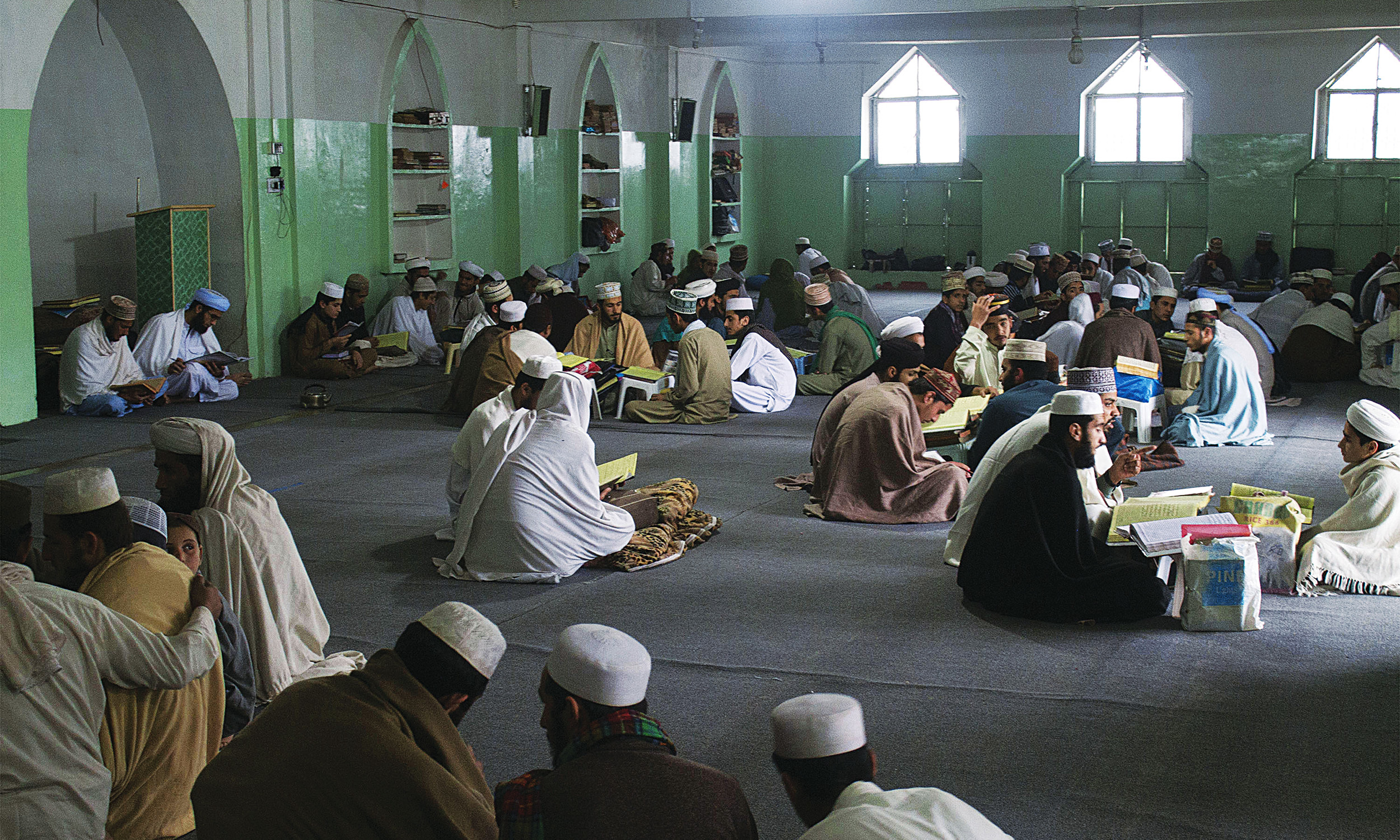
Madrasa: The Historical Industry of Jihad
As long as madrasas remain in India or any other country, the jihadi mindset and terrorism will remain. The etymology of the word madrasa goes back to the Semitic root "d r s", from which the word *madrasah* was derived in Arabic and is called madrasa in Urdu. Without vowels, no word or root can even be formed; the Semitic root—
23 October 2026 · 4 min read