YugSamvad · Sanskrit & Shastra
Sanskrit & ShastraDeclaring Tamil Older Than Sanskrit Is a British Conspiracy
प्रवक्ता · English edition 23 October 2026 · Hindi original 29 August 2018 · 4 min read
Prime Minister Falls Victim to Anti-India Propaganda
The Tamil language is once again a subject of discussion. The reason is that PM Modi, during his 'Mann Ki Baat' broadcast, declared Tamil to be older than Sanskrit. Prior to this, in February as well, PM Modi had said the very same thing while interacting with students.
The statement made by the Prime Minister, knowingly or unknowingly, carries deep implications. Everyone knows that Tamil Nadu has been the epicenter of the divisive Aryan-Dravidian mentality. Politicians there incite the public in the name of Dravidian culture. They claim that Dravidian culture and the Tamil language constitute their original identity, and that foreign Aryans imposed their culture upon them. They also assert that the Tamil language is an independent language with no connection to Sanskrit, and that Sanskrit is the language of Aryans imposed upon Dravidians.
The British Conspired to Fracture India in the Name of Aryan-Dravidian
It is well known that Tamil politicians oppose Hindi and Sanskrit by labelling them as foreign languages, yet conversely support English. Did the English language originate in some village of Tamil Nadu? No. Thus, this is nothing but a form of stubborn obstinacy. How did anti-Hindi opposition begin in Tamil Nadu?
To resolve this doubt, we must examine the history of Tamil Nadu. A Christian missionary named Robert Caldwell (1814–1891) is considered the progenitor of this rift. Upon coming to India, Robert Caldwell acquired extensive command over the Tamil language, and his book A Comparative Grammar of the Dravidian or South Indian Family of Languages, Harrison: London was published in 1856. The objective of this book was to render the non-Brahmin population of Tamil Nadu anti-Brahmin, anti-Sanskrit, anti-Hindi, anti-Veda, and anti-North Indian, so that they could be incited and easily converted to Christianity—and in this enterprise, Robert Caldwell indeed achieved success.
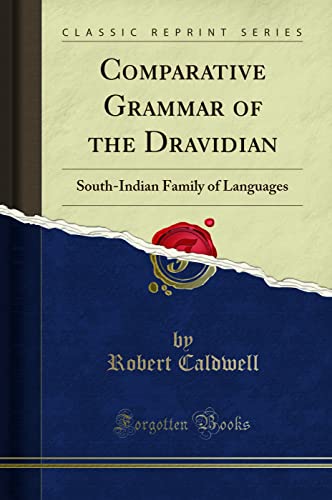
According to former Chief Minister Karunanidhi, this book states that 20 words of Sanskrit were already present in Tamil, thereby proving that the Tamil language existed prior to Sanskrit. Politics in Tamil Nadu has long been fought along Brahmin and non-Brahmin axes. It is precisely for this reason that anti-Hindi agitations were launched using this book as a foundation. Consider the irony: a statue of Robert Caldwell, who sowed discord between brothers, stands erected on Marina Beach in Madras. A commemorative postage stamp was even issued in his memory.
Similarities Among Tamil, Sanskrit, and Hindi Words from "Tamil Self-Tutor"
As far as the relationship between Tamil and Sanskrit is concerned, the relationship between Sanskrit and Tamil is like that between a mother and her son—the same relationship that exists between Sanskrit and other languages of the world. Just as Sanskrit is the mother of the world's other languages, so too is it the mother of Tamil. Upon research, we discover that numerous Sanskrit words are employed in ancient Tamil texts, particularly in Tamil poetry. In fact, spoken Tamil is thoroughly replete with Sanskrit terms. Even in the Kamba Ramayanam, many Sanskrit words are found in apabhramsha forms. Because the script of the Tamil language has fewer letters, Sanskrit words could not be written distinctly, which led to the creation of a separate script.
1. Vārte – Vārtā – Bāt
2. Grāmam – Grāmaḥ – Gā̃v
3. Jalam – Jalam – Jal
4. Dūram – Dūram – Dūr
5. Mātram – Mātram – Mātra
6. Shīgram – Shīghram – Shīghra
7. Samāchāram – Samāchāraḥ – Samāchār
Numerous such examples of similarities among Tamil, Sanskrit, and Hindi can be cited from "Tamil Svayam Shikshak" (Tamil Self-Tutor).
Similarly, consulting the authoritative dictionary of Tamil known as the Tamil Lexicon reveals that numerous Sanskrit words exist within the Tamil language. In the preface to the Hindi edition of the Tirukkural—a work authored by Saint Thiruvalluvar and celebrated as the "Tamil Veda"—the honorable C. Rajagopalachari writes that ‘by reading this book, North Indians will come to know how close a relationship and oneness Northern civilization and culture share with the Tamil people.’ Many verses in this text appear to be direct translations of the teachings of the Vedas. In the poetry of the famous Tamil poet Bharatiyar as well, Sanskrit terms are found in abundance. The influence of ancient Sanskrit texts is clearly evident throughout the literature of Tamil Nadu's famed Sangam era.
Several books have been published in the past to demonstrate the connection between the Sanskrit language and the rest of the world's languages, such as Vedon Ka Yathartha Swaroop by Pandit Dharmadev Vidyamartand, Sanskrit—The Mother of All World Languages, and Bhasha Ka Itihas authored by Pandit Bhagavad Datta, etc. There is a pressing need to advance research to establish Sanskrit as the mother of all the world's languages.
– Manish Prakash, The author is a political analyst and writes on issues of national importance.
Read – Shaiva Sects of Sanatana Dharma
Cite this article
प्रवक्ता. “Declaring Tamil Older Than Sanskrit Is a British Conspiracy”. YugSamvad, 23 October 2026. https://yugsamvad.com/en/articles/tamila-ko-sanskrita-se-praacheena-bataanaa-angrejon-kaa-shadyantra
https://yugsamvad.com/en/articles/tamila-ko-sanskrita-se-praacheena-bataanaa-angrejon-kaa-shadyantra · accessed
Related reading
The Meaning of Medha, Kautuhala, Jigyasa and Herd Mentality
*Medha* (intellect) and the Herd “He who protects *dharma* (righteousness/cosmic order), *dharma* protects him.” The meaning of *dharma* is Vedic *yajna* (sacrificial ritual), that is, the *karma-kanda* (ritual section) of the Vedas. There are ten characteristics of *dharma* — *dhriti* (fortitude), *kshama* (forgiveness), *dama* (self-control), *asteya* (non-stealing), *shaucha* (purity), *indriya-nigraha* (sensory control), *dhi* (intellect), *vidya* (knowledge), *satya* (truth), and *akrodha* (absence of anger). But these are merely characteristics on the basis of which we can recognize that a particular...
18 October 2026 · 8 min read
Suicidal Flaws in Countering Sarvadharmasamabhava
Over the past 90 years, the rise of the politics of Muslim appeasement has caused immense damage to Indian culture. By equating 'Ali, Maula, Allah' with Ishvara (the Supreme Godhead), pseudo-secularism has paralyzed our core spiritual and cultural consciousness. Even from a definitional perspective, 'religion' and 'mazhab' (confessional faith) are distinct from dharma (righteous duty and cosmic order)—
18 October 2026 · 8 min read