YugSamvad · Sanskrit & Shastra
Sanskrit & ShastraBy 2050, One in Four People Will Suffer from Hearing Problems
Yug Samvad Desk · English edition 23 October 2026 · Hindi original 4 March 2021 · 2 min read
The World Health Organization has warned that by 2050, one in four people in the world's population will suffer from hearing problems. The first global report on hearing capacity states that many of these problems are occurring due to causes such as infections, diseases, birth defects, noise, and negative changes in lifestyle.
A package of measures was proposed in the report, calculated at $1.33 per person per year. The report estimated an annual loss of nearly one trillion US dollars due to this problem because the issue was not being properly addressed.
Globally, one in every five people currently has a hearing problem. But the report warns that over the next three decades, the number of people with hearing loss could increase by more than 1.5 times. Most of this expected increase is due to demographic and population trends.
Since nearly 80 percent of people with hearing loss live in extremely poor countries, most do not receive adequate medical help. The report states that even in wealthy countries with better facilities, access to care is often unequal. "Even among healthcare providers, there is typically a lack of knowledge relevant to prevention, early identification, and management of hearing loss and ear diseases," it noted.
The report proposes a package of measures, including public health initiatives ranging from noise reduction in public spaces to expanding vaccination for diseases such as meningitis that can cause hearing loss. It also recommended systematic screening to identify the problem at key stages in people's lives.
Cite this article
Yug Samvad Desk. “By 2050, One in Four People Will Suffer from Hearing Problems”. YugSamvad, 23 October 2026. https://yugsamvad.com/en/articles/2050-taka-hara-chaara-men-se-eka-vyakti-hogaa
https://yugsamvad.com/en/articles/2050-taka-hara-chaara-men-se-eka-vyakti-hogaa · accessed
Related reading
How is Om correctly pronounced?
The *Ashtadhyayi* (Panini's foundational Sanskrit grammar) (1.2.34) states that "except for *japa* (muttered recitation), *nyunkha* (a specialized prolonged chanting of the syllable 'O'), and *sama* (melodic Vedic chanting), *ekashruti* (monotone recitation) may be employed in *yajna-karma* (sacrificial ritual performance)." When a long "Om" (or short "u" or "o") has to be appended to any *veda-mantra* (Vedic hymn), that "Om" is called "*nyunkha*". *Ekashruti* means reciting by treating all accents as a single tone.
18 October 2026 · 2 min read
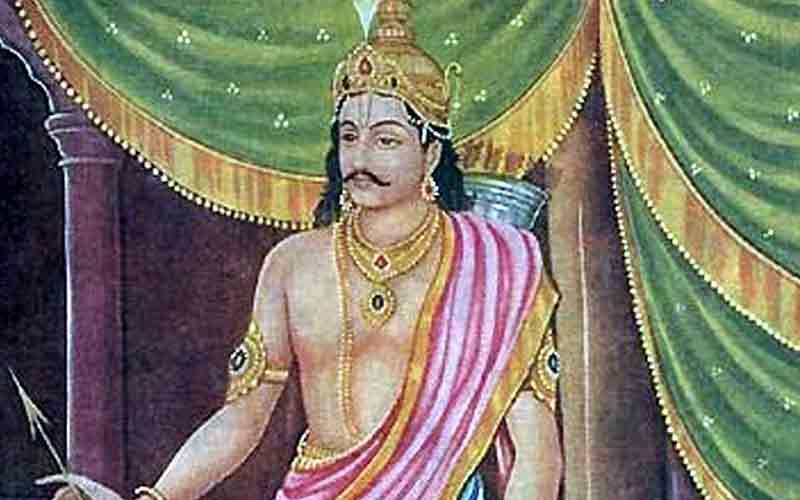
Yudhishthira's Dyuta: The Esoteric Vedic Akshavidya
It is wrong to call Dharmaraja Yudhishthira a gambler. How many times in his life did Dharmaraja Yudhishthira play dyuta (the traditional game of dice)? How many times must one play to be called a vyasani (addict)? It is also wrong to call dyutavidya (the science of dice) gambling. Why did Dharmaraja Yudhishthira have to learn dyutavidya from a rishi (seer)? Why was no teacher to be found other than a rishi? Shaku...
18 October 2026 · 1 min read

Be It Kanyadaan or Vardaan: What Is Wrong with It?
Is *kanyadan* (the ritual offering of the bride) merely charity? Why is *kanyadan* performed, and is it an insult to women? Understand the true meaning of *kanyadan* in the Hindu *vivaha sanskara* (marriage sacrament), along with its cultural and Vedic significance. Read the authentic exposition of *vardan* (boon) versus *kanyadan*, the mystery of *Brahma vivaha* (the Brahma form of marriage), and a definitive response to the fallacies that seek to misrepresent Hindu traditions.
18 October 2026 · 5 min read