YugSamvad · Sanskrit & Shastra
Sanskrit & ShastraAnupam Mishra - Father of Ponds, Wells, and Stepwells
प्रवक्ता · English edition 23 October 2026 · Hindi original 19 December 2017 · 5 min read
Anupam Mishra – The Father of Ponds, Wells, and Stepwells
The musk deer runs hither and thither to find the musk concealed within its own navel, but never attains contentment. In the very same way, man chases ceaselessly after development, yet his ambition is never satisfied. In this frantic race, man has spared no effort in destroying the very navel in which true development was hidden. Exploiting this navel that is the earth, he has reduced it to a wretched state. He has left no clean air to breathe, no wholesome water to drink, and has irrigated even food crops with poison. Ravaging every limb of nature, he has disfigured her. For millions of years, our ancestors maintained such a relationship with the earth that both mutually flourished. Everyone’s needs were met without causing harm to nature. But those blinded by modern development treated Mother Earth like a harlot.
The Significance of Water in Ancient India
In the past, India made every possible effort toward the conservation of nature. Rather, she lived in communion with nature, treating her as a friend—one who takes from another only with the steadfast desire to give back in equal measure. Our ancestors served the Earth regarding her as mother, and treated Parjanya (the deity of rain and clouds) as father. In the Atharvaveda, the very origin of the earth is said to emerge from water. Through water, Mother Earth gives birth to her offspring; through water, producing grain and medicinal herbs, she nurtures them. Water shares the most intimate, indissoluble bond with the earth. For this reason, water has been accorded supreme sanctity in Sanatana (eternal) Indian culture. Thus, the truth that 'water is life' is beyond any doubt.

Indians devised one ingenious measure after another for water conservation, chief among which was the construction of talabs (traditional ponds), kunds (stepped reservoirs), lakes, and baolis (stepwells). Through these methods of water management, the groundwater table never fell, and drinking water remained accessible throughout the year. Even today, these ancient Indian techniques of water conservation and management can be witnessed across numerous Indian villages and towns. Yet, under the sway of Western development, these proven techniques were viewed with disdain, and we struck an axe against our own feet.
The Water Crusade of Anupam Mishra Ji
Eminent environmentalist Anupam Mishra Ji commands special reverence, having forcefully drawn the attention of both the public and the government to India's marvelous ancient water management, compelling society to acknowledge the supremacy of these traditional techniques. His books, 'Aaj Bhi Khare Hain Talaab' and 'Rajasthan Ki Rajat Boondein', accomplished the peerless ("anupam") feat of aligning water conservation with an authentic Indian worldview. It is a different matter that indolent and shirking governments, here as in every sphere, displayed only their customary apathy, pushing the nation toward an even graver water crisis.
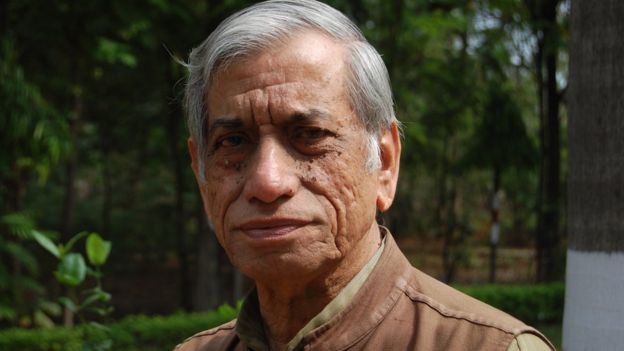
According to Anupam Ji’s research, 100 years ago there were nearly 11 to 12 lakh ponds across the country, which would fill to capacity during the monsoon season. Consider what the population was at that time! And by that measure, could any country have possessed a better system of water management? One can find no answer other than an emphatic no. Furthermore, an arid province like Rajasthan, living by the dictum 'necessity is the mother of invention', devised an incomparable marvel of water conservation in the form of baolis, wherein such stepped reservoirs were constructed in every household that all the rainwater would gather in that reservoir, ending the water crisis for the entire year.
Through his efforts, water conservation work commenced in drought-stricken Alwar, which the entire world witnessed and lauded. It was he who revived the desiccated Arvari River. In like manner, Anupam Mishra carried out monumental work toward the rejuvenation of traditional water sources across Rajasthan and Uttarakhand. He made an immense contribution toward establishing the Centre for Science and Environment (CSE), an institution of the Government of India. Anupam Mishra was also the source of inspiration and trusted collaborator to Rajendra Singh, renowned as the 'Waterman of India'.
'Talaabs' Stand Resolute Even Today
His works on water conservation, management, and replenishment—'Aaj Bhi Khare Hain Talaab' and 'Rajasthan Ki Rajat Boondein'—are not mere books; they are seminal research treatises documenting Indian water consciousness and the exemplary ancient discharge of sacred conservation duties. They will long continue to serve as a beacon to eradicate India's water crisis, provided governments possess the requisite will to extinguish this crisis entirely. Foot soldiers of water conservation can draw profound guidance from reading these works.

Anupam Mishra Ji passed away on 19 December 2016. It was a grievous blow to the movement for environmental conservation in India. It is the solemn duty of the Indian populace as well as the global community to understand the deep anguish Mishra Ji felt regarding the water crisis, and to turn our collective attention to traditional water conservation. Mishra Ji, the 'father' of ponds, will remain immortal in the waters of these reservoirs; I offer him my heartfelt, grateful tribute. If there is water, there is a tomorrow.
Also read:
Why Hindus Considered the Ganga and Yamuna Living Entities Even Before the Courts
Cite this article
प्रवक्ता. “Anupam Mishra - Father of Ponds, Wells, and Stepwells”. YugSamvad, 23 October 2026. https://yugsamvad.com/en/articles/anupama-mishra-taalaaba-kunon-aura-baavariyon-ke-pitaa
https://yugsamvad.com/en/articles/anupama-mishra-taalaaba-kunon-aura-baavariyon-ke-pitaa · accessed
Related reading
How is Om correctly pronounced?
The *Ashtadhyayi* (Panini's foundational Sanskrit grammar) (1.2.34) states that "except for *japa* (muttered recitation), *nyunkha* (a specialized prolonged chanting of the syllable 'O'), and *sama* (melodic Vedic chanting), *ekashruti* (monotone recitation) may be employed in *yajna-karma* (sacrificial ritual performance)." When a long "Om" (or short "u" or "o") has to be appended to any *veda-mantra* (Vedic hymn), that "Om" is called "*nyunkha*". *Ekashruti* means reciting by treating all accents as a single tone.
18 October 2026 · 2 min read
Yudhishthira's Dyuta: The Esoteric Vedic Akshavidya
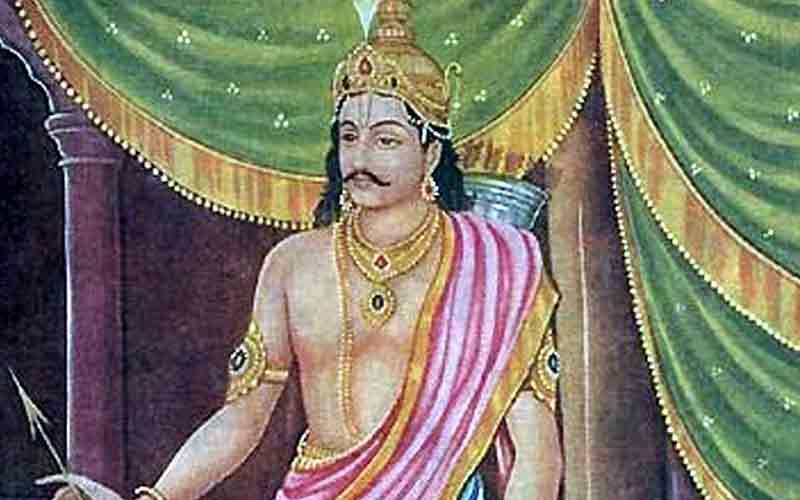
It is wrong to call Dharmaraja Yudhishthira a gambler. How many times in his life did Dharmaraja Yudhishthira play dyuta (the traditional game of dice)? How many times must one play to be called a vyasani (addict)? It is also wrong to call dyutavidya (the science of dice) gambling. Why did Dharmaraja Yudhishthira have to learn dyutavidya from a rishi (seer)? Why was no teacher to be found other than a rishi? Shaku...
18 October 2026 · 1 min read

Be It Kanyadaan or Vardaan: What Is Wrong with It?
Is *kanyadan* (the ritual offering of the bride) merely charity? Why is *kanyadan* performed, and is it an insult to women? Understand the true meaning of *kanyadan* in the Hindu *vivaha sanskara* (marriage sacrament), along with its cultural and Vedic significance. Read the authentic exposition of *vardan* (boon) versus *kanyadan*, the mystery of *Brahma vivaha* (the Brahma form of marriage), and a definitive response to the fallacies that seek to misrepresent Hindu traditions.
18 October 2026 · 5 min read