YugSamvad · Sanskrit & Shastra
Sanskrit & ShastraWho invented Snakes and Ladders OR Moksha Patam?
Yug Samvad Desk · 17 May 2018 · 1 min read
The 13th century poet saint Gyandev created a children's game called Moksha Patam. The British later named it Snakes and Ladders instead of the original Moksha Patam.
In the original one hundred square game board, the 12th square was faith, the 51st square was reliability, the 57th square was generosity, the 76th square was knowledge, and the 78th square was asceticism. These were the squares where the ladders were found and one could move ahead faster.
The 41st square was for disobedience, the 44th square for arrogance, the 49th square for vulgarity, the 52nd square for theft, the 58th square for lying, the 62nd square for drunkenness, the 69th square for debt, the 84th square for anger, the 92nd square for greed, the 95th square for pride, the 73rd square for murder and the 99th square for lust. These were the squares where the snake waited with its mouth open. The 100th square represented Nirvana or Moksha.
The tops of each ladder depict a God, or one of the various heavens (kailasa, vaikuntha, brahmaloka) and so on. As the game progressed various actions were supposed to take you up and down the board as in life.
Also read,
The story of five golden arrows
Cite this article
Yug Samvad Desk. “Who invented Snakes and Ladders OR Moksha Patam?”. YugSamvad, 17 May 2018. https://yugsamvad.com/articles/who-invented-snakes-and-ladders-or-moksha-patam
https://yugsamvad.com/articles/who-invented-snakes-and-ladders-or-moksha-patam · accessed
Related reading
How is Om correctly pronounced?
The *Ashtadhyayi* (Panini's foundational Sanskrit grammar) (1.2.34) states that "except for *japa* (muttered recitation), *nyunkha* (a specialized prolonged chanting of the syllable 'O'), and *sama* (melodic Vedic chanting), *ekashruti* (monotone recitation) may be employed in *yajna-karma* (sacrificial ritual performance)." When a long "Om" (or short "u" or "o") has to be appended to any *veda-mantra* (Vedic hymn), that "Om" is called "*nyunkha*". *Ekashruti* means reciting by treating all accents as a single tone.
18 October 2026 · 2 min read
Yudhishthira's Dyuta: The Esoteric Vedic Akshavidya
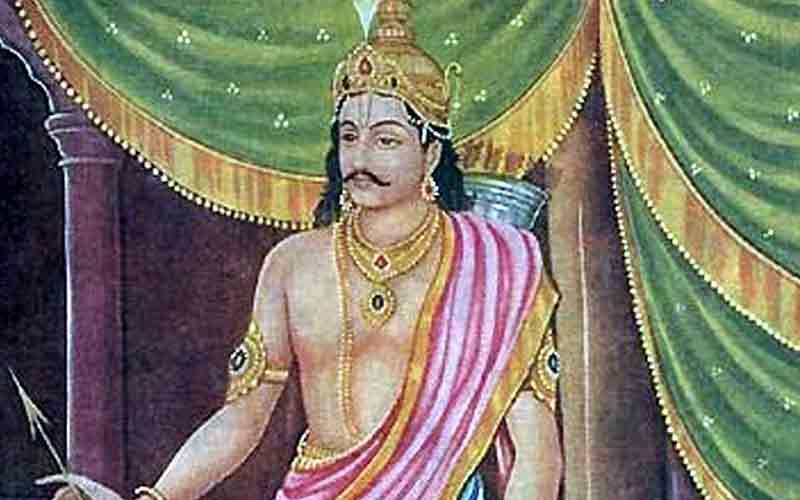
It is wrong to call Dharmaraja Yudhishthira a gambler. How many times in his life did Dharmaraja Yudhishthira play dyuta (the traditional game of dice)? How many times must one play to be called a vyasani (addict)? It is also wrong to call dyutavidya (the science of dice) gambling. Why did Dharmaraja Yudhishthira have to learn dyutavidya from a rishi (seer)? Why was no teacher to be found other than a rishi? Shaku...
18 October 2026 · 1 min read

Be It Kanyadaan or Vardaan: What Is Wrong with It?
Is *kanyadan* (the ritual offering of the bride) merely charity? Why is *kanyadan* performed, and is it an insult to women? Understand the true meaning of *kanyadan* in the Hindu *vivaha sanskara* (marriage sacrament), along with its cultural and Vedic significance. Read the authentic exposition of *vardan* (boon) versus *kanyadan*, the mystery of *Brahma vivaha* (the Brahma form of marriage), and a definitive response to the fallacies that seek to misrepresent Hindu traditions.
18 October 2026 · 5 min read