YugSamvad · Sanskrit & Shastra
Sanskrit & ShastraWhy Science & Religion May Not Be Adversaries!
Dr. Vineet Aggarwal · 23 February 2019 · 4 min read
When I tell someone I am a doctor most people automatically assume I would have nothing to do with religion. I have had that thrown at me so many times that its not even funny anymore!
The perception that people into science are not into religion and vice versa is quite widespread and I know its not without reason. Galileo, the man who used the telescope to declare, quite to the chagrin of the notions of established religions, that the Sun did not, after all, revolve around the earth and it was the other way round, was made to kneel in front of the Roman Catholic Church and accept that his theory was false.
Charles Darwin, who first came out with the ‘Theory of Evolution’ faced considerable criticism (and might I add, still does) from creationists who believed that God created this world in seven days. In spite of a huge body of evidence to support his claims, most religious clerics and not to forget many men of science refused to accept the theory in his lifetime. Even today, leaders of certain religious communities keep giving diktats to their followers on what is kosher and what isn’t acceptable.
The grass is not really greener on the other side as well and we find a lot of scientists and people educated in the modern system of schooling rubbishing their religious beliefs as primitive mumbo jumbo. So then is that how Science and Religion are destined to remain – at loggerheads with each other? Well, maybe not.
What if we tried to approach the so called myths propagated by religion from a scientific perspective? The three big religions of the world – Christianity, Islam and Hinduism – talk about a ‘Great Deluge’ that drowned everything and life could continue only when God intervened and selected one virtuous man to begin life anew after the waters receded. Might not this story be indicative of the meltdown that happened at the end of the last Ice-Age about 10,000 years ago?
In the glacial period all water is withdrawn from the oceans and get stored as ice that covers the land in thick sheets of ice (much like the South Pole today). When the meltdown begins, all this water is released back into the oceans, inundating what used to be habitable land and wiping out signs of all civilization. The stories of Noah and Vaivasvat Manu then may just be the stories of the survivors of that global flood! Not too much difference between science and religion then?
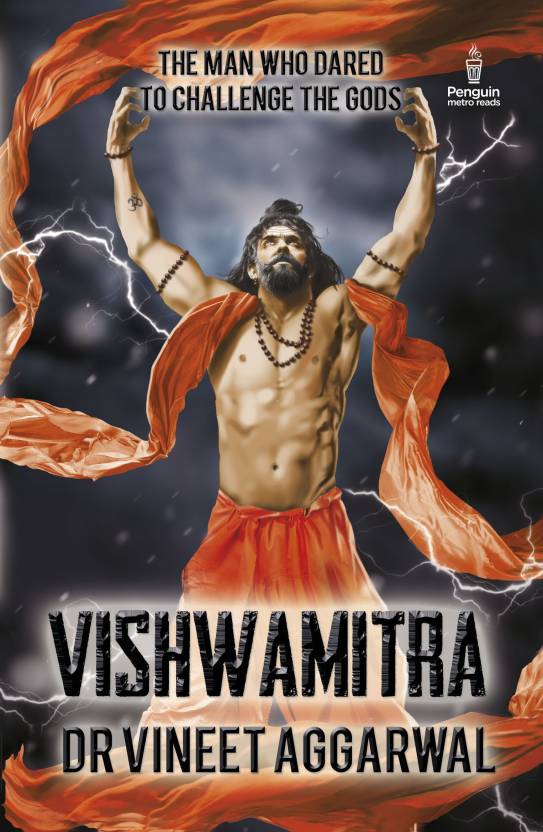
This book by Dr. Vineet Aggarwal is a powerful story of a brave but stubborn, haughty yet compassionate, visionary king of Aryavarta,Vishwamitra, who born as a Kshatriya and became a Brahmarishi, challenged the Gods and shook the very foundation of the heavens. Click here to buy this amazing book.
To give you another example, many readers may have heard about the ten incarnations of Lord Vishnu known as the Dashavatar. For those who haven’t, let me tell you that these are supposed to be the forms taken by Lord Vishnu (considered the preserver in Hinduism) in order to save the world from certain devastations. The purpose of my mentioning these is to ask if you have noticed a pattern in them. The list begins with an aquatic form (Matsya), moves to an amphibian (Kurma), followed by a terrestrial animal (Varah), transitioning into a half-animal/half-human (Narsimha), progressing to a pygmy (Vaman) to a jungle-dwelling human (Parshu-Raam) and then to city-dwellers (Raam, Krishna and Buddha). Is it just me or is anyone else also thinking of evolution?
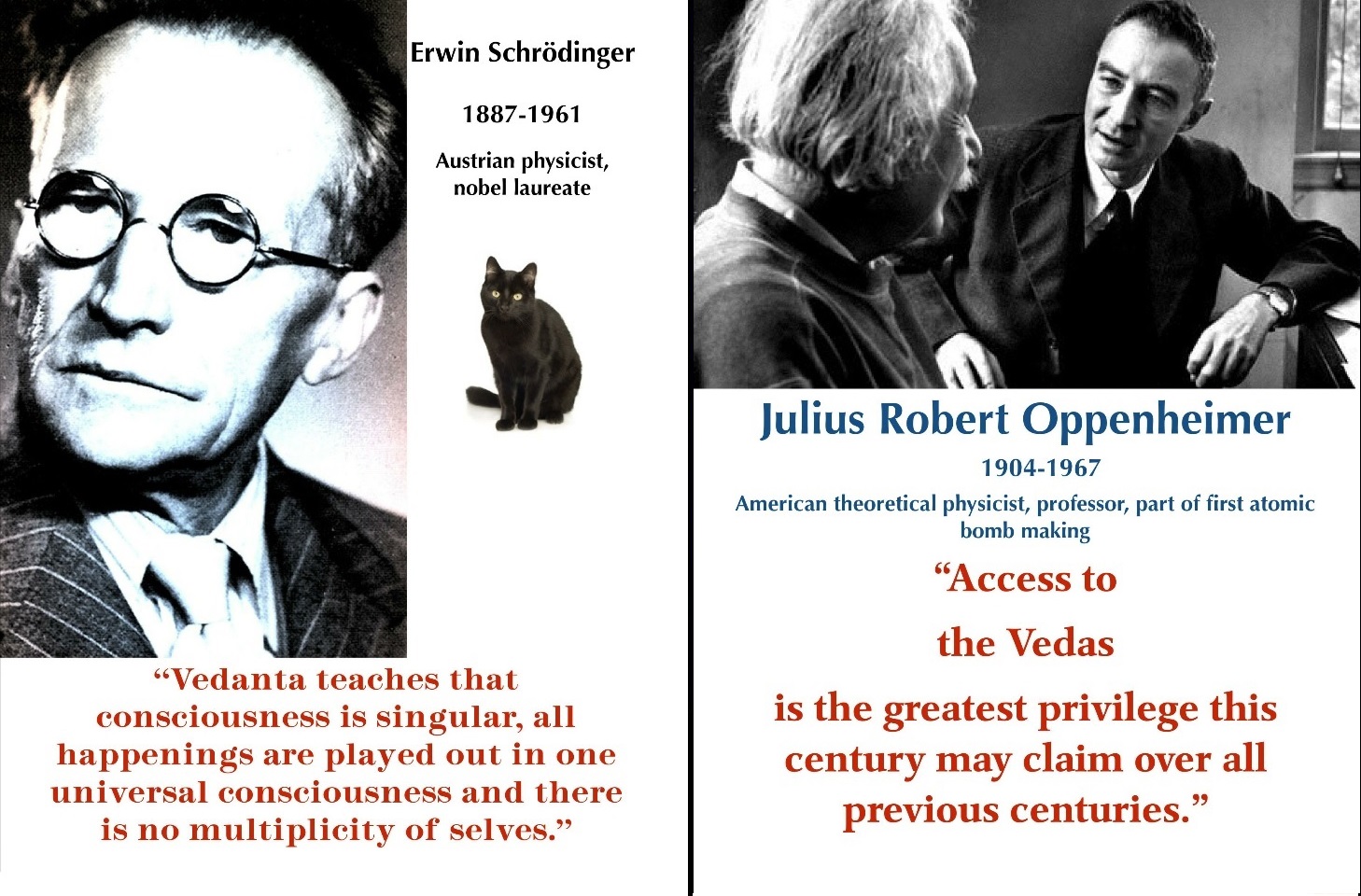
Numerous such scientific concepts can be found hidden in the religious texts and one wonders if really we could draw a neat segregating line between the two. Of course a lot of religion is ritual but that doesn’t mean all of it is to be considered unscientific! At the same time, religious leaders should open their minds and realize that science is not against religion so much as it is against blind superstition.
If instead of seeing the two as competitors, we accept that they may actually be complimentary to each other, it opens up a wide vista of enlightenment that can help both disciplines learn from each other! Perhaps the two may yet learn to co-exist. After all, isn’t that the common goal of both religion and science - the enlightenment of human mind.
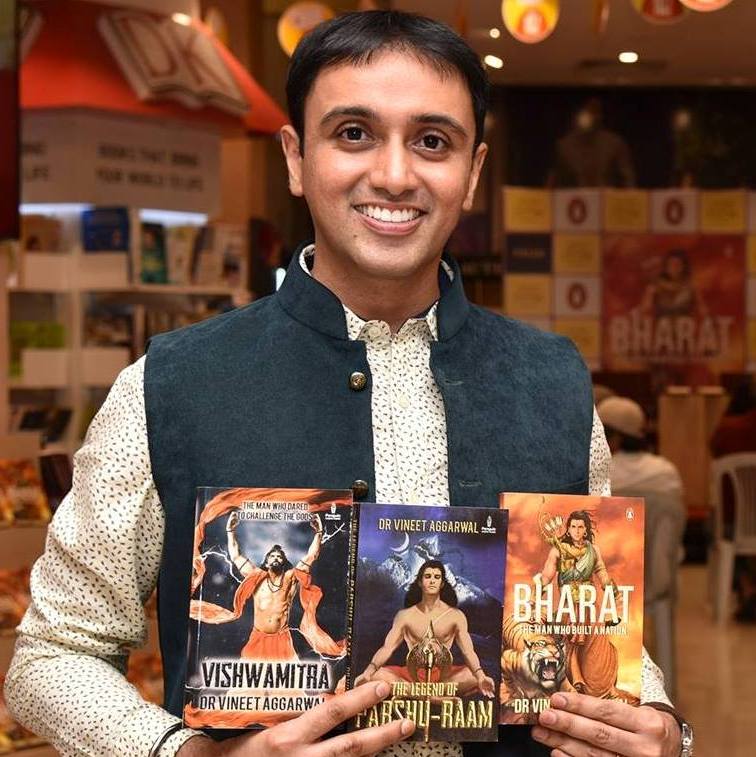
Dr. Vineet Aggarwal is a renowned author based in Mumbai. Dr. Aggarwal is a doctor by qualification, manager by profession and artist by temperament. He writes on Indian literature, arts, and science. His famous books are 'Bharat', 'Vishwamitra' and 'The Legend of Parshu-Raam'.
Also read,
Know the Mathematics of the Kumbha Mela.
Mathematics of Army Organization in Ancient India
Culture: The Zest to Communicate What Has Been Communicated
Columbia University says plastic surgery first performed in ancient India
Cite this article
Dr. Vineet Aggarwal. “Why Science & Religion May Not Be Adversaries!”. YugSamvad, 23 February 2019. https://yugsamvad.com/articles/why-science-religion-may-not-be-adversaries
https://yugsamvad.com/articles/why-science-religion-may-not-be-adversaries · accessed
Related reading
How is Om correctly pronounced?
The *Ashtadhyayi* (Panini's foundational Sanskrit grammar) (1.2.34) states that "except for *japa* (muttered recitation), *nyunkha* (a specialized prolonged chanting of the syllable 'O'), and *sama* (melodic Vedic chanting), *ekashruti* (monotone recitation) may be employed in *yajna-karma* (sacrificial ritual performance)." When a long "Om" (or short "u" or "o") has to be appended to any *veda-mantra* (Vedic hymn), that "Om" is called "*nyunkha*". *Ekashruti* means reciting by treating all accents as a single tone.
18 October 2026 · 2 min read
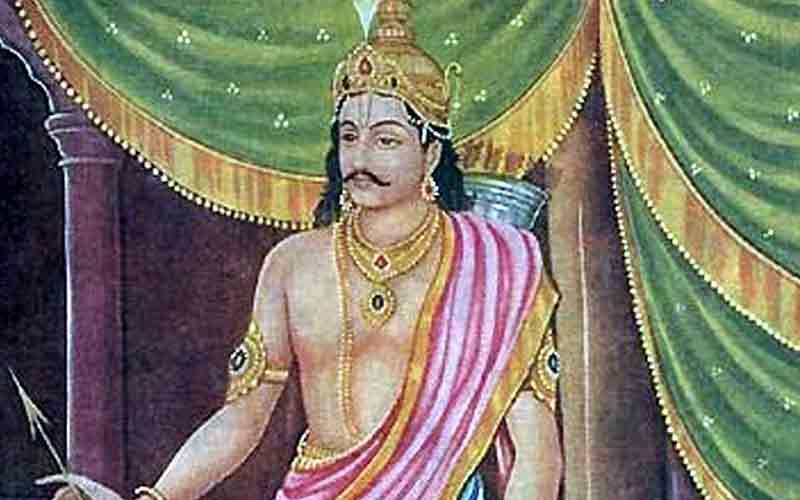
Yudhishthira's Dyuta: The Esoteric Vedic Akshavidya
It is wrong to call Dharmaraja Yudhishthira a gambler. How many times in his life did Dharmaraja Yudhishthira play dyuta (the traditional game of dice)? How many times must one play to be called a vyasani (addict)? It is also wrong to call dyutavidya (the science of dice) gambling. Why did Dharmaraja Yudhishthira have to learn dyutavidya from a rishi (seer)? Why was no teacher to be found other than a rishi? Shaku...
18 October 2026 · 1 min read

Be It Kanyadaan or Vardaan: What Is Wrong with It?
Is *kanyadan* (the ritual offering of the bride) merely charity? Why is *kanyadan* performed, and is it an insult to women? Understand the true meaning of *kanyadan* in the Hindu *vivaha sanskara* (marriage sacrament), along with its cultural and Vedic significance. Read the authentic exposition of *vardan* (boon) versus *kanyadan*, the mystery of *Brahma vivaha* (the Brahma form of marriage), and a definitive response to the fallacies that seek to misrepresent Hindu traditions.
18 October 2026 · 5 min read