YugSamvad · Politics & History
Politics & History"The City of God" - Augustine's Attack on the Pagans
Mudit Agrawal · English edition 10 September 2026 · Hindi original 3 September 2021 · 6 min read
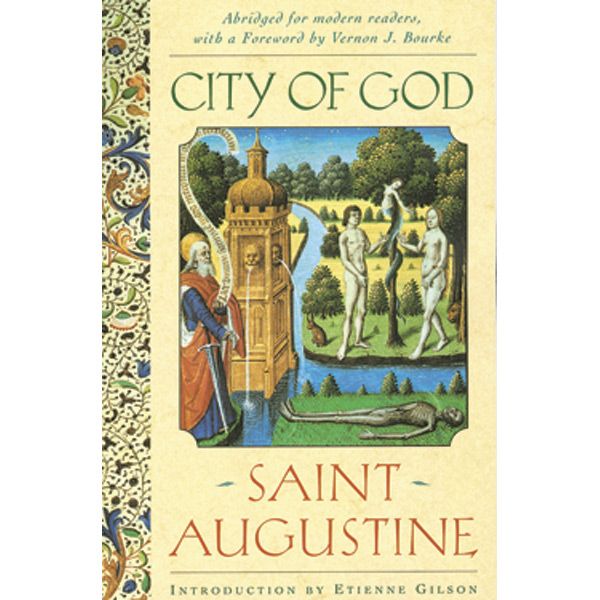
"The City of God"
The year A.D. 410 was a crucial moment in Western history, when the Vandals, led by their king, Alaric, captured the city of Rome. Rome was known as the eternal city because the Romans thought it would literally never fall, and the year 410 shook this belief to its foundations and ultimately led to the collapse of the Roman Empire.
It seemed as if the world itself had been destroyed, and everyone was searching for answers as to what to do now and what to believe in. Those who were idolaters (pagans) were blaming the Christians, claiming that the gods had abandoned Rome because many Romans had abandoned them and adopted the new Christian faith.
The City of God: The pagan Romans claimed that Christians were not patriotic enough because they asked people to serve God instead of the state, and they advocated forgiveness toward enemies. More importantly, they said that the God of the Christians had failed to protect Rome, as he should have, since Constantine had declared him the true God. Agonizing over the growing anger between the two communities, Augustine began writing The City of God in 413.
The first ten books of The City of God, which constitute the first part, refute the accusations made by pagans against Christians regarding the fall of Rome. The first five books refute the belief of the idolaters (pagans) that people must worship the old gods to attain material benefits in this world, including the continuity of the Roman Empire and the supremacy of the city of Rome.
The City of God: In the book, Augustine attacked those pagans who claimed that Rome fell because Christianity had weakened it, and the author asserts that misfortune happens to everyone. In Book II, the author demonstrates that the fall of Rome is not a unique event in human history. The Romans had faced disasters before, even when the old gods were being actively worshipped, and those gods had done nothing to prevent those disasters from occurring.
He states that the Romans actually became weak because of these gods, as they had surrendered themselves to moral and spiritual corruption. In Book III, Augustine continues to discuss the disasters that occurred during the era of pagan supremacy to prove that Christianity is not the cause of Rome's fall. To prove his point, he asks again why the old gods had not protected Rome in the past?
The City of God: In Book IV, Augustine suggests an alternative perspective. He says that Rome survived for many centuries because it was the will of the true God, that is, the Christian God, and its survival had nothing to do with the old gods of the pagans like Jove (Jupiter), who had only performed trivial deeds.
The City of God: In Book 5, Augustine writes on the concept of fate, which many pagans viewed as a viable force that had held the Roman Empire together. Rather, Augustine says, the Romans of antiquity performed virtuous deeds, and the true God (Christian) had rewarded that virtue, even if they had not worshipped him. When he reaches Book VI, Augustine shifts his focus and in the next five books refutes those pagans who said that people must worship the old gods to attain eternal life.
The City of God: Augustine used old pagan writers to destroy this notion, stating that the old gods were never held in high regard and therefore all the old ways, old myths, and old laws are useless in ensuring eternal happiness. The refutation of pagan theology continues up to the tenth book.
The City of God: Book Eleven begins the second part of The City of God, where Augustine describes the theory of two cities, an “earthly city” and a “heavenly city.” In the next three books, he explained how these two cities came to be, based on a reading of the Bible. The next four books explain the prehistory of the “city of heaven,” from Genesis to the age of Solomon, whose story is described in the form of Christ and the Church.
The City of God: In Book XVIII, Augustine begins a similar process of depicting the prehistory of the “earthly city,” which spans from Abraham to the prophets of the Old Testament. Augustine focuses on how both cities will end in Book XIX, and in this process, he outlines the nature of the supreme God. He emphasizes the idea that the peace and happiness found in the “heavenly city” can also be experienced here on earth.
Book 20 deals with the Last Judgment and the evidence found for it in the Bible. Augustine continues this subject in Book XXI and describes the eternal punishment of the damned, arguing that it is not a myth. The final book, Book XXII, tells of the end of the City of God, after which the saved Christians will be granted eternal happiness and will become immortal.
The City of God: Augustine presents four essential elements of his philosophy in the City of God: the church, the state, the City of Heaven, and the City of the World. He says that the church is divinely established and leads mankind toward eternity, which is God. The state adheres to the virtues of politics and the mind; the state creates a political community. Both of these societies are visible and seek to do good.
The City of God: In these two mirrors are two invisible societies: the City of Heaven, for those predestined for salvation, and the City of the World, for those who are damned for eternity. Through this grand design, Augustine elaborates on his theory of Christian justice; he says that just as God freely distributes the necessities of life—air, water, and light—in a fair and just manner, so mankind must pursue the City of Heaven to maintain proper order, which in turn leads to true peace.
Read also,
Cite this article
Mudit Agrawal. “"The City of God" - Augustine's Attack on the Pagans”. YugSamvad, 10 September 2026. https://yugsamvad.com/en/articles/da-sitee-opha-goda-ogasteena-kaa-paigana-para
https://yugsamvad.com/en/articles/da-sitee-opha-goda-ogasteena-kaa-paigana-para · accessed
Related reading
Propaganda Against BHU Founder Mahamana Malaviya
I draw the attention of scholars affiliated with Kashi Hindu Vishwavidyalaya who are conducting research on the persona and works of Mahamana Malaviya Ji, as well as history enthusiasts, toward a matter of utmost importance. That matter is this: for some time now, it has been repeatedly observed and read that the Darbhanga royal family and Mithi...
18 October 2026 · 6 min read