YugSamvad · Sanskrit & Shastra
Sanskrit & ShastraPardon me, your filmy dance is not art; it is darkness
Dr Madhusudan Upadhyay · English edition 18 October 2026 · Hindi original 31 December 2017 · 5 min read
Respected Shiv Kumar ji yesterday rightly expressed concern over the rising vulgarity in films. Another art form requires attention as well. Television, in particular, has been flooded with reality dance shows. These people dancing stripped of all decency call themselves artists, and their body-rubbing contests, *nritya* (classical expressive dance).
Are 'dance' and nritya the same thing?
Acharya Dhananjaya, defining *nritya* in the *Dasharupaka* (1/9), writes:
“*Nritya* is anchored in *bhava* (emotional state)—‘*bhavashrayam nrityam*’.”
According to the *Abhinaya Darpana* (verse 16), *nritya* is the manifested form of *rasa* (aesthetic essence), *bhava*, and *vyanjana* (suggestive expression). This *nritya* ought to be performed in assemblies and royal courts.
“रस भावव्यंजनादियुक्तम नृत्यमितीर्यते। एतन्नृत्यं महाराज सभायां कल्पयेत सदा॥” (That which is endowed with rasa, bhava, and vyanjana is termed nritya. O Great King, this nritya should ever be presented in the assembly.)
Understand the profound significance of temples from this historical fact: nearly all dance forms of Bharatvarsha were conceived and developed in temples. From there, passing through royal courts, they reached the common people. Furthermore, temples are not mere places of prayer.
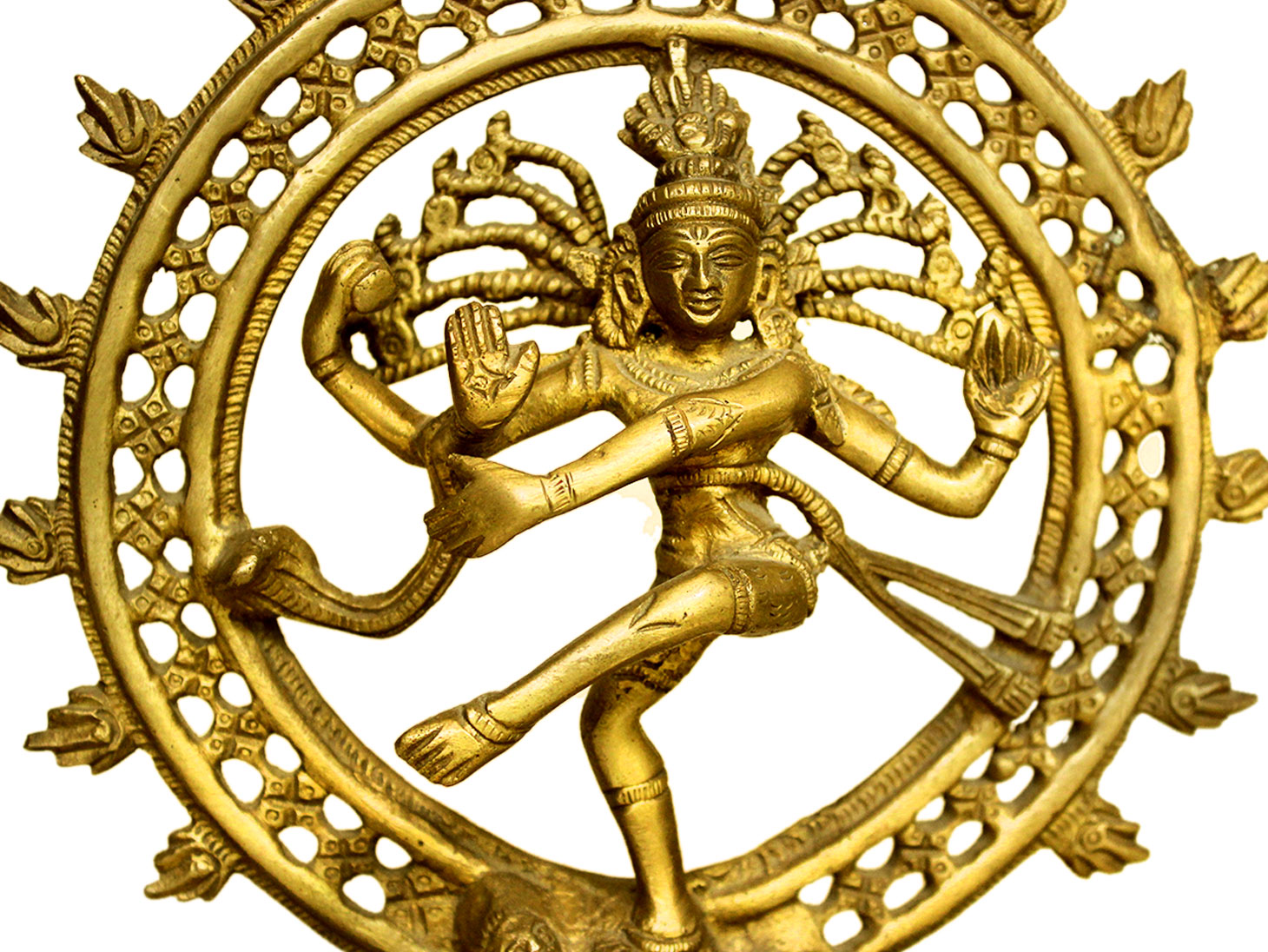
Nritya is an integral part of Indian culture
The social and religious life of human beings cannot remain untouched by dance. Since the Vedic period, dance has maintained an enduring bond with the Indian psyche. The significance of *nritya* has been extolled through a Sanskrit verse thus:
यो नृत्यति प्रहृष्टात्मा भावैरत्यन्तभक्तितः स निर्दहति पापानि जन्मान्तरगतैरपि ।।
That is, one who dances with a joyful heart, with reverent devotion and pure sincerity, burns away the sins accumulated across a hundred lifetimes.
Not only this, our sacred texts, works of *kavyashastra* (treatises on poetics), and even the Vedas are replete with the glory of dance.
There is a verse in the Rigveda:
"अधि-पेशॉसि वपते नूतूरिव..."
That is, just as a female dancer assumes manifold forms through her bodily gestures, so does Ushas, the dawn, adorn herself in varied hues in the eastern sky.
The graceful flourishes of dance and the enchanting glances of dancers, rare even among the gods, have captivated our poets as well...
The poet Keshav says:
"नूपुर के सुरन के अनुरूप ता नै लेत पग तल ताल देत अति मन भायौ री ।.."
Meaning: O friend, he derived immense delight in matching his steps to the chime of the anklets and clapping to the rhythmic beat.
Vidyapati goes far ahead in defining *nritya*. He says:
डम-डम डम्फ डिमिक डिम मादल,रून-झुन मँजिर बोल किँकिन रन रनि बलआ कनकनि,निधुबन रास तुमुल उतरोल।
While grasping its full import is difficult for me, as far as I can comprehend, he says: amidst the beat of the *damru* and the sweet chime of the cymbals, the heart is enraptured by Krishna's *rasa* dance resonating through every grain of earth and sand.
 .
In Hindi cinema, during the threshold of our adolescence, we once developed crushes watching the dance of Meenakshi Seshadri and Madhuri Dixit.
Today's film dance evokes only revulsion... bizarre, vulgar dances—salsa, lewd writhing, clingy contortions—God knows what else.
Today's dance has devolved into a circus... it bears less the influence of Bharata Muni and more that of Vatsyayana. Increasing mental ailments, these 'dances' threaten to make the next generation sick. What purpose remains for dramatic arts today? Bharata Muni must be wondering:
दु:खार्तानां श्रमार्तानां शोकार्तानां तपस्विनाम् विश्रान्ति जननं लोके नाट्यमेतद् भविष्यति... (This theatre shall be the source of rest and solace in the world for those stricken with sorrow, worn by toil, afflicted with grief, and devoted to penance...)
Apologists and those who peddle such dancing can offer any number of arguments. Fair enough—what is the yardstick for judging the greatness of any art? Who will decide whether one form of art is superior to another? The debate over whether classical arts are superior to folk arts, and whether folk arts are closer to the ordinary person's life than classical arts—if observed closely, all these debates are baseless, hollow, and unnecessary.
The fruit of *nritya* was joy;
The fruit of 'dance' is physical injury and depression.
A very beautiful verse comes to mind from the *Natya Sangraha*:
यतो हस्तस्ततो दृष्टिः यतो दृष्टिस्ततो मनः। यतो मनस्ततो भावो यतो भावस्ततो रसः॥
Where the hand moves, the glance follows; where the glance goes, the mind follows; where the mind goes, *bhava* arises; where *bhava* arises, *rasa* is born... This alone is the mystery of *nritya*!
From Waheeda Rehman, Madhubala, Asha Parekh, Hema Malini, Sadhana, and that actress who danced to the song "Honthon Mein Aisi Baat Main Daba Ke Chali Aayi" (whose name escapes me), down to Meenakshi Seshadri and Madhuri Dixit—
this alone constitutes the golden history of dance in Hindi cinema.
The point to be understood is that while most artists before them hailed from courtesan backgrounds, these women established their own dignity in films, setting high standards of morality.
Then there are today's heroines: coming from respectable families, they portray characters akin to prostitutes. In the name of dance, they flaunt their hips and cleavage, executing movements that mimic sexual intercourse.

Are we to accept now that the golden age of classical dance is nearing its end?
Must we now accept bared thighs, thrusting chests, and the erratic gyration of waists and buttocks as dance?
अर्थातुराणाम न सुह्रिन्न बन्धु: - कामातुराणाम न भयं न लज्जा चिंतातुराणाम न सुखं न निद्रा - क्षुधातुराणाम न बलं न तेजः। (For those afflicted by greed, there is neither friend nor kin; for those afflicted by lust, neither fear nor shame; for those afflicted by anxiety, neither comfort nor sleep; for those afflicted by hunger, neither strength nor vitality.)
If you wish to ruin a nation, the cheapest and simplest way is to inflame lust in its children from their very childhood.
And this work is being carried out with meticulous dedication by the media, cinema, television, and foreign rulers masquerading in native skin.
Pardon me, but your cinematic dance is not art (*kala*)—it is a dark blot (kaala)!!
- Dr. Madhusudan Upadhyay, the author is a deep scholar of Indian culture, history, art, dharma (righteous cosmic order), and spirituality.
Read Also,
Social and Economic Implications of Beauty Pageants
Cite this article
Dr Madhusudan Upadhyay. “Pardon me, your filmy dance is not art; it is darkness”. YugSamvad, 18 October 2026. https://yugsamvad.com/en/articles/kshamaa-keejiegaa-aapakaa-philmee-daansa-kalaa-naheen-kaalaa-hai
https://yugsamvad.com/en/articles/kshamaa-keejiegaa-aapakaa-philmee-daansa-kalaa-naheen-kaalaa-hai · accessed
Related reading
Thirst of Western Propaganda Apparatus and Hindu Awakening
Church-controlled media has played a major role in preventing the true character and nature of India from reaching the Christian populace or the Western world. Having achieved complete success through the nineteenth and twentieth centuries, this apparatus had become exceedingly brazen and a "character maker". The Western propaganda apparatus possessed church-driven vas...
23 October 2026 · 4 min read

There will no longer be bank scams like the PMC Bank scam
The initial objective of cooperative banks in India has been to provide small loans to rural and remote areas as well as to economically weaker urban populations, and to keep them free from usurers and middlemen. Due to this distinct nature of cooperative banks, their regulation was different from commercial banks. People
23 October 2026 · 3 min read

Why Opposition's Allegation Of GST Law Violation Is A Lie
The Comptroller Auditor General in its report has said that there was short crediting to the Fund of the GST Compensation Cess collections totalling to Rs 47,272 crore during 2017-18 and 2018-19. This short-crediting was a violation of the GST Compensation Cess Act, 2017. Opposit
26 September 2020 · 3 min read