YugSamvad · Jyotish
JyotishRajasthan's Only Surya Siddhantic Shri Sarveshwar Jayaditya Panchang Is Published
Yug Samvad Desk · English edition 23 October 2026 · Hindi original 13 April 2021 · 6 min read
Humble Submission - Shri Nimbarka Parishad
It is respectfully informed that by the infinite grace of our revered deities Thakur Shri Govinddev Ji and Thakur Shri Sarasbihari Ji, Rajasthan's sole panchang (traditional almanac) based on the ancient calculations of the Surya Siddhanta (ancient astronomical treatise), the Shri Sarveshwar Jayaditya Panchang, is being published from Jaipur by the Shri Nimbarka Parishad starting this year, Samvat (traditional era) 2078.
For some time now, differences of opinion have surfaced regarding the method of panchang computation, and because panchangs are constructed using varying computational methods, confusion arises among the general public concerning vrata (vows), upavasa (fasts), and parva (festivals/auspicious occasions). In Jaipur, the nation-renowned solar panchang, continuously published for nearly two and a half centuries based on ancient arsha (rishi-tradition) calculation, held high the flag of dharma (righteous order) even at a time when the modern calculations of new almanac-makers had begun a trend where every festival fell on two separate days. When proponents of modern Drik-ganita (observational astronomy) declared the Surya Siddhanta obsolete and insisted that only Drik-ganita-based panchangs were acceptable, thereby bypassing all dharmic and scriptural tenets, even the sole Surya-Siddhantic panchang published from Jaipur was forced to abandon solar calculation. This incident was truly shocking.
Scholars releasing the Shri Sarveshwar Jayaditya Panchang at the Central Sanskrit University, Jaipur Campus
The sole assertion made by advocates of observational astronomy in favor of their theory is that their calculations make planetary observation directly visible to the eye. Their assertion brings to mind the story of Pitamaha Bhishma performing the shraddha (rites for the ancestors) of his father Shantanu, when his father's hand physically appeared to accept the pinda-dana (offering of rice balls during ancestor rites). Bhishma recognized that the hand belonged to his father. Yet, bypassing his father's hand, Bhishma offered the pinda onto the kusha (sacred grass) alone, because such is the command of shastra (scriptural treatise): "Pindo deyah kushoshviti" (The pinda must be given upon kusha grass). Shantanu was immensely pleased with his son Bhishma's unwavering devotion to shastra.
It is clear that scripture-based discernment of dharma and adharma is subtle and unseen (adrishta); similarly, the true proof of jyotisha (Vedic astronomy/astrology) lies in its phaladesha (astrological predictions), not in the physical position of planets. Scripture ordains the drik-karma sanskara (observational correction) solely for observing planets, not for determining tithi (lunar day) and other limbs of the almanac. Observational correction is to be applied only in udayasta (heliacal rising and setting), shringa (lunar horns), and grahana (eclipse). Our elders were not lacking in discernment when they used Surya-Siddhantic panchangs until recently, nor are modern panchang-makers so self-controlled that their calling the Surya Siddhanta calculations a delusion should be accepted.
For determining vrata, parva, and dharmic ritual duties, only calculations based on the Surya Siddhanta are admissible. The entirety of scriptural lore is strewn with proofs of this. In the Matsya Mahapurana, Skanda Mahapurana, and Narada Purana, Bhagavan Vedavyasa, Madhavacharya Vidyaranya, Brahmagupta, the author of Nirnaya Sindhu and Siddhanta Tattva Viveka Kamalakara Bhatta, Shakalya Samhita, Kala Nirnaya, Bhaskaracharya, Vasanakara, Nrisimha Daivajna, Vishnu Dharmottara Purana, Kalarka, Jyotish Siddhanta Sangraha, Lalla, Munjala, Dharma Samrat Swami Shri Karpatriji Maharaj, Mahamahopadhyaya Pandit Sudhakar Dwivedi, and all other scriptures and luminaries of jyotisha have revered Surya-Siddhantic mathematics as equal to the Veda. This matter has been affirmed in this panchang in a detailed, evidence-rich article by Pandit Gangadhar Pathak Ji, the chief priest of the Shri Ram Janmabhoomi Shilapujan and scholar of the Vedas and numerous subjects, whose name needs no introduction.
Meanwhile, when even the sole solar panchang published from Jaipur began using Drik-ganita, a pang remained in the hearts of those devoted to the shastras as to how this darkness of ignorance could be dispelled. When the Shri Nimbarka Parishad came to know that Acharya Shri Vinay Jha Ji—a resident of Darbhanga, deeply versed in the Vedas, Vedangas, and Surya Siddhanta, a stellar scholar and supreme ascetic—has conducted extensive research into eternal solar-side calculations, and that panchangs are published from Kashi, Darbhanga, and many other places using his computations, the Parishad submitted this matter to him. Out of compassion, through the Akhil Bharatiya Vidvat Parishad, Kashi, he performed the precise solar-side astronomical calculations suited to the latitude of Jaipur for the panchang.
In this task, the General Secretary of the Akhil Bharatiya Vidvat Parishad, Kashi, master of all shastras, and knower of the esoteric principles of jyotisha, Acharya Shri Kameshwar Upadhyay Ji, provided inspiration and continuous guidance from the very beginning. Throughout the dharmic and astrological essays of the panchang, he has thoroughly established its scriptural authenticity. This panchang is adorned by his scholarly writings. Upon receiving the planetary calculations from Acharya Shri Vinay Jha Ji, Pandit Shri Saket Jha and colleagues, with the constant support of Pandit Shri Govind Dwivedi Ji, brought the panchang into shape in a remarkably short time—such labor would be impossible without deep dharmic devotion, for there were several moments when it seemed that this task might not materialize at all. Yet, through tireless effort, concrete form was given to this glorious endeavor.
Deliberating on the subtle elements of the panchang during the Panchang Editing Workshop, from right: Prof. Mohan Lal Sharma, Prof. Shyamdev Mishra, Prof. Satish Chandra Shastri, Prof. Vijendra Sharma, Dr. Amit Tiwari, Dr. Neeraj Trivedi, and Dr. Rameshwar Sharma
The calculations for the panchang were secured and its structure was prepared, but without determining its vrata, parva, festivals, and muhurta (auspicious time), what meaning could a panchang hold? However, Acharya Shri Mohan Lal Sharma Ji, scholar of nigama-agama (Vedic and Agamic literature) and dharma shastra and expert in karmakanda (ritualistic rites), formulated the action plan after consulting Prof. Arkanath Chaudhary Ji, the karma-yogi Director of the Central Sanskrit University, Jaipur Campus who is ever devoted to cultural preservation, and the highly senior scholar of jyotisha on whose tongue the shastras reside, the insightful daivajna (astrologer) Pandit Shri Satish Chandra Shastri Ji.
The task of determining the vrata, parva, festivals, and muhurtas was undertaken under the able leadership of Prof. Shri Shyamdev Mishra Ji, Head of the Department of Jyotisha at Central Sanskrit University, Jaipur, who is ever eager in initiatives for promoting learning. The department's Assistant Professors, Senior Teachers, and Research Scholars—Shri Vijendra Sharma Ji, Shri Rameshwar Dayal Sharma Ji, Shri Neeraj Trivedi Ji, Shri Bhojraj Sharma Ji, and Shri Amit Tiwari Ji—continuously verified and edited this momentous work, treating it as service to Lord Shri Sarveshwar, which is truly commendable. Honorable Shri Shachindra Nath Upadhyay Ji rendered invaluable contributions to this panchang in service of solar calculations, treating the work as his own.
Pt. Amit Sharma, President of Shri Nimbarka Parishad, Jaipur, honoring Prof. Arkanath Chaudhary, Director of Central Sanskrit University, Jaipur Campus, with a shawl and a shrifal (coconut)
In conclusion, it is said that half the task is accomplished the moment a formal sankalpa (solemn resolve) is taken. Thus, this auspicious resolve born in the heart of revered Pandit Shri Amit Sharma Ji—grieved by the decline of dharma—and his rigorous exertion with body, mind, and resources, now bears fruit by the unmerited grace of Lord Shri Sarasbihariji for the delight of scripture-abiding devotees of dharma.
Presenting this "Shri Sarveshwar Jayaditya Panchang" before all scholars and noble souls devoted to dharma, we humbly request you to bestow your blessings upon this maiden effort. May lovers of dharma observe the vrata, parva, and festivals according to this panchang approved by the dharma shastras to attain the fruit of righteousness. Whatever is excellent in this panchang is the contribution of scholars bestowed by the graceful prasada (offering) of Lord Shri Sarveshwar, while any errors due to inadvertence are ours alone, which can only be rectified through the cooperation of you all and the grace of Lord Shri Sarveshwar. We bow at the holy feet of Shri Sarveshwar Jayaditya Lord Shri Krishna and Shri Jayaditya Lord Shri Suryanarayana...
विश्वरूप जयादित्य जय विष्णो जयाच्युत। जय केशव ईशान जय कृष्ण नमोऽस्तु ते।। - Varaha Purana / Chapter 169 / Verse 23 (Victory to Jayaditya of universal form, victory to Vishnu, victory to Achyuta! Victory to Keshava, Ishana, victory to Krishna; salutations unto You!)
जयादित्य जय स्वामिञ्जय भानो जयामल।
जय वेदपते शश्वत्तारयास्मानहर्पते।।
-- Skanda Purana / Section 1 / Chapter 51 / Verse 54
(Victory to Jayaditya, victory O Lord, victory O Bhanu, victory O immaculate one! Victory to the Lord of the Vedas, O Lord of the Day, deliver us forever!)
‘Shri Sarveshwar Jayaditya Panchang’ Released at Central Sanskrit University, Jaipur
Panchang Editing Workshop Organized at Central Sanskrit University, Jaipur
2078 'Rakshasa' Named Samvatsar Alone is Scriptural
Samvat 2078 is Rakshasa Samvatsar, Confirmed by Akhil Bharatiya Vidvat Parishad, Kashi
Why and When is Kumbha Held in Prayag, Haridwar, Ujjain, and Nashik?
A personal consultation on this subject: write for a consultation
Cite this article
Yug Samvad Desk. “Rajasthan's Only Surya Siddhantic Shri Sarveshwar Jayaditya Panchang Is Published”. YugSamvad, 23 October 2026. https://yugsamvad.com/en/articles/raajasthaana-kaa-ekamaatra-sooryasiddhaanteeya-shreesarveshvara-jayaaditya-panchaanga-prakaashita
https://yugsamvad.com/en/articles/raajasthaana-kaa-ekamaatra-sooryasiddhaanteeya-shreesarveshvara-jayaaditya-panchaanga-prakaashita · accessed
Related reading
How is Om correctly pronounced?
The *Ashtadhyayi* (Panini's foundational Sanskrit grammar) (1.2.34) states that "except for *japa* (muttered recitation), *nyunkha* (a specialized prolonged chanting of the syllable 'O'), and *sama* (melodic Vedic chanting), *ekashruti* (monotone recitation) may be employed in *yajna-karma* (sacrificial ritual performance)." When a long "Om" (or short "u" or "o") has to be appended to any *veda-mantra* (Vedic hymn), that "Om" is called "*nyunkha*". *Ekashruti* means reciting by treating all accents as a single tone.
18 October 2026 · 2 min read
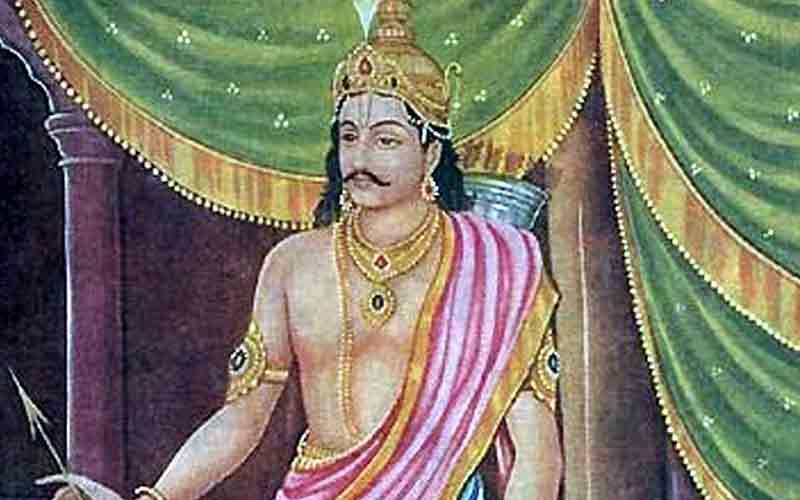
Yudhishthira's Dyuta: The Esoteric Vedic Akshavidya
It is wrong to call Dharmaraja Yudhishthira a gambler. How many times in his life did Dharmaraja Yudhishthira play dyuta (the traditional game of dice)? How many times must one play to be called a vyasani (addict)? It is also wrong to call dyutavidya (the science of dice) gambling. Why did Dharmaraja Yudhishthira have to learn dyutavidya from a rishi (seer)? Why was no teacher to be found other than a rishi? Shaku...
18 October 2026 · 1 min read
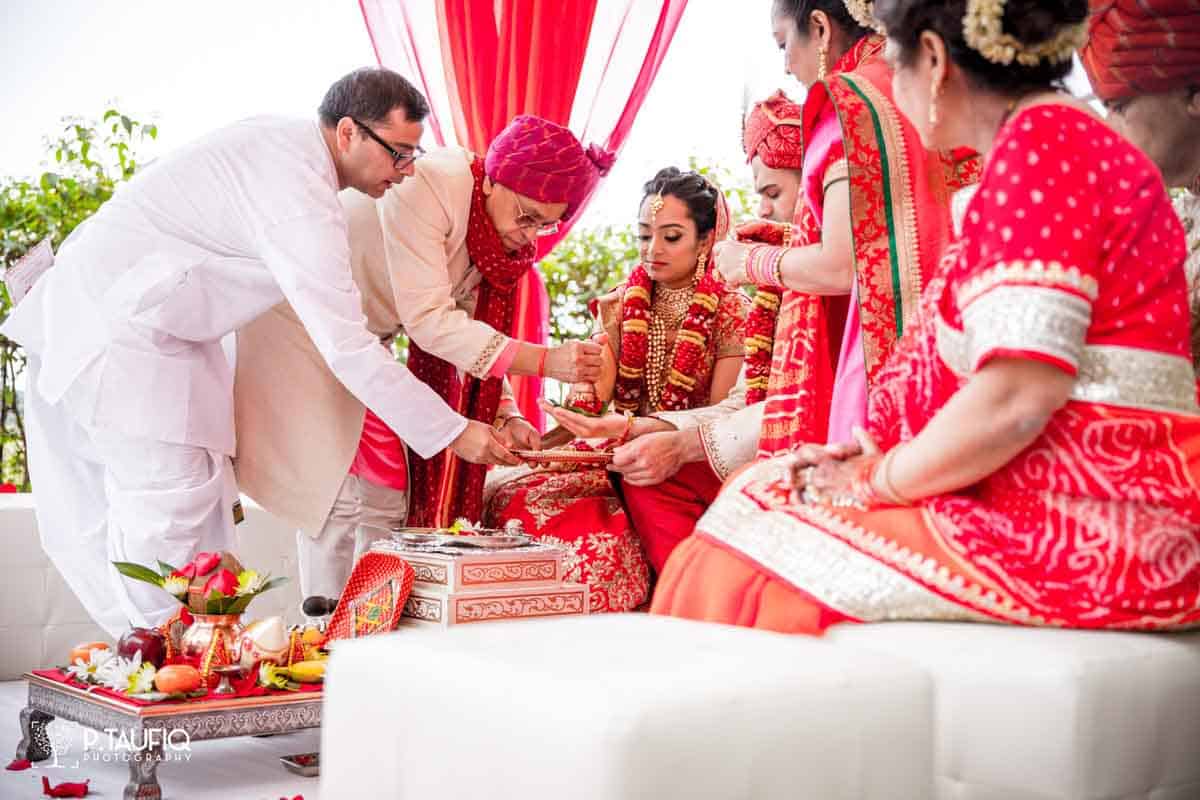
Be It Kanyadaan or Vardaan: What Is Wrong with It?
Is *kanyadan* (the ritual offering of the bride) merely charity? Why is *kanyadan* performed, and is it an insult to women? Understand the true meaning of *kanyadan* in the Hindu *vivaha sanskara* (marriage sacrament), along with its cultural and Vedic significance. Read the authentic exposition of *vardan* (boon) versus *kanyadan*, the mystery of *Brahma vivaha* (the Brahma form of marriage), and a definitive response to the fallacies that seek to misrepresent Hindu traditions.
18 October 2026 · 5 min read