YugSamvad · Sanskrit & Shastra
Sanskrit & ShastraSati Pratha Was Fictional and Never Prevalent Among Hindus
प्रवक्ता · English edition 18 October 2026 · Hindi original 29 July 2017 · 3 min read
Proving that the practice of Sati was a fictional practice and was never in vogue among Hindus will not take more than 30 seconds.
How?????
Look, the word Sati is derived from the Sanskrit root *sat* (being/truth), meaning truth or truthful. In the context of women, Sati means a true wife or a faithful wife.
Recall the story of Sati Anusuya, in which she turned Brahma, Vishnu, and Mahesh into infants. Anusuya was no magician. She turned the three deities into infants through the power of her *satitva* (virtue and chastity of a faithful wife). This means that Anusuya was a Sati while being alive, yet Christian missionaries and leftist historians propagated that among Hindus, a wife who died by burning on her husband's funeral pyre was called a Sati. Whereas according to the actual meaning of the word Sati, any faithful "living" wife can be called a Sati.
Another example is Savitri, who restored her husband to life from Yamraj on the strength of her *satitva*. This means Savitri was also a Sati while living. Ahilya and Mata Sita were also Satis, but neither of them committed self-immolation by fire.
Madri has been portrayed as a Sati by Ambedkarites in several articles, whereas the truth is something else. Durvasa had cursed Pandu that the day he engaged in coitus with his wife, he would die on that very day. Pandu therefore kept a distance from his wives because he did not want to die; but one day, Madri emerged unclad after bathing in the river, and upon seeing her, Pandu lost his self-control and mated with Madri, following which Pandu passed away. Madri committed suicide considering herself responsible for Pandu's death, which Bhimtas and Christians falsely propagated as the Hindu practice of Sati.
Shiva's wife also did not perform Sati; rather, as a result of a quarrel, she committed suicide by jumping into an *agnikunda* (sacred fire pit). Had Mahadev died, that Sati jumped into the fire? There were many widows in history, but none committed self-immolation. Ravana's widow Mandodari, and Shri Ram's three mothers were widows, but they did not commit self-immolation. Before the arrival of the British, Shivaji's mother Jijabai, despite being a widow, did not commit self-immolation either.
In Rajasthan, women of Kshatriya (warrior class) Rajput families committed suicide out of grief over their husbands killed in war, which was limited only to royal families—meaning even the women of ordinary Kshatriyas did not commit self-immolation. There is no evidence in history that women of Brahmins and Vaishyas (merchant class) ever observed this so-called Sati practice, yet by portraying it as a custom of all Hindus in history, Hindu society has been maligned. Hindus too go around saying in their defense that the practice of Sati existed in the past, but does not happen anymore. Whereas they should be saying that the practice of Sati never existed at all.
The mention of Sati is not found in any book of Hindu dharma (righteous conduct/duty), not in any Veda (sacred scriptures), nor in Manusmriti (ancient code of law). So much negativity against Hindu dharma has been deliberately spread under the 2000-year-old Joshua Project so that Hindus feel ashamed of their religion and abandon Hindu dharma, making their conversion to Christianity easier. All devout Hindus at present are in a psychological battlefield; the enemy wants to destroy Hindu society and dharma, and in this psychological warfare, our greatest weapon to defeat the enemy will be our "knowledge".
- Praveen Yadav
Cite this article
प्रवक्ता. “Sati Pratha Was Fictional and Never Prevalent Among Hindus”. YugSamvad, 18 October 2026. https://yugsamvad.com/en/articles/satee-prathaa-eka-kaalpanika-prathaa-thee-aura-kabhee-bhee
https://yugsamvad.com/en/articles/satee-prathaa-eka-kaalpanika-prathaa-thee-aura-kabhee-bhee · accessed
Related reading
Suicidal Flaws in Countering Sarvadharmasamabhava
Over the past 90 years, the rise of the politics of Muslim appeasement has caused immense damage to Indian culture. By equating 'Ali, Maula, Allah' with Ishvara (the Supreme Godhead), pseudo-secularism has paralyzed our core spiritual and cultural consciousness. Even from a definitional perspective, 'religion' and 'mazhab' (confessional faith) are distinct from dharma (righteous duty and cosmic order)—
18 October 2026 · 8 min read
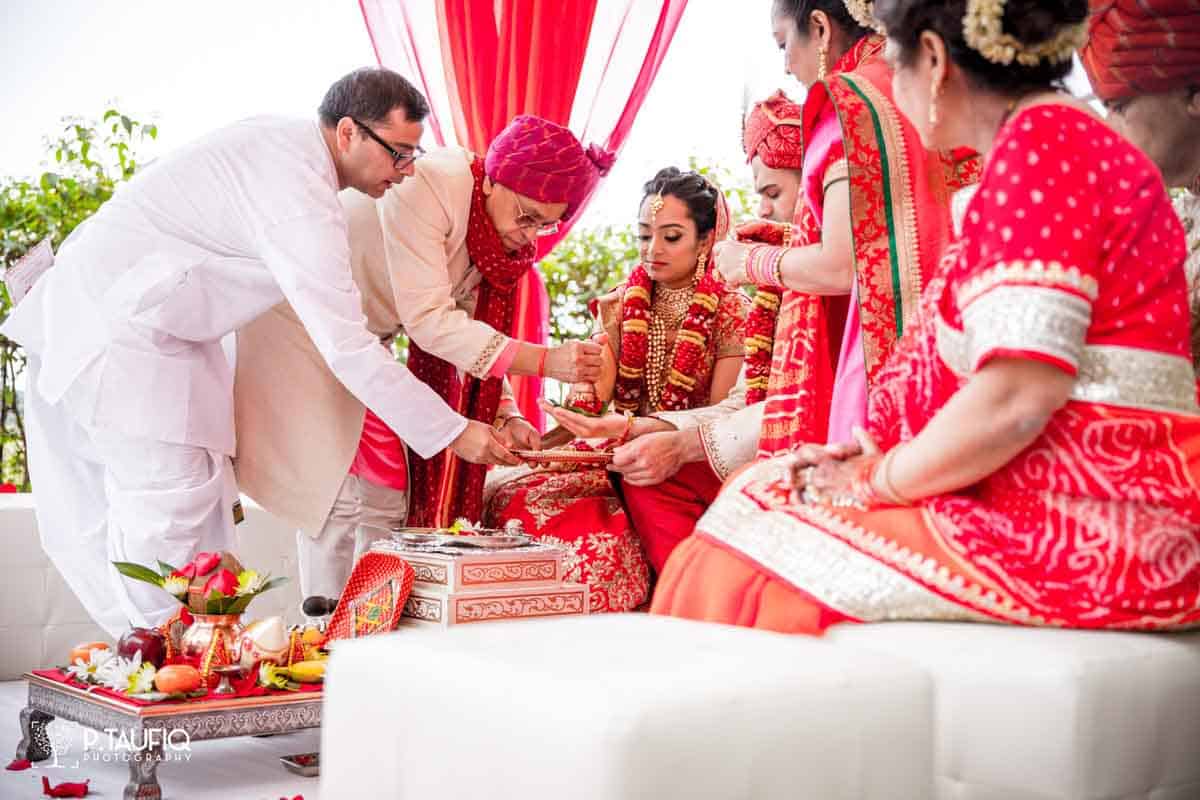
Be It Kanyadaan or Vardaan: What Is Wrong with It?
Is *kanyadan* (the ritual offering of the bride) merely charity? Why is *kanyadan* performed, and is it an insult to women? Understand the true meaning of *kanyadan* in the Hindu *vivaha sanskara* (marriage sacrament), along with its cultural and Vedic significance. Read the authentic exposition of *vardan* (boon) versus *kanyadan*, the mystery of *Brahma vivaha* (the Brahma form of marriage), and a definitive response to the fallacies that seek to misrepresent Hindu traditions.
18 October 2026 · 5 min read