
YugSamvad · Dharma & Culture
Dharma & CultureWhat Signifies the Triveni in Prayagraj?
Nityānanda Miśra · English edition 17 September 2026 · Hindi original 18 January 2019 · 2 min read
Prayaga, the site of the ongoing Ardha Kumbha Mela, is the place of what is called the ‘triveni’ (‘triveṇī’,त्रिवेणी). Where does this word come from? Let us first see what two ‘authentic’ foreign dictionaries say on this word.
Wilson Sanskrit-English dictionary (1832): त्रि three, वेणी a braid of hair, the name is especially applied to the river at Allahabad, ...
Monier-Williams Sanskrit-English dictionary (1899): ‘triple-braided’, the place of confluence (Prayāga, now Allāhābād) of the Ganges with the Yamunā (Jumnā) and the subterranean Sarasvatī
So as per Horace Hayman Wilson and Sir Monier Monier-Williams, the word ‘veni’ in ‘triveni’ means “a braid of hair”. Does it make sense? Do we see three braids of hair at Prayaga? Absolutely not.

Now let us see what two ‘authentic’ Indian dictionaries say on this word.
Shabdakalpadruma Sanskrit-Sanskrit dictionary: तिस्रो वेण्यः वारिप्रवाहा वियुक्ताः संयुक्ता वा यत्र (“where there are three ‘veṇī’s, i.e. streams of water, detached or united”)
Vachaspatya Sanskrit-Sanskrit dictionary: तिस्रः वेणयः प्रवाहाः विच्छिन्नाः संयुक्ता वा यत्र (“where there are three ‘veṇi’s, i.e. streams of water, separated or united”)
The Indian sources say that ‘veni’ (वेणी) in ‘triveni’ (त्रिवेणी) means “a stream of water”. This makes complete sense, as Prayaga has the confluence of streams of water (rivers) and not hair. The word ‘veni’ means both “a braid of hair” (as per Amarakosha) and “water stream” (as per Hemachandra’s kosha (lexicon)). But in the word ‘triveni’ (त्रिवेणी), it means “water stream” alone and not “braid of hair”.
Conclusion: ‘triveni’ (त्रिवेणी) means “having three water streams” and not “triple braided”.
Once, I used to blindly trust Monier Monier-Williams’ Sanskrit-English dictionary. I no longer do. I have not used much of Wilson’s dictionary. But this example (and I have many others also) show that these sources cannot be blindly trusted. We need to cross-check and verify them. I say this not because they were foreigners writing on Indian topics, but because my experience tells me so. In fact, writings of many right-wing Indians (e.g. Sahana Singh) are poor quality and hardly reliable at all.
Original Article can be read HERE.
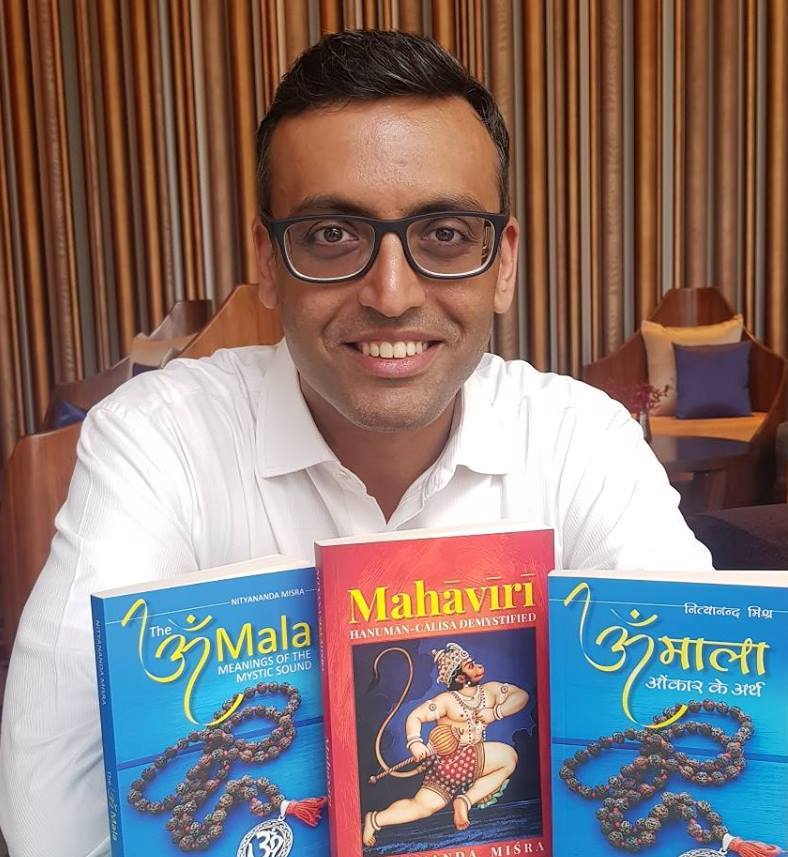
Nityānanda Miśra is a renowned author based in Mumbai. Born in Lucknow, Misra is an MBA from IIM Bangalore. He writes on Indian literature, arts, and music. His famous books are Kumbha, The Om Mala(English & Hindi), and Mahaviri. He has edited and authored eleven books in Sanskrit, Hindi, and English.
Also Read,
KNOW THE MATHEMATICS OF THE KUMBHA MELA.
It is not easy to understand the meaning of the word ‘teertha’ (sacred pilgrimage site). Why is Prayaga Teertharaja?
Why and when is the Kumbha held in Prayaga, Haridwar, Ujjain, and Nashik?
Cite this article
Nityānanda Miśra. “What Signifies the Triveni in Prayagraj?”. YugSamvad, 17 September 2026. https://yugsamvad.com/en/articles/what-signifies-the-triveni-in-prayagraj
https://yugsamvad.com/en/articles/what-signifies-the-triveni-in-prayagraj · accessed
Related reading
Determining the Jati of Shabari – Acharya Gangadhar Pathak
'Shri Ram's Devotee Shabari Was Not a Bhilni, But a Brahmani' Author: Pandit Gangadhar Pathak ‘Vedadyacharya’ Chief Acharya – Shri Ram Janmabhoomi Shila Pujan, Ayodhya Advisor: Shri Sarveshwar Jayaditya Panchang (traditional almanac), Jaipur Conducting the shilanyas (foundation stone laying) of the Shri Ram Janmabhoomi Temple in Ayodhya with Prime Minister Shri Narendra Modi m
18 October 2026 · 1 min read
Suicidal Flaws in Countering Sarvadharmasamabhava
Over the past 90 years, the rise of the politics of Muslim appeasement has caused immense damage to Indian culture. By equating 'Ali, Maula, Allah' with Ishvara (the Supreme Godhead), pseudo-secularism has paralyzed our core spiritual and cultural consciousness. Even from a definitional perspective, 'religion' and 'mazhab' (confessional faith) are distinct from dharma (righteous duty and cosmic order)—
18 October 2026 · 8 min read