YugSamvad · Dharma & Culture
Dharma & CultureYudhishthira: Sovereign Emperor and Builder of Hindu Rashtra
Mudit Agrawal · English edition 13 September 2026 · Hindi original 1 September 2021 · 13 min read
As controversies regarding Yudhisthira and others are often seen, we must look into the Mahabharata itself to determine whether Yudhisthira and the other Pandavas were inherently powerful and embodiments of dharma (righteousness), or whether, as per modern propaganda, they were merely dependent on the mercy of Shri Krishna. Since the rishis repeatedly call him Dharmaraj, their words cannot be false. In the spiritual realm, certainly, not just the Pandavas but all beings are dependent on Krishna, but here one must also examine the inherent strength of the Pandavas in the material world. All the Pandavas, including Yudhisthira, were partial incarnations of the devatas (deities). Bhagavan Shri Krishna was not a fool to have remained on the side of the Pandavas. How colossal must be the stature of the one on whose side Krishna stands.
There are thousands of instances of Yudhisthira's greatness throughout the Mahabharata. Krishna's greatness cannot be established by demeaning the Pandavas. The subjects of Hastinapur themselves wanted from the bottom of their hearts to make Yudhisthira the king. It is mentioned in (Adi Parva, Ch-140) that whenever the subjects of Hastinapur gathered at any assembly or crossroads, they would praise Yudhisthira's truthfulness, compassion, learning, and virtues, and swear oaths to make him king. Hearing this, a jealous Duryodhana ran to complain to Dhritarashtra.
In Indian history, Yudhisthira's world conquest is the true focal point of the history of Bharat. Before the Rajasuya yajna (royal consecration sacrifice), under Yudhisthira's direction, the Pandavas had conquered the entire globe through their own valor.
Arjuna defeated all the countries, kings, and robbers of the North in fierce battle, including Pulinda, Kalakuta, Anarta, Prativindhya, Shakaldvipa, Pragjyotishpur, Kirata, China (modern China), the mlecchas (foreign barbarians) of the sea islands, Trigiri, Uluka, Vrihanta, Paurava, Kashmir, mountain robbers, Trigarta, Kokanada, Chola, Vahlika, Kamboja, and the bandits of the northeast. Implementing the policy of rajagrahan mokshanugrah, karadanagyakaran pranamagaman (conquering the kingdom, granting mercy by releasing them, commanding them to pay tribute, and accepting their submission), he defeated them, reinstated them on their thrones, and collected taxes.
Bhima went to the East and defeated Panchala Ahichhatra, Dasharna, Kosala, Kashi, Matsya, Malada, Vatsa, the Bhargas, the Nishadas, Malla, Sharma, Varma, the Shakas, the Barbaras, the Kiratas, the Dandakas, and Angaraj Karna, and by his policy and valor, conquered all the mlecchas of the sea and brought them under his subjugation.
Sahadeva brought Bhoja, Pandya, Mahishmati, Dravida, Kerala, Andhra, the Yavanas, the Kalamukha rakshasas (demons), Kolagiri, the mlecchas, the Nishadas, and Lanka in the South under his control through his intellect, combat skills, and astuteness.
Nakula subjugated Marwar, Shivi, Trigarta, Ambashtha, Malava, Abhira, Punjab, Rahath, the Shakas, the Hunas, the mlecchas, the Kiratas, the Yavanas, and the Barbaras in the West.
Thus, when all the kings of the four directions bowed their heads before the martial skill, policy, and valor of the Pandavas, the sole sovereign emperor, the lion among kings, Dharmaraj Yudhisthira, established a Hindu Rashtra from the earth to the oceans. This is why the hearts of all the vidharmis (those opposed to dharma) and adharmis (the unrighteous) would be torn apart upon seeing the glory of King Yudhisthira. When the Rajasuya yajna was performed to take the oath of universal chakravartitva (universal sovereignty), every single king brought gifts for him, either out of joy or compulsion. Under his liberal rule, not a single person was unhappy, which is why the subjects rejoiced in a public-welfare-oriented Ram Rajya.
Torn apart by the gifts received by Emperor Yudhisthira and the wealth of his empire, Duryodhana weeps and complains to Dhritarashtra across two whole chapters, saying, "Neither Rantideva, nor Nabhaga, nor Manu, nor Prithu, nor Bhagiratha, nor Yayati, nor Nahusha were emperors endowed with such opulence as Yudhisthira is today. Seeing all this, my staying alive is pointless." (Mahabharata, Sabha Parva, Ch-53)
Estimate the stature of that Emperor Yudhisthira before whom the entire world had bowed its head. No matter how capable the commanders, ministers, and others may be, if the emperor lacks radiance, all of them are rendered inferior. It was this very Yudhisthira who was adorned in the Mahabharata with hundreds of epithets like Dharmaputra, Dharmaraj, Dharmatma, Dharmavatsala, Nityadharma, Mahapragya, Mahabaho, Mahamana, Parantapa, Purushavyaghra, Rajashardula, Bharatabhushana, etc., by everyone from the supreme kings of that time, Bhagavan, and the rishis, down to the village children and elders.
An adharmi like Karna was defeated dozens of times by Arjuna alone. After that, the Mahabharata is filled with indelible accounts of how many times Karna roamed around hiding his face after being defeated by Bhima, Yudhisthira, Satyaki, and others. Karna's so-called world conquest was merely the recapture of kingdoms previously conquered by the Pandavas, done in their absence after they had been sent into exile. As stated above, the Pandavas had already brought the entire world under their authority and assumed the title of Chakravarti.
As for Yudhisthira's addiction to dyuta (gambling), it may be true that he had an affinity for it, as there are such indications in the Mahabharata, but he always tried to maintain a proper distance from it. Moreover, the decree of destiny is the most powerful. The circumstances under which he had to play dyuta were inevitable. Shakuni called him a lover of dyuta several times (Sabha Parva, Dyuta Parva, Ch-48), but even if we do not believe Shakuni's cunning words, Arjuna himself called Yudhisthira an addict of dyuta twice in the 70th chapter of the Karna Parva. This is the episode where Arjuna insults Yudhisthira in accordance with Krishna's command to fulfill a vow. The condition here was only to insult him, not to speak untruths; had Yudhisthira not had the slightest love for gambling, Arjuna would never have stigmatized him by calling him a dyuta addict twice.
Hurt by Arjuna's statement and burning in the fire of atonement, Yudhisthira begins to condemn himself, cursing himself for being attached to a sinful addiction. Certainly, apart from this single vice of gambling, there could be no other flaw in Yudhisthira's most pristine character. Today, Dharmaraj was openly accepting his sole weakness.
The shastras (scriptures) mention 438 types of kalas (arts), but 64 of these are principal. A king should be proficient in as many of these 64 kalas as possible. The 8th kala among these is "dyuta". Stealing and acquiring knowledge related to courtesans are also included in the 64 kalas. At that time, dyuta was a principal science, which is why the shastra said, "आहूतो न निवर्तेत द्यूतादपि रणादपि" (When challenged, one must not retreat from either gambling or battle). It was very prevalent then, and it was because of this injunction that Yudhisthira agreed to the dyuta, as he stated several times in the Mahabharata. Dyuta was as common as hunting, hence it was also natural for a king; otherwise, Shri Krishna would not have given it such importance in the Gita by calling Himself dyuta among acts of deceit.
Once, having withdrawn from the dyuta, they had all reached Indraprastha when Dhritarashtra's invitation to play gambling arrived again. Then Yudhisthira, considering destiny to be supreme and the destruction of the Kuru lineage and the entire world to be inevitable, threw himself into gambling once more. At that time, Vaishampayana said, "An animal's body is never made of gold, yet Shri Ram was lured by it; similarly, being near his downfall, Yudhisthira's intellect has become perverted today." Knowing Shakuni's maya (illusion/deceit), he still set out to gamble. Even Bhishma, Drona, Vidura, Kripacharya, Sanjaya, the Pandavas, Gandhari, Draupadi, and Ashvatthama were stopping Yudhisthira, but captivated by maya, he did not step back from the gambling. Certainly, if the king's command was the only thing that mattered, all these learned elders would not have stopped him.
But now observe: partly the world-bewitching maya, partly the momentary illusion of ego born from a semblance of dharma, thirdly the suppressed craving of the subconscious mind, and most importantly, the command of King Dhritarashtra—who was the elder brother of his father and thus a father figure—along with the shastric injunction not to retreat from either battle or dyuta; all these dragged Yudhisthira and seated him at the gambling table. A single move by Shakuni turned the emperor into a forest dweller. In the light of kshatradharma (the duty of a warrior), it was Hastinapur that committed a sin by extending and approving the invitation to dyuta, not Indraprastha. Dhritarashtra himself had forbidden withdrawal from the gambling act as long as any property remained. Disobeying the command of his father's elder brother, who was even higher than a father, was impossible for Yudhisthira, or else, according to the rules of dyuta, the execution of him and his brothers would have become legally justified. In reality, the absolute Bhagavan Shri Krishna, who calls Himself dyuta among acts of deceit in the Gita, was Himself orchestrating this inevitable game of gambling here to make the wicked Kauravas commit an unforgivable sin, thereby setting the stage for the epoch-changing great war of the Mahabharata, from which no one could retreat even if they wanted to.
Yudhisthira did not previously have mastery over dyuta, but he certainly wanted to master it. He got this opportunity as soon as he went to the forest; in the 79th chapter of the Vana Parva, Yudhisthira requests Sage Brihadashva to teach him the true secret of the science of dyuta. The sage imparts the science of dyuta to Yudhisthira.
Yudhisthira was Dharmaraj/Yamaraj; he was Harishchandra in a previous life. Due to a wrong deed, he received the curse of Maharishi Durvasa, which is why both Harishchandra and Yudhisthira suffered great hardships. Maharaja Harishchandra also had to sell his wife and son. Vidura, who was another embodiment of Dharmaraj, also became a Shudra due to a curse received for insulting a rishi in a previous life. Therefore, in Yudhisthira's dharma-filled, ascetic life, dyuta is just like the spot on the face of the moon; one must accept that even Indra, Chandra, and others had flaws. Questions are even raised about Maryada Purushottam (Shri Ram). But this does not diminish Yudhisthira's honor; he was the manifest idol of dharma. Vedavyasa himself has called him the tree of dharma.
But under any circumstance, the character assassination of the Pandavas is wrong. They are among the highest symbols of dharma. From Afghanistan to the island of Java, the footprints of the Pandavas are scattered. Despite being emperors, uniting person to person, caste to caste, and king to king, walking on thorns themselves, they accomplished an unprecedented world conquest of the entirety of Bharat, the likes of which has never been seen before or since. They visited every single tirtha (pilgrimage site) across Bharat and assimilated every pore of Bharat. Even today, there is hardly a single tirtha where there is no temple, kunda (pond), or place associated with the Pandavas. They bathed in 500 east-flowing rivers alone; what to speak of the count of other rivers. By performing yajna and tarpan (offerings to ancestors) at every tirtha, they made the Vedic boundaries unbroken throughout Bharat. While other kings were engrossed in royal luxuries, a single rajarshi (royal sage) Yudhisthira remained the center of hope for the suffering Indians of every village and forest. He himself feared sin, adharma, bloodshed, and sorrow, but to erase these from the lives of others, he burned like a lamp himself. There was only one emperor who was beloved of the gods; the power of the entire world had bowed its head before Chakravarti Yudhisthira, and his enemies used to be shamed by his magnanimity. It is his purushartha (human effort/valor) that became and remains the focal point of Indian history. At the time of his departure to the forest, the subjects followed Yudhisthira, abandoning all concern for food and wealth, just as they did during Shri Ram's departure to the forest. Then, an empire-protector like Yudhisthira worshipped Surya to obtain the Akshaya Patra (inexhaustible vessel) for their nourishment. Because the brahmanas had declared that Duryodhana's vast earth was as good as nothing, and they would live with Yudhisthira even without food. This is the same thing said for Shri Ram: where Shri Ram resides, even the forest becomes a kingdom, and where he is not, even a kingdom becomes a jungle.
Vedavyasa bestowed upon Yudhisthira the divine Vedic Pratismriti Vidya (science of recall); through this science, the entire world could be seen at once. Upon mastering it, Yudhisthira initiated Arjuna into this vidya, thereby also becoming Arjuna's guru, and sent Arjuna, Bhima, and others to accumulate power through various sciences and divine weapons. His erudition in the Yaksha Prashna, his choosing the life of his stepmother's son, his renunciation of heaven for a dog, etc., are well known. Emperor Yudhisthira was the only personality in the world whom the commander of the enemy side trusted, saying, "If Dharmaraj says that Ashvatthama is dead, I will believe it." Such a thing is not seen anywhere else in the world. Due to the power of his truth, Dharmaraj's chariot used to move four fingers above the earth, which sank down due to a single half-truth.
Even Shri Krishna used to bow his head before Dharmaraj; he always offered pranam (respectful salutation) to Yudhisthira, he always supported Yudhisthira's essence of dharma, and in the world, Shri Krishna praised Yudhisthira the most. During the exile, rishis and munis like Shaunaka, Dhaumya, Lomasha, Vyasa, and Markandeya would come and discuss dharma with Yudhisthira. Brahmagyani (knowers of Brahman) brahmanas always followed Rajarshi Yudhisthira even in the forest. Yudhisthira belongs to the same category of rajarshi as Maharishi Janaka. The Pandavas, too, considering Shri Krishna as the absolute Brahman, were ready to sacrifice their lives for him. The Pandavas did not have the slightest pride in their strength, valor, or learning; everywhere they openly used to say, "You are the one doing it, Kanhaiya, but my name is being glorified."
In the Gita, Bhagavan has called Arjuna extremely dear by saying 'इष्टोsसि मे' (You are dear to me, 18.64) and has described Himself as Arjuna's most beloved by saying 'प्रीयमाणाय' (To you who are beloved, 10.1). Bhagavan Shri Krishna has called Arjuna 'Mahabaho' 13 times and 'Parantapa' 8 times. In the end, the Gita says, "यत्र योगेश्वरो कृष्णो यत्र पार्थो धनुर्धरः। तत्र श्रीर्विजयो भूतिर्ध्रुवा नीतिर्मतिर्मम।" (Wherever there is Yogeshvara Krishna and wherever there is Partha the archer, there are opulence, victory, prosperity, and firm policy; this is my conviction). That is, opulence, victory, prosperity, and policy are only where both Krishna and Arjuna are present. Both are incomplete without each other. The Pandavas are in all of us; their dilemmas, their doubts, their problems are everyone's personal problems; their struggle is everyone's internal war. That is why Bhagavan gave the teachings of the Gita through Arjuna. In the entire history of Bharat, not a single saint, rishi, etc., has condemned the Pandavas.
In this world, the most pristine of characters have been struck by mud. Even Maryada Purushottam himself was not spared, so what to speak of Yudhisthira. Amidst all this, there is only one who remains as pure as a lotus even when mud is slung at him, who gives refuge to mutually opposing dharmas, yet is beyond both of them, and therefore remains detached from the illusory intellectual play of dharma and adharma, because he reveals the essence of dharma even through the inclusion of alleged adharma. Then, all the dharmis and adharmis, astonished, begin to prostrate before him. Therefore, he has detached himself from the worldly expressions of being pristine (white), and has declared himself by name as "Krishna" (the dark one). Now, no matter how much filth of your "white" notions you throw at him, his self-luminous "Krishnatva" (Krishna-nature) remains untouched, because the light of another is artificial and limited, but his darkness in the form of blackness is the subtlest, natural, and all-pervading ultimate cause. That very "Krishna"...
Every form of the world resides in the life of Shri Krishna.
When Bhagavan Shri Krishna praised Bhishma Pitamah!
Historicity and authenticity of Shrimad Bhagavat and other Puranas
The birth of a hundred Kauravas from pots in the eyes of modern science
Cite this article
Mudit Agrawal. “Yudhishthira: Sovereign Emperor and Builder of Hindu Rashtra”. YugSamvad, 13 September 2026. https://yugsamvad.com/en/articles/yudhishthira-saarvabhauma-digvijayee-hindooraashtra-nirmaataa-samraata
https://yugsamvad.com/en/articles/yudhishthira-saarvabhauma-digvijayee-hindooraashtra-nirmaataa-samraata · accessed
Related reading
How is Om correctly pronounced?
The *Ashtadhyayi* (Panini's foundational Sanskrit grammar) (1.2.34) states that "except for *japa* (muttered recitation), *nyunkha* (a specialized prolonged chanting of the syllable 'O'), and *sama* (melodic Vedic chanting), *ekashruti* (monotone recitation) may be employed in *yajna-karma* (sacrificial ritual performance)." When a long "Om" (or short "u" or "o") has to be appended to any *veda-mantra* (Vedic hymn), that "Om" is called "*nyunkha*". *Ekashruti* means reciting by treating all accents as a single tone.
18 October 2026 · 2 min read
Yudhishthira's Dyuta: The Esoteric Vedic Akshavidya
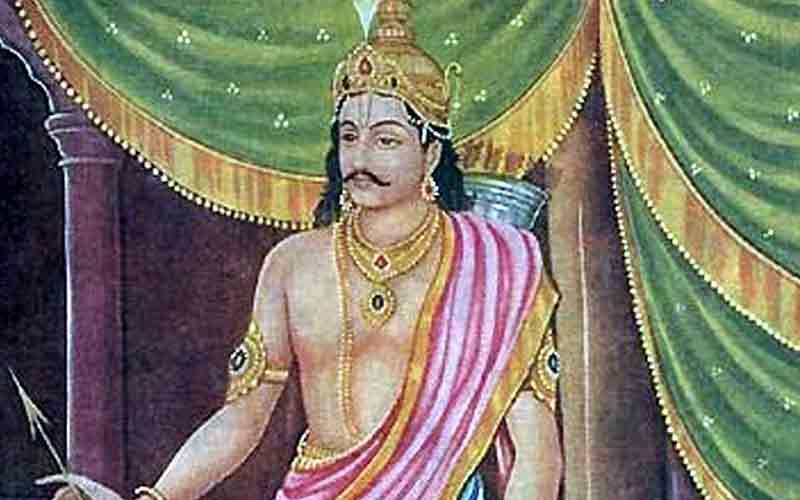
It is wrong to call Dharmaraja Yudhishthira a gambler. How many times in his life did Dharmaraja Yudhishthira play dyuta (the traditional game of dice)? How many times must one play to be called a vyasani (addict)? It is also wrong to call dyutavidya (the science of dice) gambling. Why did Dharmaraja Yudhishthira have to learn dyutavidya from a rishi (seer)? Why was no teacher to be found other than a rishi? Shaku...
18 October 2026 · 1 min read
Be It Kanyadaan or Vardaan: What Is Wrong with It?
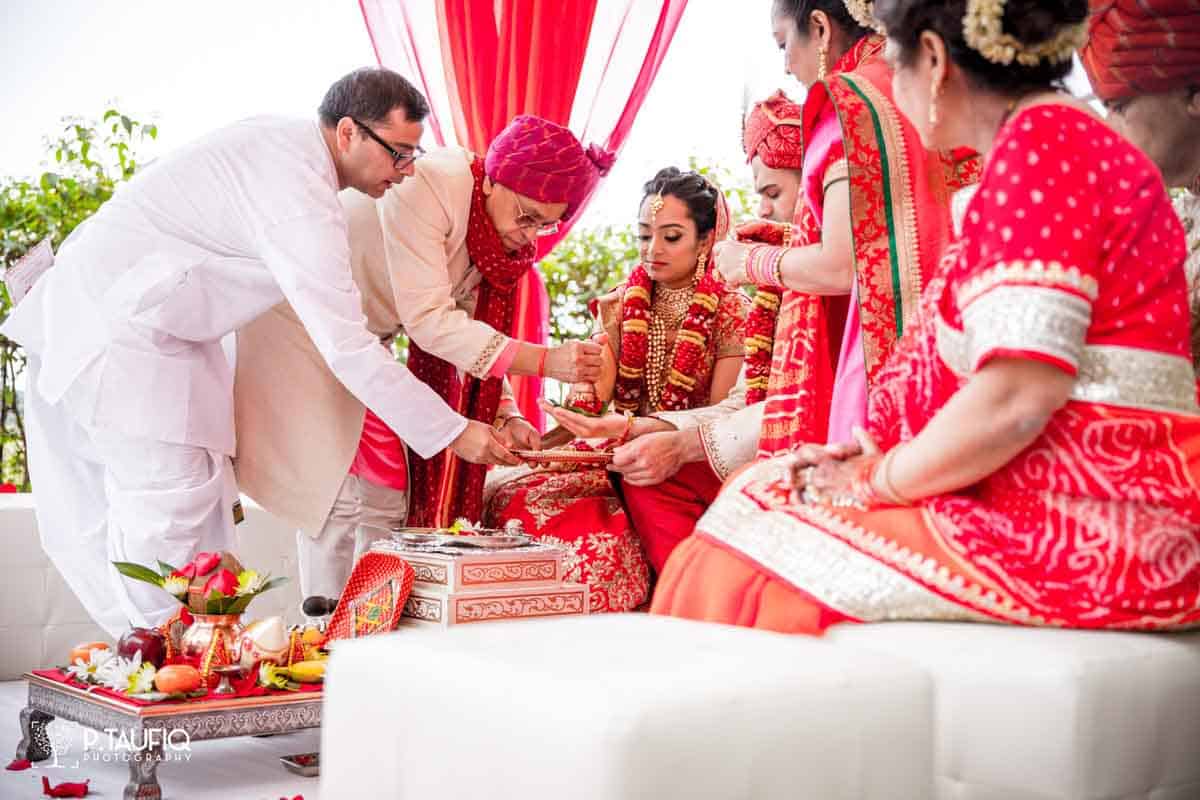
Is *kanyadan* (the ritual offering of the bride) merely charity? Why is *kanyadan* performed, and is it an insult to women? Understand the true meaning of *kanyadan* in the Hindu *vivaha sanskara* (marriage sacrament), along with its cultural and Vedic significance. Read the authentic exposition of *vardan* (boon) versus *kanyadan*, the mystery of *Brahma vivaha* (the Brahma form of marriage), and a definitive response to the fallacies that seek to misrepresent Hindu traditions.
18 October 2026 · 5 min read