YugSamvad · Politics & History
Politics & HistoryArya Ashfaqulla Khan – An Unexplored Aspect of His Life
विशाल अग्रवाल · English edition 23 October 2026 · Hindi original 26 October 2017 · 4 min read
October 22 marks the birth anniversary of the immortal martyr Ashfaqullah Khan, a resplendent nakshatra (star) in our nation's constellation of revolutionaries. A close friend of the immortal martyr Ram Prasad 'Bismil', this hutatma (sacrificial martyr) played a pivotal role in the Kakori incident. The British regime prosecuted him, and on December 19, 1927, he kissed the hangman's noose with a smile in Faizabad jail, sacrificing his life for the nation.
Ashfaqullah Khan was born on October 22, 1900, to Mohammad Shafiqullah Khan and Mazharunnisha Begum in the Kadankhel Jalalnagar locality near the railway station in Shahjahanpur, Uttar Pradesh. Through his elder brother Riyasatullah, who was a classmate of Bismil, he came into contact with Ram Prasad Bismil. A mutual love for poetry drew them together, and a profound love for the nation forged an unbreakable bond between them when Ashfaqullah Khan became an active member of Bismil's revolutionary organization, Matrivedee.
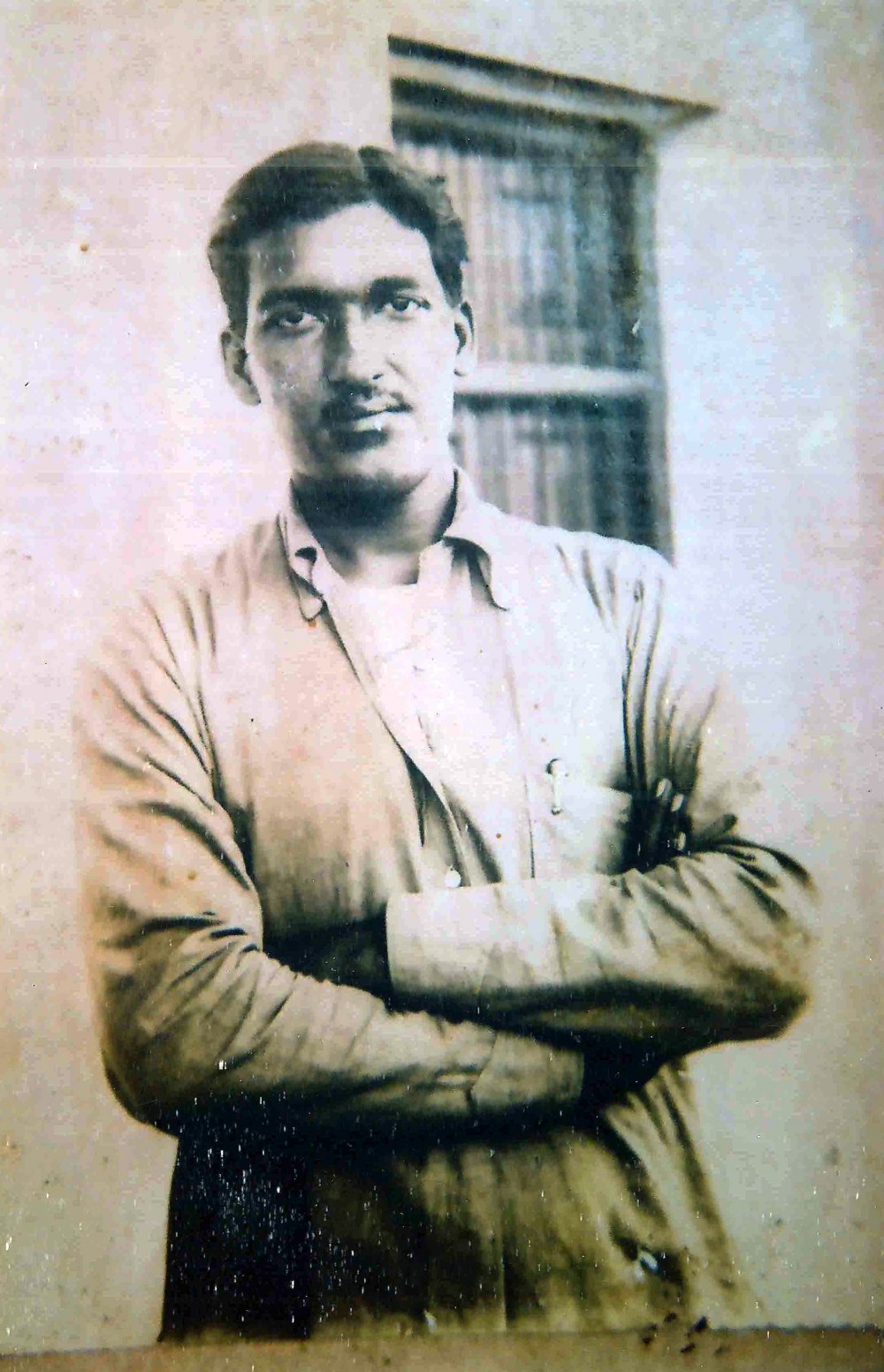
From here began a new philosophy in his life, and alongside being a poet, he became a devoted servant of the nation. Following the founding of the Hindustan Republican Association in 1925, Jogesh Chandra Chatterjee, a member of its central executive committee, designated Ashfaq as Bismil’s deputy (lieutenant), placing the responsibility for the province upon their shoulders. When two foremost leaders, Sachindra Nath Sanyal and Jogesh Chandra Chatterjee, were arrested in Bengal, the entire weight of the Hindustan Republican Association fell upon Bismil's shoulders; and to arrange funds, Bismil devised a plan to loot the government treasury.
During the looting of the government treasury in the Kakori incident, when the sturdy iron safe could not be broken open by anyone, Ashfaq handed his Mauser pistol to Manmath Nath Gupta, seized a sledgehammer, and struck the safe with all his might. As Ashfaq smashed the safe open, everyone witnessed a display of his steely strength. Had the safe resisted a little longer and the police or military arrived from Lucknow, numerous lives would have been lost in the clash; and history would have given that Kakori incident an entirely different name.
On the night of September 26, 1925, when simultaneous arrests were carried out across the country, Ashfaq eluded the police net and went underground, but was eventually apprehended. Despite manifold efforts, the death sentence could not be averted, and on December 19, 1927, he was sent to the gallows. Like Ram Prasad Bismil, Ashfaqullah Khan was also an accomplished poet of the Urdu language. His Urdu takhallus (pen name) was 'Hasrat'. In addition to Urdu, he frequently wrote essays and poems in Hindi and English. Would that the Muslim community of this nation drew inspiration from hutatmas like Ashfaqullah Khan—the very landscape of this country would have been transformed.
The fiery poet of Shahjahanpur, the late Agnivesh Shukla, penned this poignant poem, clothing in the beauty of Hindi verse the tempest of emotions surging within Ashfaqullah Khan's heart and mind as he spent his final night before execution in the dark dungeon of Faizabad jail:
जाऊँगा खाली हाथ मगर,यह दर्द साथ ही जायेगा; जाने किस दिन हिन्दोस्तान,आजाद वतन कहलायेगा। बिस्मिल हिन्दू हैं कहते हैं, फिर आऊँगा-फिर आऊँगा; ले नया जन्म ऐ भारत माँ! तुझको आजाद कराऊँगा।। जी करता है मैं भी कह दूँ, पर मजहब से बँध जाता हूँ; मैं मुसलमान हूँ पुनर्जन्म की बात नहीं कह पाता हूँ। हाँ, खुदा अगर मिल गया कहीं, अपनी झोली फैला दूँगा; औ' जन्नत के बदले उससे, यक नया जन्म ही माँगूँगा।।
(I shall depart empty-handed, yet this anguish shall go with me;
Who knows on what day Hindustan will be called a free motherland.
Bismil is a Hindu; he says, "I shall return again and again;
Taking a new birth, O Mother India, I shall set you free!"
My heart yearns to say the same, yet I am bound by my creed;
I am a Muslim, I cannot speak of punarjanma (rebirth).
Yet if I meet Khuda anywhere, I shall spread out my hem;
And in exchange for Jannat, I shall ask Him only for a new birth!)
Ashfaqullah Khan foresaw well in advance that following their martyrdom, only the Liberal party—that is, the Congress—would rise to power in India, and the sacrifices of ordinary revolutionaries like them would be consigned to oblivion, preserving only the epitaphs of rulers. That is why he prophesied the present state of affairs as early as 1927 in this qat'a (quatrain):
जुबाने-हाल से अशफाक की तुर्बत ये कहती है, मुहिब्बाने-वतन ने क्यों हमें दिल से भुलाया है? बहुत अफसोस होता है बडी़ तकलीफ होती है, शहीद अशफाक की तुर्बत है और धूपों का साया है!
(In the mute language of circumstance, the grave of Ashfaq cries out:
Why have the lovers of the motherland erased us from their hearts?
Profound is the grief, agonizing is the pain—
Here lies the grave of the martyr Ashfaq, sheltered only by the blazing sun!)
Millions of reverent salutations and humble homage to this great hutatma...
– Vishal Agarwal (The author is a profound scholar of Indian history and culture, and an educationist. The author's Rashtra Aradhak series on great Indian luminaries is essential reading.)
Read also,
Do You Remember the Sacrifice of Swami Shraddhanand?
Rash Behari Bose: Founder of the Azad Hind Fauj, Who Hurled a Bomb at Viceroy Hardinge
Benoy Krishna Basu, Who Slew Two British 'IG' Officers
Madan Lal Dhingra, Who Went to London and Shot a British Officer Dead
When the University of Calcutta Shuddered at the Bullets Fired by a Maiden
Any Last Wish, Bhagat Singh? "If Only I Could Meet Chacha Ji Once!"
Cite this article
विशाल अग्रवाल. “Arya Ashfaqulla Khan – An Unexplored Aspect of His Life”. YugSamvad, 23 October 2026. https://yugsamvad.com/en/articles/aarya-ashafaaqa-ullaa-khaan-jeevana-kaa-acharchita-paksha
https://yugsamvad.com/en/articles/aarya-ashafaaqa-ullaa-khaan-jeevana-kaa-acharchita-paksha · accessed
Related reading
Brihaspati Stotra
Brihaspati Stotra Salutations to Shri Ganesha. Of this Shri Brihaspati Stotra, Gritsamada is the rishi (seer), Anushtup is the chhandas (metre), Brihaspati is the devata (presiding deity); the viniyoga (ritual application) is recitation for propitiating Brihaspati. गुरुर्बृहस्पतिर्जीवः सुराचार्यो विदांवरः । वागीशो धिषणो दीर्घश्मश्रुः पीताम्बरो युवा ॥ 1 ॥ Guru, Brihaspati, Jiva, preceptor of the suras (gods), foremost among the wise; lord of speech, embodiment of intellect, possessing a long beard, robed in yellow garments, youthful. (1) सुधादृष्टिर्ग्रहाधीशो ग्रहपीडापहारकः । दयाकर Whose glance is nectar, sovereign among the grahas (planets), dispeller of planetary afflictions, compassionate...
23 October 2026 · 1 min read
The Meaning of Medha, Kautuhala, Jigyasa and Herd Mentality
*Medha* (intellect) and the Herd “He who protects *dharma* (righteousness/cosmic order), *dharma* protects him.” The meaning of *dharma* is Vedic *yajna* (sacrificial ritual), that is, the *karma-kanda* (ritual section) of the Vedas. There are ten characteristics of *dharma* — *dhriti* (fortitude), *kshama* (forgiveness), *dama* (self-control), *asteya* (non-stealing), *shaucha* (purity), *indriya-nigraha* (sensory control), *dhi* (intellect), *vidya* (knowledge), *satya* (truth), and *akrodha* (absence of anger). But these are merely characteristics on the basis of which we can recognize that a particular...
18 October 2026 · 8 min read