YugSamvad · Dharma & Culture
Dharma & CultureAyurveda: The Veda of Ayu, a Complete Disease-Free System
श्रीसर्वेश्वर जयादित्य पंचांग · English edition 18 October 2026 · Hindi original 11 June 2021 · 15 min read
Author: Acharya Vasudev Mishra Veda Scholar
यत्रौषधीः समम्मत राजानः समितािवव । विप्रः स उच्यते भिषग् रक्षोहामीवचातनः ॥ Rigveda 10-97-6
Just as a king sits in battle amidst his soldiers, the scholar who is well-versed in the eight branches of surgery (shalya) and the science of the pulse (nadi-vigyan), and who gathers various medicines and establishes himself with them, is called a bhishak (physician). Just as a king protects the subjects from the tyranny of the wicked, a bhishak brings well-being to the people by alleviating the pain caused by disease. (The bhishak does not have control over death, just as victory and defeat are not under a king's control; that rests solely in the hands of the Lord.)
Subject of Ayurveda
Ayus (lifespan) is the instrument for achieving the three purusharthas: dharma, artha, and kama. But what is this ayus? The continually moving, living, encompassing time is called ayus (इ॒ण् गतौ). The coexistence of the body, senses, mind, and soul is called ayus. The sense-joined mind, soul, and body form a tripod (like a tripod). If one does not exist, the others cannot exist either. The five great elements (panchamahabhutas), soul, mind, time, and space are the nine dravyas (substances). The substance endowed with senses is conscious (chetana). The substance devoid of senses is unconscious (achetana). Sound, touch, form, taste, and smell are the vishayas (objects of the senses). Heavy, light, cold, hot, unctuous, dry, mild, sharp, stable, mobile, soft, hard, clear, slimy, dense, smooth, gross, subtle, viscous, and liquid—these are the twenty gunas (qualities). Action achievable through effort is called karma or cheshita. It is the cause of combination (sanyoga) and separation (vibhaga).
The manifestation of physical creation takes place through the varying proportions of the three gunas: sattva, rajas, and tamas—this is a scientific principle, and anyone who objects may debate us in shastrartha. Akash (space) is predominantly sattva. Vayu (air) is predominantly rajas. Agni (fire) is predominantly sattva and rajas. Ap (water) is predominantly sattva and tamas. Prithvi (earth) is predominantly tamas. In the body—which is made of the panchamahabhutas—there are the respective characteristics of smell, moisture, cooking/transformation (paka), structural arrangement (vyuha), and space. However, smell alone, through inherent relation (samavaya-sambandha), is the material cause (upadana-karana) of the body. The other four elements are instrumental causes (nimitta-karana). By their differentiations, there are 8.4 million species of bodies. Among these, 900,000 types are aquatic, 2 million types are plants/immobile (sthavara), 1.1 million types are worms/insects, 1 million types are birds, 3 million types are animals, and 400,000 types are humans.
Among the panchamahabhutas, the body serving as the locus of enjoyment is predominantly of the earth (parthiva) element, one of whose characteristics is **bishtabhakatva** (opposition to structural collapse or dispersal). Akash is inactive. Among the other elements, the modification of water is called **kapha**, the modification of fire is called **pitta**, and the modification of air is called **vata**. When the objects of the senses (sound, touch, form, taste, smell) undergo improper contact (ayoga), excessive contact (atiyoga), or false/unnatural contact (mithyayoga) with their respective senses (ear, skin, eye, tongue, nose), they become asatmya (unwholesome) and create disorders, turning into doshas. **Asatmya-indriyartha-sannikarsha** (excess, too little, or unnatural exposure of senses to their objects), **parinama** (time evolution like seasonal effects or age factor), and **prajnaparadha** (doing something while knowing it is wrong)—these three are the causes of all diseases (causes of all diseases). Diseases and health manifest by taking shelter in the body and mind. Health is termed happiness (sukha). Disorder is the cause of sorrow. Physical disease is called **vyadhi**, and mental disease is called **adhi**. Vyadhi is created by the unwholesomeness of vata, pitta, and kapha, while adhi is created by the unwholesomeness of the rajas and tamas gunas. Sattva has 8 (or 7) divisions, rajas has 7 divisions, and tamas has 3 divisions. The effects of attachment, aversion, etc., fall upon the body and mind, producing anxiety, delusion, and restlessness (arati), which in turn generate disorders. The equilibrium of vata, pitta, and kapha is the cause of health, the methodology of which is to be discussed.
Health is termed happiness. Disorder is the cause of sorrow. Physical disease is called **vyadhi**, and mental disease is called **adhi**. Vyadhi is created by the unwholesomeness of vata, pitta, and kapha, while adhi is created by the unwholesomeness of the rajas and tamas gunas.
Numerous diseases arise from the unwholesomeness of vata, pitta, and kapha. Among them, **80 diseases of vata, 40 of pitta, and 20 of kapha** are principal.
Necessity of Ayurveda (Ayurveda Prayojanam)
Life (the union of prana-vayu with the body), death (the destruction of the union of prana-vayu with the body), sleeping, waking, disease, becoming free from illness through the application of medicine, the adherence to one's kind, the acceptance of favorable things, and the shunning of unfavorable things—these are some of the natural properties of the body. Happiness or sorrow arises in the body through the acquisition or avoidance of other objects. Always and in all conditions, the equilibrium (coexistence of **sadharmyas**) of all dravyas, gunas, and karmas is the cause of growth. Their unequal state (coexistence of **vaadharmyas**) isaray is the cause of decay. All the dhatus (tissues/humors) of the body are carriers of equilibrium. When those dhatus attain imbalance, the body suffers affliction or destruction. That association with sorrow is called vyadhi. These can be **agantu** (from external sources), **sharira** (genetic), **manasika** (mental), or **svabhavika** (by natural processes like aging). To bring the vitiated dhatus back to a state of equilibrium across all types of bodies is the purpose of Ayurveda. Vrikshayurveda (horticulture/dohada), Hastyayurveda, Ashvayurveda, Vrishayurveda, etc., are sub-branches of Ayurveda.
Relation (Sambandha)
The treatment of **vyadhi** is performed through rational means utilizing gems, mantras, and medicines. The treatment of **adhi** is performed through knowledge, science, patience, memory, and samadhi. Dry, light, cold, subtle, mobile, clear, rough—these are the qualities of vata. The application of opposing qualities pacifies vata disorders. Slightly unctuous, warm, sharp, liquid, sour, mobile, pungent—these are the qualities of pitta. The application of opposing qualities pacifies pitta disorders. Heavy, cold, soft, unctuous, sweet, slimy, stable—these are the qualities of kapha. The application of opposing qualities pacifies kapha disorders. By considering place, time, and dosage, and applying medicines possessing qualities opposite to vata, etc., if a vata-induced disease is curable, health is restored. However, if the disease is incurable, a special knowledge of qualities and actions is necessary—such as nidana (etiology/causes), purvarupa ( prodromal symptoms), rupa (manifest symptoms), upashaya (palliation/favorable application of medicines, food, and regimen counteracting the cause), and samprapti (pathogenesis/lateral spread of vitiated vata, etc., to other locations). Ayurveda describes precisely those special qualities and actions.
In **vata disorders**, one should administer foods containing sweet, sour, hot, and salty tastes, along with unction (snehana), sweating/fomentation (svedana), asthapana (decoction enemas), anuvasana (oil enemas), nasal administration (nasya), oil massage (abhyanga), udtadana (friction massage), and pouring medicated liquids over the body (parisheka). In **pitta disorders**, one should administer foods containing astringent, bitter, and sweet tastes, along with purgation (sramsana/virechana), drying treatments, external poultices (pradeha), parisheka, abhyanga, and immersion baths (avagaha). In **kapha disorders**, considering dosage and time, one should administer foods containing astringent, pungent, and bitter tastes that are dry and warm, along with snehana, svedana, emesis (vamana), head purgation (shiro-virechana), and exercise. Ayurveda
Originally, Ayurveda was a single shastra of 1,000 chapters, divided into **6 sthanas** (sections) and **8 angas** (branches), which is taught to every bhishak. These are:
Sthanas (Sections)
Sutrasthana, Nidanasthana, Vimanasthana, Sharirasthana, Indriyasthana, Chikitsasthana (Agnivesha). Or – Sutrasthana, Nidanasthana, Sharirasthana, Chikitsasthana, Kalpasthana, Uttarasthana (Dhanvantari). Or – Sutrasthana, Vimanasthana, Sharirasthana, Indriyasthana, Chikitsasthana, Kalpasthana (Kashyapa). Or – Annapanam, Arishtasthana, Chikitsasthana, Kalpasthana, Sutrasthana, Sharirasthana (Atri).
Angas (Branches of Ayurveda)
- Shalya (Surgery: removal of foreign bodies or vitiated substances from the body through the use of instruments, surgical tools, caustic alkalis (kshara), and fire, along with treatment for the diagnosis of wounds. The treatment of 107 vital marmasthanas located in the body also falls under this – surgery etc. as taught to Sushruta by Dhanwantari).
- Shalakya (Treatment of diseases located above the collarbone such as ears, nose, throat, eyes, mouth, etc. – ENT, Eye and dentistry).
- Kayachikitsa (General Medicine: treatment of systemic diseases affecting the entire body such as fever, rakta-pitta (bleeding disorders), consumption/shosha, tuberculosis (yakshma), insanity (unmada), epilepsy (apasmara), skin diseases including leprosy (kushtha), prameha, diabetes (madhumeha), and diarrhea – General Medicine for symptoms arising out of malfunction of the body, like fever, impurities of blood, dehydration, TB, Epilepsy, Leprosy, diabetes, Diarrhea, etc., as taught to Charaka by Agnivesha).
- Grahavesha Chikitsa (Bhoota Vidya / Demonic/Microbial Afflictions: disorders whose root causes are not visually apparent (लक्ष्यन्ते केवलं शास्त्रचक्षुषा – infections arising out of bacteria and virus), and diseases arising from non-human causes (unmada, apasmara, etc.), which are termed grahavesha. Constant crying in children is a prodromal symptom of grahavesha).
- Kaumara Bhritya (Pediatrics as espoused elaborately by Ravana).
- Agada Tantra (Actions for the pacification of disorders arising from the combination of various stationary (sthavara) and mobile (jangama) poisons – Treatment for poisons).
- Rasayana Tantra (Treatments for maintaining youthfulness, increasing lifespan, intellect, and physical strength, and enhancing disease-resistance power – Rejuvenation and Immunization).
- Vajikarana Tantra (Treatments to increase virility in men who are naturally or due to specific causes deficient in semen, for purifying semen vitiated by vata, etc., for increasing semen in men whose semen has dried up due to old age, and for generating sexual excitement in intercourse – Sexual arousal and stimulation).
Adhikari (Eligibility / Qualities to get the knowledge) –
A person of noble birth, religious, pleasant countenanced, blessed with good assistants, calm, free from greed, straightforward, faithful, grateful, free from anger, harshness, jealousy, deceit, and laziness, who is self-controlled, forgiving, pure-natured, virtuous, intelligent, industrious, wishing well to all, skilled, an eloquent speaker, free from addictions, devoted to the knowledge of the pulse, knowing the truth of diagnosis, well-versed in the truths of stationary and mobile medicines, and always keeping antidotes/medicines ready—only such a person is qualified for this shastra.
The Essence of a Doctor (Vaidya ki Vaidyata)
व्याधिस्तत्त्वपरिज्ञानं वेदनायाश्च निग्रहः । एतद्वैद्यस्य वैद्यत्त्वं न वैद्यः प्रभुरायुषः ॥
Knowing the root cause of a disease and alleviating suffering—this alone is the true function (vaidyatva) of a physician. Life and death (ayus) are not under the physician's control. A physician who thoroughly understands the nature of diseases, the nature of medicines, and the curable or incurable characteristics of illnesses, and who is widely experienced and well-versed in the shastras, succeeds in his medical practice. It is the duty of the physician to employ means whereby the dhatus residing in the human body remain in a state of equilibrium. A physician who begins treatment without examining the pulse, tongue, eyes, voice, touch, urine, stool, and physical appearance/demeanor is not a physician—he is a thief (यः कर्मकुरुते वैद्यः स वैद्यऽन्ये तु तस्कराः). Ayurveda
Pulse Examination (Nadi Pariksha)
वातं पित्तं कर्फ द्वन्दं सन्निपातं रसं त्वसृक् । साध्यासाध्यविवेकश्च सर्वं नाडी प्रकाशयेत् ॥
Vata, pitta, kapha, their dual combinations (vata-pitta, vata-kapha, pitta-kapha), sannipata (all doshas combined), the state of rasa and blood, and the distinction between curable and incurable diseases—the pulse reveals all of this. Pulse examination is not merely counting the pulse rate (pulse rate). Without practicing pulse examination, it is impossible to gain knowledge of the pulse merely by reading or listening to books or by counting numbers. For that, one must develop the sense of touch through practice. First, one should practice pulse examination on a healthy person, and thereafter examine the patient's pulse. Among accessible texts, **Ravana-krita Nadi-pariksha** is an exceptional treatise on this subject.
उर्ध्वं प्राणमुन्नयति अपानं प्रत्यगस्यति । मध्ये वामनमासीनं सर्वेदेवा उपासते ॥ .... तत्र नाड्यः समुत्पन्नाः सहस्राणि द्विसप्तति ।... सततं प्राणवाहिन्यः सोमसूर्याग्निदेवताः । इडापिङ्गलासुषुम्नास्तिस्रो नाड्यः प्रकीर्तिताः ॥
The prana-vayu residing in the upper part of the body moves upwards. The apana-vayu causes downward movement. However, the vyana-vayu situated in the center balances them both. Only then do living beings remain alive. The number of nadis (channels) serving as the basis for the vyana-vayu is 72,000. When adding up their branch channels, the number becomes 72,72,10,101. Among these, 10 or 14 are considered principal. Even among those, three—Ida, Pingala, and Sushumna—and principally **Sushumna** is considered supreme. These nadis are hollow channels. Through them, the essence (rasa) of consumed food circulates throughout the entire body via contraction and expansion, nourishing the physique. When, due to some improper diet and lifestyle, the collection of rasa, rakta, etc., in the body diminishes and becomes disordered, the movement of the nadis changes. Just as an accomplished musician listening to ragas and raginis knows which strings of the veena are being played, similarly, an expert physician diagnoses disease by understanding the state of the body from the movement of the nadis. The science of the pulse is extremely subtle. A few examples are given below:
आदौ वातवहा नाडी मध्ये वहति पित्तला। अन्ते श्लेष्मविकारेण नाडीकेति त्रिधा मता ॥ वातेऽधिके भवेन्नाडी प्रव्यता तर्जनीतले । पित्ते व्यक्ताऽथ मध्यायां तृतीयाङ्गुलिगा कफे ॥ तर्जनीमध्यमामध्ये वातपित्ताधिके स्फुटा। तर्जन्यनामिकामध्ये व्यक्ता वातकफे भवेत् ॥ मध्यमानामिकामध्ये स्फुटा पित्त कफे भवेत् । अङ्गुलित्रितयेऽपि स्यात् प्रव्यक्ता सन्निपाततः ॥…. भूलताभुजगप्राया स्वच्छा स्वास्थ्यमयी शिरा। सुखितस्य स्थिरा ज्ञेया तथा बलवती मता ॥ प्रातः स्निग्धमयी नाडी मध्याह्नेऽप्युष्णतान्विता । सायाह्ने धावमाना च चिराद्रोगविवर्जिता ॥ स्थिरा श्लेष्मवती ज्ञेया मिश्रिते मिश्रिता भवेत् ॥ सर्पजलौकादिगतिं वदन्ति विबुधाः प्रभञ्जने नाडीम् । वातावक्रगता नाडी चपला पित्तवाहिनी। पित्तेन काकलावकभेकादिगतिं विदुः सुधियः ॥ राजहंसमयुराणां पारावतकपोतयोः । कुक्कुटस्य गतिं धत्ते धमनी कफसंसृता ॥… आदि ॥
It is a matter of sorrow that such an advanced diagnostic methodology of Ayurveda has been excluded from our Ayurveda syllabus and replaced with the stethoscope, so that under the guise of various mechanical diagnostic tools, not only the patient's life but also their wealth can be plundered.

Rasa Vigyan (The Science of Rasa/Taste/Essence)
रसदोषविभागज्ञः प्रकोपोपशमं प्रति । भिषभिषक्त्वं लभते विपर्ययमथान्यथा ॥
The physician who knows the divisions of rasas and doshas attains true physicianhood (bhishaktva) regarding the aggravation and alleviation of diseases; otherwise, he experiences the reverse.
Among the five mahabhutas like earth, food is classified by divisions such as chavya (chewable), choshya (suckable), lehya (lickable), peya (drinkable), bhaksha (masticable/eaten together), and bhojya (eaten separately – course by course); and by six tastes: sweet, astringent, bitter, sour, alkaline, and pungent; and by two types of virya (potency): cold and hot, or eight types of virya: cold, hot, unctuous, dry, clear, slimy, soft, and sharp; or by the aforementioned twenty gunas. When food is ingested and undergoes proper digestion (paripaka), the exceptionally subtle, pure, and supreme essence resulting from it is called rasa. Spreading throughout all the limbs of the body into the domains of doshas, dhatus, and malas, this rasa is considered saumya (cooling/moon-like) owing to its flowing nature like liquid, unctuousness, life-giving property, comforting/refreshing nature, sustaining power, and structural support. Ayurveda
Among the panchamahabhutas, the body serving as the locus of enjoyment is predominantly of the earth element. Akash is inactive. Therefore, the other three elements create mutual modifications. The motion generated from the meeting of two elements, resulting in a modification, is called rasa (रसँ आस्वादनस्य). Among these, water, fire, and earth combine to create three types of rasa. Fire and water combine with earth to create two types of rasa (or rather: water, fire, and air combining with earth create rasas). Fire and air combining with water create two types of rasa. Fire combining with air creates one type of rasa. Altogether there are 6 types of rasa.
Among these, the sweet taste is created in the mixture of earth and water. The sour taste is created in the mixture of earth and fire. The astringent taste is created in the mixture of earth and air. The salty taste is created in the mixture of fire and water. The pungent taste is created in the mixture of fire and air. The bitter taste is created in the mixture of air and water. However, since rasa resides in dravya (substance), and substances themselves are panchamabhoutika (made of five elements), and because bitter has a deficiency of water and an excess of akash (space), the bitter taste is said to be created in the combination of air and akash. Ayurveda
The question may arise: why is there no mention of proteins, vitamins, etc., in Ayurveda?
The answer is that this is an unscientific classification. Proteins, vitamins, etc., are not found independently in our food; they are specific mixtures of molecules such as carbon, oxygen, hydrogen, nitrogen, phosphorus, etc. Even these are not a single element. Proteins are formed by the combination of 20 amino acids. Each amino acid has one carbon, one amine group (NH2), one carboxyl group (COOH), and one hydrogen atom, joined together with a side chain (R group) for each of the 20 amino acids, connected to an alpha carbon (Alpha Carbon is the carbon adjacent to the carbonyl. The functional group C =O is called a “carbonyl”) by a polypeptide bond. As amino acids achieve density, one carboxyl group releases one OH and another group releases one hydrogen; both combine to form water. Ayurveda
Similarly, there are 13 types of vitamins, known by different names and having different chemical compositions. For example, Vitamin A is retinol, Vitamin C is ascorbic acid, Vitamin D is calciferol, etc. Protein molecules are found in the periodic table, but vitamins are formed from gross molecules. Proteins, vitamins, etc., do not maintain their separate existence in our food, but remain in a combined state. Just as while drinking water we do not say we are drinking oxygen and hydrogen (because although being their combined form, the quality and function of water are entirely different from the qualities and functions of oxygen and hydrogen), similarly, while eating food we cannot say we are eating proteins, vitamins, etc.
However, there is no such contradiction regarding rasa. The rasa of Ayurveda is based on science. For example, take the sweet taste. The chemical composition of glucose is C6H12O6, which can be written as 6(C + H2O). By the principle that whatever is hard is earth ("यत् काठिन्यं तत् पृथिवी"), carbon is the earth element, which is the root of all organic elements. This proves that when combined with water, it forms the sweet taste. The other tastes are to be understood in the same manner. Now let us look at our body.
Prameha and diabetes are of two types based on whether they are sahaja (hereditary) or apathya-nimitta (lifestyle-based). Among these, a patient suffering from sahaja prameha is emaciated, dry, eats little, is thirsty, and loves to wander. A patient suffering from apathya-nimitta prameha is obese, overeating, unctuous, and fond of bed, sitting, and sleep. Women whose menstrual cycle is regular do not get prameha. Disease originates from the mutual connection of nidana (etiology), dosha, and dushya (tissues affected). Excessive consumption of foods that increase kapha, fat, and urine, along with the abandonment of bodily cleansing (bathing, elimination of waste) and physical exertion, are the causes of prameha. Excessive kapha is its root cause. When kapha is dense, it is eliminated; but when thin, kapha stays within the channel-carrying nadis of the body and creates obstruction due to its viscosity. Just as moss is created in water pipes from contaminated water flow and emerges along with water, similarly kapha attains hardness (possessing earth qualities) and emerges. The sweet taste is created in the mixture of earth and water. Therefore, sweet taste (sugar) emerges along with urine. Sweet taste (sugar) is a symptom, not a disease. The disease is prameha and diabetes. Modern medicine manages only that symptom (Allopathy manages the symptoms – hence generates side effects) and does not treat the disease. Ayurveda alone treats the disease (Ayurveda treats the system – hence no side effect).
मधुरः कषायस्तिक्तोम्लकश्च क्षारः कटुः षड्सनामधेयम् । द्वयं द्वयं वाककफप्रकोपनं द्वयं तथा पित्तकरं वदन्ति ॥
Author: Acharya Vasudev Mishra Veda Scholar
Everything You Need to Know About Somras
Shastra-Based Description and Pacification of Epidemic-Induced Calamities
Cite this article
श्रीसर्वेश्वर जयादित्य पंचांग. “Ayurveda: The Veda of Ayu, a Complete Disease-Free System”. YugSamvad, 18 October 2026. https://yugsamvad.com/en/articles/aayurveda-aayu-kaa-veda-sampoorna-rogamuktapaddhati
https://yugsamvad.com/en/articles/aayurveda-aayu-kaa-veda-sampoorna-rogamuktapaddhati · accessed
Related reading
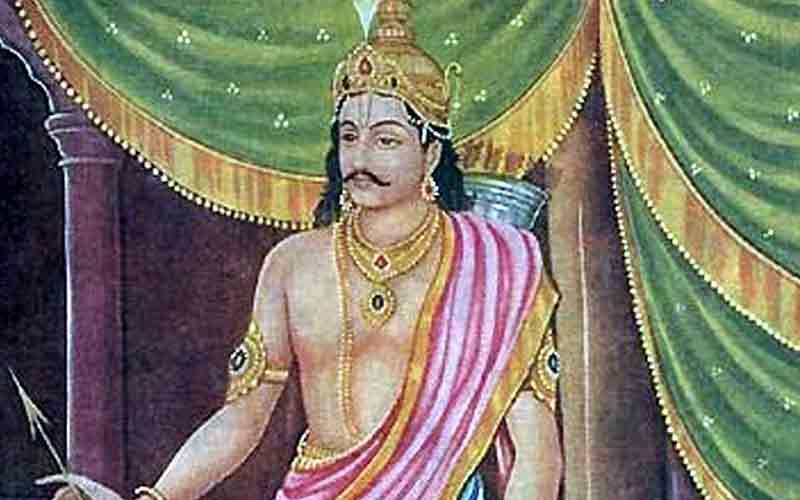
Yudhishthira's Dyuta: The Esoteric Vedic Akshavidya
It is wrong to call Dharmaraja Yudhishthira a gambler. How many times in his life did Dharmaraja Yudhishthira play dyuta (the traditional game of dice)? How many times must one play to be called a vyasani (addict)? It is also wrong to call dyutavidya (the science of dice) gambling. Why did Dharmaraja Yudhishthira have to learn dyutavidya from a rishi (seer)? Why was no teacher to be found other than a rishi? Shaku...
18 October 2026 · 1 min read

Be It Kanyadaan or Vardaan: What Is Wrong with It?
Is *kanyadan* (the ritual offering of the bride) merely charity? Why is *kanyadan* performed, and is it an insult to women? Understand the true meaning of *kanyadan* in the Hindu *vivaha sanskara* (marriage sacrament), along with its cultural and Vedic significance. Read the authentic exposition of *vardan* (boon) versus *kanyadan*, the mystery of *Brahma vivaha* (the Brahma form of marriage), and a definitive response to the fallacies that seek to misrepresent Hindu traditions.
18 October 2026 · 5 min read