YugSamvad · News & Media
News & MediaThe History of India's Economic Prosperity – Part 1
शैलेन्द्र सिंह · English edition 18 October 2026 · Hindi original 15 August 2018 · 5 min read
There are two things all of us have been hearing and reading since childhood:
1. India was the golden bird
2. India was an agrarian-dominated country
Just as the first statement is an absolute truth, the second is an outright falsehood; yet we find ourselves helpless, lacking the evidence to prove either. First, let us address: was India the golden bird? Why was it so, or how? Establishing this requires little effort, nor is there any need to scour ancient history.
Right until the arrival of the British, despite enduring thousands of invasions and the subjugation and plundering of the Mughals, it remained the golden bird—evidence of which is preserved to this day in the House of Commons Library. Professor Dharampal states, "When the East India Company arrived here to trade, witnessing India's economic prosperity, they initiated a conspiracy to seize control and convert the whole of India to Christianity. The motive behind turning India into a Christian nation then remains the same today, and that is the 'drain of wealth.'"
In London, in the year 1813 at the House of Commons, British MP William Wilberforce, citing a report of the East India Company, states that India possesses more gold than one can imagine. Therefore, if that vast wealth is to be extracted, they must be Christianised and enslaved, and extracting all this wealth would take at least a thousand years.
He further states that India’s economic share in world trade is 33%, and that they conduct this export in gold (goods-for-goods exchange); India sells its goods in exchange for gold, which is why it possesses boundless gold. Elaborating on this, let me point out that India's principal trading partner was Africa, which acquired Indian goods by paying in gold and traded them across the globe. As you all know, the most abundant gold mines are in Ghana, Africa.
India exported upwards of 36 commodities in total, chief among them chintz fabric, muslin, lime, spices, steel, and bricks. Hence, it amassed vast reserves of gold. He further observes that one must understand there is so much gold that even their temples are made of gold—not merely one, but nearly a thousand temples of gold. And scores of temples possess upwards of two to three hundred tonnes of gold; therefore, they simply must be Christianised.
This proves that India was a trade-driven, industry-driven nation, not an agriculture-dominated one. Now let us turn to agriculture: agriculture occupied second place, serving to supply raw materials for industry. But through calculated conspiracy, the British first decimated our industries, trades, and craftsmanship.
Chief among these measures, they enacted legislation to ban and suppress the trade in chintz. By placing orders and then refusing to buy the finished goods, they crippled the artisans and paved the way for the direct export of raw materials—a pattern that continues to this day. We sell them cotton and purchase linen shirts; there are thousands of such examples. To ruin India, thousands upon lakhs of tonnes of gold were loaded onto ships and transported to Britain. The official in charge of Calcutta alone dispatched 900 shiploads of gold, plundering Bengal alone; in this manner, it continued throughout the country. This was how poverty arrived; otherwise, we were never poor.
After devastating industry and enterprise, agriculture was targeted next, so that the people could be driven to starvation. "Only then will these people submit to us." I will not write at length on this subject, but shall cite merely two examples: one of tea, and the other of indigo cultivation. Farmers were coerced into indigo cultivation so that they could not grow food grains, but would cultivate indigo for the British instead. Even then, to ensure they did not make money by selling indigo, they were forcibly handed tobacco from a factory in Surat in exchange for indigo, told to recover their money by selling tobacco to the local populace. In this way, not only did tobacco penetrate every household, but people began to starve. This is why, as you may know, even today in remote villages tobacco is called surti (tobacco named after Surat).
Despite all this relentless plunder and the gutting of the education system, when they left India, we were in a position where one rupee equalled one dollar. And we did not owe a single rupee of debt to any nation. But before departing, the white British had birthed "black Englishmen" here; where they led the country will be addressed in the next part.
Otherwise, consider for yourself: had we been impoverished and stricken by famine, why did Alexander come here? Why did Ahmad Shah Abdali come? What were Babur and his progeny doing here? What had the Portuguese and the French come to take? And finally, what had these British come to take for two hundred years? The very gold that you possessed. Even after being looted to such an extent, we still hold the largest amount of gold in the world, in whatever form it may be. But the "black Englishmen" disposed of even that, and today.......
Whoever believes all this to be false is welcome to unearth thousands of documents from the British Museum Library and the House of Commons Library to prove me wrong. Below is the chart illustrating the British plunder.
-Shailendra Singh, the author is a specialist in national and social affairs and writes on contemporary issues.
Read Further – History of India's Economic Prosperity - Part 2
Read Also,
History of the Christian Assault on India
Cite this article
शैलेन्द्र सिंह. “The History of India's Economic Prosperity – Part 1”. YugSamvad, 18 October 2026. https://yugsamvad.com/en/articles/bhaarata-kee-aarthika-samriddhi-kaa-itihaasa-bhaaga-1
https://yugsamvad.com/en/articles/bhaarata-kee-aarthika-samriddhi-kaa-itihaasa-bhaaga-1 · accessed
Related reading
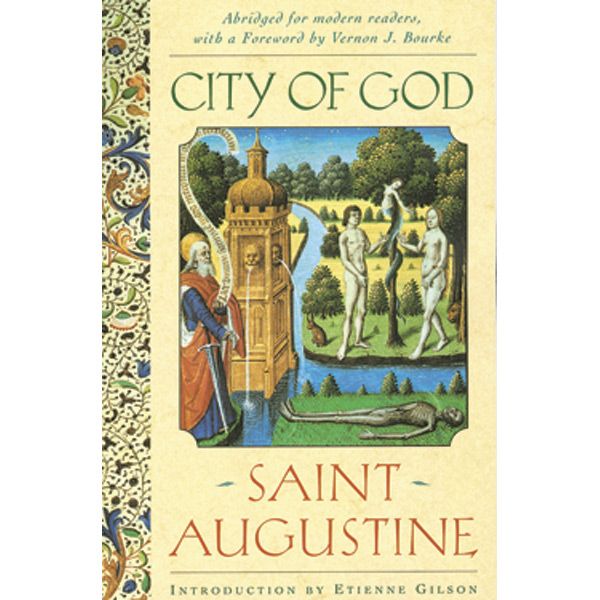
"The City of God" - Augustine's Attack on the Pagans
"The City of God" in A.D. 410 was a significant moment in Western history, when the Vandals, under the leadership of their king, Alaric, captured the city of Rome. Rome was known as the Eternal City because the Romans thought that it would truly never fall, and the year 410 shook this belief to its foundation
10 September 2026 · 6 min read