YugSamvad · Politics & History
Politics & HistoryDr. Harvansh Lal Oberoi: Staunch Protector of Hindu Sanskriti
Gunjan Aggrawala · English edition 18 October 2026 · Hindi original 28 July 2021 · 5 min read
The great karmayogi Dr. Harvansh Lal Oberoi was born on October 21, 1925, in Rawalpindi, to a Punjabi Khatri couple, Shri Dharmachandra and Ramkaur Oberoi. Following the partition of the country in 1947, he was forced to migrate to India with his family. Harvansh Lal Oberoi was a worker of the Rashtriya Swayamsevak Sangh. Endowed with a brilliant intellect since childhood, Shri Harvansh Lal obtained Master's degrees in philosophy, Indian history, and Hindi literature at a young age, and a Ph.D. from Jalandhar in 1948. That same year, he was falsely implicated in the Gandhi assassination case and imprisoned in Delhi jail, from where he was released a few days later after being proven innocent. From 1948 to 1963, he taught philosophy in Delhi and at various colleges of Punjab and Haryana universities. Prior to this, in 1960 and 1961, he was elected twice as the national president of the Akhil Bharatiya Vidyarthi Parishad. During this period, his independent studies continued, and he successfully established himself as an authoritative scholar of Indology. He served as the president of the Akhil Bharatiya Hindi Sahitya Sammelan, Punjab, the Purvanchal head of the Bharatiya Itihas Sankalan Samiti, and the founder of the Vishva Hindu Parishad, Ranchi. "The influence and spread of Hindu culture across various religious traditions of the world" was the primary subject of his studies.
Impressed by Dr. Harvansh Lal Oberoi's brilliance and original research work, UNESCO invited him in 1963 to deliver a lecture series on the subject of "Hindu Culture and Philosophy" at universities in Europe, America, Canada, and Asian countries. Under this lecture series, Dr. Oberoi traveled to 126 countries and delivered over a thousand substantive lectures on Hindu culture in their universities. In this regard, Dr. Harvansh Lal Oberoi was the Vivekananda of the twentieth century. During this travel series, Oberoi not only delivered lectures but also studied the remnants of the propagation of dharma by Hindu kings, emperors, sadhus, and sannyasis in those countries, and collected photographs, sculptures, and inscriptions of archaeological importance from there. According to available information, Dr. Harvansh Lal Oberoi’s first speech abroad took place in the auditorium of the University of Michigan (USA) on September 11, 1963, at a conference organized to mark the 70th anniversary of the First Parliament of Religions (Chicago, 1893 CE). Shri Chandrakant Birla was present at that conference to listen to this "second Vivekananda." He was so profoundly impressed by Dr. Oberoi's lecture that he persuaded the prominent philanthropist Babu Jugal Kishore Birla (1883-1967) to establish independent departments of philosophy and humanities under B.I.T. and appointed Dr. Oberoi as their head. This was an honor not for Dr. Harvansh Lal Oberoi, but for his brilliant scholarship.
The renowned linguist and Indologist, former national president of the Bharatiya Jan Sangh, and founder of "Saraswati Vihar" (International Academy of Indian Culture, Hauz Khas, Delhi), Dr. Acharya Raghuvira (1902-1963), was Dr. Harvansh Lal Oberoi's source of inspiration. In 1963, during Dr. Oberoi's travels abroad, Acharya Raghuvira passed away in a motor accident in India. His sudden demise inflicted a deep shock on Dr. Oberoi's heart, and resolving to carry forward Dr. Raghuvira's work, he laid the foundation of an institution named "Sanskriti-Vihar" (Academy of Indian Culture) in Upper Bazar, Ranchi, in 1965. Babu Jugal Kishore Birla was the patron of this institution. Under this institution, Dr. Oberoi undertook whirlwind tours of the rural areas of Bihar, Odisha, Madhya Pradesh, and other neighboring states, giving a fitting reply to the conspiracies of Christian missionaries and bringing countless Vanavasi brothers and sisters back to Sanatana Dharma. During the Emergency from 1975 to 1977, Oberoi was kept successively in Ranchi, Gaya, and Hazaribagh Central jails. At Hazaribagh Central Jail, my revered father, Shri Krishna Mohan Prasad Agarwal, was deeply impressed by Oberoi's personality. Oberoi was kept in Ward No. 6, but my father requested the chief jail warden of the jail to have Oberoi transferred to his ward (Special Ward No. 1). In this ward, apart from the daily shakha, the birth anniversaries of numerous great figures were celebrated from time to time, with Shri Oberoi himself being the main speaker. Once, during Bhagat Singh’s birth anniversary in jail, Oberoi prepared paints from some natural materials and made a portrait of Bhagat Singh, which my father brought home after his release from prison. That painting hung in his bedroom for years and was later donated to the Saraswati Shishu Mandir.
A portrait of Bhagat Singh drawn by Dr. Oberoi during his imprisonment
My father had the privilege of Dr. Oberoi's company for about 10 months in Hazaribagh Central Jail, and those sweet memories remain etched upon my father's memory canvas to this day. After his release from jail in 1977, my father invited Dr. Oberoi to his village, Jaridih Bazar, on 6 occasions (twice on the occasion of Makar Sankranti, once for Varsha Pratipada, once for Swami Vivekananda Jayanti, once on the Assam problem, and once for Bhagavad Gita Jayanti) and had him deliver a lecture. To make Dr. Oberoi's programs a success, my father and his close friend Shri Shiv Hari Banka would pour all their energy into it. Dr. Oberoi always stayed at my ancestral residence.
In September 1983 CE, when Dr. Oberoi was going from Ranchi to Indore to give a speech in a lecture series on the subject "Veda and Science" organized at an educational conference held in Indore, during that very journey on September 19, an assailant pushed him from a moving train and murdered him. On September 20, 1983, Harvansh Lal Oberoi's mortal remains departed from this world, but his body of glory became immortal and imperishable.
— Kumar Gunjan Agarwal, Researcher, Mahamana Malaviya Mission
An unforgettable saga of hooliganism in the field of literature..
Disinformation against Mahamana Malaviya, the founder of BHU
Cite this article
Gunjan Aggrawala. “Dr. Harvansh Lal Oberoi: Staunch Protector of Hindu Sanskriti”. YugSamvad, 18 October 2026. https://yugsamvad.com/en/articles/do-haravanshalaala-obaraaya-hindoo-sanskriti-ke-prakhara-sanrakshaka
https://yugsamvad.com/en/articles/do-haravanshalaala-obaraaya-hindoo-sanskriti-ke-prakhara-sanrakshaka · accessed
Related reading
Suicidal Flaws in Countering Sarvadharmasamabhava
Over the past 90 years, the rise of the politics of Muslim appeasement has caused immense damage to Indian culture. By equating 'Ali, Maula, Allah' with Ishvara (the Supreme Godhead), pseudo-secularism has paralyzed our core spiritual and cultural consciousness. Even from a definitional perspective, 'religion' and 'mazhab' (confessional faith) are distinct from dharma (righteous duty and cosmic order)—
18 October 2026 · 8 min read
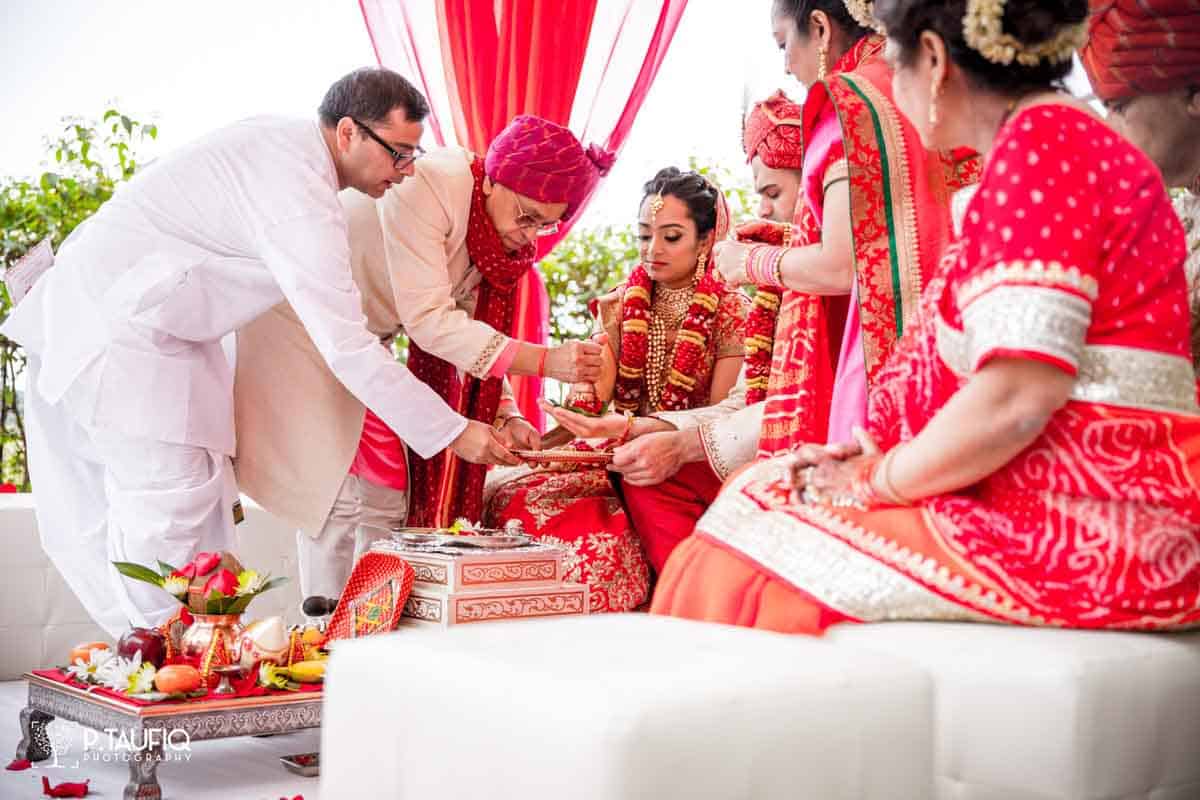
Be It Kanyadaan or Vardaan: What Is Wrong with It?
Is *kanyadan* (the ritual offering of the bride) merely charity? Why is *kanyadan* performed, and is it an insult to women? Understand the true meaning of *kanyadan* in the Hindu *vivaha sanskara* (marriage sacrament), along with its cultural and Vedic significance. Read the authentic exposition of *vardan* (boon) versus *kanyadan*, the mystery of *Brahma vivaha* (the Brahma form of marriage), and a definitive response to the fallacies that seek to misrepresent Hindu traditions.
18 October 2026 · 5 min read
Yudhishthira: Sovereign Emperor and Builder of Hindu Rashtra
Given the controversies often seen regarding Yudhishthira and others, we must look to the Mahabharata itself to determine whether Yudhishthira and the other Pandavas were powerful in their own right and embodiments of dharma (righteousness), or if, according to modern propaganda, they were merely dependent on the mercy of Shri Krishna. For the sages repeatedly call him Dharmaraj, and their words cannot be false.
13 September 2026 · 13 min read