YugSamvad · Politics & History
Politics & HistoryEven Jinnah and Iqbal Will Not Escape Islamic Fundamentalism
Abhijeet Singh · English edition 23 October 2026 · Hindi original 6 March 2019 · 5 min read
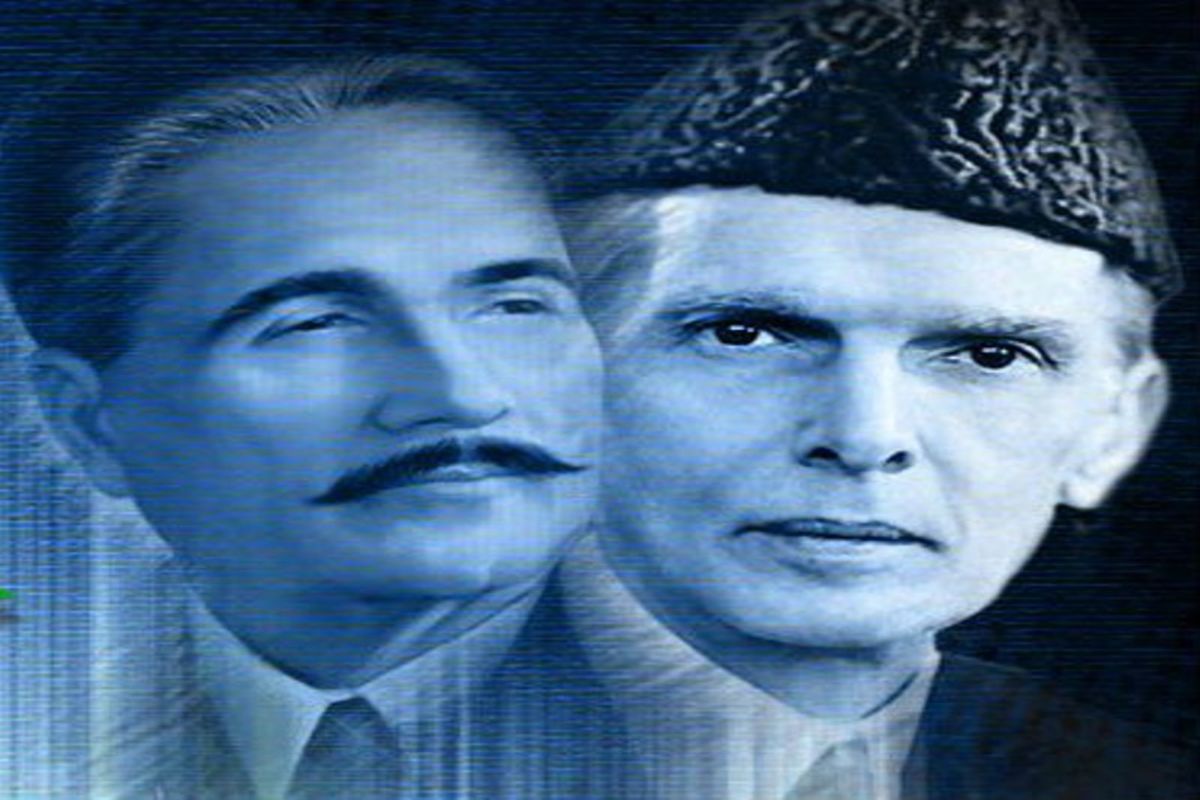
If you visit the official website of the Government of Pakistan, you will find photographs of two individuals on the homepage: one of "Allama Iqbal" and the other of "Muhammad Ali Jinnah."
In Pakistan, the standing of both is nothing short of a 'Waliullah' (friend of Allah/saint), which is why the people there proudly append Rahmatullah Alaih (meaning, may Allah’s mercy be upon him) to their names. There is a reason why both attained this status. Iqbal penned verses issuing threats in the name of Pakistan, and Jinnah achieved this goal through political bargaining. Today, Jinnah is the "Quaid-e-Azam" and "Baba-e-Azam," while "Allama Muhammad Iqbal" occupies the revered position of National Poet. Yet, this stature of theirs is not going to last much longer, for their former sins (?) are once again being remembered by the followers of their ummah.
By "once again," it is meant that when Iqbal sowed the seeds of separatism and Jinnah nurtured them to fruition, elements like Deoband, Jamaat-e-Islami, and Maulana Abul Kalam Azad stood in fierce opposition to them. They believed that by settling for a small slice of the land, the whole of Hindustan would slip out of their grasp. It was for this reason that prominent muftis of that era issued fatwas against Jinnah, going so far as to declare that he was not "Jinnah" but "Zina" (fornication/adultery).
Be that as it may, Pakistan was created.
The nation formed under the name "Islamic Republic of Pakistan" cooled the wrath of the ummah, and it was accepted that this bounty called Pakistan was bestowed through the grace of Iqbal and Jinnah, and the entire qaum (community) prostrated itself in reverence before both.
In recent decades, once the movement to declare Ahmadis as non-Muslims ran its course, people there began searching for a new quarry within Muslims themselves who could be declared kafir (infidel) and mushrik (polytheist/idolater). As their quarry, they found the "Shia community." The moment the quarry was marked, packs of predators swarmed under various banners; operatives of "Lashkar-e-Jhangvi," "Sipah-e-Sahaba," and "Tehreek-e-Tahaffuz-e-Khatme Nabuwwat" began singling out and slaughtering Shias. An attempt was made to completely eradicate the "Hazara community" among the Shias. When the frenzy reached its zenith, a deeply emotional plea came from the Shias. They said, "Brothers! You slaughter us? Do you not know that this treasure called Pakistan that you have acquired was given to you by a Shia named 'Muhammad Ali Jinnah'?"
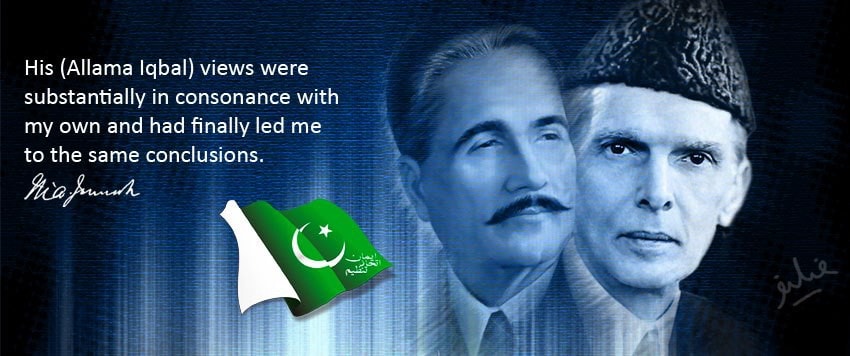
The veil was lifted, the truth stood bare, and old wounds opened anew. The Deobandis recalled Maulana Hussain Ahmad Madani, the Jamaat remembered Abul A'la Maududi, and the Ahl-i Hadith remembered Sanaullah Amritsari. The dust was brushed off the fatwas that had once been hurled against Jinnah. The situation there today is such that soldiers of the deen (faith) find it deeply galling that a Shia has been enthroned in the position of "Baba-e-Azam" and that a "Khoja Shia" is the Quaid-e-Azam of their nation.
The grievance does not end here. Someone also set off the spark that their national poet, Allama Iqbal, had spent eight precious years of his life, intellect, and youth as an Ahmadi—meaning he was an apostate (murtad), meaning he was astray. When history books were opened, evidence was found that Iqbal had indeed become a Qadiani, and he had composed his finest poems during that very period. Expressions of penitence such as *"Lahawla wala quwwata... Taubah! Taubah! We kept singing anthems penned by an apostate and deviant, believing them to be songs of the ummah... woe unto us!"* have now become commonplace in Pakistan.
Meanwhile, someone also pointed out that the Pakistan movement was in fact a campaign of the 'Jamaat Ahmadiyya', which ultimately cost them Delhi. It is worth noting that the Ahmadiyya community acted as Jinnah's right hand and financier in this Pakistan movement; consequently, Iqbal too came under fire, and the nexus between Iqbal, Ahmadism, and Jinnah began to appear evident to all.
Kamleshwar wrote a short story referencing an episode from the "Mukti Bahini war." He wrote that when Bangladesh broke away from Pakistan, someone went to Jinnah's grave and painted the words—
"We have repaid half our debt of gratitude."
Now, after half that debt was discharged, whatever remained has been settled by Jinnah's Shia origins. To the Pakistani public, Iqbal and Jinnah now appear like black stains on their white shirts, stains they cannot rest until they wash away. Therefore, preparations are underway to humiliate "Baba-e-Azam" Jinnah and strip him of his stature, and to purge Iqbal from the textbooks.
To replace Jinnah, they have already found a hero, arguing that Jinnah hardly created Pakistan. Why, the foundation of Pakistan was laid the very day "Muhammad bin Qasim" arrived here! One will not have to wait long. With our own eyes, we shall witness Jinnah—who inflicted thousands of wounds upon us—being disgraced posthumously, and that too at the hands of the very people for whom he carved out Pakistan.
Well, whoever becomes the "Baba-e-Azam" of a cursed people is their own concern, but this punishment meted out to Jinnah for his crimes is, at the very least, gratifying. Yet complete satisfaction will come only when Iqbal is subjected to the same execration and disgrace, and the funeral of his status as Pakistan's national poet is carried out.
Read also,
Why Can a Muslim Never Be a Leftist?
Marxist Ideology's Betrayal of India's History and Present
Negationists – Criminals Who Deny the Crimes of History
Nobel Laureate V. S. Naipaul Was an Incisive Hindu Visionary
Vivekananda Rock Memorial in Kanyakumari, a Symbol of a Historic Struggle
Cite this article
Abhijeet Singh. “Even Jinnah and Iqbal Will Not Escape Islamic Fundamentalism”. YugSamvad, 23 October 2026. https://yugsamvad.com/en/articles/islaamika-kattaravaada-kee-chapeta-se-jinnaa-aura-iqabaala-bhee
https://yugsamvad.com/en/articles/islaamika-kattaravaada-kee-chapeta-se-jinnaa-aura-iqabaala-bhee · accessed
Related reading

Are the DNA of Hindus and Muslims the same?
While reading the novel "Doosri Jannat" written by Nasira Sharma, born in DNA Allahabad, I suddenly remembered Allama Iqbal, who in his "Jawab-e-Shikwa" restlessly and immersed in grief says to his co-religionists: "वज़ह में तुम हो नसारा तो तमद्दुन में हनूद/ ये मुसलमां हैं जिन्हें देख के शर्माये" (The Christians are [ahead] in reason, and the Hindus in culture; these are Muslims, seeing whom [even Islam] is ashamed.)
18 October 2026 · 5 min read
The Meaning of Medha, Kautuhala, Jigyasa and Herd Mentality
*Medha* (intellect) and the Herd “He who protects *dharma* (righteousness/cosmic order), *dharma* protects him.” The meaning of *dharma* is Vedic *yajna* (sacrificial ritual), that is, the *karma-kanda* (ritual section) of the Vedas. There are ten characteristics of *dharma* — *dhriti* (fortitude), *kshama* (forgiveness), *dama* (self-control), *asteya* (non-stealing), *shaucha* (purity), *indriya-nigraha* (sensory control), *dhi* (intellect), *vidya* (knowledge), *satya* (truth), and *akrodha* (absence of anger). But these are merely characteristics on the basis of which we can recognize that a particular...
18 October 2026 · 8 min read
What does Narendra Modi think about Israel?
Prime Minister Narendra Modi writes on Israel in his book 'Setubandh', "Two thousand years ago, invaders devastated Israel. Some of its people had been scattered across different parts of the world, yet, filled with their sense of self-pride, taking advantage of the circumstances of the First and Second World Wars...
17 October 2026 · 3 min read