YugSamvad · Politics & History
Politics & HistoryWhen Calcutta University Trembled at Bina Das's Bullets
विशाल अग्रवाल · English edition 23 October 2026 · Hindi original 23 August 2017 · 3 min read
It was the day of 6 February 1932 when hundreds of people seated in the convocation hall of Calcutta University were left stunned by rapid gunfire unleashed by a young woman, whose target was none other than Stanley Jackson, the then Governor of Bengal. Although Jackson survived, the courage of this young girl sent tremors throughout the British Empire. Imbued with revolutionary and nationalist fervor, that young woman was Bina Das, whose birth anniversary falls on 24 August.
Born on 24 August 1911 in Krishnanagar, Bengal, to the renowned Brahmo Samaj teacher Beni Madhab Das and social worker Sarala Devi, Bina Das had begun participating actively in protest marches and rallies against the British during her student days itself. Soon, however, the conviction took root in her mind that armed revolution was the only means to instill fear in the hearts of the British. To give concrete shape to this conviction, she began participating actively in the Calcutta-based revolutionary group Chhatri Sangha.

Her desire to teach the British a lesson was soon realized when her organization entrusted her with the mission of eliminating the ruthless Governor of Bengal at the Calcutta University convocation. Bina Das was among the many graduates seated in the auditorium. The moment Jackson drew near her, she fired 5 bullets at him in quick succession. Unfortunately, Jackson survived, and Bina Das was arrested and sentenced to 9 years of rigorous imprisonment. Even after her release in 1939, Bina Das continued her resistance against the British, and for participating in the Quit India Movement, she was imprisoned once again from 1942 to 1945, enduring immense hardships.
Later, she married Jatish Chandra Bhowmick, who had been an active member of the famous revolutionary organization Jugantar. Following her husband's demise, she lived a solitary life in Rishikesh, where she passed away on 26 December 1986. It is a matter of profound regret that in this country—reveling in songs such as 'De di hamein azaadi bina khadga, bina dhal' (You gave us freedom without sword, without shield)—no one ever tried to learn about this revolutionary. Bina Das, who surrendered her youth for the sake of the nation, departed this mortal world enveloped in the darkness of oblivion.
– Vishal Agarwal (The author is an educationist and deep scholar of Indian history and culture. His Rashtra Aradhak series on great Indian personalities is well worth reading.)
Read Also,
Rash Behari Bose: Founder of the Azad Hind Fauj, who threw a bomb at Viceroy Hardinge
Veer Kartar Singh Sarabha, who went to the gallows at the age of nineteen
Three biological brothers who mounted the gallows for the country
Madan Lal Dhingra, who went to London and shot a British officer
Hargopal Bal, who attained veergati (heroic death in battle) fighting the British at the age of 13
The veerangana (heroic woman) whom we forgot, who shot the British Collector
Cite this article
विशाल अग्रवाल. “When Calcutta University Trembled at Bina Das's Bullets”. YugSamvad, 23 October 2026. https://yugsamvad.com/en/articles/jaba-beenaa-daasa-dvaaraa-chalaayee-gayee-goliyon-se-tharraa
https://yugsamvad.com/en/articles/jaba-beenaa-daasa-dvaaraa-chalaayee-gayee-goliyon-se-tharraa · accessed
Related reading

Be It Kanyadaan or Vardaan: What Is Wrong with It?
Is *kanyadan* (the ritual offering of the bride) merely charity? Why is *kanyadan* performed, and is it an insult to women? Understand the true meaning of *kanyadan* in the Hindu *vivaha sanskara* (marriage sacrament), along with its cultural and Vedic significance. Read the authentic exposition of *vardan* (boon) versus *kanyadan*, the mystery of *Brahma vivaha* (the Brahma form of marriage), and a definitive response to the fallacies that seek to misrepresent Hindu traditions.
18 October 2026 · 5 min read
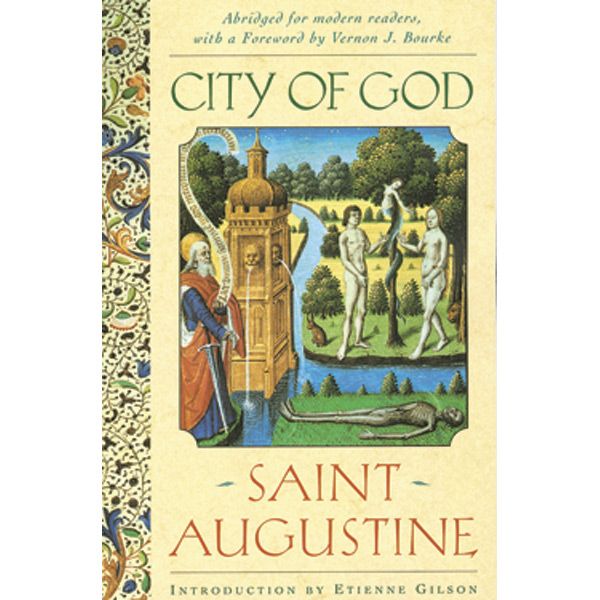
"The City of God" - Augustine's Attack on the Pagans
"The City of God" in A.D. 410 was a significant moment in Western history, when the Vandals, under the leadership of their king, Alaric, captured the city of Rome. Rome was known as the Eternal City because the Romans thought that it would truly never fall, and the year 410 shook this belief to its foundation
10 September 2026 · 6 min read