YugSamvad · Sanskrit & Shastra
Sanskrit & ShastraHow Russia's Communist Regime Committed 20 Million Murders
Shivpujan Tripathi · English edition 15 October 2026 · Hindi original 12 October 2019 · 12 min read
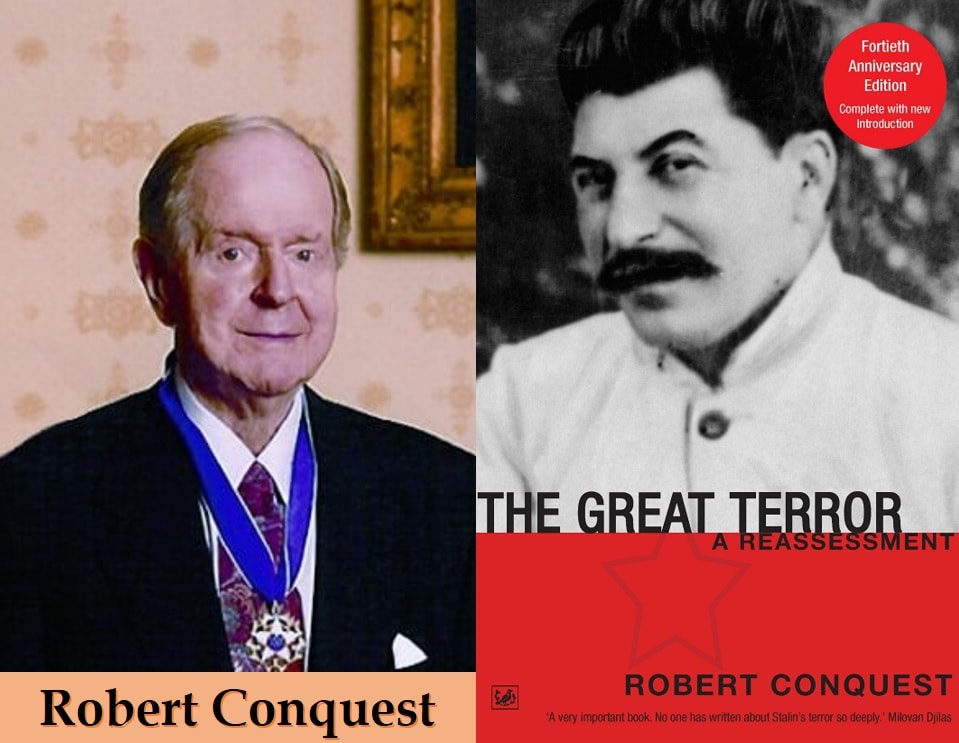
In 1968, the British-American historian and poet Robert Conquest (15 July 1917 – 3 August 2015) wrote a seminal book, 'The Great Terror: A reassessment", on the estimated 15 to 20 million murders committed by Stalin in the Soviet Union. This book was published in 1968 and reissued with minor revisions in 1990. On its fortieth anniversary in 2008, it was printed with a new preface. In fact, this work should be read as a sequel to Conquest’s book on the collectivization of agriculture in Ukraine, Harvest of Sorrow. The present book offers a vivid depiction of the murderous campaign launched by Stalin beginning in the fourth decade of the last century to eliminate his opponents. While hundreds of books and films are available on Hitler and the Holocaust, it is perhaps in this book that a detailed account of Stalin’s atrocities was first made available.
Although prior to this book, fictional accounts such as George Orwell's 'Animal Farm' and '1984', and Arthur Koestler’s 'Darkness at Noon' were available, Conquest argues that depicting these characters merely as victims—as in 'Darkness at Noon', where they might represent Trotsky, Bukharin, and others—is only a half-truth. In reality, before the purging of these figures even began, false charges of Sabotage, Enemy of the People, Foreign Agent, and so forth were fabricated to try and execute the Industrial Party in 1930, the Mensheviks in 1931, and the Metro engineers in 1933. When these show trials were being orchestrated, not a single word of protest was uttered by Trotsky, Bukharin, Zinoviev, Kamenev, or the rest. On the contrary, they actively supported these sham trials conducted by Stalin.
1984 and Animal Farm: Specimens of a Leninist Deaf-Mute Society
Conquest sharply criticizes the numerous Western intellectuals who remained entangled in Stalinist illusions until the end, failing to comprehend the horrific scale of the terror. Among them, he cites Beatrice and Sidney Webb, G. B. Shaw, Jean-Paul Sartre, Walter Duranty, Sir Bernard Pares, Harold Laski, D. N. Pritt, Theodore Dreiser, Bertolt Brecht, Owen Lattimore, Romain Rolland, and the American Ambassador Joseph Davies. Timothy Garton Ash called Robert Conquest "Solzhenitsyn before Solzhenitsyn."
The book is divided into three parts:
1- The Purge Begins
2- The Yezhov Years, and
3- Aftermath.
On 26 May 1922, Lenin suffered his first stroke, which diminished his active role in politics. At the Tenth Party Congress held in March 1921, Lenin remarked that most important and popular movements in history invariably contain elements of filth, adventurism, braggadocio, and unnecessary clamor. A few months after this congress, Lenin harshly criticized the carelessness and parasitic elements within the Party, characterizing Communist boasting and falsehoods in his distinctive idiom as "Com-boasts" and "Com-lies" on the pattern of "Com-munist." Meanwhile, Stalin addressed Lenin's wife, Krupskaya, in an exceedingly crude and abusive manner. Stalin hurled a vile insult ("syphilitic whore") at Krupskaya, which I do not deem appropriate to translate into Hindi. In the wake of fierce peasant resistance to collective farming, Lenin announced the New Economic Policy (NEP), which bolstered the moderates. Disturbed by Stalin’s harsh and abrasive conduct, Lenin even proposed in his Testament that Stalin be removed from the post of General Secretary, a matter to be deliberated by the Central Committee. In the years that followed, a power struggle ensued among the seven Politburo members—Stalin, Trotsky, Zinoviev, Kamenev, Bukharin, Rykov, and Tomsky—and ultimately Stalin alone survived. The others were sentenced to death.
Apart from Stalin, Zinoviev was the only Bolshevik leader not regarded as an intellectual. Lenin remarked of Zinoviev that he merely imitated his mistakes, adding further that Zinoviev’s bravery surfaced only after the danger had passed. Kamenev was regarded as utterly lacking in ambition and could at best be described as a moderate. Regarding Trotsky, Milovan Djilas observed that he was an eloquent orator, cultured, and exceptionally sharp-witted, but completely out of touch with reality.
The key figures in the Stalinist faction were Molotov, Ordzhonikidze, Yagoda, Lazar Kaganovich, Andrei Zhdanov, L. Beria, and Yezhov. Except for Molotov, all of them were fanatics of the sort Stalin favored. Yagoda recorded in a memoir that in the first half of the 1930s, Stalin told him he preferred public support rooted in fear rather than ideological commitment, because ideological commitment risked waning, whereas fear-based support was enduring.
The Right Opposition within the Politburo was an obstacle to Collectivization. The principal leader of this group was Bukharin, but Stalin, enlisting the support of Trotsky, Zinoviev, and others, crushed the right-wing faction and enforced it ruthlessly. In Ukraine alone, five million people perished in this civil war. Such was the rigor of repression that on 27 December 1932, an internal passport system was instituted even for traveling from one place to another within the country. The enforcement of Collectivization is a chronicle of sheer, barbaric brutality, which the same author documented in his book Harvest of Sorrow. In the Soviet Union, the term 'Kulak' was treated with as much hatred as 'Jew' was in Nazi Germany. The present book covers the aftermath of Collectivization.
 The color of the leftist flag is red with blood
There was immense resistance to Stalin’s Collectivization policy. On 23 September 1932, Ryutin was expelled from the Party for a second time and arrested. Stalin sought to have him executed through the OGPU (the forerunner of the KGB) without political interference, but the matter was referred to the Politburo. On the question of the death penalty, Kirov, Kuibyshev, Kossior, Kalinin, Rudzutak, and Ordzhonikidze opposed Stalin. Only Kaganovich stood by Stalin, while even Molotov and Andreyev could not openly support shooting Ryutin. For the first time, Stalin failed to secure the clear backing of his declared supporters. It was then that Stalin realized that eliminating his rivals purely on grounds of political dissent was not feasible; they could only be sent before a firing squad on charges of actual murder conspiracies. It was in this sequence of events that Kirov was assassinated on 1 December 1934. Robert Conquest wrote a separate book on Kirov's assassination detailing the affair. In 1963, Stalin’s daughter Svetlana stated that her father was himself responsible for Kirov’s murder. Khrushchev’s memoirs, published in 1989, explicitly state that Yagoda had Kirov assassinated on Stalin’s orders. The assassination of Kirov was the watershed event after which Stalin transformed into a ruthless dictator and engineered the machinery of terror that dragged all his rivals before firing squads on trumped-up charges.
The arguments used to frame opponents relied primarily on two phrases: the first was "As is well known," and the second was "It is not accidental." Relying on these two idioms, it was routinely asserted that "as is well known, the Trotskyites are Nazi agents," and any event would be linked by asserting that "it is not accidental that so-and-so committed such-and-such an act."
Yenukidze became the first victim of Stalin’s terror. Thereafter, on 26 January 1935, Kuibyshev was eliminated. As this machinery of terror continued to devour people, a few voices of dissent also emerged. Among them, a prominent figure was Lenin’s widow, Krupskaya, whom Stalin threatened into silence by warning that otherwise Elena Stasova would be declared Lenin’s widow, for the Party was omnipotent and could do anything. Another dissenting voice was that of Maxim Gorky, who fell ill under mysterious circumstances on 31 May 1935 and died on 18 June 1935. By this time, the machinery of terror, the OGPU, had been reorganized as the NKVD under the leadership of Yagoda.
Three major trials took place. The first trial was held from 19 August to 28 August 1936; the second trial from 23 to 30 January 1937; and the third trial in March 1938. In the first trial, 16 individuals were convicted and executed, among whom the two prominent names were Zinoviev and Kamenev. In the second trial, 17 people were found guilty and shot; in the third trial, 21 individuals were convicted and subsequently shot, including three notable figures: Bukharin, Rykov, and Yagoda. During the first trial, Yagoda was the chief of the NKVD. During the second and third trials, Yezhov held that office. Ironically, Yagoda himself was found guilty in the third trial and shot on 15 March 1938. Yezhov was likewise tried and shot on 4 February 1940. Yezhov is regarded as the most despised man in the Soviet Union. Standing barely 5 feet tall, he was also dubbed the "poison dwarf." Yezhov's successor as NKVD chief, Beria, was also shot during the Khrushchev era on 23 December 1953.
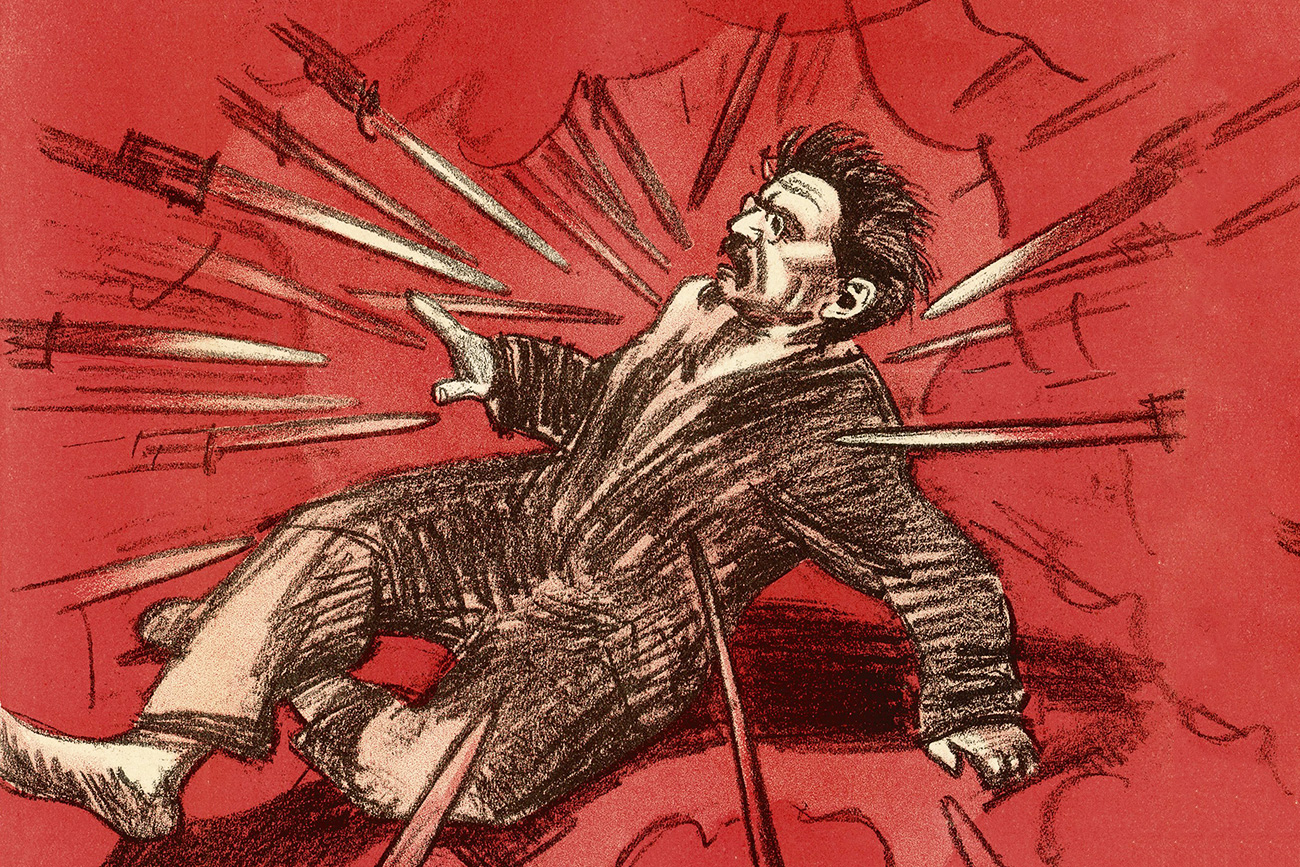
In all these trials, securing confessions from the alleged perpetrators was essential to establish guilt. Interrogators were appointed to extract confessions. The charges were typically vague accusations: acting as agents of foreign powers, particularly Nazi agents; being Trotskyites; conspiring in assassinations; aiding enemies of the people; committing sabotage; participating in conspiracies behind the murder of Kirov or the alleged murder of Gorky; aiding Kulaks, and so on. The accused were demanded to confess to these crimes themselves. A Polish communist recorded from personal experience that after 50 to 60 separate interrogations over two to three weeks, a prisoner would be reduced to a state of semi-consciousness, as the interrogations were accompanied by confinement in freezing cold cells, meager food rations, and total deprivation of sleep. In such a condition, a man turned into a machine: his eyes would dilate, legs swell, and hands tremble. His capacity to think and comprehend was nearly destroyed. The primary theorists of securing guilt via extracted confessions were Dzerzhinsky and Vyshinsky. One interrogator, Zhukovsky, went so far as to boast that if he were given Karl Marx to interrogate, he would very quickly extract a confession that Marx was an agent of Bismarck.
Recently, I read Nien Cheng's 1986 book, "Life and Death in Shanghai," which offers a harrowing, vivid account of her own interrogations during the Cultural Revolution in Mao's China.
These trials are widely renowned due to the prominent figures involved. In addition, monthly quotas were assigned to all officials to arrest innocent people on fabricated charges across various offenses. It is also noted that if they failed to meet these quotas, they risked being classified as criminals themselves. During Stalin's rule, this machinery of terror murdered over 20 million people. Leszek Kołakowski, a Polish former Marxist philosopher, wrote: "Starving, destitute people entirely deprived of the basic necessities of life parrot the government's lies at Party meetings, claiming they are immensely prosperous, even though they themselves only half-believe these slogans. They know that 'truth' is the Party's prerogative, so the lie is their truth, even while they are fully aware of the reality of this lie. The creation of such a Soviet citizen, dwelling simultaneously in two worlds of truth and falsehood, is the supreme achievement of the Soviet Union."
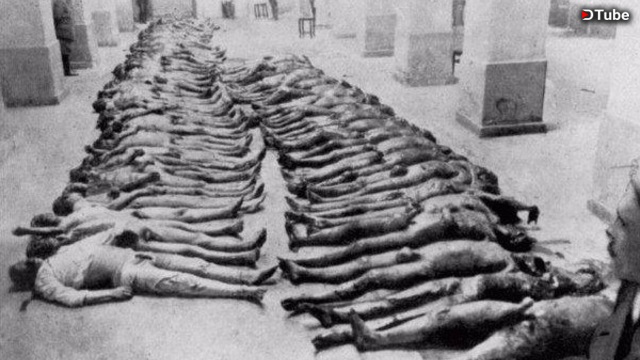
The Soviet government relentlessly denied its terror and falsehoods. Through terror and lies, not only were the Soviet populace and dissidents murdered, but it was also hoped that the memory of this terror and deceit would be erased from the minds of the Soviet people and the world. In the former, they succeeded, but they could not erase it from human memory. Vitaly Korotich, a Ukrainian journalist and intellectual, observed that the Soviet Union was brought down by information—and the dissemination of that information began with Solzhenitsyn’s book, "One Day in the Life of Ivan Denisovich."
– Shivpujan Tripathi, the author is a deep scholar and researcher of Indian history and culture
Read Also:
Superstitions of Communist Ideology
Why a Muslim Can Never Be a Leftist
Shri Guruji Golwalkar’s Thoughts on the Hollowness of Communism (the Left)
Marxist Ideology's Betrayal of India's Past and Present
When a Communist Said, "Let the People Taste Blood!"
1984 and Animal Farm: Specimens of a Leninist Deaf-Mute Society
Negationists: Criminals Who Deny the Crimes of History
Even Jinnah and Iqbal Will Not Be Spared from the Clutches of Islamic Radicalism
Nobel Laureate V. S. Naipaul Was a Formidable Hindu Visionary
Cite this article
Shivpujan Tripathi. “How Russia's Communist Regime Committed 20 Million Murders”. YugSamvad, 15 October 2026. https://yugsamvad.com/en/articles/kisa-prakaara-roosa-ke-kamyunista-shaasana-ne-kee-do
https://yugsamvad.com/en/articles/kisa-prakaara-roosa-ke-kamyunista-shaasana-ne-kee-do · accessed
Related reading
"The City of God" - Augustine's Attack on the Pagans
"The City of God" in A.D. 410 was a significant moment in Western history, when the Vandals, under the leadership of their king, Alaric, captured the city of Rome. Rome was known as the Eternal City because the Romans thought that it would truly never fall, and the year 410 shook this belief to its foundation
10 September 2026 · 6 min read