YugSamvad · Politics & History
Politics & HistoryHas Triple Talaq truly ended? What did Muslim Women gain?
Abhijeet Singh · English edition 18 October 2026 · Hindi original 27 December 2018 · 5 min read
The new bill related to triple talaq was passed by the Lok Sabha on Thursday after a discussion lasting nearly 5 hours. There were 245 votes in favor of the bill and 11 against. During voting, members of the Congress, AIADMK, DMK, and SP staged a walkout. Now this bill will go to the Rajya Sabha. The government wants to pass it in the winter session itself, which runs until January 8. An ordinance on triple talaq was issued in September this very year.
Let us understand what triple talaq is, and ascertain whether this bill has truly eased the path for Muslim women—or are we still looking at a half-truth today? Terminology-wise, within Islam, the marital relation is a contract, and therefore scope has also been made for dissolving this contract, which is termed talaq (divorce). Now, regarding how talaq should be pronounced, several methods have been prevalent within Muslim society :-
Generally, three types of talaq exist among Muslims:-
1. Talaq-e-Bid'at—in which three talaqs are pronounced at one time.
2. Talaq-e-Hasan—in this, talaq is pronounced and a waiting period of one month is observed (for haiz ), then talaq is pronounced again, then another month is observed, and then talaq is pronounced for the third time.
3. Talaq-e-Ahsan—this is the method of pronouncing talaq that is mentioned in the Quran and Hadith. Under this, if someone pronounces talaq, he must wait for three months; if within those three months he feels that he made a mistake or should not have given talaq, he can perform ruju (reconciliation) with his wife.
If they do not undergo ruju within these three months, they no longer remain husband and wife. But even after that, if the husband wishes, he can perform nikah (Islamic marriage contract) with his former wife again. As stated in the Quran: "And when you divorce women and they fulfill their iddat (waiting period), do not prevent them from marrying their husbands." (Surah Al-Baqarah, 2:232). However, in this nikah, a new meher (dower) will be fixed again. If after remarrying a problem arises again and talaq has to be given, there is again a period of three months in which he can perform ruju with his wife. This is permissible three times; after that, to perform nikah with his wife again, he will have to take recourse to the halala process, wherein his wife will enter into nikah with another man (in Arabic, one meaning of nikah is "marriage" and another meaning is "physical relations") and then, only if that man divorces her, can she perform nikah again with her first husband.
The method of Talaq-e-Hasan is also similar; the only difference is that there (in Talaq-e-Ahsan) the period for ruju is three months, whereas here it is one month. When the judgment of the Honorable Supreme Court arrived, there was one and only one point in that decision: triple talaq pronounced all at once (here triple talaq means three talaqs pronounced "together at the same time") was declared unconstitutional. That is to say, the Supreme Court abolished one method of divorce termed "Talaq-e-Bid'at".
This implies that :-
- The remaining two methods of talaq, namely Talaq-e-Hasan and Talaq-e-Ahsan, still remain intact.
- If someone pronounces talaq to his wife over the phone or WhatsApp, there still remains scope for it to be considered valid, because the Honorable Supreme Court has said nothing about it.
- Muslim women have received relief only from instant talaq, a practice that several Muslim nations around the world, including Pakistan, had already invalidated.
- One thing common to all three methods is that seeking the woman's consent at the time of pronouncing talaq is not mandatory.
The method of talaq abolished by the Honorable Supreme Court is called "Talaq-e-Bid'at". In Islam, bid'at means "introducing a new or different matter into the faith"—naturally, Muslim society does not view this favorably. This means that the practice of "Talaq-e-Bid'at" did not exist during the time of the Prophet; there is evidence for this as well. For instance, during the time of the Prophet, Hazrat Rukana pronounced triple talaq to his wife all at once in a mosque. On this, the Prophet remarked that this counts as only one instance, and if he wished, he could perform ruju. Consequently, he performed ruju and restored his household. (Musnad Ahmad, 1/265).
In a Hadith, it is recorded that the Prophet was informed about a man who had pronounced three talaqs to his wife. Upon hearing this news, the Prophet stood up out of anger and said: Is the Book of Allah being played with while I am still among you?
This means that the Prophet's explicit decree was that whether one says talaq three times or three hundred times at once, it shall be considered only one. Later, during the Caliphate of Hazrat Umar Farooq, at the request of certain women, he issued a fatwa (religious decree) stating that if someone pronounces three talaqs at once, it shall be counted as three. It is said that Hazrat Umar Farooq later retracted this fatwa, but since it had occurred, this method of divorce gained acceptance in Muslim society, which continues to this day.
For the authoritative scholars of Islam, the decision of the court and the government brings great comfort. Be that as it may, the unanswered question still remains: apart from instant triple talaq, have Muslim sisters gained any other benefit? The answer is no. The world is still not round after all!!!!
Why are the supporters of casteist parties only the poor and uneducated?
Cite this article
Abhijeet Singh. “Has Triple Talaq truly ended? What did Muslim Women gain?”. YugSamvad, 18 October 2026. https://yugsamvad.com/en/articles/kyaa-sacha-men-khatma-ho-gayaa-teena-talaaqa-muslima
https://yugsamvad.com/en/articles/kyaa-sacha-men-khatma-ho-gayaa-teena-talaaqa-muslima · accessed
Related reading

Shri Ram Eating the Tasted Ber of the Bhilni Shabari Is Proved from the Valmiki Ramayana
Nowadays, some hyper-scholars are propagating the delusion in society that the tale of Shabari’s "tasted ber (jujube fruits)" is not in the Ramayana, and that Shabari was not a low-caste devotee but an upper-varna (class/caste) woman. This is not only contrary to the supreme import of the shastra (sacred text), but also extremely harmful to social samarasya (harmony) and is a manifestation of ego and malice.
18 October 2026 · 13 min read
Be It Kanyadaan or Vardaan: What Is Wrong with It?
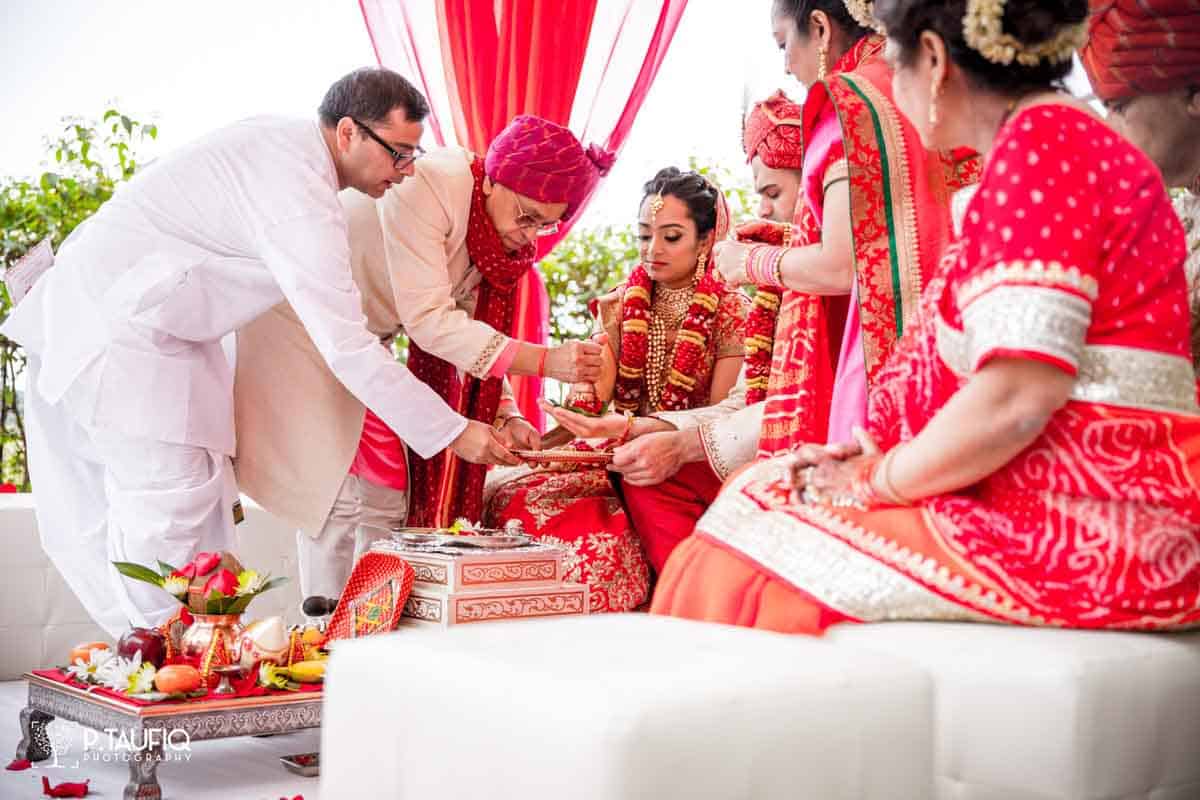
Is *kanyadan* (the ritual offering of the bride) merely charity? Why is *kanyadan* performed, and is it an insult to women? Understand the true meaning of *kanyadan* in the Hindu *vivaha sanskara* (marriage sacrament), along with its cultural and Vedic significance. Read the authentic exposition of *vardan* (boon) versus *kanyadan*, the mystery of *Brahma vivaha* (the Brahma form of marriage), and a definitive response to the fallacies that seek to misrepresent Hindu traditions.
18 October 2026 · 5 min read
Is Feminism A Movement Against Physically Desirable Women?
Feminism: I know feminist amidst us would like to quote the dictionary meaning of feminism to prove me wrong. The fact of the matter is that Taliban means Student. Shall we start respecting the Taliban? Here is the truth, Feminism is a movement against physically desirable women.
23 May 2021 · 3 min read