YugSamvad · Sanskrit & Shastra
Sanskrit & ShastraThe Conspiracy to Strangle and Murder India's Historical Consciousness in the Civil Services Examination
प्रवक्ता · English edition 18 October 2026 · Hindi original 26 July 2017 · 6 min read
Some time ago, I contacted a coaching institute to prepare for the RAS (Rajasthan Administrative Service). A day or two ago, I received a call from them saying that their new batch was starting and that I could take a two-day trial class. I didn't intend to take admission right now, but I thought, what's the harm in taking a trial class? So today, I went for the trial class. I am presenting to you point-by-point what was taught there, which has shaken me to the core, and I have still not been able to recover from it.
● Maharana Pratap was brave but not a patriot. He was a regionalist; his fight was not for India but only for his own region. On the other hand, Akbar was the emperor of the whole of India, who set an example of generosity by giving representation to all sections in the administration and gave Man Singh the largest mansabdari (military rank) of seven thousand.
● All Rajput kings submitted to Akbar voluntarily; there was no coercion on Akbar's part. Rajput kings willingly entered into matrimonial alliances with Akbar by marrying off their daughters. Maharana Pratap fought Akbar only for his own vested regional interests.
● Considering the breadth of vision, openness of ideas, and the interest of India, Akbar alone was great, while Maharana Pratap was merely a brave warrior.
● The same vested interests belonged to Shivaji and other Marathas, which is why they fought the Mughals. Shivaji was not just an enemy of the Mughals, but also a great plunderer. He plundered everyone, Hindus and Muslims alike, without discrimination.
● The Rebellion of 1857 was also not a national freedom movement in these terms. It was merely a war fought for the vested interests of the kings. Rani Lakshmibai's fight was not for India but only for Jhansi; she used to say, "I want Jhansi." If she had been given Jhansi, she would have never fought. Similarly, the Mughals participated in that war only to secure their pension.
● Lord Dalhousie laid the foundation of railways, telegraph, and postal services in India. Though done for their own selfish interests, they proved to be very beneficial for India. For instance, nationalists now began to travel by trains. This also dealt a blow to casteism because Brahmins (priestly class) and Shudras (laboring class) now had to sit close to each other in the same compartment, bringing them into 'touch' for the first time. Even if reluctantly, Brahmins had to touch Shudras.
● The period from 750 to 1757 was the medieval period, which saw feudal rule. Land granted by the king was primarily given to Brahmins, who then exploited the public.
● In 712, Arab merchants were plundered by Indians. Those Arab merchants went with a complaint to the Caliph of Baghdad, Al-Hajjaj. Hajjaj sent commander Muhammad bin Qasim to negotiate with Dahir, the then Brahmin king of the Sindh province. Qasim demanded that those Indian plunderers be punished or handed over, which Dahir rejected. Consequently, a war broke out between Qasim and Dahir, and Dahir was defeated. His wife, Ranibai, performed India's first jauhar (ritual self-immolation). Qasim took Dahir's daughters captive to Caliph Hajjaj, where the daughters lamented their plight, leading the Caliph to find Qasim guilty and sentence him to death.
● There was no expansionist, plundering, or religious motive behind the Arabs; the war occurred solely due to Dahir's misconduct.
● Dahir's death actually benefited the country, as it led to an exchange of knowledge between the Arabs and India. Indians acquired knowledge of sea winds and geography from the Arabs, while the Arabs learned arithmetic from us.
● When Qasim arrived in India, he observed that the people here were highly arrogant and intellectually self-indulgent, considering themselves superior to everyone else. Qasim called Indians the biggest kupamanduka (frog in a well) in the world, which remains true even today.
● This history is found in the Arabic text 'Chachnama'. Indians never wrote their own history, nor did they preserve any genealogy. The history we know comes from Arabic texts. Later, under their influence, we thought of writing history, and Kalhana wrote the Rajatarangini. We were merely engrossed in writing texts on the beauty of Shakuntala.
● The first instance of Sati (widow burning) occurred during the Gupta period. In that era, women were also designated as property by the Brahmins, according to which, after death, she too should be burnt on the funeral pyre and taken along.
● Manu spread casteism in the country by making absurd rules. He dragged the country into various kinds of hells and hypocrisy. Some more vulgar remarks were made about Maharishi Manu.
● It was the Arabs who later gave us the name Hindu. 'Hindu' was derived from 'Sindhu'. Even our name was given by foreigners (laughter). Before that, it was not a religion, it had no name; it was called Brahmanism.
● Casteism was so rampant that only Kshatriyas (warrior class) were given the right to fight. This completely disintegrated society. And the foolish Indian kings kept fighting among themselves. Therefore, they did not pay proper attention to foreign invasions. It was even made mandatory to wage war on the day after Vijayadashami (festival celebrating victory of good over evil), solely for their false pride.
● Casteism was such that even if a Kshatriya was dying of thirst on the battlefield and a Shudra stood nearby with a water pot, he would not drink the water. He preferred death over giving up casteism.
In the very first class, students were thoroughly injected with an inferiority complex, guilt of being Indian, anti-Brahminism, and anti-Hindu sentiment. One wonders what else they must be teaching(?) later on. I was unaware that such false history is being taught for civil services examinations. Not a single thing was taught about the country that could evoke even a shred of pride. Was there nothing good in our country? Witnessing this tragedy, I am unable to think straight; no thoughts are forming, and my mind is completely numb. The loud laughter that erupted in the class over all these things is piercing my heart. Every single point pricks like a festering wound. Which direction India is heading, where it is going, is highly uncertain. All I can understand is that we have taken the wrong path, and we have come too far.
Also Read,
Superstitions of Communist Ideology
Hemchandra Vikramaditya – The Last Hindu Emperor
Peshwa Bajirao – The Greatest Hindu General of the Last Millennium
The Betrayal of India's History and Present by Marxist Ideology
When a Communist Said, “Let the People Taste Blood”!
Cite this article
प्रवक्ता. “The Conspiracy to Strangle and Murder India's Historical Consciousness in the Civil Services Examination”. YugSamvad, 18 October 2026. https://yugsamvad.com/en/articles/sivila-sarviseza-pareekshaa-men-bhaarata-ke-itihaasa-bodha-kee
https://yugsamvad.com/en/articles/sivila-sarviseza-pareekshaa-men-bhaarata-ke-itihaasa-bodha-kee · accessed
Related reading
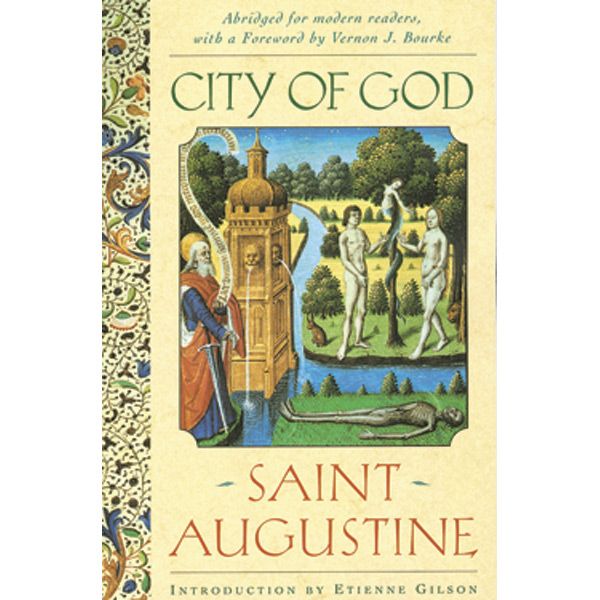
"The City of God" - Augustine's Attack on the Pagans
"The City of God" in A.D. 410 was a significant moment in Western history, when the Vandals, under the leadership of their king, Alaric, captured the city of Rome. Rome was known as the Eternal City because the Romans thought that it would truly never fall, and the year 410 shook this belief to its foundation
10 September 2026 · 6 min read