YugSamvad · Dharma & Culture
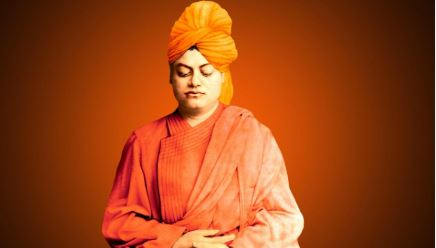
Dharma & CultureSwami Vivekananda - Through Whom the World Recognizes India
विशाल अग्रवाल · English edition 23 October 2026 · Hindi original 12 January 2019 · 6 min read
In modern times, if any saint has exerted the greatest influence on the public life of India, particularly on its youth, it is Swami Vivekananda. Swami Vivekananda, who presented the Vedanta (philosophical tradition based on the Upanishads) philosophy of Adi Shankaracharya in a modern perspective as Navya Vedanta, was born on 12 January 1863 in Calcutta as the son of Vishwanath Datta, a renowned High Court lawyer influenced by Western civilization, and Bhuvaneshwari Devi, a lady of religious temperament.
His childhood name was Narendranath, and he was a child of exceptionally sharp intellect. Under the influence of the religious and spiritual environment of the family fostered by his mother's devout nature, the sanskars (spiritual impressions) of dharma (righteous order and duty) and spirituality deepened in young Narendra's mind from early childhood, and an intense longing to know and realize God began to manifest in him.
By divine providence, his father Vishwanath Datta passed away prematurely, and the responsibility of the household fell upon Narendra. The financial condition of the family deteriorated severely. In search of mental peace during such times, Narendra began visiting the monastery of Ramakrishna Paramahamsa, a devout bhakta of Mother Kali, and gradually surrendered himself completely to him. His devotion to his guru was of such a degree that, demonstrating affection for everything belonging to Gurudev, he would personally empty the spittoon filled with blood and phlegm kept beside his master's bed.
It was through the power of such exclusive devotion and loyalty to the guru that he was able to serve his guru’s physical form and divine ideals with supreme devotion, comprehend Gurudev, merge his own existence into Gurudev's true nature, and later spread the fragrance of India's invaluable spiritual treasure across the entire world.
At the age of 25, Narendra donned the saffron robes and assumed his new name—Swami Vivekananda. Thereafter, he traversed the length and breadth of India on foot, striving to observe and understand life closely. To introduce the entire world to Sanatana Dharma, he conceived the idea of attending the World's Parliament of Religions held in Chicago (USA) in the year 1893, and reached there with the support of the Maharaja of Khetri. As a resident of an enslaved nation,
he had to face numerous hardships there, but through the efforts of an American professor, he was allotted a short time to speak. His address, beginning with the words "Sisters and Brothers of America," spellbound the audience. Hearing his profound thoughts, all the scholars present were astonished, and subsequently, his fame resounded throughout America.
He stayed in America for 3 years, imparting the wondrous light of Indian metaphysics to the people there. Beholding his oratorical style and wisdom, the media there bestowed upon him the moniker 'The Cyclonic Hindu'. In his brief lifespan of 39 years, the work that Swami Vivekananda accomplished will continue to guide generations for centuries to come. Gurudev Rabindranath Tagore once remarked—"If you want to know India, read Vivekananda.
In him you will find everything positive, nothing negative." Romain Rolland wrote of him—"It is impossible to imagine his second; wherever he went, he remained first. Everyone perceived in him their leader. He was a representative of God, and gaining mastery over all was his defining trait."
He was not merely a saint, but also a great patriot, orator, thinker, writer, and lover of humanity. He was convinced that holy Bharatvarsha is the sacred land of dharma and philosophy. It is here that great mahatmas and rishis were born; this is the land of sannyasa (renunciation) and sacrifice, and it is here—and here alone—from time immemorial to the present day, that the highest ideals of life and the doorway to liberation remain open for humanity.
This statement of his ought to be the foundation of our life—"Arise, awake, awaken yourself and awaken others! Make your human birth successful, and stop not till the goal is reached."
Swami Vivekananda was strictly opposed to sacerdotalism, religious ostentation, dogmatism, and obsolete dogmas. He engaged in spiritual contemplation only after placing dharma at the center of human service. His Hinduism was not bizarre, spineless, or ethereal. Only a Vivekananda could have declared that the 330 million hungry, impoverished, and malnourished people of this country should be installed in temples like gods and goddesses, and that the idols of gods and goddesses should be removed from the temples.
Swamiji pointed out that while material prosperity exists abroad and India indeed requires it, we must not become beggars. We possess far more that we can offer to the West, and the West stands in desperate need of it. This was not pride or grandiloquence on Swami Vivekananda's part regarding his nation's heritage. It was an objective, neutral, and value-based evaluation of Indian civilization and culture by a Vedantic monk, which prominent thinkers acknowledge today.
Vivekananda was a great visionary. He envisioned a society in which there would be no discrimination between human beings on the basis of religion or caste. He presented the principles of Vedanta in precisely this light. Without entering into the debate of spirituality versus materialism, it can be stated that a stronger intellectual foundation for the principle of equality than the one provided by Vivekananda can hardly be found. Vivekananda harbored immense hopes for the youth and considered them the centerpiece of the nation's aspirations. For the youth of today, the life of this fiery sannyasi serves as an ideal.
Like Adi Shankaracharya, the founder of classical Vedanta, this proponent of Navya Vedanta also departed from this mortal world at a young age on 4 July 1902, leaving behind his teachings. Building upon these, his disciples and followers constructed a temple in his memory there and established over 130 centers worldwide to propagate the messages of Swami Vivekananda and his guru Ramakrishna.
With the objective of keeping his memory immortal, the Vivekananda Rock Memorial was established in Kanyakumari under the leadership of Eknath Ranade, a senior pracharak of the Rashtriya Swayamsevak Sangh, upon the very rock where Swamiji sat in deep meditation and contemplated the state of the nation and society.
Under the leadership of Ranade Ji himself, Vivekananda Kendra was established in Kanyakumari on 7 January 1972 to disseminate Swami Vivekananda's teachings, whose current president is P. Parameswaran, who is also associated with the Sangh. Through four cadres of workers—Jeevanvrati, Sevavrati, Vanaprasthi, and Karyakarta—Vivekananda Kendra strives continuously to convey Swami Vivekananda's thoughts to remote areas. In memory of this young sannyasi, his birth anniversary is celebrated as National Youth Day.
– Vishal Agarwal (The author is a scholar of Indian history and culture, an educationist, and a voice for national interests. The author's Rashtra Aradhak series on great Indian personalities is worth reading.)
Read also,
Swami Shraddhanand is Even More Relevant Today
Sacred Remembrance of Vedamurti Pandit Shripad Damodar Satwalekar Ji
The One Who Made the Sangh Nation-wide: Former Sarsanghchalak Balasaheb Deoras
Cite this article
विशाल अग्रवाल. “Swami Vivekananda - Through Whom the World Recognizes India”. YugSamvad, 23 October 2026. https://yugsamvad.com/en/articles/svaamee-vivekaananda-jinase-duniyaa-bhaarata-ko-pahachaanatee-hai
https://yugsamvad.com/en/articles/svaamee-vivekaananda-jinase-duniyaa-bhaarata-ko-pahachaanatee-hai · accessed
Related reading
Yudhishthira's Dyuta: The Esoteric Vedic Akshavidya
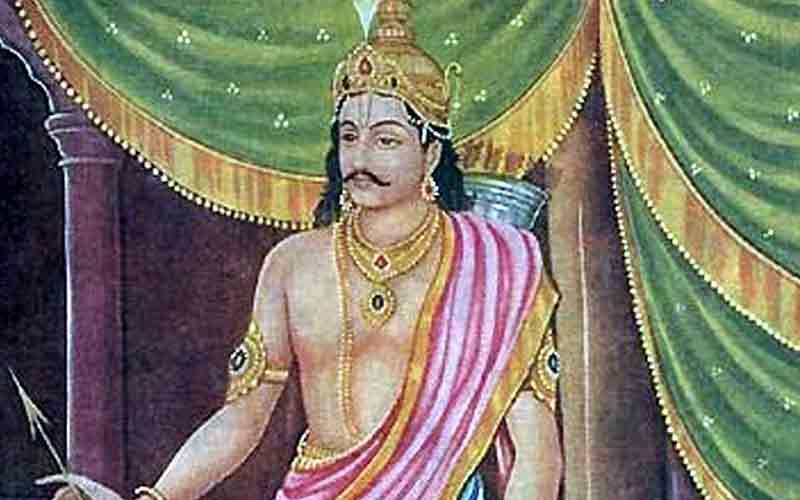
It is wrong to call Dharmaraja Yudhishthira a gambler. How many times in his life did Dharmaraja Yudhishthira play dyuta (the traditional game of dice)? How many times must one play to be called a vyasani (addict)? It is also wrong to call dyutavidya (the science of dice) gambling. Why did Dharmaraja Yudhishthira have to learn dyutavidya from a rishi (seer)? Why was no teacher to be found other than a rishi? Shaku...
18 October 2026 · 1 min read

Be It Kanyadaan or Vardaan: What Is Wrong with It?
Is *kanyadan* (the ritual offering of the bride) merely charity? Why is *kanyadan* performed, and is it an insult to women? Understand the true meaning of *kanyadan* in the Hindu *vivaha sanskara* (marriage sacrament), along with its cultural and Vedic significance. Read the authentic exposition of *vardan* (boon) versus *kanyadan*, the mystery of *Brahma vivaha* (the Brahma form of marriage), and a definitive response to the fallacies that seek to misrepresent Hindu traditions.
18 October 2026 · 5 min read