YugSamvad · Sanskrit & Shastra
Sanskrit & Shastra7 Truth You Must Know About Tipu Sultan
Shri Dwivedi · 23 October 2017 · 4 min read
1.Mass Rape, Genocide and Forcible Conversion in Kittur and Nargund:
The moment the city of Nargund fell, Tipu like a hungry wolf, rushed straight to the ruler's palace, his Muslim army burning and plundering the citizens and their houses. There he arrested the ruler, Bhave himself and his valiant minister, Pethe and put heavy fetters on their hands and feet. They and their relatives, their families and friends were all subjected to unbearable torture. The brutal humiliation Tipu himself inflicted on the royal ladies in the palace and caused his followers to perpetrate elsewhere in the city is beyond all description! The young and fair ones of the royal ladies were first put to inhuman torture and then brutally ravished. Tipu locked in his harem the exceptionally beautiful young lady from the royal family and took her to his capital. The sight of the inhuman and disgraceful treatment meted out to her daughters and daughters- in-law, nieces and grand-daughters broke the heart of Pethe's grand old mother and she died instantaneously.
2. Mass Rape, Genocide and Forcible Conversion in Coorg:
The cruelties which Tipu Sultan committed in Coorg, has no parallel in history. On one occasion, he forcibly converted over ten thousand Hindus to Muhammadanism. On another occasion, he captured and converted to Islam more than one thousand Hindu Coorgis before imprisoning them in the Sreerangapatanam fortress. Tipu Sultan forcibly abducted a young princess from the Coorg royal family and made her his wife against her will.
3.Atrocities in Bidnur:
The atrocities committed by Tipu Sultan in Bidnur in North Karnataka during and after its capture by him, were most barbarous and beyond description. Ayaz Khan who was Kammaran Nambiar from Chirackal Kingdom before his forcible conversion to Islam by Hyder Ali Khan, had been appointed as Governor of Bidnur. Tipu Sultan was jealous of and opposed to Ayaz Khan from the very beginning because Hyder Ali Khan had considered the latter more intelligent and smart. When Ayaz Khan learnt that Tipu Sultan was scheming to kill him secretly, he escaped to Bombay with plenty of gold. Tipu Sultan came to Bednur and forcibly converted its entire population to Islam. The people accepted Islam for the sake of their lives
4.Forcible conversion of thousands of Christians in Manglore:
After the capture of Mangalore, thousands of Christians were also forcibly sent to Sreerangapatanam where all of them were circumcised and converted to Islam.
5. Temple destruction and forcible conversion in Malabar:
According to Lewis B. Boury, the atrocities committed by Tipu Sultan against Hindus in Malabar were worse and more barbarous than those committed against the Hindus in Hindustan by the notorious Mahmud of Ghazni, Alauddin Khalji, and Nadir Shah.
According to the Malabar Manual of William Logan who was the District Collector for some time, Thrichambaram and Thalipparampu temples in Chirackal Taluqa, Thiruvangatu Temple (Brass Pagoda) in Tellicherry, and Ponmeri Temple near Badakara were all destroyed by Tipu Sultan.
6. Kozhikode made a gravyard
Kozhikode was then a centre of Brahmins and had over 7000 Brahmin families living there. Over 2000 Brahmin families perished as a result of Tipu Sultan's Islamic cruelties. He did not spare even women and children. Most of the men escaped to forests and foreign lands. Thali, Thiruvannur, Varackal, Puthur, Govindapuram, Thalikkunnu and other important temples in the town of Kozhikode as well as those nearby were completely destroyed as a result of Tipu's military operations.
7. Humiliating defeats at the hands of Maharaja of Travancore
It was January 1, 1790, when Tipu Sultan tasted a humiliating defeat. It is recorded in Travancore history and also confirmed by the local folklore that as the wounded Tipu was lying unconscious in the battlefield he was rescued by a Nair soldier who quietly carried the unconscious Sultan to the Mysore military camp during the night and left quickly. The brave Nair soldier could have easily killed the unconscious Tipu as many Muslims have done to a Hindu in similar circumstances; but his Hindu values of life prompted him to deposit the helpless victim near the Muslim camp.
Source: 1
Cite this article
Shri Dwivedi. “7 Truth You Must Know About Tipu Sultan”. YugSamvad, 23 October 2017. https://yugsamvad.com/articles/7-truth-you-must-know-about-tipu-sultan
https://yugsamvad.com/articles/7-truth-you-must-know-about-tipu-sultan · accessed
Related reading
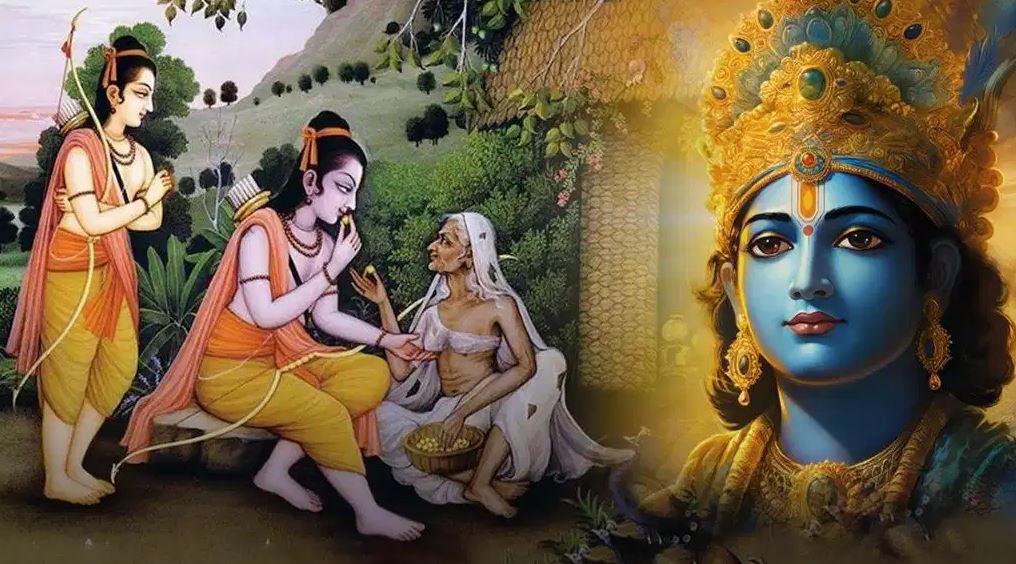
Shri Ram Eating the Tasted Ber of the Bhilni Shabari Is Proved from the Valmiki Ramayana
Nowadays, some hyper-scholars are propagating the delusion in society that the tale of Shabari’s "tasted ber (jujube fruits)" is not in the Ramayana, and that Shabari was not a low-caste devotee but an upper-varna (class/caste) woman. This is not only contrary to the supreme import of the shastra (sacred text), but also extremely harmful to social samarasya (harmony) and is a manifestation of ego and malice.
18 October 2026 · 13 min read
The Meaning of Medha, Kautuhala, Jigyasa and Herd Mentality
*Medha* (intellect) and the Herd “He who protects *dharma* (righteousness/cosmic order), *dharma* protects him.” The meaning of *dharma* is Vedic *yajna* (sacrificial ritual), that is, the *karma-kanda* (ritual section) of the Vedas. There are ten characteristics of *dharma* — *dhriti* (fortitude), *kshama* (forgiveness), *dama* (self-control), *asteya* (non-stealing), *shaucha* (purity), *indriya-nigraha* (sensory control), *dhi* (intellect), *vidya* (knowledge), *satya* (truth), and *akrodha* (absence of anger). But these are merely characteristics on the basis of which we can recognize that a particular...
18 October 2026 · 8 min read

Be It Kanyadaan or Vardaan: What Is Wrong with It?
Is *kanyadan* (the ritual offering of the bride) merely charity? Why is *kanyadan* performed, and is it an insult to women? Understand the true meaning of *kanyadan* in the Hindu *vivaha sanskara* (marriage sacrament), along with its cultural and Vedic significance. Read the authentic exposition of *vardan* (boon) versus *kanyadan*, the mystery of *Brahma vivaha* (the Brahma form of marriage), and a definitive response to the fallacies that seek to misrepresent Hindu traditions.
18 October 2026 · 5 min read