YugSamvad · Sanskrit & Shastra
Sanskrit & ShastraWhy Are the Puranas Important in Hindu Dharma?
Mudit Agrawal · English edition 18 October 2026 · Hindi original 5 July 2017 · 4 min read
The Saga of the Puranas, Part-1
The banyan tree of Hindu dharma (cosmic order and righteous duty), laden with many branches of flowers, leaves, and fruits, rests upon roots that run deep into the Vedas (sacred scriptures), but what is its trunk? Its trunk is the Purana (ancient compendiums of history and lore). If Hindu dharma were to be called a grand multi-storeyed building, the Veda would be called its foundation, and the 'Purana' its pillars upon which its roofs rest. Whatever Hindu dharma survives in the world today is entirely dependent on the Puranas; if we remove the Puranas from it, the Sanatan (eternal) banyan tree will fall headlong and the palace of Sanatan Dharma (eternal way of life) will be razed to the ground.
The Puranas are indeed the texts of not only Indian but also world history in this world. Excluding the Puranas, no coherent chain of world history can be established. The very name 'Purana' makes it clear that it is related to 'Purana' (ancient). The primary texts of Indian history are the 'Ramayana' and the 'Mahabharata'. But these two texts contain not just the history of their respective eras, but also a vast history of the times preceding them. Scattered throughout the Ramayana and the entire Mahabharata is the history of numerous royal dynasties and lineages of rishis (sages). One of the 18 Puranas, the 'Harivamsa Purana', is the final parva (canto/section) of the Mahabharata itself, which also contains a description of the life of Shri Ram. Thus, history and the Puranas are interwoven with each other.
The Puranas are not merely history, but the pitcher of nectar churned from Sanatan culture. All the traditions, rituals, conduct such as dana (charity), dakshina (honorarium), seva (service), and philanthropy, as well as behaviors like heroism, kindness, forgiveness, and truthfulness to one's word observed in Hindu dharma, are learned solely from the stories of the Puranas. Japa (meditative chanting), tapa (austerity/penance), niyama (observances), purity, bhakti (devotion), love for the cow, etc., are all learned from the Puranas alone. In such a scenario, the Puranas are like a torch for Hindu society, which kept dharma illuminated in the dark shadows of Kaliyuga (the age of darkness), preserved Indian wisdom, arts, and sciences, and did not let the consciousness of being Hindu perish despite slavery, the atrocities of followers of other faiths, contact with mleccha (barbarian/foreign) cultures, and the loss or near-extinction of other scriptures. The Vedas themselves declare that humans should conduct themselves in accordance with the Puranas.
What is the main subject of the Puranas?
- How did creation originate, and how were the five mahabhutas (great elements), senses, intellect, and other principles produced?
- Where and how will its dissolution occur, and what was and will be its course at different times and ultimately?
- What transpired between this creation and pralaya (dissolution)?
- What is the sequence of the origin of the elements of creation?
- In what order did the prominent rishis and kings of mankind assume authority, and what is the history of the solar, lunar, and other dynasties, Manu, the sons of Manu, devas (deities), danavas (demons), Indra, and the avatars (divine incarnations) of Bhagavan (the Supreme Lord)?
- What were the characters of those ancestors like?
That from which the knowledge of these five matters is obtained is called Purana Vidya (Purana knowledge). In this manner, the Puranas are the very all-in-all of the Hindu race. The Puranas must be revered just like the Vedas, because among all the shastras (scriptures), Brahma first recalled the Purana, and only after that did the Vedas manifest. That is to say, the Puranas were manifested even before the Vedas. Why? Understand it this way: if we want to drink a glass of water, first an image of the glass and water is formed in our mind; then we say with our voice, 'Give me a glass of water'—meaning, the meaning manifests before the word. In the same way, the profound meaning of the Vedas is inherent in the Puranas. Therefore, Brahma first recalled the 'meaning', i.e., the Purana, and subsequently, the Veda manifested in the form of Shabda Brahman (the Absolute as sound).
Therefore, it has been said, "One must study and elaborate the meaning of the Vedas through history and the Puranas. The Veda is afraid of men of meager knowledge who do not know history and the Puranas, fearing, 'Lest these men strike me.'" Hence, one who is hostile to the Puranas is hostile to dharma, and especially to the Veda. To be continued...
To read more articles in this series, click on the links below.
The Saga of the Puranas, Part-1, Why are the Puranas important?
The Saga of the Puranas, Part-2, Who is Vedavyasa?
Cite this article
Mudit Agrawal. “Why Are the Puranas Important in Hindu Dharma?”. YugSamvad, 18 October 2026. https://yugsamvad.com/en/articles/hindoo-dharma-men-kyon-mahatvapoorna-hain-puraana
https://yugsamvad.com/en/articles/hindoo-dharma-men-kyon-mahatvapoorna-hain-puraana · accessed
Related reading

Be It Kanyadaan or Vardaan: What Is Wrong with It?
Is *kanyadan* (the ritual offering of the bride) merely charity? Why is *kanyadan* performed, and is it an insult to women? Understand the true meaning of *kanyadan* in the Hindu *vivaha sanskara* (marriage sacrament), along with its cultural and Vedic significance. Read the authentic exposition of *vardan* (boon) versus *kanyadan*, the mystery of *Brahma vivaha* (the Brahma form of marriage), and a definitive response to the fallacies that seek to misrepresent Hindu traditions.
18 October 2026 · 5 min read
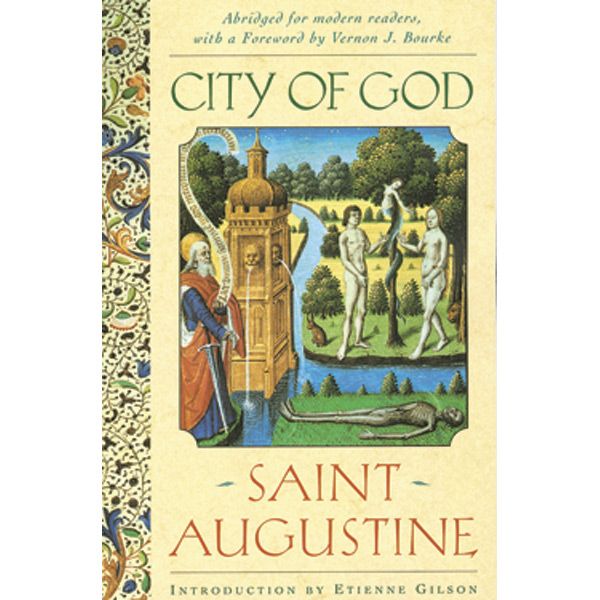
"The City of God" - Augustine's Attack on the Pagans
"The City of God" in A.D. 410 was a significant moment in Western history, when the Vandals, under the leadership of their king, Alaric, captured the city of Rome. Rome was known as the Eternal City because the Romans thought that it would truly never fall, and the year 410 shook this belief to its foundation
10 September 2026 · 6 min read