YugSamvad · Sanskrit & Shastra
Sanskrit & ShastraImportance and Contribution of the Vaishyas in Hindu Dharma
Mudit Agrawal · English edition 18 October 2026 · Hindi original 19 November 2017 · 5 min read
The opposition to the film *Padmavati* by the entire Hindu society is a matter of great joy. For the fierce opposition to the film, Shri Rajput Karni Sena and Rajput organizations have come together with Bajrang Dal, Vishwa Hindu Parishad, other Hindu organizations like Agarwal Sabha, Brahmin Sabha, Vaishya Sabha, and 36 other communities. Maharani Padmini is the mother of all Hindus, and her honor is not divided for anyone.
However, whenever Hindus begin to appear united, some fools start spreading casteism. For instance, some fools even call Rajputs cowards, while some cunning people hurl abuses at Brahmins without hindrance. Similarly, some specimens insult the Banias by calling them profiteers and selfish. The Vaishyas have never publicized themselves or blown the trumpet of their own greatness to look down upon others; hence they have always been underestimated and almost vanished from the view. Yet the Vaishya community has always supported every battle of the Hindus just as an accompanist supports a classical singer. Here are a few lines by a poet --
मुख्य गायक की गरज़ में,
वह अपनी गूँज मिलाता आया है प्राचीन काल से,
गायक जब अंतरे की जटिल तानों के जंगल में, खो चुका होता है,
तब संगतकार ही स्थाई को सँभाले रहता है।
तारसप्तक में जब बैठने लगता है उसका गला,
तभी मुख्य गायक को ढाढस बँधाता,
कहीं से चला आता है संगतकार का स्वर,
कभी-कभी वह यों ही दे देता है उसका साथ,
और उसकी आवाज़ में जो एक हिचक साफ़ सुनाई देती है,
या अपने स्वर को ऊँचा न उठाने की जो कोशिश है,
उसे विफलता नहीं,
उसकी मनुष्यता समझा जाना चाहिए।
Such is the Vaishya community, which, hiding away without any ego, has been making a squirrel's contribution to the battle of dharma. When we say that foreign invaders attacked and looted India's wealth and destroyed trade, who were those being looted? They were these very people. Yet they never strayed from dharma and always kept their wealth and resources open selflessly for the cause of dharma. The heaviest burden of wars falls upon trade itself, and it is the Vaishyas who make the state prosperous through taxes.
Jauhar is not of a single caste alone...
Will Durant wrote in his book *The Story of Civilization*, "When Alauddin entered Chittoor, there was not a trace of human life within the enclosing walls of the ramparts. All the men had been killed in battle and their wives in jauhar." According to Amir Khusro, "Apart from the soldiers, Khilji had 30,000 Hindus slaughtered, so much so that it seemed men grew in Khizrabad instead of grass." Therefore, it is clear that not just Rajputs, but Brahmins and Vaishyas alike—all faced sacrifice and slaughter. For no city is populated by a single caste alone. The vast Hindu society also lived under the protective shade of the Rajput empire. Thus, from the very beginning, this fight has not belonged to a single community alone, but to the pan-Hindu society.
The Donation of Bhamashah
The Vaishya community has never lagged behind for the sake of dharma. After the Battle of Haldighati, when Maharana Pratap was wandering in the forests for the self-respect of Mewar, Bhamashah donated his entire private wealth, which could sustain 25,000 soldiers for 12 years. With this received support, a new enthusiasm arose in Maharana Pratap, and reorganizing his military power, he defeated the Mughal rulers and reclaimed his state.
Excommunicated for Devotion to Dharma...
Such was the level of religious devotion among the Agarwal Vaishyas that one Lala Ratanchand became the dewan of the Mughal emperor Farrukhsiyar and a confidant of the Syed brothers. At that time, Lala Ratanchand's role was like that of a kingmaker. He had also opposed the jizya. However, the Agarwal community found his taking up service under Muslims unacceptable and excommunicated him. Before Ratanchand, no Agarwal had any ties with the Mughals. Later, Ratanchand formed a separate sub-caste named Rajvanshi. Because of this very righteousness, not a single case of an Agarwal converting to Islam is found before 1990.
Vaishyas: Selfless Servants of the Hindu Dharma
There is no need to recount this community's contribution to the construction and management of most of the country's temples, religious events, service projects, yajna-yagas, etc. Whether it is Bharatendu Harishchandra, the father of Hindi; Lala Lajpat Rai, the inspiration of revolutionaries; Hanuman Prasad Poddar ji and Jaydayal Goyandka ji, the founders of Gita Press who rendered unimaginable, selfless service to Sanatana Dharma; Sitaram Goel, who nurtured Hindutva with his pen; revered Ashok Singhal ji, who whipped up a storm for Shri Ramlalla across the nation; or the thousands of youths who historically participated in the Shri Ram Janmabhoomi movement—the Vaishyas never made their work a means of publicity or of flaunting favors. Nor did they ever look down upon respect/honors for it. They performed their share of the service to dharma and cast it away from their minds. Once again, becoming servants of dharma and saints, they considered making a squirrel's contribution to be the sole purpose of life. Yet, when certain people afflicted by the arrogance of casteism try to feed their own hubris by calling Vaishyas selfish, conniving, and passive, they evoke not anger, but pity.

In opposing the film *Padmavati* too, this community naturally and self-inspiritingly kept the flame alive, and will always stand for the mother's honor. The Rashtriya Agarwal Sabha fully supports and greets all those who stand for the mother's honor. The entire Vaishya community will continue to fulfill its duty by contributing in solitude to every act of dharma. Sometimes they will be seen in a corner healing the wounds of an injured cow, and sometimes laying stones at the doorstep of Ramlalla. Sometimes quenching the thirst of a parched traveler, and sometimes serving saints in a communal feast (*pangat*). Sometimes supplying rations in war, and sometimes found sacrificed on the battlefield with a smiling face....
- Rashtriya Agarwal Sabha
Cite this article
Mudit Agrawal. “Importance and Contribution of the Vaishyas in Hindu Dharma”. YugSamvad, 18 October 2026. https://yugsamvad.com/en/articles/hindoo-dharma-men-vaishya-samaaja-kaa-mahatva-aura-yogadaana
https://yugsamvad.com/en/articles/hindoo-dharma-men-vaishya-samaaja-kaa-mahatva-aura-yogadaana · accessed
Related reading
The Meaning of Medha, Kautuhala, Jigyasa and Herd Mentality
*Medha* (intellect) and the Herd “He who protects *dharma* (righteousness/cosmic order), *dharma* protects him.” The meaning of *dharma* is Vedic *yajna* (sacrificial ritual), that is, the *karma-kanda* (ritual section) of the Vedas. There are ten characteristics of *dharma* — *dhriti* (fortitude), *kshama* (forgiveness), *dama* (self-control), *asteya* (non-stealing), *shaucha* (purity), *indriya-nigraha* (sensory control), *dhi* (intellect), *vidya* (knowledge), *satya* (truth), and *akrodha* (absence of anger). But these are merely characteristics on the basis of which we can recognize that a particular...
18 October 2026 · 8 min read
Be It Kanyadaan or Vardaan: What Is Wrong with It?
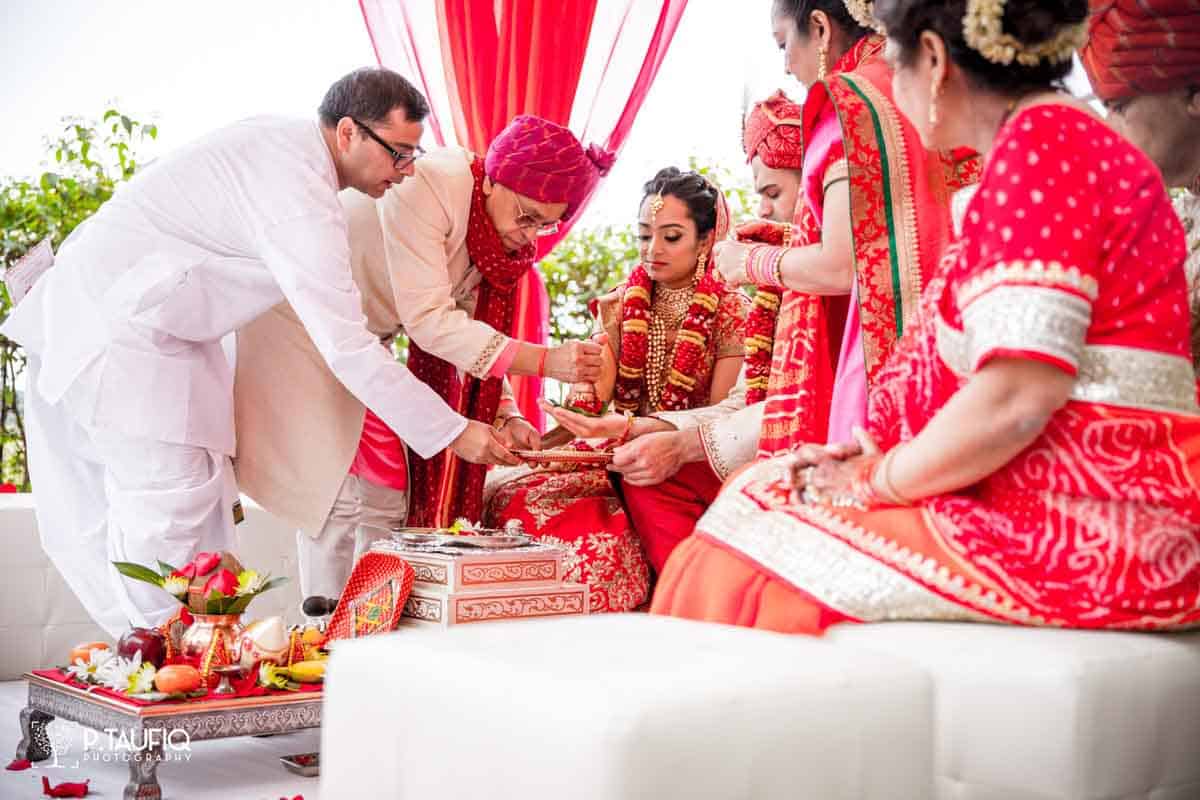
Is *kanyadan* (the ritual offering of the bride) merely charity? Why is *kanyadan* performed, and is it an insult to women? Understand the true meaning of *kanyadan* in the Hindu *vivaha sanskara* (marriage sacrament), along with its cultural and Vedic significance. Read the authentic exposition of *vardan* (boon) versus *kanyadan*, the mystery of *Brahma vivaha* (the Brahma form of marriage), and a definitive response to the fallacies that seek to misrepresent Hindu traditions.
18 October 2026 · 5 min read