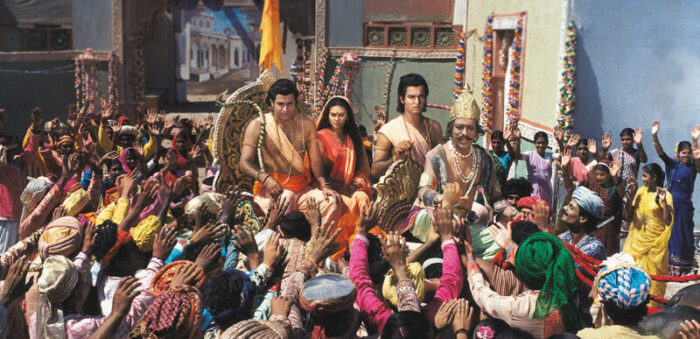
Dharma & CultureWhen Bhagwan Shri Ram was leaving for the forest, all the people of the city began to follow him. Among those people were three types of Brahmanas: some were elders by age (vayovridha), some were elders by knowledge (jnanavridha), and others were elders by austerity (tapovridha). Among the elders by age, some were so old that their heads shook upon their necks. Those Brahmanas were calling out from afar— O swift one!
23 October 2026 · 3 min read
Sanskrit & ShastraChennai, February 5: A video clip of DMK leader Stalin has surfaced on social media in which he is criticising the Vedic rituals of marriage. In this video, Stalin has insulted Hindu customs and, in particular, the Brahmins chanting the Vedas. Over the past week on social media
23 October 2026 · 6 min read
Dharma & CultureWherever we look in the world, nature-endowed diversity, distinctiveness, the distinction between adhikara (competence or entitlement) and anadhikara (lack of entitlement), and their harmony are readily apparent. Even across all beasts, birds, trees, stones, metals, and other jada (insentient) and chetana (sentient) entities, a continuum of difference born of inherent specificity is clearly discernible. This diversity of nature, replete with distinctiveness
23 October 2026 · 7 min read
Politics & HistoryRecently, Raja Bhaiya held a rally in Lucknow. It occurred to me, therefore, to conduct a survey via social media to ascertain the backgrounds of those who attended the rally. From yesterday until today—that is, after two days of painstaking effort—I found 100 people right here on Facebook who Raja Bhaiya's Lucknow
23 October 2026 · 5 min read
Dharma & CultureWhen Shri Ram was instructing Bharat in statecraft at Chitrakoot, He asked him whether the purohits (family priests) and brahmins in his kingdom were living in peace and happiness. Filled with curiosity, Bharat asked, “Elder brother! I can understand why you asked about the brahmins, but why did you ask about the purohits?” To this, Shri Ram...
23 October 2026 · 4 min read
Sanskrit & ShastraIt is asserted by some that no matter how wicked a woman may be, she must be respected, even if she is a prostitute. To substantiate this, they even advance arguments drawn from Hindu texts. One argument is that Hanuman Ji honoured Surasa and Trijata, who were rakshasis (demonesses), by addressing them as 'Mother'; then Bollywood act...
23 October 2026 · 6 min read
Sanskrit & ShastraThe Purusha Sukta (hymn to the Cosmic Being) of the Veda is that Manasarovar of Sanatana Sanskriti (eternal culture) from plunging into which our ancestors extracted the finest of gems and jewels. The Vedas manifested upon the earth solely to secure the welfare of all humanity. If Bharat is viewed after excising these very foundational texts of dharma (cosmic and moral order)—the Vedas, Upanishads, Smritis (remembered canon), and Puranas (ancient scriptures)—th
23 October 2026 · 6 min read
Sanskrit & ShastraAlthough descriptions of Brahmanas are found in numerous texts, the finest ones are in the Vedas and smritis (sacred texts outside the Vedas). The right to be a Brahmana belongs to everyone, regardless of caste, region, or sect. However, becoming a Brahmana requires the observance of certain rules. Through the observance of these very rules, eight Brah
23 October 2026 · 3 min read
Dharma & CultureRead both statements on jati (caste) and Hindu organization carefully and understand the difference. 1. "As long as the sense of jati does not end among Hindus, Hindu organization and Hindu awakening are impossible." — Veer Savarkar 2. "If the Hindu becomes awakened, he will automatically become organized and give a fitting response to the challenge of jati-bhed (caste division)..."
18 October 2026 · 1 min read
Politics & HistoryThis following essay is written by @RamaInExile.Trad: The events of the past few months have shaken me to my core. I was completely unaware of the true nature of the elements within these events. Like a tadpole, my worldview began to undergo a metamorphosis. In the name of Trad vada (Trad traditionalism), dharma...
18 October 2026 · 63 min read
Politics & History'Shri Ram's Devotee Shabari Was Not a Bhilni, But a Brahmani'
Author: Pandit Gangadhar Pathak ‘Vedadyacharya’
Chief Acharya – Shri Ram Janmabhoomi Shila Pujan, Ayodhya
Advisor: Shri Sarveshwar Jayaditya Panchang (traditional almanac), Jaipur
Conducting the shilanyas (foundation stone laying) of the Shri Ram Janmabhoomi Temple in Ayodhya with Prime Minister Shri Narendra Modi m
18 October 2026 · 1 min read
Sanskrit & ShastraThe opposition to the film *Padmavati* by the entire Hindu society is a matter of great delight. For this vehement protest against the film, along with the Shri Rajput Karni Sena and Rajput organizations, Bajrang Dal, Vishwa Hindu Parishad, other Hindu organizations, Aggarwal Mahasabha, Brahmin Mahasabha, Vaishya Mahasabha and 36 other communities (caste groups) have come together.
18 October 2026 · 5 min read
Sanskrit & ShastraGenerally, we consider someone a Brahmin, Kshatriya, Vaishya, or Shudra solely on the basis of jati (birth-caste), but according to Hindu dharmagranthas (sacred texts), a person's karma (actions) is of greater importance than their birth. It is only on the basis of karma that one can truly be called a Brahmin or anything else. Here, we shall see that Hindu sha...
18 October 2026 · 4 min read
Sanskrit & ShastraA gang has been created on social media that is manufacturing differences between Brahmins and Rajputs. Today, after conducting research across numerous grantha (texts), I would like to give them a reply. Although this research yielded 25-30 shloka (verses) and several episodes that illustrate the interdependent relationship between Brahmin and Kshatriya, but the article t
18 October 2026 · 7 min read
Sanskrit & ShastraTales from the Puranas (sacred texts), Part 3: When Romaharshana and Ugrashrava of the Suta jati (bardic order) became Brahmanas. "Breaking India" powers attack Hindu culture in order to break India; after all, Hindu culture is indeed Indian culture. Part of that very conspiracy is attempting to prove the casteism that emerged in the medieval period to be ancient, and the so-cal...
18 October 2026 · 6 min read
Sanskrit & ShastraWhat is varna (traditional social order)? Who is foremost among the four varnas? In contemporary times, the Shudra (service and artisan order) varna is perhaps assumed to be impoverished people clad in wretched clothes; that is why many jatis (lineage-based communities) take issue with being designated as Shudra varna. Before I offer my view on what follows, let me clarify one thing: if tomorrow someone presents me with my true history and th—
18 October 2026 · 4 min read
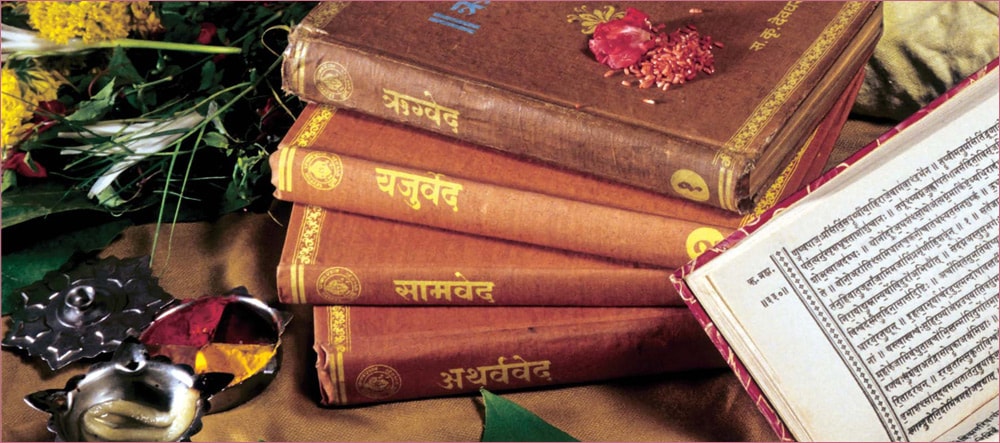
Dharma & CultureMantra: The instrument of the mind is called a "mantra". That is, the means to turn into truth whatever *sankalpa* (resolve) the mind conceives is called a mantra. No Vedic *samhita* (textual collection) contains "mantras". In the Rigveda, there are *richas* (verses) used for praise in a *yajna* (sacred ritual), the *saman* (melodic chants) of the Samaveda are sung, and with the *yajus* (prose formulas) of the Yajurveda, *havi* (oblation) is offered
18 October 2026 · 8 min read
Sanskrit & ShastraShudras (the fourth varna) lived on the outskirts of the village and protected it. Working on the land of farmers, demarcating village boundaries, providing security to merchants as they moved from place to place, protecting agricultural yields and the state treasury, and safely transporting them from one place to another—all these were the duties of the Shudras.
18 October 2026 · 10 min read
Sanskrit & ShastraWhere does the jiva (individual soul) go after death? A detailed description of this is found in the Chandogya Upanishad of the Tandya Mahabrahmana of the Samaveda. Three gatis (post-mortem paths) of the jiva are described there, among which we shall discuss the movement towards Chandraloka (realm of the Moon), in which...
17 October 2026 · 8 min read
Politics & HistoryBrahmins of Malav Republic: When the republics of Malvas and Kshudrakas made a confederacy to face Alexander, 5000 Brahmins from Malav republic left the pen for sword and died fighting. Only a few were captured. Brahmins of Musicanus (Mushika) and Oxycanus: When the two kings Mus
3 July 2020 · 3 min read
Dharma & CultureCommon people in the west know hardly anything about India. But one thing they all know: India has an ‘inhuman’ caste system, which is an important feature of their religion, Hinduism. Most also ‘know’ that Brahmins are the highest caste, which oppresses the lower castes, and wor
22 October 2019 · 7 min read
Dharma & CultureThis was a question on Quora to which I replied in August 2017. It got over 237,800 views and 16,000 upvotes, yet on 18. July 2019 I got a message that it violates their “Be nice, be respectful” policy. I appealed and today was told that my appeal is rejected. Please check for yo
22 October 2019 · 6 min read
Politics & HistoryIn a major move ahead of the Lok Sabha polls, the Union Cabinet on Monday cleared a 10% reservation in jobs and educational institutions for “economically weaker” upper castes, meeting a key demand of upper castes, a staunch BJP support base which has shown signs of a drift from
7 January 2019 · 5 min read
Sanskrit & ShastraCEO of Twitter was recently found posing with a placard saying 'Smash Brahminical Patriarchy', which later generated the criticism from Hindus, and an apology will be the logical culmination of the entire episode, but how the CEO of Twitter posed with such a placard is the produc
23 November 2018 · 3 min read