YugSamvad · Sanskrit & Shastra
Sanskrit & ShastraThe Science Behind Shraddha
Dr. Vineet Aggarwal · English edition 17 October 2026 · Hindi original 12 September 2019 · 8 min read
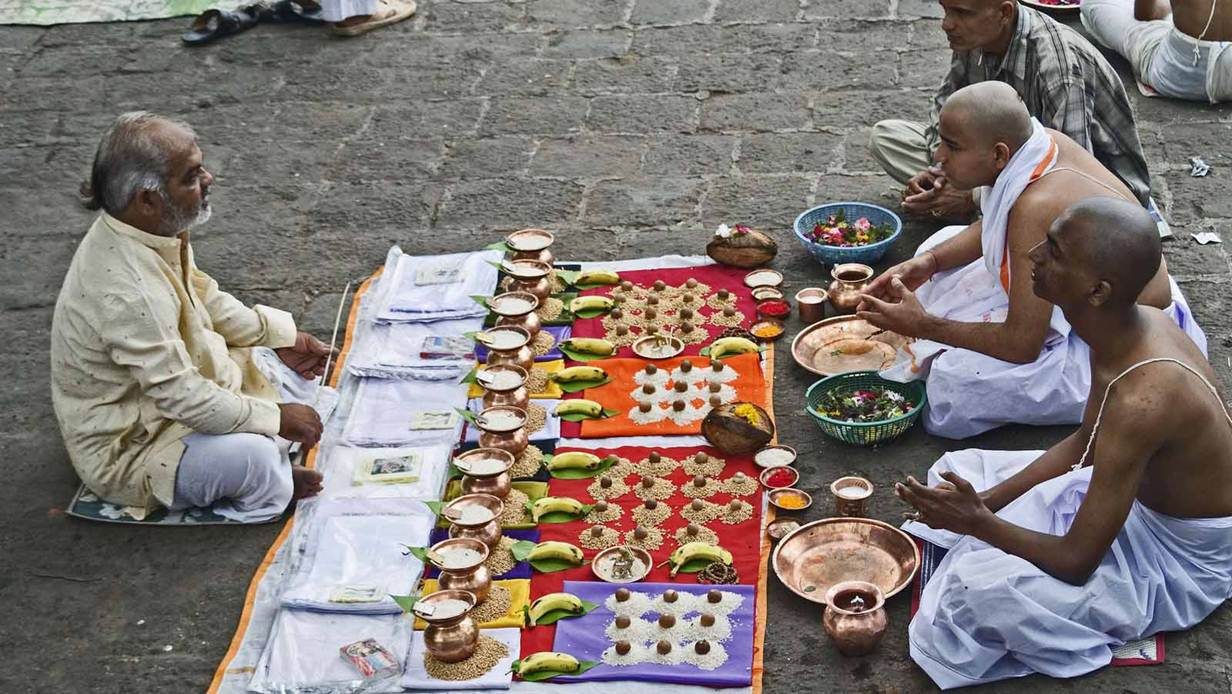
Where does this soul go after death? Its description is found in detail in the Chandogya Upanishad of the Tandya Mahabrahman of the Samaveda. There are three movements of the jeeva (individual soul) described there, out of which we will talk about the movement towards the chandraloka (lunar realm) in which the shraddha (rites for the ancestors) of the ancestors is performed. All our ancestors are called pitaras (ancestral spirits). It is self-understood that the corporeal body of the deceased does not come or go anywhere; there is no movement in the soulless, unconscious dead body. But the soul is omnipresent, and there is no movement even in the omnipresent. Therefore, only the subtle body composed of the five karmendriyas (organs of action), the five jnanendriyas (organs of perception), the five pranas (vital breaths), the mana (mind), and the buddhi (intellect), leaves the body and goes to other worlds and births.
Among these 17 elements, the mind is the dominant one, and it is the reason for the attraction of the subtle body towards the moon. But why? It is a law of science that homogeneous substances attract each other. Each object is attracted towards an object like itself. A lump of soil falls to the earth because of attraction. In physics, the law of gravitation is taught, which is nothing but the attraction between masses, G.m1.m2/r.r. In the same way, the mind is a form of the moon (chandrama)—“Chandrama manaso jatah” (The moon manifested from the mind of Virat Purusha, -Purusha Sukta, Rigveda)—and thus the mind-dominant subtle body has an attraction towards its like, the Moon.
How do these parts enter our subtle body? The answer is that just as when air flows through a flower, it carries away a fragrant fraction of the flower and becomes fragrant itself, or just as even after pouring water out of a bowl, a fraction of water still remains in the bowl—that is, when substances exist together, even after separation, a fraction of each remains attached—in the same way, when the subtle body that has resided for a long time in the corporeal body emerges from it, a part of that corporeal existence remains attached to it.
This article can be read in Hindi here,
Modern Science and Pitru Shraddha
The primary connection of shraddha is with the movement of the subtle body towards Chandraloka, because the recipients of shraddha are the ancestors who reside in Chandraloka. It is a law of nature that in moving from one point to another, every substance in the world undergoes loss of energy. You eat food, expend the energy gained, and feel hungry again by night. Plants watered today undergo attenuation and must be watered again tomorrow. To understand this more deeply, Rutherford proposed an atomic model in which the electron revolves around the nucleus at very high speed; however, according to Planck-Maxwell theory, accelerating electrons necessarily emit continuous electromagnetic radiation (this emission being attenuation), causing them to eventually spiral into the nucleus and cause a collapse, which is incompatible with atomic stability.
We are able to replenish our lost energy, but the souls traveling to different lokas (realms) do not possess the power to compensate for the attenuation occurring in their subtle bodies. We fulfill that need through shraddha. What happens if we do not perform shraddha? According to the Vedas, the mind is a fraction of the Moon and the intellect a fraction of the Sun. Therefore, while the Moon and the Sun exercise attraction over the mind and intellect components of the subtle body respectively, they exert no attraction over the elemental air. If the movement of those sun-oriented and moon-oriented souls is halted, they cannot proceed toward their respective realms and remain wandering in the atmosphere. Since the bodies of ghosts and spirits are composed of air, these wandering souls are likewise categorized as spirits. Hence the common saying among followers of Sanatana Dharma: "That man's shraddha was not performed, so he floats in the air."
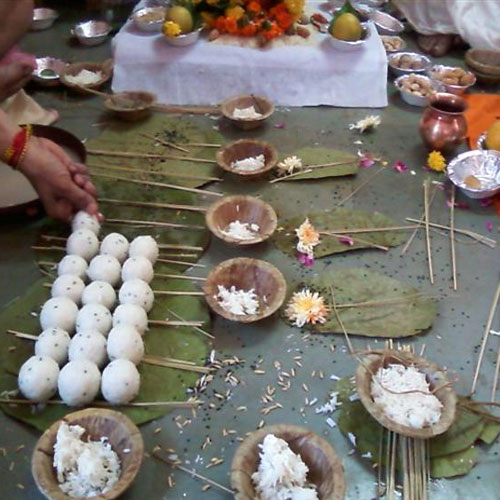
That is why the Vedas command sons to sustain the subtle bodies of their father and mother: "When you were bodiless, your parents constructed your body from their own elements. Today they are becoming bodiless, so it is your karma to construct their bodies now." Thus, according to the Vedas, the purpose of shraddha is to fortify the subtle body through the Soma (lunar energy) aspect of the rice pindas (sacrificial offer balls). Even through the lens of modern scientific principles, shraddha proves to be thoroughly consistent with science. The only difference is that modern science disavows spirituality, whereas shraddha is both spiritual and scientific.
Ascetics, sages, and realized beings travel along the path of devayana (path of the gods). They do not require the fortification of their subtle body by Soma, as they are inherently fiery in nature; nothing can impede the solar attraction acting upon them. Consequently, shraddha for ascetics is not required.
Those whose ancestors receive arghya (water offering) and kavya (offering for ancestral spirits) from them find satisfaction and bestow their blessings. Their blessings bring profound welfare. Conversely, the ancestors of those who neglect shraddha depart sighing with curses. In this manner, we have sought to illuminate the concept of shraddha in brief; the Shastras contain vast detail on this subject.
Shraddha: Pitru Suktam from the Rigveda
The Pitru Sukta is in Sanskrit. The 14 richas (verses) or mantras of the 15th sukta in the tenth mandala of the Rigveda constitute the Pitru Sukta. In the first 8 richas, the pitaras from various realms are invoked to accept the havis (sacred oblation offered to the pitaras as naivedya). The remaining 6 richas are prayers to Agni to convey all the pitaras here to receive the havis. Shankha Yamayana is the rishi (seer) of the Pitru Sukta, the pitaras are the presiding devata (deity), and the chhandas (poetic meters) are Tristup (verses 1–10, 12–14) and Jagati (verse 13).
May they ascend, the lowest, highest, midmost, the Fathers who deserve a share of Soma,
May they who have attained the life of spirits, gentle and righteous, aid us when we call them. [1]
Now let us pay this homage to the Fathers, to those who passed of old and those who followed,
Those who have rested in the earthly region, and those who dwell among the Mighty Races. [2]
I have attained the gracious-minded Fathers, I have gained son and progeny from Viṣṇu.
They who enjoy pressed juices with oblation seated on sacred grass, come oftenest hither. [3]
Fathers who sit on sacred grass, come, help us: these offerings have we made for you; accept them.
So come to us with most auspicious favor, and give us health and strength without trouble. [4]
May they, the Fathers, worthy of the Soma, invited to their favorite oblations.
Laid on the sacred grass, come nigh and listen: may they be gracious unto us and bless us. [5]
Bowing your bended knees and seated southward, accept this sacrifice of ours with favor.
Punish us not for any sin, O Fathers, which we through human frailty have committed. [6]
Lapped in the bosom of the purple Mornings, give riches to the man who brings oblations.
Grant to your sons a portion of that treasure, and, present, give them energy, ye Fathers. [7]
Our ancient Fathers who deserve the Soma, who came, most noble, to our Soma banquet,—
With these let Yama, yearning with the yearning, rejoicing eat our offerings at his pleasure. [8]
Come to us, Agni, with the gracious Fathers who dwell in glowing light, the very Kavyas,
Who thirsted mid the Gods, who hasten hither, oblation winners, the theme of singers' praises. [9]
Come, Agni, come with countless ancient Fathers, dwellers in light, primeval, God-adorers,
Eaters and drinkers of oblations, truthful, who travel with the Deities and Indra. [10]
Fathers whom Agni's flames have tasted, come ye nigh: ye kindly leaders, take ye each your proper place.
Eat sacrificial food presented on the grass: grant riches with a multitude of hero sons. [11]
Thou, Agni Jātavedas, when entreated, didst bear the offerings which thou madest fragrant,
And give them to the Fathers who did eat them with Svadha. Eat, thou God, the gifts we bring thee. [12]
Thou, Jātavedas, knowest well the number of Fathers who are here and who are absent,
Of Fathers whom we know and whom we know not: accept the sacrifice well-prepared with portions. [13]
They who, consumed by fire or not cremated, joy in their offering in the midst of heaven,—
Grant them, O Sovran Lord, the world of spirits and their own body, as thy pleasure wills it. [14]
Also read,
Why is Shraddha Important During Pitru Paksha?
Shraddha: The Remarkable Tradition Connecting Southeast Asia
Know the Mathematics of the Kumbha Mela.
Why Science & Religion May Not Be Adversaries!
Mathematics of Army Organization in Ancient India
Culture: The zest to communicate what has been communicated
Columbia University says plastic surgery first performed in ancient India
Cite this article
Dr. Vineet Aggarwal. “The Science Behind Shraddha”. YugSamvad, 17 October 2026. https://yugsamvad.com/en/articles/the-science-behind-shraddh
https://yugsamvad.com/en/articles/the-science-behind-shraddh · accessed
Related reading
Yudhishthira's Dyuta: The Esoteric Vedic Akshavidya
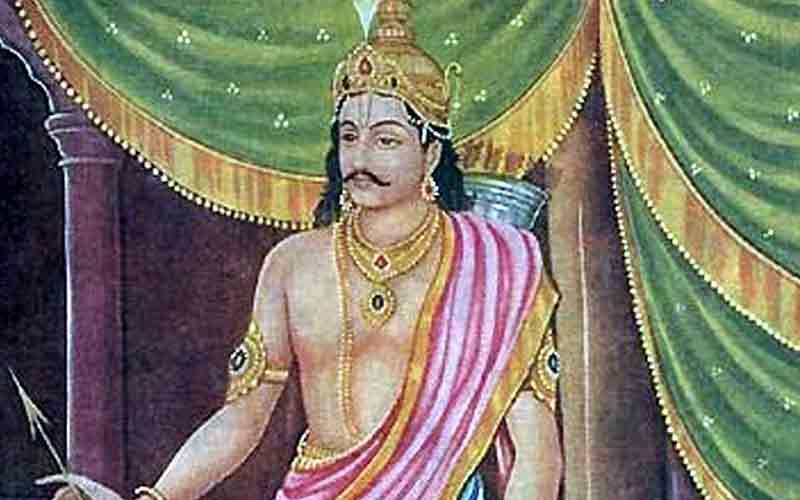
It is wrong to call Dharmaraja Yudhishthira a gambler. How many times in his life did Dharmaraja Yudhishthira play dyuta (the traditional game of dice)? How many times must one play to be called a vyasani (addict)? It is also wrong to call dyutavidya (the science of dice) gambling. Why did Dharmaraja Yudhishthira have to learn dyutavidya from a rishi (seer)? Why was no teacher to be found other than a rishi? Shaku...
18 October 2026 · 1 min read
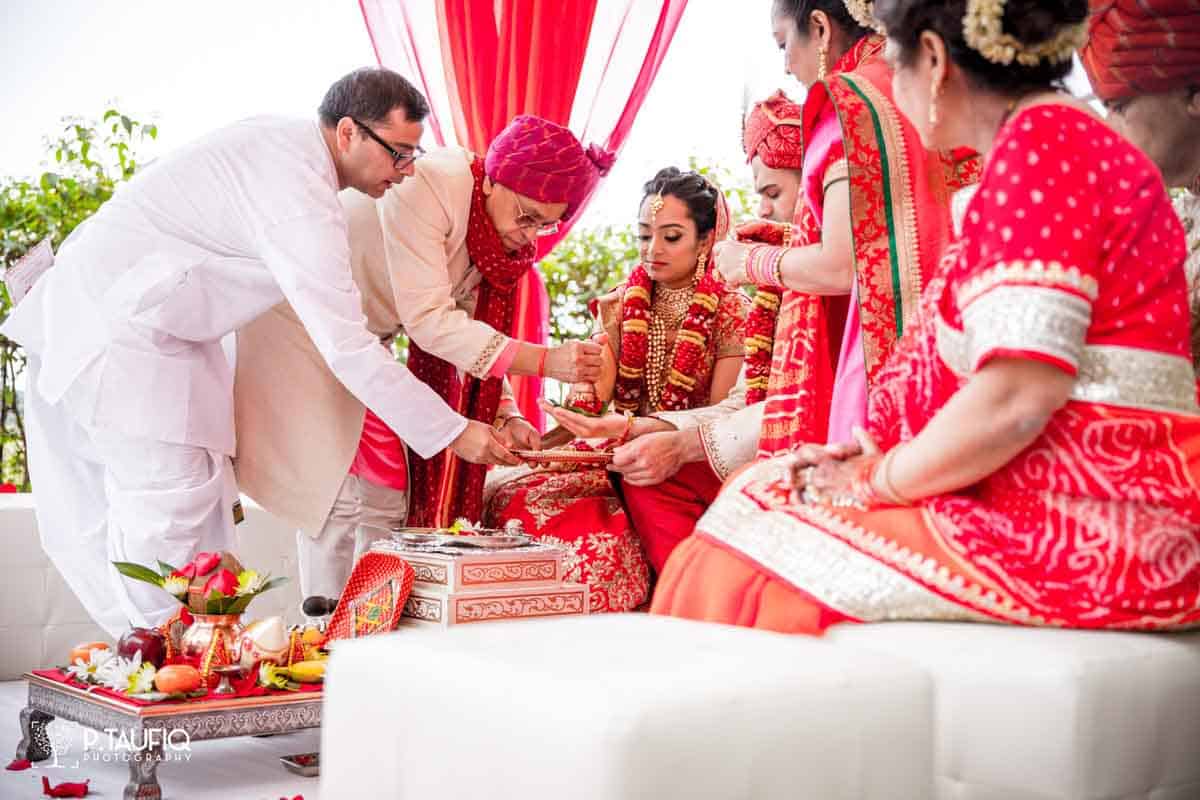
Be It Kanyadaan or Vardaan: What Is Wrong with It?
Is *kanyadan* (the ritual offering of the bride) merely charity? Why is *kanyadan* performed, and is it an insult to women? Understand the true meaning of *kanyadan* in the Hindu *vivaha sanskara* (marriage sacrament), along with its cultural and Vedic significance. Read the authentic exposition of *vardan* (boon) versus *kanyadan*, the mystery of *Brahma vivaha* (the Brahma form of marriage), and a definitive response to the fallacies that seek to misrepresent Hindu traditions.
18 October 2026 · 5 min read