YugSamvad · Sanskrit & Shastra
Sanskrit & ShastraWhen Romaharshan and Ugrashrava of Suta Jati Became Brahmanas
Mudit Agrawal · English edition 18 October 2026 · Hindi original 16 July 2017 · 6 min read
Saga of the Puranas, Part-3: When Romaharshana and Ugrasrava of the Suta Jati Became Brahmins
'Breaking India' forces attack Hindu culture to fracture India—after all, Hindu culture is Indian culture. Part of this conspiracy is to portray medieval casteism as ancient, instilling animosity in the minds of so-called lower castes by claiming that varna (social order) was determined by birth and that they were perpetually oppressed because of it. But just as adding a stream of lemon juice curdles hot milk instantly, taking a dip in the confluence of ancient Hindu shastras (scriptures) completely exposes this false conspiracy.
Bhagavan Vedavyasa, observing the aptitude of Romaharshana of the Suta jati (caste/lineage group), took him as his disciple and taught him Purana-vidya (knowledge of the Puranas). His objective behind this was to bestow the meaning of the Vedas through the Puranas for the welfare of those deprived of Vedic study. Romaharshana belonged to the Suta jati. An offspring born to a Kshatriya (warrior class) father and a Brahmana mother is a Suta, whose primary duty was to be a charioteer and engage in dynasty-singing and panegyric recitation (historiography). Now, it is noteworthy that due to varnasamkara (intermixing of varnas), a Suta did not have the right to study the Vedas, whereas both Brahmanas and Kshatriyas possessed the right to Veda-adhyayana (Vedic study). Yet, they were entrusted with the vital task of writing history; it was they who recorded and preserved the genealogies and sagas of kings. This clearly demonstrates that not having the right to study the Vedas did not determine one's status as high or low.
Romaharshana Ji was a beloved disciple of Vedavyasa Ji. By virtue of his brilliance, he composed his own texts on Purana-vidya. In those days, due to the re-compilation of the Puranas, this was a fresh discipline of learning, and Romaharshana Ji became renowned for propagating this knowledge. He made six learned Brahmanas his disciples. Now observe: learned Brahmanas became disciples of Romaharshana, who belonged to the Suta jati—otherwise perceived as lower. Thus, it is abundantly clear that varna was not a measure of high or low status, but rather represented different responsibilities and rights. Shri Krishna has stated in the Gita, 'चातुर्वर्णं मया सृष्टम्, गुण कर्म विभागशः' ("The four varnas were created by Me based on qualities and actions"), which simply means that the four varnas were created according to innate qualities and deeds.
Romaharshana Ji had a son named Ugrasrava, who studied Purana-vidya from his father as well as from his father's disciples, acquiring even greater knowledge of the Puranas than his father—proving to be a worthy successor who surpassed him. Once, thousands of rishis (sages) performed a grand yajna (sacred ritual) in Naimisharanya. When numerous yajamanas (patrons of ritual) collectively perform a yajna, it is called a sattra (sacrificial session). This yajna was to last for 1000 days. Since the yajna took place daily, a lot of spare time remained after each day's rites; however, the sacrificers could neither leave the venue nor engage in worldly affairs, making it difficult to pass the remaining time. Therefore, the rishis devised a solution: to spend the remaining hours listening to the newly compiled Purana-vidya created by Maharshi Vedavyasa. In this way, they would master a new discipline while utilizing their time productively. Thus, with great respect, they invited Romaharshana Ji, seated him on an elevated throne, while they themselves sat below, drinking in the nectar of his discourse. Romaharshana Ji narrated the Puranic tales so beautifully that every hair on the rishis' bodies thrilled with joy—hence he came to be known as 'Romaharshana' (one whose words thrill the hair on the body). This proves that in ancient India, personal qualities were revered far more than caste.

In this assembly, Rishi Shaunaka would pose questions intermittently, and Romaharshana or Ugrasrava would answer through the recitations of the Puranas. Through this dialogue, a fresh redaction of the Puranas took place, and Romaharshana Ji re-codified them while preserving the intended purport of Vedavyasa Ji. During the assembly, a moment came when Balarama Ji arrived at the sacrificial ground. All the rishis bowed to him, but Romaharshana Ji, seated on the elevated Vyasapeetha (seat of the preceptor), deemed it inappropriate to bow down from the Vyasapeetha itself. Balabhadra Ji thought, "Such great rishis and munis (ascetics) are standing up to pay me respect, yet this person hasn't even budged from his seat." Thinking that an unqualified person had insolently ascended the Vyasapeetha, he raised a weapon against the pulpit without asking the rishis, thereby killing Romaharshana Ji.
This unjust and adharmic (unrighteous) slaying sent shockwaves through the entire pavilion. All the rishis and munis were submerged in an ocean of grief. At that moment, Rishi Shaunaka said to Balabhadra Ji, "You have committed a terrible catastrophe. Romaharshana Ji was a scholarly disciple of Bhagavan Vedavyasa, proficient in Purana-shastra. Though he was not a Brahmana by birth, his Brahminic erudition made him worthy to occupy this Vyasasana (preceptor's throne). Out of reverence for the dignity and sanctity of the Vyasasana, Romaharshana Ji did not rise upon your arrival, and taking this as a personal insult, you killed him. Now, by killing Romaharshana Ji, you incur the sin of brahmahatya (slaying of a Brahmana). Furthermore, you have caused immense harm to us rishis and to the world. With his death, there is a risk that Purana-vidya will vanish."
Balarama Ji sank into deep remorse. He then said, "I must surely suffer the consequences of this grave sin, but what should I do now to preserve Purana-vidya?"
Shaunaka replied, "We must summon Rishi Ugrasrava, son of Romaharshana, to continue the Puranic discourse; he too is a great pandit (scholar). We shall not allow this wisdom to perish."
Balabhadra Ji fell at the feet of Rishi Shaunaka and said, "O exalted Muni! Please invite Ugrasrava Ji and seat him upon this Vyasapeetha. Once he is seated, I will beg his forgiveness for my offence, and to expiate the sin of brahmahatya, I shall undertake a pilgrimage visiting holy places to perform prayashchitta (expiation)."
Then Rishi Shaunaka called Ugrasrava, explained the entire situation, and seated him on the Vyasagaddi. Balabhadra Ji sought forgiveness for his transgression and departed to perform prayashchitta. Observe how, on the strength of their inherent virtues and wisdom, Romaharshana Ji and Ugrasrava attained the status of a Brahmana, and Shri Balarama Ji incurred the sin of brahmahatya. In that era, birth or caste was no barrier to attaining prestige and acquiring wisdom.
Then Rishi Ugrasrava began narrating the Puranas. Among the Puranas available today, several attribute the reciter as Romaharshana, while several attribute Ugrasrava. The very Puranas upon which Hindu society stands today were preserved by members of the Suta lineage—often misconstrued as 'lower'. Had these Puranas not existed, Sanatana Dharma (the eternal order) would crumble in an instant.
This stands as a fitting response to the false propaganda of leftists and proselytizing missionaries who sow seeds of hatred among Hindu brethren. Every individual ought to abide by their rightful domain and fulfill their dharma (righteous duty); this brings welfare not only to oneself but to the entire world. However, those who abandon their own dharma and attempt to encroach upon another's end up acquiring only infamy and sin.
To read more articles in this series, click on the links below.
Saga of the Puranas, Part-1: Why are the Puranas Important?
Saga of the Puranas, Part-2: Who is Vedavyasa?
Saga of the Puranas, Part-3: When Romaharshana and Ugrasrava of the Suta Jati Became Brahmins
Historicity and Authenticity of Shrimad Bhagavata and Other Puranas
Books That Must Be Read to Understand Sanatana Dharma
Sampradayas of Sanatana Dharma and Their Major 'Mathas' and 'Acharyas'
Cite this article
Mudit Agrawal. “When Romaharshan and Ugrashrava of Suta Jati Became Brahmanas”. YugSamvad, 18 October 2026. https://yugsamvad.com/en/articles/jaba-soota-jaati-ke-romaharshana-aura-ugrashravaa-braahmana-bana
https://yugsamvad.com/en/articles/jaba-soota-jaati-ke-romaharshana-aura-ugrashravaa-braahmana-bana · accessed
Related reading
Suicidal Flaws in Countering Sarvadharmasamabhava
Over the past 90 years, the rise of the politics of Muslim appeasement has caused immense damage to Indian culture. By equating 'Ali, Maula, Allah' with Ishvara (the Supreme Godhead), pseudo-secularism has paralyzed our core spiritual and cultural consciousness. Even from a definitional perspective, 'religion' and 'mazhab' (confessional faith) are distinct from dharma (righteous duty and cosmic order)—
18 October 2026 · 8 min read
Be It Kanyadaan or Vardaan: What Is Wrong with It?
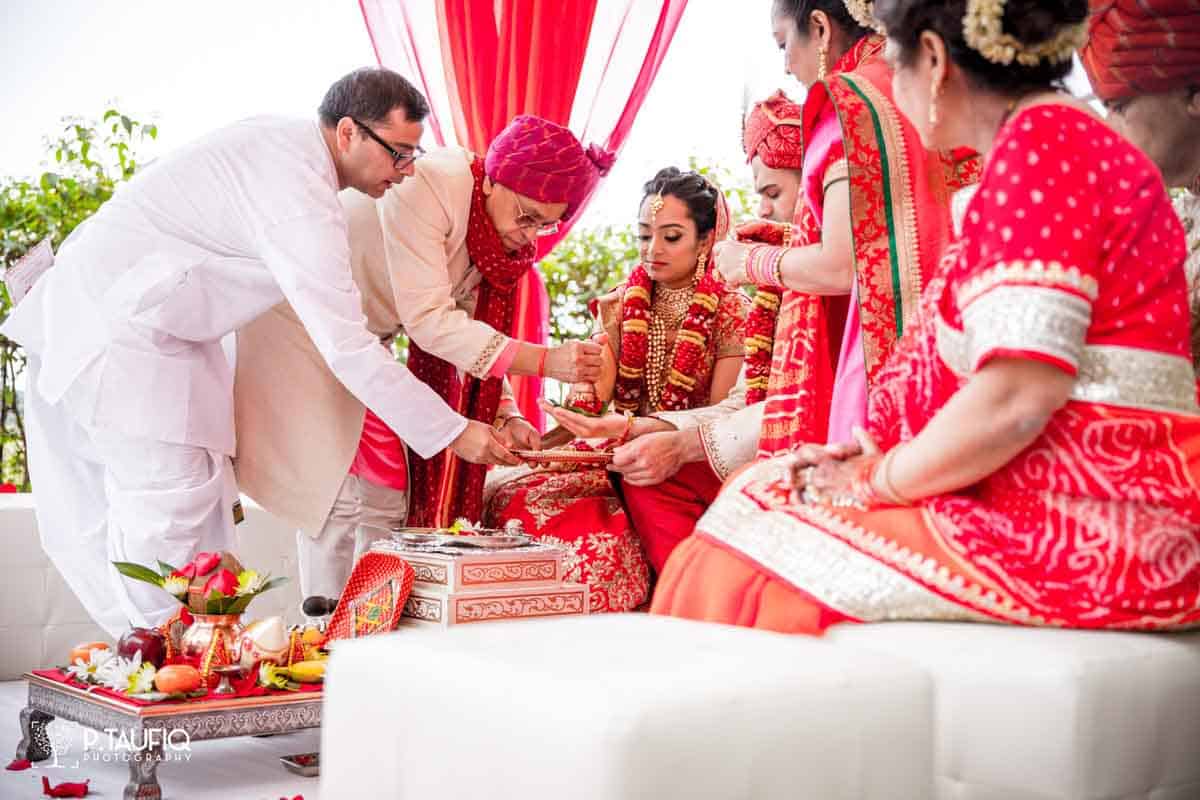
Is *kanyadan* (the ritual offering of the bride) merely charity? Why is *kanyadan* performed, and is it an insult to women? Understand the true meaning of *kanyadan* in the Hindu *vivaha sanskara* (marriage sacrament), along with its cultural and Vedic significance. Read the authentic exposition of *vardan* (boon) versus *kanyadan*, the mystery of *Brahma vivaha* (the Brahma form of marriage), and a definitive response to the fallacies that seek to misrepresent Hindu traditions.
18 October 2026 · 5 min read