YugSamvad · Politics & History
Politics & HistoryKarpatraratnasamuchchaya and Tradition-ism | Including 'Kutarkakootnashak' (Destroyer of False Logic)
प्रतिज्ञ · English edition 18 October 2026 · Hindi original 31 August 2021 · 63 min read
- Trad The following article is written by Pratijya @RamaInExile. Trad
The events that occurred with me over the past few months have shaken me to the core. I was unaware of the true nature of the components involved. Like a frog in a well, my own worldly outlook began to undergo a metamorphosis. I was stunned to see the universal symbols of dharma being stripped bare in the name of Trad-ism. Consequently, to pacify the turmoil within, I decided to go to the root of it all, and what came to hand was the Karpatri literature. I had, and still have, immense respect for the erudite scholar, Dharma Samrat Anant Shri Swami Karpatri Ji Maharaj, who was adorned with titles such as "Abhinav Shankar" and "Kaliyuga Vyas". One can always learn from someone's spiritual austerities and good qualities. But after reading his literature and classical commentaries, my outlook changed. Therefore, without praising or condemning him, I am presenting some of the unheard views of Maharaj Ji. My intention is not to hurt anyone.
Karpatri Maharaj was opposed to shudra temple entry. According to his interpretation, lower castes like shudras were not permitted temple entry by dharma. Criticizing the Rashtriya Swayamsevak Sangh (RSS), which champions equality, Maharaj Ji says with a sharp tone: "They are always bent upon destroying scripturally ordained temple decorum; just like socialists, the Sanghis too want to destroy temple decorum by dragging Bhangis into the temples." (A.Au.Hin./120/29). When Swami Ji is invited in the context of temple consecration following the restoration of Somnath, he lays down a condition, asking: "What is the decorum of temples? How is it to be observed? Who should be allowed entry into them and who not?" (Vi.Pi./362/11-20).
Not only this, elucidating his stance at another place, he wrote that, "It is a strange thing that even government sadhus and government pandits remain silent on the entry of Harijans into the Vishwanath temple." (Na.Aa./57/25-26). Maharaj Ji says that, "Those who used to refute idols by calling them stones are today, like orthodox idol-worshippers, proclaiming the necessity of temple entry and darshan of the deity for everyone in order to defile the temples of the gods." (San.E.V./67/1-3). Maharaj Ji writes that, "Temple entry, and the sharing of food and marital relations , are against the shastras, and impossible for one who follows the shastras." (San.E.V.65/25). While writing against the policies of the contemporary government against Hindu dharma, Karpatri Maharaj also speaks out on temple entry, stating, "The decorum of Hindu temples is being breached and they are being devastated." He writes further, "To shatter the beliefs and religious sentiments of the faithful, the government wants to barge everyone indiscriminately into the temples." (A.Au.Ra/6/20-29).
What is this temple decorum, really? According to Karpatri Maharaj, everyone has the right to the darshan of the temple spire (Vi.Sha./96/15-18). Therefore, shudras and lower castes can only pacify their spiritual yearning through the darshan of the temple spire. Explaining the greatness of preserving temple decorum, Karpatri Maharaj rationally answered Chief Minister Sampurnanand on matters like Harijan entry, explaining that if an antyaja has the darshan of the temple spire and performs external service to the temple, he receives the exact same fruit according to the shastras. Thus, the above evidence makes the views of Karpatri Maharaj clear. Besides these, other proofs are available, such as the debate between Neem Karoli Babaji and Swami Ji, evidence from political documents, contemporary newspapers, and hoardings prohibiting shudra entry outside temples of the time, but Karpatri Maharaj's own writings are an impartial reflection of his ideology.
It is with great sorrow that one must say his supporters have given up, ignoring his very own ideas and casting away his scriptural interpretations. They do not have the courage left to present the scriptural standpoint against shudra temple entry. Instead, by hook or by crook, they try to preserve Swami Ji's fading halo by deflecting the issue and reducing the debate merely to sanctum sanctorum entry— Swami Ji never even spoke of sanctum sanctorum entry! As proof, they cite some commemorative volume that shrouds the truth! If the Trad brethren themselves are weeping and wailing while incorporating reformism and abandoning the tradition of prohibiting shudra temple entry, then the very traditionalism the Trads advocate turns out to be utterly hollow!
Karpatri Maharaj was also a supporter of untouchability by birth. According to him, practicing untouchability with lower castes is a scriptural command. Exposing the anti-dharma activities of so-called reformist Vaishnav storytellers influenced by the Bhakti movement, Maharaj Ji writes—"Under the guise of chanting the divine name, reformers got a wonderful opportunity to erase touchability and untouchability as established by the shastras. In the kirtan circle, there was even inter-dining with a devotee of Mleccha birth. Some people issue invitations for Satyanarayan katha-kirtan, call innocent, naive Sanatanis, and preach the eradication of untouchability. They have the prasad distributed through the hands of untouchable and non-inter-dining people, and say—'None asks of caste or line, whosoever worships Hari becomes Hari's own...'" (San.E.V/63/15-20). Thus, Maharaj Ji fully supported the tradition of untouchability, which according to him was scripturally proven. He says that, "Just as one has to wash one's hands after touching internal organs, similarly, not touching antyajas is not an insult to them." (San.E.V/66/18-20). Swami Ji's view was that one should not even accept prasad from the hands of such people. If any Brahmin refused to accept prasad, or if any Vaishnav said—look, the king refused to accept prasad from the hands of a cowherd, and all his sons and descendants perished... all such talk is contrary to dharma according to Karpatri Maharaj. (San.E.V/64/1-3).
According to Karpatri Ji Maharaj, we should not imitate the embrace of Nishadraj, a lower-caste man, and Shri Ram, and furthermore, in matters of conduct and the like, dharma shastras are authoritative, not history (Ramayana and Mahabharata). (Ra.Mi/765/18-26). And from the perspective of "If even the shadow of a shudra touches , it must be cleansed with water" — such was his view. Swami Ji was not in favor of inter-dining or marital relations. Maharaj Ji writes: "While talking big about dharma, Sangh people do not consider it a loss of dharma to eat the food of Bhangis and Chamars." (A.Au.Hi/120). Repeating his point at another place, he says, "Boys of the nation, falling into the Sangh, are becoming hypocrites—deprived of sandhyavandan, sun darshan, study of the Vedas and other shastras, and scriptural good conduct, eating everyone's food in the name of love and breaking the varna system." (A.Au.Ra/13/9-12). The intent is clear: presumably, eating a shudra's food and inter-dining were not in accordance with scriptural good conduct (interpreted by Maharaj). Karpatri Ji Maharaj also believed in blood distinctions between Brahmin, Kshatriya, Vaishya, and shudra.
According to most Indian intellectuals, the term "caste" originated in Europe, where it was viewed from the perspective of blood purity, and after the British invasions of India, the word "caste" came to be linked with blood purity. However, according to Karpatri Maharaj, the theory of blood distinctions among varnas is shastra-approved. There is no external difference among Brahmin, Kshatriya, Vaishya, and shudra, but there is a difference from the perspective of blood. Maharaj Ji's statement is: "Even though upper-level differences are not apparent among Brahmins and others, it is mandatory to consider them different based on the differences in their various qualities, duties, and blood, which are cognizable through shastric authority." (M.Au.Ra/284/4-5). According to Maharaj Ji, "Pride in pure blood is not mere arrogance." (M.Au.Ra/287). Maharaj Ji constantly spoke of blood admixture and blood purity.
Discussing this very blood purity, Maharaj supports the purdah system and child marriage. Maharaj Ji explains, "A woman is married at the age of nine or ten; the moment she enters her father-in-law's house, she remains in purdah. She does not even speak to her elder brothers-in-law, always staying behind a veil inside the house; where the purdah system does not exist, the practice of averting one's gaze is certainly there. Going out alone without family members is simply impossible, and speaking to any outsider is out of the question—let alone meeting them independently! In such a situation, adultery within the family might perhaps occur, but a relationship with another caste is utterly impossible!" (M.Au.Ra/223/1-6). These words prove Maharaj Ji's ideology. It appears Maharaj Ji was more concerned that relationships with other castes should not happen than he was about intra-family adultery. Maharaj Ji writes further, "When a woman attains puberty, mental aberrations may arise, and her mind may wander toward someone; therefore, the rule is to marry before the attainment of puberty." (M.Au.Ra/223). Through such statements, Maharaj Ji supports child marriage.
Regarding entitlement and lack thereof, it is well known that women and shudras do not have the right to the Vedas and Vedanta. There are many other rights they do not have, as pronounced by the smritis.
We have seen Karpatri Maharaj's views on shudra temple entry, untouchability, and inter-dining, but beyond all this, while interpreting the shastras, Karpatri Maharaj attempts to deprive the shudra even of the Sanskrit language. A shudra has the right only to mantras ending in names in Sanskrit. Karpatri Ji Maharaj writes—"To say that 'Sanskrit language is everyone's language' is directly contrary to fact. From the perspective of the shastras too, Sanskrit has been declared to be the language of the dvijas alone. For many people, even the pronunciation of Sanskrit words is prohibited." (R.Au.Hi./147/5-7). At another place, Maharaj Ji made this even clearer: "Sanskrit is not just the language of Brahmins; it is the language of all three varnas—Brahmin, Kshatriya, and Vaishya. Why, it is even the religious language of all living beings. Shudra brethren have the right, according to their entitlements, to Sanskrit mantras ending in names." (R.Mi./760/28-31)! All these statements seem to give support even to Ambedkarites, because Bhimaites spout falsehoods and nonsense by declaring Sanskrit to be the language of Brahmins and Pali-Prakrit to be the language of shudras.
"Furthermore, a shudra has no right to milk (drinking Kapila cow's milk), Pranava (Om), Saligrama worship, or homa." (Vi.Pi./194/7-9)! Be that as it may, Maharaj Ji did not stop there; reminding the so-called anti-dharma reformist Vaishnav storytellers—who go about in the name of uplifting untouchables—of the rights of shudras, he says, "Yes, everyone has the right to chant the divine name, but only the traivarnikas have the right to chant the divine form, etc., through the Vedas and Vedanta." (San.E.V/80/7-10). That is to say, shudras and people of other lower bloodlines can only chant the name—Ram Ram Ram... in this manner—but a shudra has no right to such kirtan through the Vedas, Vedanta, and other sources that describe the Lord's form, essence, and majesty apart from His name. Maharaj Ji clarifies that shudras do not even have the right to read Puranas and historical shastras; they may only listen to stories of Puranas, Ramayana, etc., from the mouth of a Brahmin. That is to say, they do not even have the right to recite the Vishnu Sahasranama or any other Sanskrit/Pauranic stotra. Whereas all Vaishnav traditions clearly recognize the right of shudras to recite Sanskrit and historical (Ramayana/Mahabharata) texts, Puranas, Vishnu Sahasranama, etc. This right is also proven by the phalashruti of the stories and numerous stotras found in the Puranas.
Maharaj Ji was not in favor of the participation of shudras and women in bhajan-sankirtan programs either. He writes, "In these institutions and festivals, generally the shudra community and married or widowed women participate by neglecting their duties appropriate to their svadharma." (San.E.V/78/17-20). Maharaj Ji wanted people not to abandon their birth-based svadharma in the name of spirituality. Anyway, if shudras and women start moving toward spirituality, then who will serve the traivarnikas? Be that as it may, Maharaj Ji says further, "Whose duty it is to take refuge in Sri Hari right within their homes, sustaining their lives through proper labor while remaining dependent on fathers, sons, brothers, etc." (San.E.V/78/21-22). Therefore, they should stay within the four walls; even if the purpose is kirtan, etc., they should not step outside, but contemplate Hari at home.
Karpatri Maharaj expresses his views by writing through a question-and-answer format. Amidst this, he raises a question: "Some people, while claiming to follow the shastras, say that even a shudra who is a devotee of the Lord is worshipable, while a Brahmin who is not a devotee is not worshipable; therefore, a shudra devotee adorned in ascetic robes is also worshipable."(San.E.V/67) Now, in response to this, Maharaj Ji, by elaborating on the entire shastra, proves that the above notions are against the shastras. Maharaj Ji explains, "Just as a cow that kicks is still a cow; similarly, 'Even a vicious dvija is worshipable'—a vicious, low... Brahmin is also worshipable. But 'Not a shudra, even if he has conquered his senses.'" (San.E.V/68). That is to say, even if one who has conquered his senses happens to be a shudra, he is not worshipable. According to Swami Ji's view, such a shudra may be worthy of respect, but not worshipable. Maharaj Ji even states that, "For a shudra, offering obeisance brings down even a traivarnika who is blazing like fire." (San.E.V/68/21-23). That is to say, a shudra is not even worthy of being greeted, no matter how self-controlled he may be. Maharaj Ji writes, "A duty-bound shudra pays obeisance to a duty-bound Brahmin; a Brahmin does not pay obeisance to a shudra. A father does not bow to his son; the son bows to his father. The father calls the son by 'Hey-O', and the son addresses him as 'Pitaji'!!"(Vi.Pi./416/15-18).
Lest the worshipability of Mother Shabari—who was low-born or outside the varna system, yet a devotee of the Lord—be doubted, Maharaj Ji, declaring Shabari to be a Brahmin for the first time in history within his book *Ramayana Mimamsa*, puts forth a bizarre interpretation of Valmiki Ramayana, etc., rejecting all other Ramayana authors, commentators, explicit statements, Vaishnav traditions, and popular customs. The aforementioned opinion is refuted with evidence in the following article. Karpatri Ji Maharaj writes, "According to Valmiki Ramayana, Shabari was a righteous Brahmin shramani. Shabari was merely her name. She was neither a Bhilni nor of the Shabar tribe, and shramani means she was a siddha, recognized as a siddha, a female ascetic. To describe Shabari here and there as belonging to the Shabar tribe and her offering tasted/bitten fruits to Shri Ram is not authentic, but is only for the sake of praising her love." (Ra.Mi./488-489/...)
Shri Ram Eating the Tasted Ber Fruit of the Bhilni Shabari is Proved from Valmiki Ramayana
Karpatri Ji Maharaj states that "A Brahmin must not be killed" prohibits the killing of a Brahmin caste, whether noble or base (Ra.Mi/612)!! To devotee shudras, wearing saffron robes also appeared anti-scriptural to Maharaj Ji. (San.E.V/67/8-9). Swami Ji's opinion is that women too, neglecting the glory of pativratya as established by the shastras, foolishly strive to become Gopis. The question arises: what is this svadharma? Karpatri Maharaj's tradition considers varna to be determined by birth and accepts the corresponding system of duties—which in plain words means one hundred percent reservation by birth. Maharaj Ji writes, "A learned Brahmin should be made a priest and a Mahamatya. Brahmins alone must be appointed to the posts of chief justice and teacher. A pure, valiant Kshatriya should hold the post of commander-in-chief, and soldiers too should mostly be high-born Kshatriyas. Vaishyas should be treasurers, and shudras should be ministers of service. Leather merchants and heads of machinery/workshops should be leatherworkers. The head of the sanitation department should be an antyaja. Similarly, shudras should predominate in almost all mechanical arts, crafts, factories, etc." (A.Na./56/1-7).
That is to say, everyone's future is predetermined by birth; in this system, devoid of personal striving and without considering capability or incapacity, a creature conforming by birth to its svadharma is a true Hindu. It should be known here that Karpatri Ji Maharaj believed in Brahmins, Kshatriyas, Vaishyas, shudras, etc., by birth. And throughout the Karpatri literature, it is stated everywhere that just as a lion is a lion by birth, and a donkey is a donkey by birth, similarly varnas are separate by birth. The comparison of the lion with the dog and donkey occurs so many times that I am leaving out the citation numbers. Now, since everyone's work is fixed, the birth-based servitude of a particular society is also ensured. Karpatri Maharaj also appeared to be a supporter of the slave system. Maharaj Ji writes, "No matter how meaningless, unnatural, or foolish the institution of slavery is called, in some form or other its existence is everywhere and will remain so." (M.Au.Ra/244).
Further, after giving the example of the Soviet Union, he says, "In all departments such as governance, justice, education, military, etc., the relationship of limb-and-limbed or master-and-servant between higher and lower employees remains mandatory. One person is forced to obey another's orders, and is punished upon disobedience—this is the model of slavery. When can this be absent? Only in a dharma-governed state can the distinction between ruler and ruled, etc., be absent. Even there, the rule-and-regulated relationship rooted in dharma—the rule-regulated relationship of guru-disciple, elder-younger, father-son, husband-wife—always remains." (M.Au.Ra/244/1-12). Maharaj Ji has spoken correctly here, but Maharaj Ji was a supporter of a birth-based labor system, and the meaning of "dharma-governed" is clear: the varnashrama system by birth! In such a scenario, an entire varna acquires the sentiment of servitude by birth. And this later takes the form of the slave system, where oppression becomes natural. My hand trembles while writing a word like slavery. After reading the above views of Maharaj Ji, it becomes clear that all this is unacceptable to a science-oriented person.
Karpatri Maharaj has written an entire book declaring foreign travel to be utterly contrary to the shastras. Foreign travel is prohibited for all varnas. Even the dharma acharyas and acharyas who are doing public welfare work abroad are described by Karpatri Maharaj as acting out of their "personal desires" (Vi.Sha./3/2-7). Classical and historical perspectives on foreign travel are discussed in the following article ---
Foreign Travel in Hinduism: History and Shastras
What is the Newly Discussed So-called Trad-ism?
Over the past few years, an organized wave has surged in the name of dharma by some of Maharaj Ji's disciples, whose ideas I term as Trad-ism. Although the source of their entire thought is *Karpatraratnasamuchchaya*, let us understand what Trad-ism is. Before understanding this, we must understand the mentality of an arrogant person. A bound, ignorant human being never accepts their fault. Wasting their entire life merely in feeding their ego, that human being ideologically, politically, and practically protects the enjoyer and the enjoyed. Their ideological stance is such that the blood-based, caste-based, semen-based arrogance of Brahmins and upper varnas does not take a hit. That is to say, straight and simple: no Brahmin and no subject matter related to Brahmins can ever be bad; even if something bad happens, no one can call it bad; and if anyone dares to call it bad, they are immediately declared anti-Brahmin. To start from the beginning: even if a fly falls into milk, Trad-ism is not ready to accept that there is a fly in the milk. Their blind faith in the purity of milk has destroyed their discrimination; now, if someone even points out that there is a fly in the milk, the Trad follower will feel that by questioning the purity of the milk, this person has become anti-milk. Trad-ism is the theoretical framework of drinking milk along with the fly sitting in it. Here, the fly represents medieval malpractices. But after amalgamating these external malpractices and turning them into tradition, a pseudo-traditionalism called "Trad-ism" is being propagated today in the name of traditionalism.
Hinduism: The Ocean of Tradition-like Rivers
This Trad-ism has nothing to do with genuine traditionalism. Sanatana Dharma has diverse traditions: Rudra, Brahma, Shankar, Ramanuja Srivaishnava, Pustimarga, Gaudiya Vaishnava, Nimbarka Vaishnava, Ramanandi Vaishnava, Smarta, Haridasa, Tantric, Sahajiya, Siddhanta Shaiva, Kashmiri Shaiva, Kapalika, Nath Pantha, Lakulisha, Siddha, Aghora, Veershaiva, Jangama, Lingayat, Tantramargi, Shakta, Samayachari, Trikula, Kaulachara, Vamachara, and innumerable other viewpoints and sects exist on the soil of Bharat. Among them, there are vast differences on philosophical and doctrinal grounds. Here, dualistic, non-dualistic, qualified non-dualistic, pure non-dualistic, dual-non-dual, Shaiva Advaita, Shakta Advaita, Traita, and many other philosophical traditions exist. Therefore, if you are a supporter of traditionalism, you must protect these distinct branches independently and impartially, maintaining mutual harmony, and ensure all their tenets. But pseudo-traditionalists, being solely followers of the Smarta or Shankar traditions and politically dictated by the one-sided views of Karpatri Maharaj and the current Shankaracharya of Puri, do not represent the entirety of Hindu dharma. In the classification of Hindus officially issued by the Shankaracharya of Puri himself and the Govardhan Math, Hindus are divided into four categories: Primary, Medium, Uttam, and Uttamottam. Among these, only the Kevaladvaitavadis of the Shankar tradition have been considered Uttamottam Hindus—those who consider Brahman to be the non-different material and efficient cause of the universe. No Vaishnav or other sect besides the Shankarites believes this. That is to say, no other sect, principle, doctrine, or panth can ever be called an Uttamottam Hindu. In this light, the Shankaracharya's scripturally contradictory, unhistorical, and self-proclaimed supreme religious headship automatically stands nullified.
Sayings and Doings of the Trad-vadis
Accepting the views of these two Maharajs as supreme, these egoistic Trad-vadi individuals hand the rattle of false pride to young brethren, delude them, and spread Trad-ism. Accepting views as supreme? Wait a moment! How many Trad-vadis are child-married? If anyone supports child marriage, let them actually practice it; and if you have abandoned this practice, then you haven't even remained true to your own traditionalism. Trad-vadis themselves have internalized the very system they call "reformism". Residing in Mleccha countries, adopting Mleccha conduct, diet, and behavior, with what face do these Trad brethren spout wisdom? Let us assume you are a Brahmin by birth, yet the conduct and diet appropriate to a Brahmin should be visible! You just want to become a Brahmin by birth and enjoy the prestige due to a Brahmin! Rejecting your own pseudo-traditionalism, by what kind of traditionalism do you indirectly make appeals? Today, how many supporters of Sati, supporters of slavery, supporters of untouchability by birth, supporters of "shudra temple entry is prohibited", supporters of the prohibition of foreign travel, supporters of caste-by-birth put all this into practice? Answer: None! And if you do not put these traditions into practice, your traditionalism is hollow! Therefore, it is clear that the intellectual box of Trad-vadi ideas is zero from a practical standpoint.
Then what is this? The Trad-vadi mentality declares every old thing worthy of preservation, teaching that every old thing is right and a matter of pride. Such a mentality is diametrically opposed to the cosmic order of creation. All spiritual disciplines exist solely for the evolution of consciousness; they proceed in parallel at mental, physical, and doctrinal levels. Collective evolution leads to the evolution of social consciousness. Where there is evolution, change is certain. And when change is accepted, it is called reform. We will discuss reformism in great detail sometime later. Therefore, it must be accepted that this box of Trad-vadi pseudo-traditional ideas is also zero in philosophical analysis. Then what is this? This nascent pseudo-traditional Trad-ism is nothing other than the preservation of caste-arrogance! It is the preservation of personal lack of spiritual striving and the paternal property! Because of my semen-derived existence, I am always right! It is the preservation of semen-derived casteism! Trad-ism signifies the preservation of withered leaves in the name of traditionalism, whereas I am a supporter of that traditionalism which preserves the blossoming and flowering of fresh, everyday flowers. Thank you.
-- Pratijya
Abbreviations:- A.Au.Hin. - RSS and Hindu Dharma Vi.Sha. - Videsh Yatra Shastriya Paksha San.E.V. - Sankirtana Mimamsa evam Varnashrama Maryada M.Au.Ra. - Marxism and Ramrajya Na.Aa. - Nastika Astikavada Ra.Mi. - Ramayana Mimamsa Vi.Pi. - Vichara Piyusha A.Au.Ra. - Modern Politics and Ramrajya Parishad Citation format: (Book Name / Page Number / Line Number)
-: Subject-Related Facts :-
• Karpatri Maharaj has not been insulted in any way in the above article. The author respects Maharaj Ji from a spiritual perspective. This article is merely a compilation of Maharaj Ji's views from his self-written books. Trad-ism is discussed in the latter part.
• As is apparent, the article is not a discussion on shastras, nor on determining what is right or wrong, nor on determining what is supported by dharma or contrary to dharma. It does not discuss various other similar topics; it is solely a presentation of Karpatri Maharaj's views.
• Explicitly, the article is also not on the subjects of any sect, panth, math, doctrine, or tradition, nor is it a refutation or glorification of anyone.
Kutarkakootanashaka
Although the article was merely a presentation of Karpatri Maharaj's views, some prejudiced individuals felt that this was an attack on Karpatri Maharaj. Moreover, they felt it was a doctrinal attack on the Smarta tradition. Attaching these imaginary thoughts of their own to the author, they wrote something akin to a refutation and made false allegations against me: Read Here. Even though they veered away from the subject, I shall attempt to review that as well. Here, I will certainly present my views at places. The statements of the opponent are marked in blue, the reviews in black, and video excerpts of the Puri Shankaracharya are marked in red.
Some universal symbols of dharma are: Indian philosophy, Indian tradition, temples, maths, etc. If there are others, what is their source? Rishis, munis, and shastras, or mere emotions and beliefs? The second option cannot hold because of their diversity, nor is there any ground for them to be means of valid knowledge. If the first option holds, individuals like the author attempt to deny them. Furthermore, the very first four lines prove you to be afflicted with doubt and delusion; how can such a person be considered a cause of true knowledge on any subject?
That is correct, the sources of the unbroken tradition of Indian knowledge, meditation, devotion, yoga, etc., are the shastras and rishi-munis, and the originators and carriers of these disciplines are the universal symbols of dharma—not some medieval beliefs pasted onto dharma. Hence, when the universal symbols of dharma are stripped bare, it harms dharma itself. Consequently, when universal gurus of dharma—whose thoughts and discourses resonate universally, everywhere, and in every heart even outside the maths—when those holy personages are subjected to unbridled accusations and abuse beyond all bounds, we too are compelled to take up the pen for the sake of defending the counter-perspective. So I did, but the postal contractors of dharma did not relish this. You say that I am afflicted with doubt and delusion, thereby casting doubt on my true knowledge, but you do not know that true knowledge without direct experience is hollow. I merely expressed some of my own experiences; the experience of them is the evidentiary basis of my knowledge. True explanation is possible not by sitting in a palace, but only after experiencing darkness in a dense forest; the flowering of experiential thoughts involving direct and indirect occurrences is true knowledge.
Furthermore, right at the outset, you laid the groundwork for person-centric sophistry, which you seem to nourish further in the article through ad hominem attacks.
The reason for declaring a person in doubt to be unqualified is that by the end, he forgets his own premise and tends to deviate into irrelevant reasoning and shifting positions. It is written: “Therefore, without praising or condemning, I am presenting some unheard views of Maharaj Ji.” But while writing, the author ends up with (1) “After reading the above views of Maharaj Ji, it becomes clear that all this is unacceptable to a science-oriented person.” (2) Maharaj Ji wrote that the earth is flat (this is nowhere to be found) (3) In this system, devoid of purushartha, without considering capability or incapacity, a creature conforming by birth to its svadharma will be a true Hindu (4) These words prove Maharaj Ji's ideology. It appears Maharaj Ji was more concerned that relationships with other castes should not happen than he was about intra-family adultery. There are numerous such examples through which the author violated his own premise. At many places, Karpatri Ji's words have been removed, new words added, and arbitrary meanings extracted. Such traits are not seen in well-meaning people in the world. Therefore, from the very beginning of the article, his flimsy state is worthy of consideration. Reading the concluding part of the article is utterly essential. Can such a person be a source of any true information?
Riding the boat of person-centric sophistry, you chant the song of irrelevant reasoning. But you do not know the style of presentation: between the quoted statements, the author has to provide brief reviews/clarifications of intent, explaining the core meaning, etc. As is visible, even in the portions from *Karpatraratnasamuchchaya* (where I did not discuss Trad-ism), I tried to remain as impartial as possible. In those words too, I neither condemned nor praised Karpatri Maharaj. If my intermittent direct concluding statements appear to you as condemnation/praise, this is merely your delusion; as stated in the preface, throughout the article I remained firmly resolved. Wherever I quoted Maharaj Ji's words with evidence, it is not mine. At no place have Karpatri Maharaj's words been tampered with. Let us see if you have presented any evidence further down or merely talked in thin air. So far, you have engaged solely in person-centric sophistry. Through this, you have established a prejudice in the reader's mind so that people can be manipulated through pure emotionalism.
The author is calling commemorative volumes authored by Karpatri Ji’s close devotees and reliable persons unauthentic, whereas they can under no circumstances fall into the category of unauthentic. Yet elsewhere, he makes up his own arbitrary interpretation that “Karpatri Maharaj was opposed to shudra temple entry.” We can cite numerous proofs for our side, but what proofs do you have for this side? Some words used by Karpatri Ji are: “To shatter the beliefs and religious sentiments of the faithful, the government wants to barge everyone indiscriminately into the temples” (A.Au.Ra/6/20-29). “Those who used to refute idols by calling them mere stones are today, like orthodox idol-worshippers, proclaiming the necessity of temple entry and darshan of the deity for everyone in order to defile the temples of the gods” (San.E.V./67/1-3). “What is the decorum of temples? How is it to be observed? Who should be allowed entry into them and who not?” (Vi.Pi./362/11-20). “It is a strange thing that even government sadhus and government pandits remain silent on the entry of Harijans into the Vishwanath temple” (Na.Aa./57/25-26). In all these contexts, the word “shudra” is nowhere used. Then on what evidence did you write that “Therefore, shudras and lower castes can only pacify their spiritual yearning through the darshan of the temple spire”? According to his interpretation, shudras and other lower castes were not permitted temple entry by dharma. Thus, talking without evidence, you are proving yourself to be merely a prattler.
You wrote "The author is calling commemorative volumes authored by Karpatri Ji’s close devotees and reliable persons unauthentic," whereas this is a lie; it was never stated or concluded anywhere. I said: "As proof, they cite some commemorative volume that shrouds the truth!" Do you not even know what hierarchy of evidence is? Assuredly, Karpatri Maharaj's self-written books carry a thousand times more importance than books written by anyone else. Over and above that, biographical commemorative volumes authored by his close devotees praising Karpatri Maharaj's life events will always remain suspect in terms of academic impartiality; this is the logical rule. Therefore, I repeat my statement: “Karpatri Maharaj's own literature is an impartial reflection of his ideology.”
The next accusation leveled was that the author made arbitrary interpretations. First of all, I would like to tell you that first a proposition is presented, and then proofs are given for it. For instance, I first put forth the propositional statement that Karpatri Maharaj was opposed to shudra entry. Then I presented eight related pieces of evidence, which are sufficient to prove the statement. The quoted statements of Karpatri Maharaj (which I highlighted) were not tampered with in any way. But you took recourse to etymological sophistry, veered away from the original intent, and started prattling over a single word "shudra"—demanding to show where this word was used. Let us assume the word "shudra" was not used. But what words were used? Answer: "Bhangi", "Harijan", "Antyaja", etc. Now, which varna does a Bhangi—meaning the Valmiki community—belong to? Is this even a question worth asking? In "Harijan", besides many Dalits, antyajas, and chandalas, this terminology is also used for shudras. All these divisions are fluid, and taking advantage of this fluidity, a particular class was historically deprived of entry! Do not play with words like Dalit, antyaja, shudra, anulomaja, pratilomaja, chandala, etc.! Anyway, the entire division is encompassed within the four varnas alone; there is no fifth varna. "Chaturth ekajatistu shudro nasti tu panchamah" Even those so-called "avarnas" distinct from them were once in the category of shudras. And the game of avarna and savarna is merely medieval muck.
Earlier you were striking up the tune of the sanctum sanctorum, saying everyone has the right to temple entry! And now, as your bluff is called, you shift the matter to antyaja and chandala! And now, seizing upon a single word, you lay claim to a false refutation. Let us expose your lies even further.
Doubt:- The Shankaracharya of Puri has considered shudra temple prohibition to be valid; the very title of his video is “Rights of shudras in temple entry.” Resolution:- The task of writing or having titles and subtitles written does not belong to the Acharya of Puri, nor does he have the resources or time. The titles of many videos are indeed wrong. The question asked by the questioner is: “Is there a scriptural prohibition for Brahmins, Kshatriyas, Vaishyas, shudras, etc., regarding temple entry or not?” The person writing the subtitle wrote here: “Can shudras go to temples?” The mistake is obvious. Nowhere in that long video has the Shankaracharya of Puri stated that “shudras have no temple entry, let them do shikhar darshan instead”; rather, contrary to this, statements of numerous shudra individuals are seen stating that the Shankaracharya of Puri gave them initiation, did not stop them when asked about temple entry, etc. Therefore, in the absence of evidence, surmising is not proper.
First of all, the title of the video of the Kaliyuga Prahlada, Shri Shri Puri Shankaracharya, is crystal clear, yet you pointed out a massive blunder in your own camp and made a run for it. No matter, this whitewashing of yours won't last long. Come, readers, let us shed light on the video of the Puri Shankaracharya: (Original video in red font)
Question: Brahmin, Kshatriya, Vaishya, and shudra......... (low-quality low audio where nothing is clear)... Is there a prohibition in the shastras for him to go into the temple, or can he go inside and perform worship as well, or not?
Maharaj Ji: What is your name?
(Maharaj Ji always asks caste first, in almost all videos; even great nitya sannyasi saints whose stripping of dignity I mentioned in the preface, Maharaj Ji always addresses them with caste-indicative terminology.)
After the questioner states his name:
Maharaj Ji: What did you say? Upadhyaya? Sit down!
You weren't stopped anywhere? You had stopped !! You weren't stopped, alright, huh-hu-hu (laughing)!
(This is also indicative of what kind of Trad-vadi disciples they are! Who stop people from entering temples.)
After quoting a shloka from the Gita, Maharaj Ji explains how the fruit is not theft, and then—the very matter over which all of you were fleeing, the very word "shudra" over which you were spouting falsehoods for so long—Maharaj Ji himself blows the lid off:
Maharaj Ji: "Very good example, leave aside shudras and antyajas, take me for instance, because nowadays in answering such questions—not answering is improper, and if you answer, it's handcuffs in jail straight away, huh-hu-hu (laughing). That is why a style has to be adopted so that no one, right up to the Supreme Court, can trap you and everything is covered; understand? Otherwise we would go to jail every day! Huh-hu-hu (laughing)."
Clearly, listen with your ears wide open: "Shudras and antyajas"—even if we consider them separate, both are spoken of regarding their disqualifications. Shudra is shastric terminology, whereas Chamar, Bhangi, Harijan, Dalit are caste-based practical terms used in general news. According to the Untouchability (Offences) Act, 1956, preventing any person from worship in a temple can invite a prison sentence of up to 6 months. Thus, regarding temple entry, moreover Maharaj Ji knows the rules and laws under the courts and the Indian judicial constitution, which is why throughout the video he used only symbolic phrasing! Maharaj Ji, who endlessly harps on about ruling over rulers, what is he afraid of getting handcuffed for? Further on, recalling his so-called political and cultural supreme position, Maharaj Ji reiterates the word "shudra":
Maharaj Ji: "I am a sannyasi, you leave aside shudras and Dalits..."
Why is Maharaj Ji repeatedly repeating the word shudra?
Thus, all your claims are entirely false.
Since you have struck up the tune of the Puri Shankaracharya's video, watch another video:
The Puri Temple Entry Movement of 1932-34 is world-famous. Prior to this, the coming of lower castes into the temple was also prohibited; now all Hindus can enter, only non-Hindus are barred. Among the lower castes, the entry of Kaivarta fishermen such as Gokha, Siyul, Tiyar, Nuliya, Kandra, etc., was strictly prohibited; all these Kaivarta castes are called shudras. The Shankaracharya of Puri explains that temple courtyard entry is no longer shastra-compliant! The rules now are promulgated by the governance system. Explaining this very fact and criticizing the pandas and priests in another video, Maharaj Ji says—
"Pandas and priests who do not have proper knowledge of the shastras, who have absolutely no knowledge; they think that those whose entry is prohibited is a shastra-ordained prohibition. That is not a shastra-ordained prohibition! The shastra-ordained prohibition was implemented in earlier times. Now the prohibitory order or law is being followed as per the Odisha governance system and the courts here. The decorum of the shastras is that those persons who enter the courtyard of the temple through methods sanctioned by the shastras and have the formal darshan of Sri Jagannath Darubrahma, attain the fruit; but those persons who, according to shastric decorum—because in matters of purity and impurity the shastras alone are authoritative............().... For those whom the shastras have prohibited, there is a grace that by having the darshan of the shikhar and doing circumambulation, they attain the exact same fruit; no one is deprived of the fruit."
Shudra temple entry is prohibited; who are those pandas and priests well-versed in Vedas and Vedanta putting up such prohibitory notices outside temples actually inspired by? Eyes do not deceive!
The great Vaishnav acharya Shri Kanakadasa, a disciple of Shripada Vyasatirtha Swami Ji, was born in the shepherd Kuruba caste to Bire Gowda and Bachamma. The Kuruba caste is considered a shudra caste. He is the first shudra equivalent to the Reddy caste and associates himself with "Indra Shudra". Once, at the request of Vyasaraya Swami Ji of the Vyasaraya Math, he came to Udupi. But this was a medieval era when discrimination based on caste by pandits was at its peak. The temple pandas and priests did not allow him to enter the temple because he was a shudra, although Vyasaraya Swami Ji had asked Kanakadasa to go into the temple. Kanakadasa was meditating on Krishna, his Lord, outside the temple and singing songs in praise of Sri Krishna. He did this for weeks, camping outside the temple and cooking his own food. Distressed at being denied entry into the temple, he composed poems and kirtans in praise of Lord Krishna that remain relevant to this day. He sings of how all human beings are equal, just as everyone is born equally physical, everyone shares the same water, and everyone sees the same sun supporting life on earth. Hindu temples and the deities within them always face east. In Udupi, however, Lord Krishna, as a deity, faces west. It is believed that something extraordinary must have happened when Kanakadasa stayed outside the temple for days seeking permission to enter. It is believed that in those days, when Kanakadasa was not permitted to have darshan of Lord Krishna, he consoled his heart by singing kirtans for his beloved Lord. Miraculously, the deity of Lord Krishna turned to face west. Through a crack in the outer walls of the temple, Kanakadasa, an ardent devotee of Sri Krishna, was able to have darshan of his Lord.
This shocked orthodox Trad-vadis as to why such a thing happened. Since then, the deity of Lord Krishna has faced west, although the main entrance faces east. The miracle is not over yet. Today that window (called "Kanakana Kindi") exists as a symbol of tribute to Kanakadasa. Devotees visiting the Sri Krishna Temple in Udupi try to have darshan of Lord Krishna through this small window. It is a memorial to Kanakadasa, and also proof of the liberal Hindu belief that devotion, poetry, and saintliness rise above caste and creed, and certainly above rigid orthodoxy. It is said that Kanakadasa lived in a hut in front of the "Gopura" at this spot. Later, a small shrine was built in his memory and came to be known as "Kanakana Kindi" or "Kanakana Temple". Similarly, Shripada Vallabhacharya appointed the shudra Krishnadasa even as the chief manager of the temple.
Now you Trad-vadis tell me, on the basis of which shastras was the shudra Kanakadasa denied temple entry at that time? Were those shastras lost? Stop making fools of your own people!
Now I don't think there is any need for me to speak further on this subject. The views of Karpatri Maharaj and his followers are clear, and likewise, my article was solely about his views. Anyway, today the tradition of temple disqualification has also been shattered to pieces; everyone has the right to temple entry, whether Harijan, Bhangi, Antyaja, Dalit, or shudra! Everyone has the right to equal temple entry—the foundation of this movement was first laid by Shripada Ramanujacharya. Now the problem for Trad-vadis like you is that you are neither following this nor admitting your mistakes, when such a tradition has sunk into the abyss of time and been declared contrary to dharma by numerous saints and great souls! This tradition no longer survives at all, so what is there to conserve? Because conservation is done for the endangered, not the extinct! Your so-called conservation is solely and purely of false ego! Thus, your pseudo-traditionalism has indeed turned out to be utterly hollow!!
The author does not even know the difference between ordinary terms like asprishya and abhakshya. He is calling discrimination between eatable and uneatable by the name of untouchability, so what on earth will he call untouchability? What fault is there in this? Let this person state where Karpatri Ji has mentioned the word Vaishnavacharya on page 63! This person is busy adding and twisting words of his own accord. He wants to show that respected Vaishnav acharyas too were in favor of reform against the Vedas like him; this will be described in detail later. For now, know this much: “In the Varnashrama Swarajya Sangh and Dharma Sangh, there were also respected acharyas of all Vaishnav traditions.”
How talented you appear—distinguishing between abhakshya and asprishya? Maharaj Ji himself has used this term repeatedly and called untouchability by birth as scripturally proven. They believe that even sharing food should not happen. You keep harping on about a shudra's food, and the audacity you have, fie! Regarding this very shudra's food, the Puri Shankaracharya in a video had criticized even Shri Nrityagopal Das Ji Maharaj, the warrior of Shri Ram Janmabhumi and saint of Ayodhya. If someone says President Ram Nath Kovind is untouchable because he is a shudra by birth, in my view this is not wisdom but self-destruction; here I will certainly write my views.
What have you conjured up of your own accord?? Wherever Karpatri Maharaj's statements were quoted, there was no tampering. Now the author is bound to write something or other between the quotes! Over that, you start crying that these words were twisted! This is your ecological sophistry. The reader will understand it himself. Clearly, any book whose title itself is *Sankirtana Mimamsa* and which describes storytellers, reformers, kirtans, cultural collective chanting of the divine name, etc.—anyone can sniff out who it is a critique of. Their direct intent was toward contemporary Vaishnav acharyas who, forgetting inter-dining, untouchability, caste distinctions, and duties by birth, were promoting Harinam sankirtana for the upliftment of oppressed untouchables. Therefore, keep your sophistry to yourself! And nobody expects to learn about the stances of various Vaishnav acharyas from your mouth—you, whose self-proclaimed universal gurus have already declared Madhvacharya, Chaitanya Mahaprabhu, and Goswami Tulsidas to be Smarta Advaitavadis. What the views of Vaishnav acharyas are is not even the subject of discussion right now! For Karpatri Maharaj, even Devala and Medhatithi were reformists contrary to the shastras, so what is there even to say about Vaishnavas! All these matters have nothing to do with the aforesaid article; you are unnecessarily displaying your pseudo-scholarship.
A shudra has not been called untouchable in any shastra; meeting them, etc., does not incur any fault either, so what talk can there be of bathing upon a shadow falling?
Nobody is talking about shastras here! Here the subject is Karpatri Maharaj's views. Over and over again repeating the same sophistry, bringing up extraneous topics that have nothing to do with the article—you have posted an entire evidence-free, subject-evading so-called rebuttal so that the reader might feel: Ah! All these things are wrong!!! As for untouchability, caste-indicative words like Bhangi-Chamar, Harijan, Antyaja, etc., which are commonly used as terminology for shudras—even if they weren't, the observance of the sentiment of segregation in them is borne out by history! Here you are deliberately employing terminological sophistry to dissect words, whereas Karpatri Maharaj explicitly used the word shudra and forbade them from meeting and mingling in kirtans and gatherings. What the shastras say—how much obfuscation are you using to cover it up!
Even if we assume that you only want to talk about extraneous matters, and you claim that a shudra has not been called untouchable in any shastra, then go and start reading the texts. There are explicit statements in the texts: "Sarvam cha shudrasansprishtamapavitram na samshayah" Even among the three things in the world declared impure by the shastras, the shudra is one. "Shva cha shudrah shvapakashcha apavitrani" Since you declared us petty at the very beginning, a grand scholar like you must at least have the competence to know where the above statement is quoted from! If nothing else, even if you don't know the Gautama Dharmasutra, there too is the statement: "Water brought by a shudra becomes polluted!" Therefore, do not entertain your naive readers by manufacturing splits in words, saying: "Look, he didn't write shudra, he wrote Bhangi-Chamar, Harijan-Dalit, Antyaja (though he wrote shudra as well, but you suffer from far-sightedness)! Despite so many lies, how you speak falsehoods regarding the shastras! Fie!
You say there was no untouchability regarding shudras and that people ate their food, so let me tell you a history contained in a Vaishnav text, concerning the Vaishnav acharya Shri Ravidas Ji. Ravidas Ji was a shudra by birth. Aapu hu padaren un bahu dhan patvare, Vipra suni paon dharen, seedhou dai nibariyai. Kari ke rasoi dvij bhojan karan baithe, Dve-dve madhya yo Ravidas ko niariyai. Dekhi bhai ankhen, deen bhavai shiv salai bhaye ~Bhakti Rasa Subodhini Teeka, Bhaktamal At the invitation of the queen, Saint Ravidas Ji arrived in Chittorgarh. There the queen honored him greatly and offered many gifts. On this occasion, the queen also organized a grand community feast for all sadhus and saints. Brahmin guests also came, but the Brahmins who established untouchability by birth objected to eating food cooked in the feast, so the queen arranged raw provisions for them. Thereafter, the Brahmins cooked the food with their own hands, but when they sat down in rows to eat, what do they see—between every two Brahmins sits Saint Ravidas Ji! Seeing the influence of Saint Ravidas Ji, their eyes opened, and in an utterly wretched and pathetic state, they began begging forgiveness of Saint Ravidas Ji!! What shastras were the Brahmins following by behaving like that at the time? Were those shastras lost? Where has that tradition gone today??
Anyway, inter-dining with a shudra is also prohibited according to Trad-vadis. You stray away from the subject and talk about shastras! So let me write a few more things. It is stated somewhere that if a shudra's food remains in a Brahmin's stomach at the time of his death, in his next birth he either becomes a pig or is born in a shudra family ("Shudrannodarsthena yah kashchinmriyate dvijah, sa bhavetshukaro gramyastasya va jayate kule")—such examples are overflowing! Whatever Karpatri Maharaj says is all shastra-approved.
You do not pay attention to your own words, writing that “in this system devoid of purushartha, without considering capability or incapacity,” whereas terms like “learned Brahmin,” “valiant Kshatriya,” etc., are explicitly used in Karpatri Ji's words. Is becoming learned or valiant possible without purushartha?! And tell me, what is purushartha? Arbitrary conduct? Or the desire for dharma, artha, kama, and moksha? If you accept the first, you won't be able to achieve it even taking seven births. If you accept the second, dharma is knowable through shastras, the sources of wealth too mostly lie with Vaishyas and shudras, and moksha too is attained through various means while remaining established in one's svadharma. Therefore, this very system is purushartha; any action done outside of this is blameworthy.
You too should learn to pay attention to words and learn to look with your eyes wide open. Such lies upon lies—you saw "learned Brahmin" and "valiant" but cut out the rest of the sentence entirely! He said, "A learned Brahmin should be made a priest and a Mahamatya. Brahmins alone must be appointed to the posts of chief justice and teacher. A pure, valiant Kshatriya should hold the post of commander-in-chief, and soldiers too should mostly be high-born Kshatriyas." Why did you forget to write that no adjectives were attached to the posts of teacher and chief justice—did you not see "Brahmins alone"? And pray, what kind of qualification is high birth for a commander-in-chief!! And as for those who clean sweep floors and slaves, capability and incapacity are no question at all! After this, the same subject-evading, useless prattle of scholarship; I will not say it repeatedly, we will discuss this at the end, I won't say anything further, the readers are wise.
You do not pay attention to your own words, writing that “in this system devoid of purushartha, without considering capability or incapacity,” whereas terms like “learned Brahmin,” “valiant Kshatriya,” etc., are explicitly used in Karpatri Ji's words. Is becoming learned or valiant possible without purushartha?! And tell me, what is purushartha? Arbitrary conduct? Or the desire for dharma, artha, kama, and moksha? If you accept the first, you won't be able to achieve it even taking seven births. If you accept the second, dharma is knowable through shastras, the sources of wealth too mostly lie with Vaishyas and shudras, and moksha too is attained through various means while remaining established in one's svadharma. Therefore, this very system is purushartha; any action done outside of this is blameworthy.
You too should learn to pay attention to words and learn to look with your eyes wide open. Such lies upon lies—you saw "learned Brahmin" and "valiant" but cut out the rest of the sentence entirely! He said, "A learned Brahmin should be made a priest and a Mahamatya. Brahmins alone must be appointed to the posts of chief justice and teacher. A pure, valiant Kshatriya should hold the post of commander-in-chief, and soldiers too should mostly be high-born Kshatriyas." Why did you forget to write that no adjectives were attached to the posts of teacher and chief justice—did you not see "Brahmins alone". And pray, what kind of qualification is high birth for a commander-in-chief!! And as for those who clean sweep floors and slaves, capability and incapacity are no question at all! After this, the same subject-evading, useless prattle of scholarship; I will not say it repeatedly, we will discuss this at the end, I won't say anything further, the readers are wise
Further, the foolish author committed another audacity: “From the perspective of ‘If even the shadow of a shudra touches , it must be cleansed with water’—even if a shudra’s shadow falls, it must be cleansed with water, such .” Firstly, these words do not belong to Karpatri Ji at all. He wrote that “They say Raghavendra wanted to erase that dejection of the Kewat which society had loaded upon him. He was deprived not just in terms of wealth, but in every way; he was untouchable... ‘He could not even imagine opening his mouth in front of any king’—this is the view of others. In response to this, Karpatri Ji wrote ‘...the storytelling gentleman is no exception to this. But according to them, Ram and Tulsidas ought to have promulgated a new code of conduct. At least they ought to have answered ‘Jasu chhah chhui lei-a’ .’ Now let this foolish author tell where it is written: ‘From the perspective of ‘If even the shadow of a shudra touches , it must be cleansed with water’—even if a shudra’s shadow falls, it must be cleansed with water.’ An author afflicted with such inferiority complex writes that “Therefore, without praising or condemning, I am presenting some unheard views of Maharaj Ji.”
You don't even know how articles are written and how things are read and comprehended through mathematical logic! I never said anywhere in the article that these are verbatim, word-for-word statements of Karpatri Maharaj! I neither put them in bold nor quoted them as such, so why this prattle of yours? Nor did I write any citation number for it! Yet unbridled accusations and sophistry? Your eyes and your intellect have become afflicted with an inferiority complex, seeing Karpatri Maharaj in every statement in the world. You are asking where this is written! O elder brother! You haven't read any article prior to this! This is a statement explaining my intent, placed among several quoted Karpatri statements; that is what I was talking about. Now let us see what this statement is. "Jasu chhah chhui lei-a sincha" is Tulsidas's statement, which undoubtedly signifies that contemporary tradition where people cleansed themselves even if a shadow fell upon them! The literal meaning is precisely that. Now if someone supports this tradition, my brother, what is to be written about them! You people never tire of all this obfuscation! In the end, when Karpatri Maharaj's name wasn't even mentioned, what condemnation and what praise!
What is meant by Karpatri Ji Maharaj's tradition? This is the proven doctrine of the Vedas themselves. Ramanujacharya, Madhvacharya, Vallabhacharya, Ramanandacharya, Mimamsakas, Naiyayikas, Vaiyakaranas—all accept varna based on birth (by 'based on' is meant birth and corresponding samskaras, etc.). Because of your making far-fetched interpretations of their traditional authoritative statements, you have been proven wrong multiple times by followers of these very sects. You have no study rooted in guru-parampara, nor any stable doctrine. We who remain in contact with the acharyas of every sect also know their views. To cure your personal inferiority complex or malice, do not engage in the malicious attempt to prove the acharyas of our various sects as anti-Vedic.
Do not worry, all your prattle will always remain relevant and will bring you good profit. First of all, all this is not the subject of the article! What these acharyas believe will be told by their followers, not by me! And as for Karpatri Maharaj's views, I have already written them; whether varna is by birth or by karma is not the subject here! And even though other acharyas considered varna to be by birth, all other Vaishnav acharyas are in favor of everyone getting temple entry; none of them supports untouchability by birth! At present, the views of countless acharyas, not just of Vaishnav acharyas but of the Shankar tradition, do not match Karpatri Maharaj even slightly; acharyas connected with the Madhva tradition and Vallabhacharya and others strongly opposed social evils! The Trad-vadis of their time opposed them too; it is clear in the *Chaitanya Charitamrita* how Trad-vadis lodged a complaint with Maulana Qazi, accusing them of breaking dharma! Why? Because Mahaprabhu was giving the Mahamantra to women and lower castes as well! Countless such examples are contained in every sectarian literature. Even Mlecchas were initiated by Vaishnavas, e.g., Kabir, Haridasa Thakura, etc. Therefore, do not hand people the rattle of false equality by showing the acharyas' uniformity regarding varna by birth and their commentaries, thereby erasing their differences on the social plane!
Then after this you cry, bringing up yet another piece of sophistry? Come on, tell me one thing: are you issuing a rebuttal/refutation of the article or of the author? If you are refuting the author, then his article is the evidence for that. Why are you writing all sorts of random things on random subjects based on random prejudices formed in your mind? What has my stance got to do with this article? Wanting to know about me could be a personal matter. Do not talk like a phantasmagoric comic book! What my opinion is has what bearing on this article?
Serving as a servant is only done for money, otherwise there are other sources of income too. Oppression is natural—who said so? By what evidence was it known? There are proofs in the shastras describing that one should keep the slave, the women of the house, and sons hungry before feeding oneself, but never keep the slave hungry; and that giving jewelry, etc., to slaves brings heaven. Will there be oppression in such a case? Why do your hands tremble? People like you who get frightened and tremble at the similarity of words between "gramasimha" and "simha" display a flaw in your understanding. In Sanatana tradition, a slave is like a son; this has no similarity to "slave".
"Why do your hands tremble?" Very well, granted that a ruthless, uncompassionate, heartless, dry creature like you—devoid of mercy and pity—never has his hands trembling at anything, but one who knows history, who knows this with evidence, his hands will certainly tremble. Countless such examples abound where cruelty is mentioned regarding birth-based servitude. There are many examples in history and certainly numerous ones over the last 100 years. But since you have an addiction to subject-evading scholarship, I shall write them down too! Fifteen kinds of slaves have been described in the so-called shastras, among which "Grihe jatastatha krito labdhaah"—meaning born of a house slave/maid, purchased, obtained as profit... these distinctions also exist! That is to say, slaves by birth, and what is more, their buying and selling! Just like a lifeless object! Furthermore, they could never be freed from slavery, not even if the master wished it: "Yatha- tatra purvashchaturvargo dasatvan na vimuchyate, prasadaddhanino'nyatra dasyammesham kramagatam"! Why, even these slaves were examined and then their price was paid! There was a tradition of buying and selling not just male slaves, but female slaves and women! Generally, the testing period for a male slave was 15 days and for a female slave 1 month (Yatha: "Dvipadamardardhamasah syat pumsam tadvigunam striyah")! What is more, if a female slave belonged to a lower varna than the master, the master could also commit rape upon her. And there is no fault in this! Not just a female slave, this could happen with four types of women: 1. Svairini (other than Brahmin: Kshatriya, Vaishya woman, and what to say of lower ones), 2. Courtesan, 3. Female slave, 4. Expelled woman ! At another place it is stated that if a child is born from sexual intercourse with a female slave, the master may, if he wishes, free her from slavery ("Svdasim yastu sangatcchetprasuta cha bhavettatah, avekshya bijam karyah syanna, dasi samanvaya tu sah"). What are the inauspicious duties of a slave? "Guhyadvasparshanochchishtavinyamutragrahanojjhanamishtatah, svaminashchangarupasthanamadhothantatah" Shall I write it down?? You surely know their citation numbers, don't you? Besides these, Manusmriti 8.413~415 also establishes the shudra as a slave; in other words, Brahma created the shudra for the servitude of Brahmins ("Dasyaayaiva hi srishtosau brahmanasya svayambhuva"). The shudra is adorned with adjectives like "Yathakamavadhyah". No matter how much you whitewash this in a shastric manner, history bears witness to the tradition of slavery! My hands will certainly tremble while writing this word.
You have also sung grand songs of atonement. How many atonements are practical in today's age? Relevant? If their tradition has been completely obliterated, then when the tradition itself no longer survives, what is there to conserve? Do you even know the atonement for consuming alcohol? "Surapognisparsha suram pibet" (Aa.Dha. 1.9.25.3), "Suram pitwoshanaya karya dehat" (Bo.Su 2.1.1.17) and numerous such injunctions exist; there are also atonements for theft, which are completely useless in the present time. Whether they existed in any historical era is also doubtful because no such historical evidence is seen in the history of any Hindu kingdom! Now nobody gets their genitals excised to atone, and based on these words, who used to do so earlier either?! I ask the so-called Trad-vadis: are you lifelong celibates? Then why according to the smritis do you not sacrifice a donkey and fast in the forest! Not a single person among you can perform even one of the impractical atonements given in the smritis. At the drop of a hat you write down injunctions for the Chandrayana vow. Almost one-hundredth of the so-called Trad-vadis cannot perform a single Chandrayana in their entire lives! In that case, all you so-called Trads have fallen away from dharma!
Another monkey-division sophistry is very famous: if someone gives thousands of slaps to an opponent, when the time for judicial review comes, the person who dealt the slaps says that in former times I too received 10 slaps! Take another example: someone says so-and-so does not have the right to eat, and then says take me, food is prohibited for me too during a fast. And not only that, they add that you will be satisfied just by looking at the bottom of the empty plate—such arguments are categorized purely as sophistry.
Now listen to the most important thing, which proves your entire rebuttal to be thoroughly prejudice-driven and akin to a runaway ego-train off the tracks/out of subject:-
You have accepted all the views of Karpatri Maharaj described by me in "Karpatraratnasamuchchaya"! In your article, you have proven them to be shastra-approved and attempted to show equivalence by taking examples of the views of other acharyas. Your article is written from the perspective of rescuing Karpatri Maharaj's views; here too lies your fault, because you had already assumed that all these views are damaging Maharaj Ji's halo, and in that case you should have written an article to explain things to people rather than for the sake of refuting me.
What a matter of great scholarly height it is that you started giving shastric proofs from who-knows-what texts for Maharaj Ji's words! Ah, Saraswati herself sits on Maharaj Ji's tongue, so whatever he speaks will naturally be shastric (according to his interpretation)—you don't need to give so many proofs. Moreover, displaying useless scholarship on these meaningless, subject-evading matters is the height of sophistry. Why? Because I am not deciding here (in the article) what is right or wrong! Nor am I deciding whether this is scripturally ordained and right, or counter-scriptural? Against dharma or in accordance with dharma? I am not here to refute anyone's doctrine! I was merely presenting Maharaj Ji's views, highlighting them. Whoever wants to believe it, believes it; whoever doesn't, doesn't. What is it to the author? Plain and simple! All views should be displayed before the reader, and what to choose depends upon him. Here the only thing that could be decided is whether he said so or not? Yes or no? A little discussion on intent/purpose could also happen! But without knowing the nature of the article, writing unbridled, subject-evading, context-evading, hollow scholarly topics driven by heinous prejudice is simply not logical. Engaging in futile debates on things outside the premises is a sign of ossification.
If you still don't understand, by way of example, suppose I say that Modi said 'Acche Din' will come!! And you open the Constitution and start explaining that look, according to this, such and such should happen, and based on that Modi's statement is shastra-approved—then how does that refute me?! And if, conversely, you open the Constitution to show that this is wrong and that is wrong, then too, does that refute Modi or me? From either perspective, citing the Constitution is not logical. And if you start saying that Rajnath also said this, and so-and-so said that—what has that got to do with my purpose? Did that refute me??
It's the classic case of asking for directions to Neem village and being told about the tamarind tree! On top of that, you dragged into this debates on Nyaya shastra, Advaita, Buddhism, the views of acharyas, and the very identity of Vedic shastric texts! It felt as though someone was holding a scriptural debate with Advaita Vedanta and the Smarta tradition! Blessed are you, Lord! All these gymnastics; all these hollow fabrications prove that you brought this down even to your partisan self-respect! If you want to display scholarship, explain to people through shastra-compliant methods how child marriage is shastra-approved, what its spiritual and social benefits are, how mental aberrations arise in a menstruating woman, how the path to liberation is facilitated by the veil—explain all this, won't you, then it will make sense! Explain how a Dalit, antyaja, or shudra will attain liberation through the darshan of a temple spire!
Explain to people how a shudra should be made a slave, and how liberation lies precisely in their servitude! Do not confine your "Dharma Samuchchaya" merely to Hindus or the hollow of your palms; step out of your mental, arrogant echo-chamber, step out of the maths, and propagate the dharma you profess. Explain it to every person, facilitate the path of liberation for everyone. Explain to all varnas—through scriptural citations and shastragama proofs—how even if a self-controlled person is a shudra, he is not to be greeted, whereas even if one is a vicious, birth-based Brahmin, one must bow with folded hands and a respectful 'Ji' attached; educate the dormant Hindu society on the provisions of not punishing even an unrighteous Brahmin, and numerous such topics! Explain their core essence to every single person and practice it yourself—then there will be some upliftment of dharma! Explain the necessity of untouchability by birth, explain how liberation is attained through occupation by birth! Where are you folks stuck? After all, if you people don't do this work, then who will? Authors like us certainly won't! The day you fully satisfy me/the masses on these subjects on the ground of direct perception, inference, and scriptural testimony, that very day I will become a follower of your views. What is the point of knowing the views of authors like us for now??
This is the irony in all of you: even after thousands of years of refuting and counter-refuting, your hunger has not been satiated! With the man-made word-webs of a know-it-all, you have entangled the common people! The symposium of truth got restricted merely to the refuter and counter-refuter, and over time its sole purpose remained the feeding of caste-based, semen-based, sectarian arrogance! Debate and dialogue are meant for embracing the truth! Not for preserving ancestral property! Here too the sentiment is of embracing the truth, for which some untruth will have to be abandoned, which is contrary to the ideology of Trad-ism. These absurd sophistries are merely arrow-piercing word-nets13:27
Miles away from truth and Brahman. I humbly request you to abandon medieval malpractices and the impurities of the mind! I can say with confidence that through cutting-edge arguments, the rationality of any object in the world can be proven and supported. I myself can forcefully refute what I have written. Defeating someone is very easy, winning is difficult, and learning something from the process is arduous. Guru Gorakhnath's command is "Pandita so na kariba vada"; therefore, wishing for peace, I bring an end to all disputes.
Note:- This article was written on 7.9.2021. If any evidence-laden article comes in response to it, refuting every single line exactly like us, a reply to it will be given after 13/9/2021. Those who have a problem with shastravada and traditionalism, we encourage them to take up the pen and refute us on the basis of evidence; this will only strengthen the camp of shastravadis. Iti
This note merely reveals the hollowness of your counter-rebuttal, which is afflicted with doubt and delusion, filled with sophistry, and adorned with abuses and accusations. You didn't even have faith in what you wrote! Hence you were once again eager to refute my response. I have no problem with traditionalism, nor with shastravada! Yes, I certainly have a problem with Trad-ism!
Read Also
Who were the Shudras? What did they do?
The Golden Resolution of Hindu Rashtra
Who is the Greatest among the Four Varnas of Sanatana Dharma?
The Interdependent Relationship Between Brahmin and Kshatriya
The Ancient Basis and Distinctiveness of the Caste System
Does the Purusha Sukta of the Rigveda Discriminate Against Shudras?
The Wonderful Tradition Connecting Southeast Asia: Shraddha
Cite this article
प्रतिज्ञ. “Karpatraratnasamuchchaya and Tradition-ism | Including 'Kutarkakootnashak' (Destroyer of False Logic)”. YugSamvad, 18 October 2026. https://yugsamvad.com/en/articles/karapaatraratnasamuchchaya-evan-traida-vaada-kutarkakootanaashaka-sahita
https://yugsamvad.com/en/articles/karapaatraratnasamuchchaya-evan-traida-vaada-kutarkakootanaashaka-sahita · accessed
Related reading
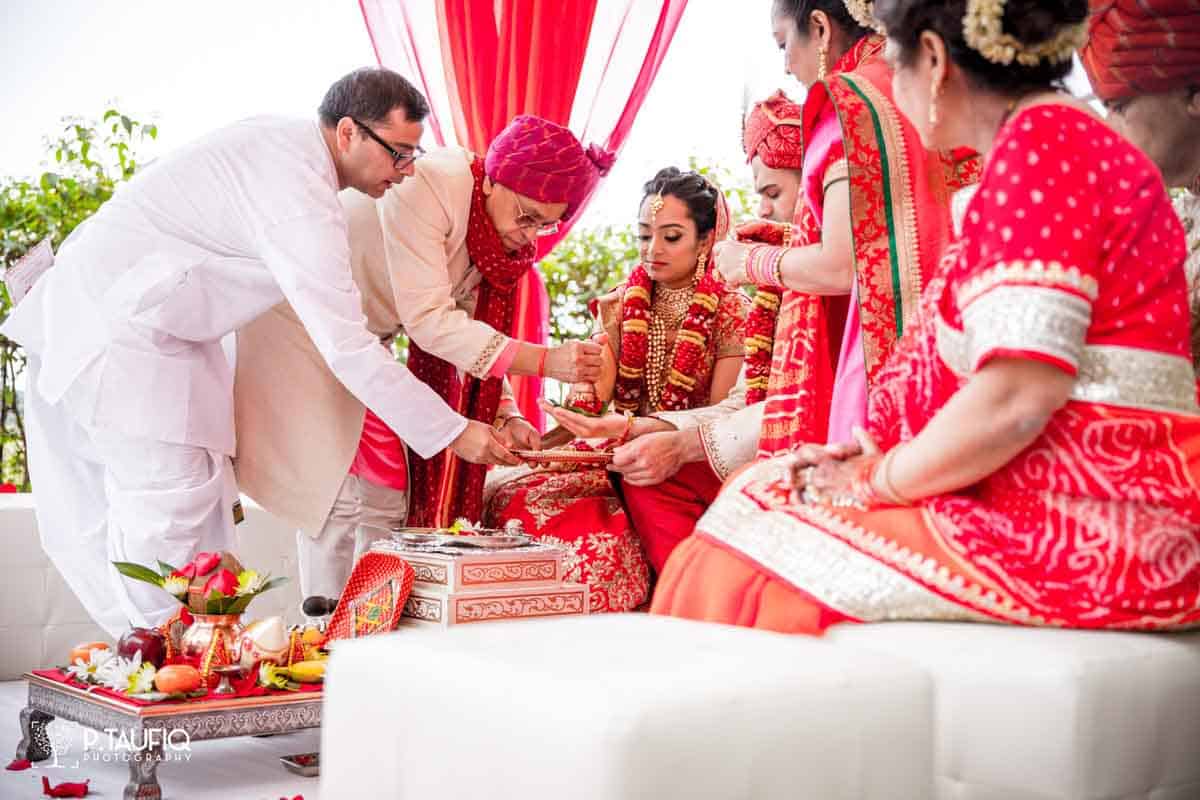
Be It Kanyadaan or Vardaan: What Is Wrong with It?
Is *kanyadan* (the ritual offering of the bride) merely charity? Why is *kanyadan* performed, and is it an insult to women? Understand the true meaning of *kanyadan* in the Hindu *vivaha sanskara* (marriage sacrament), along with its cultural and Vedic significance. Read the authentic exposition of *vardan* (boon) versus *kanyadan*, the mystery of *Brahma vivaha* (the Brahma form of marriage), and a definitive response to the fallacies that seek to misrepresent Hindu traditions.
18 October 2026 · 5 min read
Yudhishthira: Sovereign Emperor and Builder of Hindu Rashtra
Given the controversies often seen regarding Yudhishthira and others, we must look to the Mahabharata itself to determine whether Yudhishthira and the other Pandavas were powerful in their own right and embodiments of dharma (righteousness), or if, according to modern propaganda, they were merely dependent on the mercy of Shri Krishna. For the sages repeatedly call him Dharmaraj, and their words cannot be false.
13 September 2026 · 13 min read