YugSamvad · Dharma & Culture
Dharma & CultureThe Meaning, Application, and Fruits of Mantra
Shri Vinay Jha · English edition 18 October 2026 · Hindi original 15 October 2019 · 8 min read
Mantra :-
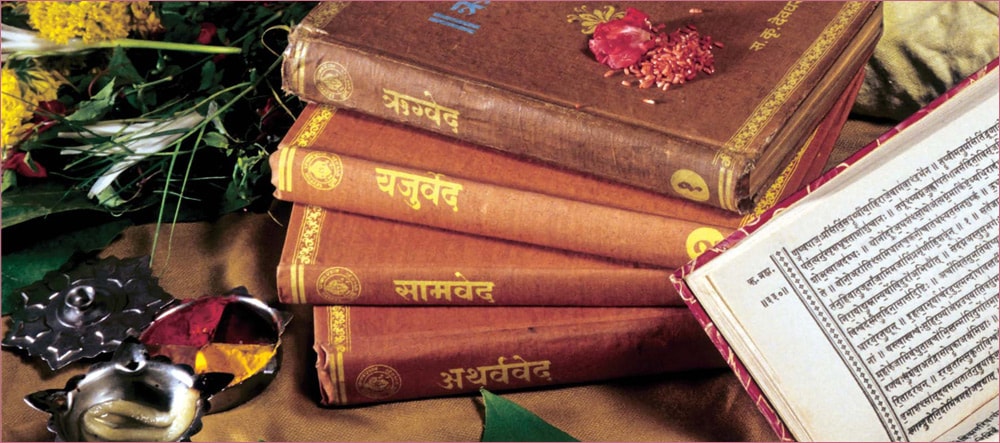
The instrument of the mind is called a "mantra" (sacred formula). That is to say, the instrument through which the mind brings its *sankalpa* (solemn resolve) into fruition is called a mantra. No Vedic Samhita (scriptural collection) contains "mantras". In the Rigveda, there are *richas* (Vedic verses) which are used for praise in a *yajna* (sacrificial ritual); the *sama* (melodic chant) of the Samaveda is sung; through the *yaju* (prose sacrificial formula) of the Yajurveda, the *havi* (sacrificial offering) is rendered; and the silent contemplation of the Atharvaveda ought to be performed by the *purohita* (priest) named Brahma, though in present times the Atharvaveda is not employed at all. A mantra is an entity distinct from all of these. The *diksha* (initiation) into a mantra and its method of application are esoteric, imparted solely to an initiated person.
With the aid of the Brahmana-granthas (expositional texts on Vedic rituals) and Kalpasutras (ritual manuals), trained priests formulate mantras from Vedic *chhandas* (metres) as required. For instance, the *richa* named "Gayatri" is in the Rigveda, the *yaju* of the same name is in the Yajurveda, and the *sama* of the same name is in the Samaveda. The spelling of these three is identical, yet there is a vast difference in their pronunciation. When *vyahritis* (mystic utterances) are appended, and at times additional terms added, followed by prescribed *viniyoga* (ritual application), it is termed a "mantra". Through the forward and reverse recitation of the very same Gayatri, numerous types of mantras are formed.
By appending Vedic Tantric *vyahritis* to the Gayatri *yaju* and reciting them in seven distinct reverse sequences through specialized methodologies, the mantras for the seven *divyastras* (celestial weapons) are formed, which are never conferred upon the unworthy. Even if their detailed procedure were to be divulged, no one in the present era would be capable of performing the severe *tapa* (austere penance) indispensable for the *siddhi* (spiritual attainment) of those *divyastras*. The *siddhi* of *divyastras* can only be achieved through mantras derived from the Yajurvedic Gayatri *yaju*, and not from the Gayatri of other Vedas, because Dhanurveda (science of warfare) is the *upaveda* (applied Vedic sub-text) of the Yajurveda, and the use of other Vedas is prohibited in Dhanurveda.
However, when a mantra, such as Gayatri, needs to be employed in Ayurveda, one must formulate the mantra by prefixing *vyahritis* to the Gayatri *richa* of the Rigveda; at that point, the Yajurveda or Samaveda will not work, because Ayurveda is the *upaveda* of the Rigveda. No *vaidya* (traditional practitioner) in modern times possesses the *siddhi* of Ayurvedic divine mantras; figures like Balkrishna or Ramdev have not even heard of such matters. The application of Samaveda mantras is the most difficult of all; to its rhythm, all seven realms dance. In Kali Yuga, out of the thousand *shakhas* (recensional branches) of the Samaveda, only three survive, and even among them, no one knows the ritual application of the mantras.
My *shakha* is the Madhyandina *shakha* of the Vajasaneyi Samhita of the Shukla Yajurveda. I am versed in the application of several mantras from this branch, but disclosing them is forbidden. Arbitrary alterations cannot be made to the count of *japa* (repetition of a mantra) or the method of its application. For achieving *siddhi* of a Vedic mantra, one must perform *japa* to a specified count while holding a specific type of *pranayama* (breath control), which is exceedingly difficult. For example, attaining *siddhi* over the Brahmastra requires repeating a specific sequence of the reverse recitation of Gayatri along with Tantric *vyahritis* one *nikharva* (a traditional high numeral) times. However, people of Kali Yuga added numerous zeroes onto *nikharva*, turning it into such an astronomical number that even if one recited it all day during rigorous *pranayama*, it would take nearly 20 lakh (two million) years—hence, the modern interpretation of *nikharva* is complete nonsense! The mantras currently prevalent under the name of Vamamargi Tantra, and the methods of their application through *vamamarga* (left-hand path) found in texts, were composed during the decline of Hindu culture (post-Gupta period) and are detrimental.
No one will impart the aforementioned knowledge; I have written this because the children capable of correctly utilizing these mantras are now reaching an age suitable for learning. They were born between 16 April and 9 May in 2003, when six to seven planets were exalted. When a Vedic mantra is applied through proper procedures, the *devata* (deity) of that mantra bestows the fruit. However, the Arya Samaj does not believe in *devatas* at all; thus, it labels mantras and their *japa* as superstition, which prevents Arya Samajists from deriving any benefit from mantras. The Arya Samaj accepts Panini's Astadhyayi as an authority, wherein it is mentioned that *japa* should be performed with proper intonation. This is stated specifically regarding the *japa* of Vedic mantras. Therefore, according to the very Astadhyayi that Arya Samaj considers authoritative, the authenticity of *japa* is established, and the doctrine of Arya Samaj is proven false.
The knowledge of Vedic mantras should be imparted only to a true Brahmana, who are rare in this day and age. A Brahmana must never utilize Vedic sciences for financial gain; if wealth dwindles, he should beg for alms and perform the duties prescribed for Brahmanas in the *shastras* (sacred scriptures) (Gautama Buddha too stated the same regarding Brahmanas). Shri Krishna described the nine *brahma-karmas* (duties of a Brahmana) in the Gita. Whoever lacks these qualities, regardless of the caste they are born into, is not a Brahmana.
"Singing" is considered a flaw in the recitation of Veda mantras. Sama chant exists only in the Samaveda, but even there, one cannot arbitrarily thrust musical *ragas* (melodic frameworks), *laya* (tempo), or *tala* (rhythm) into it. A "mantra" should not be interpreted arbitrarily; "mantra" is derived from the verbal root "*man*". Mantras manifest spontaneously only within the minds of Lord Brahma and the Vedic *rishis* (sages), who perceive them through *divya-chakshu* (divine vision); yet even they do not possess the authority to arbitrarily compose or generate Veda mantras. The lifespan of Lord Brahma is 72,000 *kalpas* (cosmic epochs), after which a new Brahma emerges from the navel of Vishnu; hence, the position of Brahma is that of a *karmadeva* (deity by merit), not an *ajanadeva* (immortal deity by nature) like the Sun. However, the Vedas are not mortal. Thus, Lord Brahma merely manifests the Vedas within the minds of the *rishis* in the world; Brahma does not compose the Vedas. Vedic *shabda* (words) are eternal and of fixed meaning; imposing arbitrary notions upon their grammar incurs sin. Avoid the temptation to forcefully project oneself as a *brahmagyani* (knower of the Supreme); even the slight possibility of God-realization present in one's horoscope will be destroyed. In the path of Yoga, *siddhis* come automatically, but paying attention to them obstructs spiritual progress. Those who deliberately chase after *siddhis* do not attain them; even if they do, they are fleeting, and spiritual progress moves only in the reverse direction.
Benefits of Mantra
Through *mantravidya* (knowledge of mantras), I have benefited many individuals, including several nationally renowned figures. However, I always had the *mantra-japa* performed by *brahmachari* (celibate) youths; I never performed any *japa* for anyone myself—not even for my own self—because on the instruction of my Guru, I perform *japa* for self-realization, which decades ago turned into *ajapa japa* (spontaneous, effortless repetition). Chanting any other mantra would disrupt it. I know several other people as well who make proper use of *mantravidya*. I also know individuals who can accomplish a great deal even without mantras; they are *siddhas* (perfected beings). Yet even they are incapable of conferring benefit upon the wicked, for Vedic sciences are not meant for the wicked.
In the entire history of Vedic civilization, no one to this day has been able to acquire any knowledge or reap any benefit through incivility. Every educated Indian knows what path ought to be taken to acquire knowledge or to derive benefit from it. Shri Krishna made immense efforts to reform Duryodhana, yet could not reform him. All avatars of Vishnu impart this very lesson: it is impossible to reason with the wicked and the foolish. They are not amenable to words. In my childhood, due to excessive reading and neglecting food and rest, I was prescribed glasses with a power of -3.75. When medicines yielded no benefit, I stopped taking them after a few years. However, when I commenced performing 344 *pranayamas* daily, after a few months my eyes began to hurt upon wearing glasses; testing revealed that the power had reduced to -1.5, even though my food intake was drastically reduced, sleep had virtually disappeared, and walking about and physical exercise were completely stopped—only *siddhasana* (accomplished posture) and *shavasana* (corpse posture)! I neither employed any mantra nor followed the course prescribed by doctors; I was never concerned about the physical body. Decades had passed since I had fallen ill. However, due to excessive travel and contaminated water, joint pain commenced a few months ago. When medicines had no effect, I abandoned them. I checked the *grahadasha* (planetary period) according to *jyotisha* (Vedic astrology) and became at ease—once the planetary phase passed, it healed automatically. I have no desire to become anyone's Guru; I have written multiple times on Facebook as well that I do not like being addressed as "Guru".
Read also,
The Reality of the Asuric Civilization of Mohenjo-daro and Harappa
The Never-Vanquished “Ayodhya” Wins in Court as Well
Cite this article
Shri Vinay Jha. “The Meaning, Application, and Fruits of Mantra”. YugSamvad, 18 October 2026. https://yugsamvad.com/en/articles/mantra-kaa-artha-prayoga-aura-usake-phala
https://yugsamvad.com/en/articles/mantra-kaa-artha-prayoga-aura-usake-phala · accessed
Related reading
Yudhishthira's Dyuta: The Esoteric Vedic Akshavidya
It is wrong to call Dharmaraja Yudhishthira a gambler. How many times in his life did Dharmaraja Yudhishthira play dyuta (the traditional game of dice)? How many times must one play to be called a vyasani (addict)? It is also wrong to call dyutavidya (the science of dice) gambling. Why did Dharmaraja Yudhishthira have to learn dyutavidya from a rishi (seer)? Why was no teacher to be found other than a rishi? Shaku...
18 October 2026 · 1 min read

Be It Kanyadaan or Vardaan: What Is Wrong with It?
Is *kanyadan* (the ritual offering of the bride) merely charity? Why is *kanyadan* performed, and is it an insult to women? Understand the true meaning of *kanyadan* in the Hindu *vivaha sanskara* (marriage sacrament), along with its cultural and Vedic significance. Read the authentic exposition of *vardan* (boon) versus *kanyadan*, the mystery of *Brahma vivaha* (the Brahma form of marriage), and a definitive response to the fallacies that seek to misrepresent Hindu traditions.
18 October 2026 · 5 min read