YugSamvad · Dharma & Culture
Dharma & CultureDoes Manusmriti oppose women ??
Mudit Agrawal · English edition 23 October 2026 · Hindi original 18 July 2018 · 3 min read
Nowadays, many left-wingers and feminists accuse the Hindu text Manusmriti of being anti-woman and patriarchal in order to oppose Hindu religion, whereas the reality is quite different. It is astonishing when these very same people portray the Quran as a well-wisher of women. There are numerous verses in Manusmriti concerning women that accord them a very high status and fully look after the woman's happiness. Today, let us examine the rules of paternal property distribution according to Manusmriti to see how much consideration it gives to women.
The eldest brother should be given an additional twentieth share of the total property. The one younger to him should be given an additional fortieth share. All the remaining brothers should divide the rest equally among themselves. If the eldest brother is more virtuous, he should be honoured by giving him the best among all items. If all the brothers are equally virtuous, they should divide the best items equally, yet give a little extra to honour the eldest brother. But each brother must give a fourth part of his property to his unmarried sister. Those who fail to do so become patita (fallen).
- Manusmriti, Ninth Chapter, Verse 112-118
Let us look at some examples of this rule—
First Example
If the property is 1 crore and there are 3 brothers and 1 sister, then this is how the calculation works out.
The twentieth share of 1 crore is 5 lakhs, which is for the eldest brother, and the fortieth share is 2.5 lakhs, which is separate for the middle brother.
Now the equal distribution of 92.5 lakhs will take place = 92.5 / 3 = 30.83 lakhs.
Thus, the eldest brother gets = 30.83 + 5 = 35.83 lakhs.
The middle brother gets = 30.83 + 2.5 = 33.33 lakhs.
The youngest gets = 30.83 lakhs.
All three brothers will give 25-25 percent to the younger sister, so the sister gets 25 lakhs.
Final Result :-
Eldest brother = 26.87 lakhs
Middle brother = 25 lakhs
Youngest brother = 23.12 lakhs
Sister = 25 lakhs
Second Example
If there are 3 brothers and 3 sisters,
The share of the three brothers is already written in the example above. Following that, there is a provision to give 25% to the unmarried sister. If the sisters are already married before the partition, the 25% is not to be given, because the father has already given them a share in the marriage. If all three sisters are unmarried, then first all three brothers should give 25% to one. Then, out of what remains, 25% should be given to the second. Then, out of what remains, 25% should be given to the third. This is dharma. Even if one is left with very little for oneself. Relying solely on ancestral property is not purushartha (manly enterprise). Only wealth earned through dharma itself has importance in dharma. In some places, the shastra states that ancestral property should be given away in charity. Giving to sisters and others brings growth according to the shastras. Not giving incurs a dosha (fault).
Now let the readers tell themselves whether Hindu dharma is patriarchal and anti-woman? Give your opinion in the comments...
Click here to download Manusmriti
Read this as well,
A Rebuttal to ‘The Quint’s’ Allegations on Hindu Marriage
The Practice of Sati Was a Fictional Practice and Never in Vogue Among Hindus
Cite this article
Mudit Agrawal. “Does Manusmriti oppose women ??”. YugSamvad, 23 October 2026. https://yugsamvad.com/en/articles/kyaa-manusmriti-mahilaaon-kaa-virodha-karatee-hai
https://yugsamvad.com/en/articles/kyaa-manusmriti-mahilaaon-kaa-virodha-karatee-hai · accessed
Related reading
Karpatraratnasamuchchaya and Tradition-ism | Including 'Kutarkakootnashak' (Destroyer of False Logic)
This following essay is written by @RamaInExile.Trad: The events of the past few months have shaken me to my core. I was completely unaware of the true nature of the elements within these events. Like a tadpole, my worldview began to undergo a metamorphosis. In the name of Trad vada (Trad traditionalism), dharma...
18 October 2026 · 63 min read
Be It Kanyadaan or Vardaan: What Is Wrong with It?
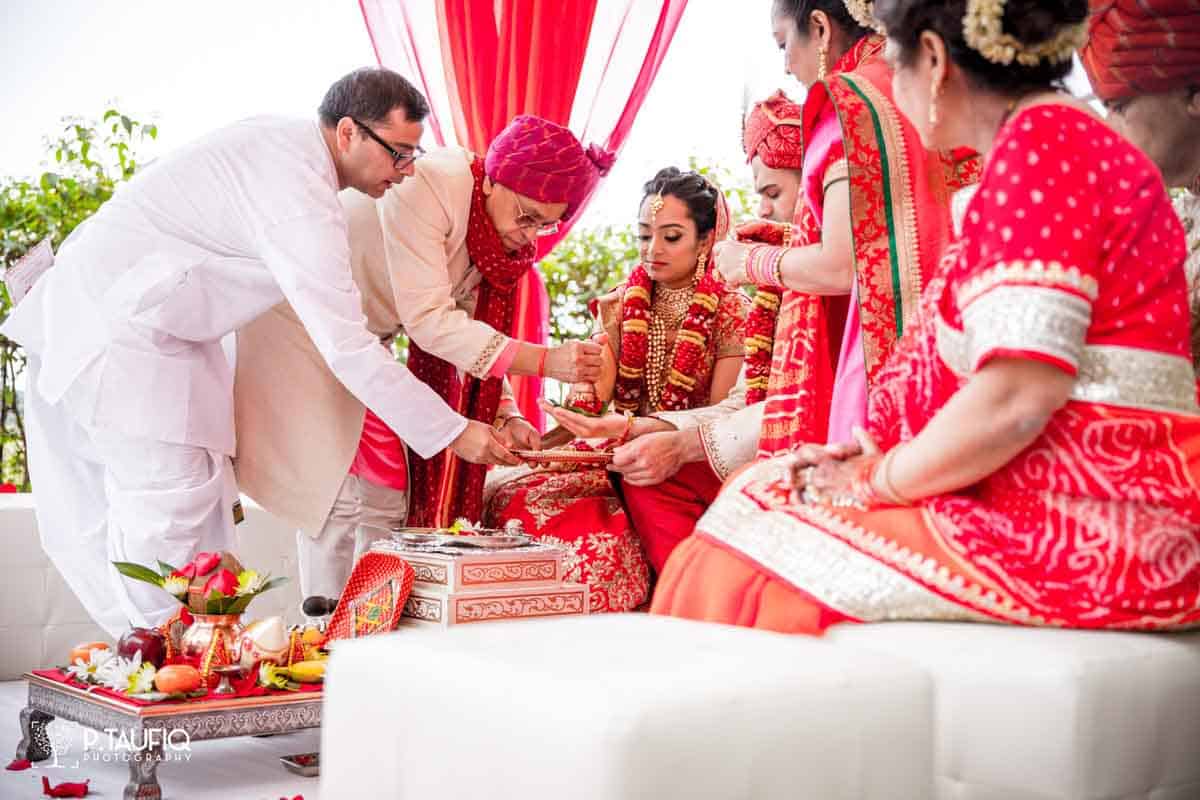
Is *kanyadan* (the ritual offering of the bride) merely charity? Why is *kanyadan* performed, and is it an insult to women? Understand the true meaning of *kanyadan* in the Hindu *vivaha sanskara* (marriage sacrament), along with its cultural and Vedic significance. Read the authentic exposition of *vardan* (boon) versus *kanyadan*, the mystery of *Brahma vivaha* (the Brahma form of marriage), and a definitive response to the fallacies that seek to misrepresent Hindu traditions.
18 October 2026 · 5 min read
Yudhishthira: Sovereign Emperor and Builder of Hindu Rashtra
Given the controversies often seen regarding Yudhishthira and others, we must look to the Mahabharata itself to determine whether Yudhishthira and the other Pandavas were powerful in their own right and embodiments of dharma (righteousness), or if, according to modern propaganda, they were merely dependent on the mercy of Shri Krishna. For the sages repeatedly call him Dharmaraj, and their words cannot be false.
13 September 2026 · 13 min read