YugSamvad · Jyotish
JyotishKumbh in Prayag, Haridwar, Ujjain, Nashik: Why and When?
Gunjan Aggrawala · English edition 17 October 2026 · Hindi original 3 January 2019 · 6 min read
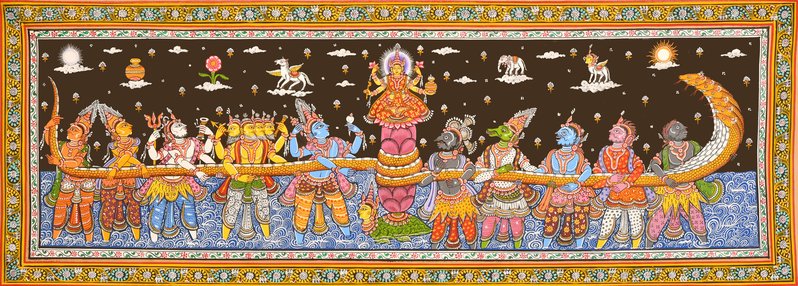
The ultimate and supreme goal of human life is the attainment of amrita (nectar of immortality). During the Devasura Sangrama (war between devas and asuras) described in the Puranas, the pot of nectar emerged from Samudra Manthan (churning of the cosmic ocean). Bhagavan Vishnu himself assumed the Mohini form and administered the nectar to the gods of divine nature. But before that, a relentless war raged for 12 days between the devas and danavas to establish control over the nectar pot. At that time, Chandra protected the pot from spilling, Surya from breaking, Guru from abduction by the demons, and Shani from the fear of Devendra. However, during this war, drops of nectar spilled from the pot onto four places on Earth (Prayag, Haridwar, Ujjain, Nasik). Therefore, at whichever time and place the nectar drops spilled from the pot while Chandra and others protected it, whenever the planets Chandra, Surya, and Guru recreate that exact astrological position for that location, the yoga of Kumbh occurs there.
Shastric and Astrological Basis of the Prayagraj Kumbh
The time when the nectar spilled in Prayag was when Surya entered Makara-rashi (zodiac sign) (on Makara-sankranti ) and Brihaspati entered Vrishabha-rashi. According to another calculation, when Surya and Chandra enter Makara-rashi and Brihaspati enters Vrishabha-rashi, on the amavasya (new moon day) of Magha, the Kumbh festival is held in Prayag. The Kumbh here is also called 'Makarastha Kumbh'—
प्रयागे भास्करक्षेत्रे मकरस्थे रवौ सति।
मेषे जीवे मृगे चन्द्रे कुम्भाख्यो योग उच्यते॥
माघे मेषगते जीवे मकरे चन्द्रभास्करौ।
अमावस्या तदा योग: कुम्भाख्यस्तीर्थनायके॥
It is stated in the Krityasarasamucchaya:
माघामायां मृगे भानौ मेषराशिगते गुरौ।
कुम्भयोगो भवेत्तत्र प्रयागे त्वतिदुर्लभः॥
According to another ancient shloka, for the complete yoga of the Prayag Kumbh festival, it is imperative to have Magha Amavasya, Guru in Mesha or Vrishabha, and Chandra and Bhaskara (Surya) in Makara arising from the first half of Shravana or Dhanishtha nakshatra (lunar mansion)—
यदा स्यातं नक्रे दिनकरनि शेशौ खगरवौ।
सुमन्त्री देवानां रविसुतयोतोऽप्ती खलु यदा॥
श्रुतिर्विश्वं माघे शमयति च विश्वाघमखिलं।
त्रिवेणी कुम्भोऽस्मिन् ननु नरकपातश्च न भवेत्॥
It is stated in the Padma Purana—
मकरस्थे रवौ माघे प्रातः काले तथाऽमले।
गोष्पदेऽपि जले स्नानं स्वर्गदम् पापिनामपि॥
—पद्मपुराणम्, उत्तरखण्ड, 127.5
It is stated in the Narada Purana—
मकरस्थे रवौ माघे गोविन्दाच्युत माधव।
स्नानेनानेन मे देव ! यथोक्तफलदो भव॥
—नारदपुराण, उत्तरपर्व, 63.13-14
That is: O Lord! Being pleased with this bath of mine in the waters of Triveni in the month of Magha while Surya resides in Makara-rashi, grant me the fruits prescribed by the shastras.
Shastric and Astrological Basis of the Haridwar Kumbh
When Surya and Chandra are in Mesha-rashi and Brihaspati is in Kumbha-rashi, the yoga named 'Kumbh' occurs in Haridwar, which is considered supreme—
पद्मिनीनायके मेषे कुम्भराशिगतो गुरौ।
गंगाद्वारे भवेद्योगः कुम्भनामा तदोत्तमः।।
—Krityamanjari
When Brihaspati is in Kumbha-rashi and on the day Surya enters Mesha, a bath taken in Haridwar frees one from rebirth. This is renowned among people by the name 'Kumbh' and recognized by everyone in every way—
कुम्भराशिगते जीवे यद्दिने मेषगे रवौ।
हरिद्वारे कृतं स्नानं पुनरावृत्तिवर्जनम्।
लोके कुम्भमिति ख्यातं जानीयात् सर्वतो नरैः।।
During Vasanta ritu (spring season), upon Vishuva-sankranti (equinoctial transit)—that is, the Sankranti into Mesha-rashi—and when the guru of the devas resides in Kumbha-rashi, the yoga named 'Kumbh' is formed in Haridwar. Through this yoga, man obtains sudha, that is, amrita—
वसंते विषुवे चैव घटे देवपुरोहिते।
गंगाद्वारे च कुम्भाख्यः: सुधामिति नरो यत:।।
Shastric and Astrological Basis of the Ujjain Kumbh
When Surya entered Mesha-rashi and Brihaspati entered Simha-rashi, the nectar spilled into the Kshipra river at Ujjain. In memory of this event, the Kumbh named 'Simhastha' is organized here in Ujjain every 12 years—
मेष राशि गते सूर्ये सिंह राशौ बृहस्पतौ।
उज्जियन्यां भवेत कुम्भः सदा मुक्तिप्रदायकः॥
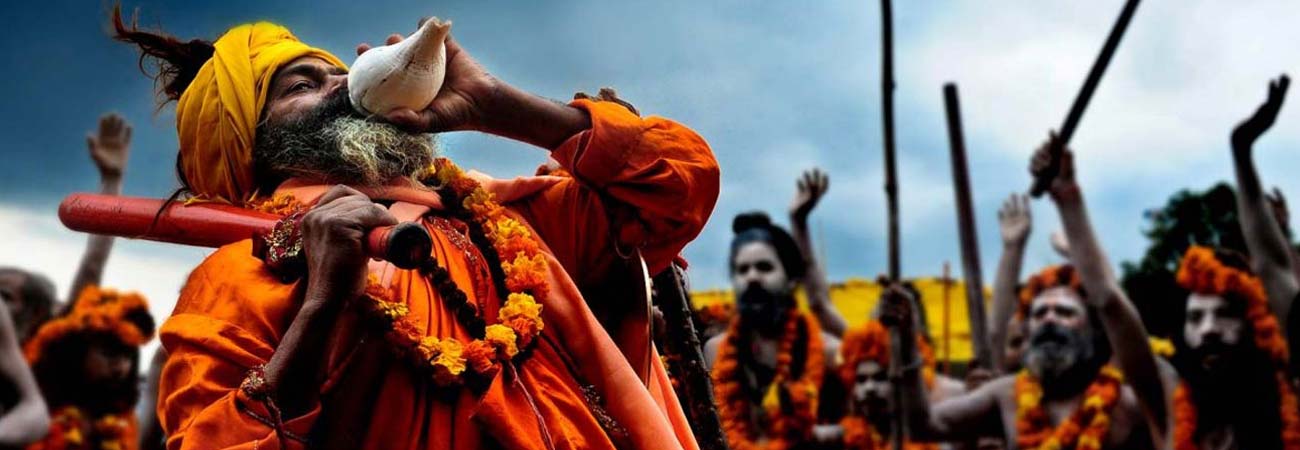
Ujjain Simhastha Kumbh
Just as for Prayag, astrological alternatives are available for Ujjain as well—
घटे सूरिः शशी सूर्यः कुह्यां दामोदरे यदा।
धारायां च तदा कुम्भो जायते खलु मुक्तिदा:॥
When Surya and Chandra are together on Kartika Damodara (Krishna) Amavasya, and Suri (Brihaspati) enters Tula-rashi, the liberation-granting Kumbh takes place in Dharanagari (Ujjain).
Shastric and Astrological Basis of the Nasik Kumbh
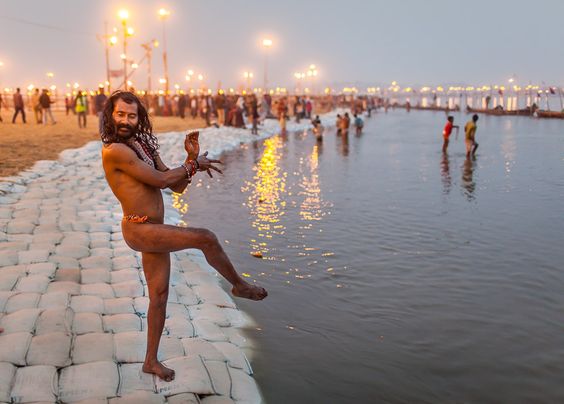
When Surya and Brihaspati entered Simha-rashi, nectar spilled into the Godavari at Nasik. According to a variant tradition, when Brihaspati, Surya, and Chandrama enter Karka-rashi on the amavasya-tithi (lunar day), the Kumbh known as 'Simhastha' is held on the banks of the Godavari—
सिंह राशि गते सूर्ये सिंह राशौ बृहस्पति।
गोदावर्या भवेत कुम्भो जायते खलु मुक्तिदः॥
When Surya and Brihaspati entered Simha-rashi, nectar spilled into the Godavari at Nasik. According to a variant tradition, when Brihaspati, Surya, and Chandrama enter Karka-rashi on the amavasya-tithi, the Kumbh known as 'Simhastha' is held on the banks of the Godavari—
सिंहराशिं गते सूर्ये सिंहराशौ बृहस्पतौ।
गोदावर्यां तदा कुम्भो जायतेऽवनिमण्डले॥
अयं योगस्तदा यदा गुरुः कर्कराशौभवेत्तस्मिन् श्रावणमावास्यायां सम्भवति॥
It is stated in the Krityasarasamucchaya—
कर्के गुरुस्तथा भानुचन्द्रश्चन्द्रक्षयस्तथा।
गोदावर्यां तदा कुम्भो जायतेऽवनिमण्डले॥
अयं योगस्तदा यदा गुरुः कर्कराशौभवेत्तस्मिन् श्रावणमावास्यायां सम्भवति॥
It is stated in the Brahma Purana:
षष्टिर्वर्षसहस्राणि भागीरथ्यवगाहनम्।
सकृद्गोदावरीस्नानं सिंहयुक्ते बृहस्पतौ॥
—ब्रह्मपुराण, 175.84
That is: At the time when Brihaspati is in Simha-rashi, taking a bath even once in the Godavari grants a person merit equivalent to bathing in the Ganga for 60,000 years.
It is stated in the Brahmavaivarta Purana:
अश्वमेधफलं चैव लक्षणोदनजं फलम्।
प्राप्नोति स्नानमात्रेण गोदायां सिंहगे गुरौ॥
That is: At the time when Brihaspati is located in Simha-rashi, merely bathing in the Godavari earns a person the merit of performing an Ashvamedha Yajna and donating 100,000 cows.
It is stated in the Brahmanda Purana:
यस्मिन् दिने गुरुर्याति सिंहराशौ महामते।
तस्मिन् दिने महापुण्यं नरः स्नानं समाचरेत्॥
यस्मिन् दिने सुरगुरुः सिंहराशिगतो भवेत्।
तस्मिंस्तु गौतमीस्नानं कोटिजन्माघनाशनम्॥
तीर्थानि नद्यश्चस तथा समुद्राः क्षेत्राण्यरण्यानि तथाऽऽश्रमाश्च।
वसन्ति सर्वाणि च वर्षमेकं गोदातटे सिंहगते सुरेज्ये॥
During the Simhastha festival at the Godavari, whichever deva, danava, yaksha, or human bathes in or drinks from the Gautami (Godavari), they shall be freed from all afflictions and emerge victorious over all. Bathing, worshipping, reciting sacred texts, and offering charity in accordance with prescribed rituals in the Godavari during Simhastha-Guru grants liberation.
Ardh Kumbh is Held Only at Prayag and Haridwar!!
These are the astrological planetary positions on the basis of which Kumbh is organized at four places. Out of these four, Ardh Kumbh is organized only at Haridwar and Prayagraj, falling at the midpoint between two Poorna Kumbh melas. Due to Guru’s 12-year transit, there is a 12-year interval between two Poorna Kumbhs at the same location; Ardh Kumbh occurs 6 years after a Poorna Kumbh. Only at Haridwar and Prayag are half of the requisite astrological conditions for Kumbh fulfilled at the time of Ardh Kumbh; hence, Ardh Kumbh takes place exclusively in Haridwar and Prayagraj. Ardh Kumbh does not occur in Nasik or Ujjain. After every 12 Poorna Kumbhs, a Mahakumbh is held once every 144 years. This year, Ardh Kumbh is being organized in Prayagraj from Makara Sankranti to Mahashivaratri.
Read Also,
Was Kumbh held at 12 places?
This Ardh Kumbh of Prayagraj is Very Special
How Yogi Government Resolved Puri Shankaracharya’s Complaint Regarding Kumbh..
What after all is the Secret Mystery of the Aghori Sampradaya..
'Shri Sarveshwar Jayaditya Panchang' (traditional almanac) Released at Central Sanskrit University, Jaipur
A personal consultation on this subject: write for a consultation
Cite this article
Gunjan Aggrawala. “Kumbh in Prayag, Haridwar, Ujjain, Nashik: Why and When?”. YugSamvad, 17 October 2026. https://yugsamvad.com/en/articles/kyon-aura-kaba-lagataa-hai-prayaaga-haridvaara-ujjaina-naasika
https://yugsamvad.com/en/articles/kyon-aura-kaba-lagataa-hai-prayaaga-haridvaara-ujjaina-naasika · accessed
Related reading
Introduction to Puranic Shri Sutaji - Acharya Gangadhar Pathak
'The Authentic Introduction of Shri Sutaji' Author: Pandit Gangadhar Pathak 'Vedadyacharya' Chief Priest - Shri Ram Janmabhoomi Shilabujan, Ayodhya Guide: Sarveshreshwar Jayaditya panchang (traditional almanac), Jaipur The chief priest who had Prime Minister Shri Narendra Modi perform the shilanyas (laying of the foundation stone) of the Shri Ram Janmabhoomi temple in Ayodhya.
23 October 2026 · 1 min read
Shri Vedavyasa Pujapaddhati - Acharya Gangadhar Pathak
'Shri Vedavyasa Pujapaddhati' Author: Pandit Gangadhar Pathak 'Vedadyacharya', Principal - Shri Ram Janmabhoomi Shila Pujan, Ayodhya, Shri Vrindavan Dham. Chief Priest Acharya Shri Gangadhar Pathak, who had Prime Minister Shri Narendra Modi perform the shilanyas (laying of the foundation stone) for the Shri Ram Janmabhoomi temple in Ayodhya, performing the Shri Vedavyasa Pujap
18 October 2026 · 2 min read
Yudhishthira: Sovereign Emperor and Builder of Hindu Rashtra
Given the controversies often seen regarding Yudhishthira and others, we must look to the Mahabharata itself to determine whether Yudhishthira and the other Pandavas were powerful in their own right and embodiments of dharma (righteousness), or if, according to modern propaganda, they were merely dependent on the mercy of Shri Krishna. For the sages repeatedly call him Dharmaraj, and their words cannot be false.
13 September 2026 · 13 min read