YugSamvad · Politics & History
Politics & HistoryLakshmi Sahgal: Untouched Aspects of the Life of the Azad Hind Fauj Commander
विशाल अग्रवाल · English edition 23 October 2026 · Hindi original 25 October 2017 · 6 min read
24 October marks the birth anniversary of Captain Lakshmi Sehgal, commander of the Rani Jhansi Regiment of the Azad Hind Fauj (Indian National Army) and Minister of Women's Affairs in the Azad Hind Government. She was born on 24 October 1914 into the traditional Tamil household of Dr. S. Swaminathan, a successful lawyer of the Madras High Court. Lakshmi's mother, Ammukutti, was a social worker from a renowned freedom fighter family of Kerala, who actively participated in the independence movements. From her early days, Lakshmi was compassionate and ever-ready to help others. She used to say that she inherited this trait from her mother, who was always helping others.
Captain Lakshmi Sehgal was proficient in her studies. Bravely facing her father's demise in the year 1930, Lakshmi passed her Bachelor of Science examination in 1932. From the beginning, she felt deeply pained seeing the sick poor distressed for lack of treatment. In view of this, she chose the medical profession to serve the poor and obtained her MBBS degree from Madras Medical College in 1938. Thereafter, she completed a Diploma in Gynaecology and became a gynaecologist the following year, in 1939.
After working in India for a few days, she moved to Singapore in 1940. In Singapore, she not only opened a free clinic for immigrant laborers from India, but also became an active member of the India Independence League. During World War II, when the British surrendered Singapore to the Japanese in 1942, Lakshmi ji worked extensively for the wounded prisoners of war. At that time, the thought of working for their motherland's freedom was arising in the minds of many Indian soldiers in the British army.
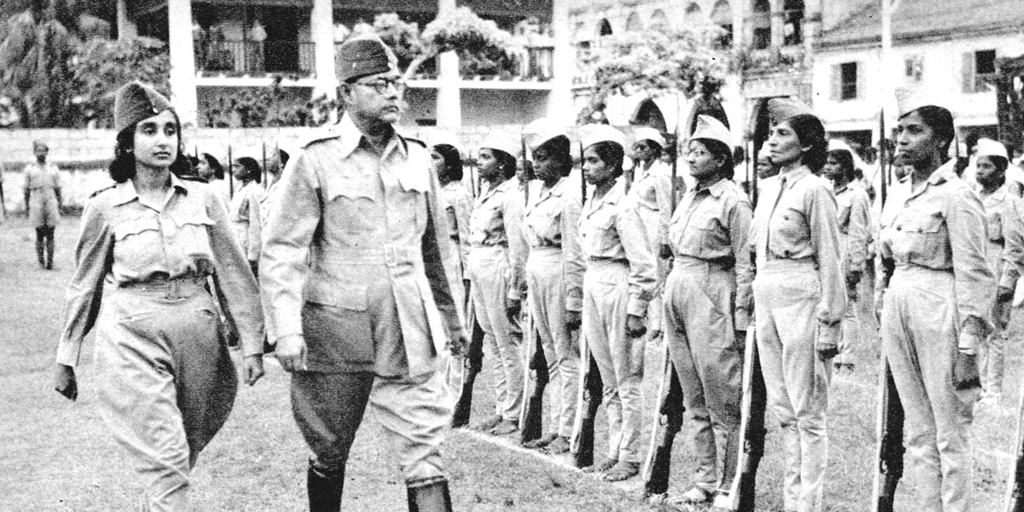 Laxmi Shehgal, Netaji Subhash Chandra Bose and girls of Rani Jhansi Regiment
2 July 1943 was a historic day when Netaji Subhash Chandra Bose set foot on the soil of Singapore. Amidst his rallies and speeches, the idea of the Azad Hind Fauj's first women's regiment took concrete shape, named the Rani of Jhansi Regiment in honor of the brave Rani Lakshmibai. On 22 October 1943, Dr. Lakshmi Swaminathan became a military officer with the rank of Captain in the Rani of Jhansi Regiment. Later, when she was raised to the rank of Colonel, she became Asia's first woman Colonel. Now, it is another matter that people always remembered her as Captain. Dr. Lakshmi became the first woman cabinet member of the provisional 'Azad Hind Government'. She was an officer of the 'Azad Hind Fauj' and Minister of Women's Affairs in the 'Azad Hind Government'.
Serving in the army shoulder to shoulder with Subhash Chandra Bose, she performed several commendable deeds. She was entrusted with an extremely difficult responsibility. On her shoulders lay the responsibility of inspiring women to enlist in the army and recruiting them into service. Lakshmi Sehgal executed this responsibility impeccably. In an era when a woman stepping out of the house was considered almost a crime, she raised an army unit of 500 women—the first wing of its kind in Asia.
After Japan's defeat in World War II, when the British forces began rounding up soldiers of the Azad Hind Fauj, Lakshmi Sehgal too was arrested in Singapore on 4 March 1946. Brought to India on 4 July 1946, she was released amidst rapidly mounting public pressure for independence.
Just as the country was on the threshold of independence, talks were initiated for her marriage with Colonel Prem Kumar Sehgal of Lahore, to which she agreed. In the year 1947, she married Prem Kumar and became Captain Lakshmi Sehgal from Captain Lakshmi Swaminathan. Captain Sehgal has two daughters, Subhashini Ali and Anisa Puri. Subhashini married filmmaker Muzaffar Ali. Subhashini Ali was also a Communist Party of India (Marxist) Member of Parliament from Kanpur in 1989. Subhashini Ali also acted in communist leader Brinda Karat's film *Amu*. Dr. Sehgal's grandson, and the son of Subhashini Ali and Muzaffar Ali, Shaad Ali, is a film producer-director who has made popular movies like 'Saathiya', 'Bunty Aur Babli', and others. The famous dancer Mrinalini Sarabhai was her biological sister.
After her husband's passing, she settled in Kanpur and began practicing medicine. Later, she entered active politics and became a member of the Rajya Sabha from the Communist Party of India (Marxist) in 1971. She was among the founding members of the Akhil Bharatiya Janwadi Mahila Samiti (All India Democratic Women's Association). She fought extensively for the social and economic freedom of women. In view of her significant contribution and struggle in the freedom movement, she was honored with the Padma Vibhushan in 1998 by the President of India, K. R. Narayanan.
In the year 2002, at the age of 88, under pressure from members of her party (the Left Front), she contested the presidential election against former President A. P. J. Abdul Kalam, though she faced defeat. Yet, there was no dent in her stature. After living a long political life, she became quite frail in 1997. Those close to her relate that even after becoming physically frail, Captain Sehgal always thought of the welfare of the people and tried to attend to patients. Even at that advanced age, she continuously saw patients in Kanpur, and her clinic located in Arya Nagar used to witness a huge rush of patients.
At the age of 98, on the morning of 23 July 2012 at 11:20 AM, Captain Dr. Lakshmi Sehgal passed away at Hallet Hospital in Kanpur, where she had been admitted after suffering a heart attack on 19 July. Thereafter, she suffered a brain hemorrhage and went into a coma just two days later. After battling between life and death for about five days, Captain Lakshmi Sehgal finally lost her final battle. As per her wishes, her mortal remains were donated to Kanpur Medical College. The nation will forever remember her as a freedom fighter, doctor, Member of Parliament, and social worker. Humble tribute and millions of obeisances.
-Vishal Agarwal (The author is a deep scholar of Indian history and culture, an educationist, and a voice for national interests. The author's Rashtra Aradhak series on great Indian personalities is well worth reading.)
Read also,
When Calcutta University trembled at the bullets fired by a young woman
The heroic woman who shot the British Collector, whom we forgot
Founder of the Azad Hind Fauj, Rash Behari Bose, who hurled a bomb at Viceroy Hardinge
Any last wish, Bhagat Singh? Wish I could meet my uncle just once!
Brave Kartar Singh Sarabha, who mounted the gallows at the age of nineteen
Cite this article
विशाल अग्रवाल. “Lakshmi Sahgal: Untouched Aspects of the Life of the Azad Hind Fauj Commander”. YugSamvad, 23 October 2026. https://yugsamvad.com/en/articles/lakshmee-sahagala-aajaada-hinda-fauja-kee-senaapati-ke-jeevana
https://yugsamvad.com/en/articles/lakshmee-sahagala-aajaada-hinda-fauja-kee-senaapati-ke-jeevana · accessed
Related reading
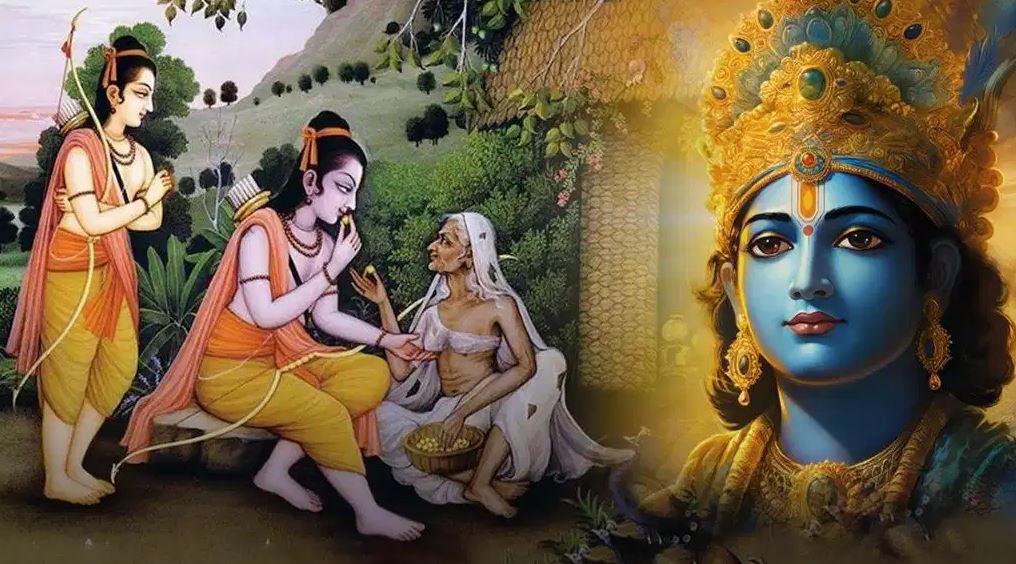
Shri Ram Eating the Tasted Ber of the Bhilni Shabari Is Proved from the Valmiki Ramayana
Nowadays, some hyper-scholars are propagating the delusion in society that the tale of Shabari’s "tasted ber (jujube fruits)" is not in the Ramayana, and that Shabari was not a low-caste devotee but an upper-varna (class/caste) woman. This is not only contrary to the supreme import of the shastra (sacred text), but also extremely harmful to social samarasya (harmony) and is a manifestation of ego and malice.
18 October 2026 · 13 min read
The Meaning of Medha, Kautuhala, Jigyasa and Herd Mentality
*Medha* (intellect) and the Herd “He who protects *dharma* (righteousness/cosmic order), *dharma* protects him.” The meaning of *dharma* is Vedic *yajna* (sacrificial ritual), that is, the *karma-kanda* (ritual section) of the Vedas. There are ten characteristics of *dharma* — *dhriti* (fortitude), *kshama* (forgiveness), *dama* (self-control), *asteya* (non-stealing), *shaucha* (purity), *indriya-nigraha* (sensory control), *dhi* (intellect), *vidya* (knowledge), *satya* (truth), and *akrodha* (absence of anger). But these are merely characteristics on the basis of which we can recognize that a particular...
18 October 2026 · 8 min read
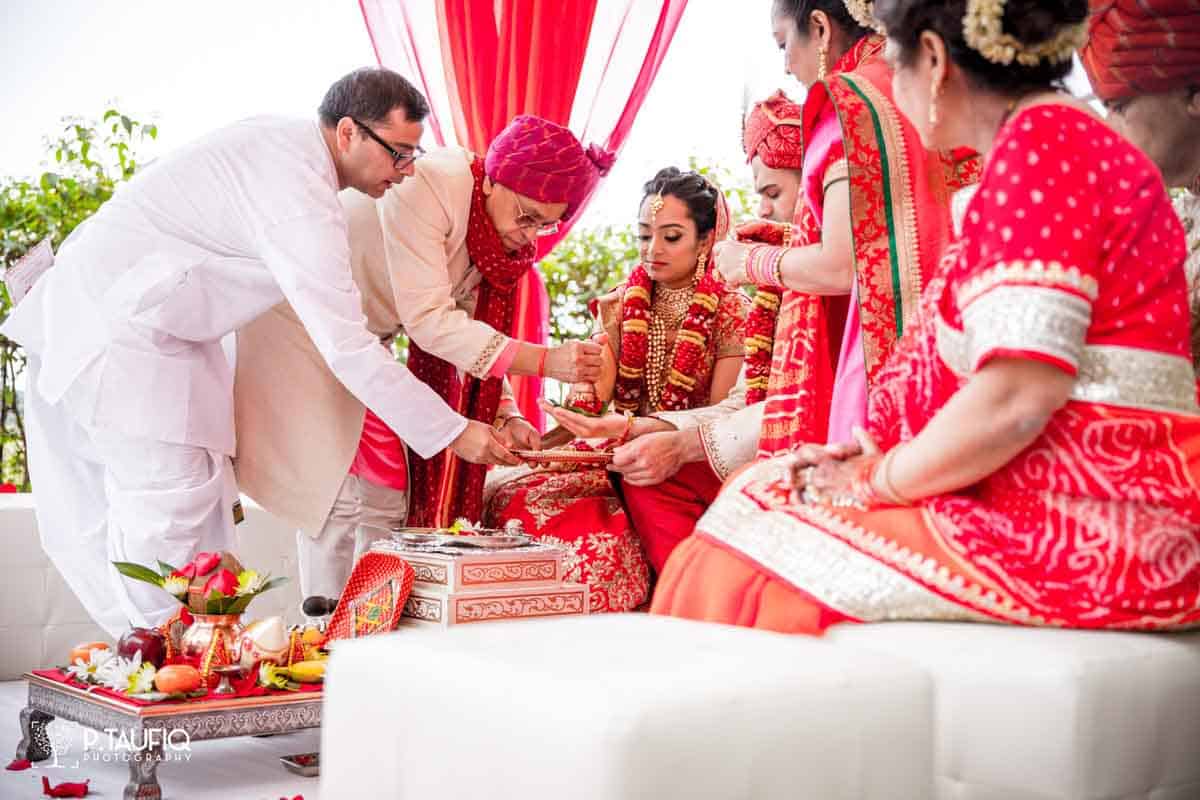
Be It Kanyadaan or Vardaan: What Is Wrong with It?
Is *kanyadan* (the ritual offering of the bride) merely charity? Why is *kanyadan* performed, and is it an insult to women? Understand the true meaning of *kanyadan* in the Hindu *vivaha sanskara* (marriage sacrament), along with its cultural and Vedic significance. Read the authentic exposition of *vardan* (boon) versus *kanyadan*, the mystery of *Brahma vivaha* (the Brahma form of marriage), and a definitive response to the fallacies that seek to misrepresent Hindu traditions.
18 October 2026 · 5 min read