YugSamvad · Politics & History
Politics & HistoryPrem Nath Dogra: Who Foiled Sheikh Abdullah's Conspiracies
विशाल अग्रवाल · English edition 23 October 2026 · Hindi original 25 October 2017 · 11 min read
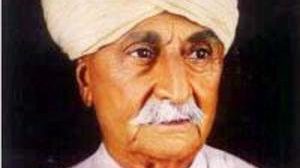
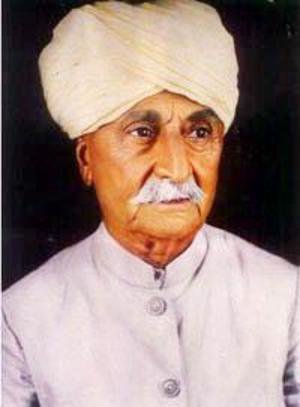
From the accession of Kashmir to India until the present day, the state of affairs prevailing in Kashmir and the relentless incitement of treason, rhetoric of Kashmir’s "azadi" (freedom), and recurrent waving of Pakistani flags are deeply alarming. In such times, one is inevitably reminded of that eminent stalwart who, in concert with Dr. Syama Prasad Mookerjee, spearheaded a formidable agitation on the question of preserving Kashmir as an integral part of India, laying bare Sheikh Abdullah's insidious machinations before the entire nation. That luminary was none other than Pandit Prem Nath Dogra, President of the Praja Parishad and founding member and President of the Bharatiya Jana Sangh.
Lala Hansraj Gupta once remarked of Pandit Prem Nath Dogra that he was an *ajatashatru* (one without enemies). He consecrated every atom and every moment of his life to public service. Madhavrao Muley, former Sarkaryavah (general secretary) of the Rashtriya Swayamsevak Sangh, also observed of Dogra ji: "I caught a glimpse of his towering personality when I visited Jammu for the work of the Rashtriya Swayamsevak Sangh, and at my insistence, he assumed leadership of the work there. He was a master at maintaining poise even in the most perilous situations. Even in his advanced years, he possessed a youthful vigor that could put the young to shame."
A personality of such distinction, Pandit Prem Nath Dogra was born on 23 October 1894 in Samailpur, a prominent village situated north of the Jammu–Pathankot highway, 22 km from Jammu city. His father, Pandit Anant Rai, served during the reign of Maharaja Ranbir Singh as the superintendent of the "Ranbir Government Press" and subsequently oversaw the "Kashmir Property" in Lahore. His stature can be judged from the fact that he resided in the haveli of Raja Dhyan Singh in Lahore, which was why Prem Nath ji received his education in Lahore itself.
From his early boyhood, Pandit Prem Nath ji demonstrated exceptional academic capability alongside remarkable athletic prowess. In 1904, he matriculated from Model School, Lahore, and gained admission to F.C. College. Alongside his academic pursuits, he distinguished himself in track and field, securing first place in the 100-yard, 400-yard, half-mile, and one-mile races. He was awarded a pocket watch by the then Governor of Punjab, who presided over the occasion—a prize he preserved with great care for decades and which remains safely kept with his family today. During his college days, Pandit ji was also a high-caliber football player, representing the college football team. Chetram Chopra, then Governor of Jammu province, once remarked: "I believe that Pandit ji’s stamina and swiftness owed entirely to this game of football, the imprint of which stayed with him until the very last day of his life."
 After completing his education, Pandit Dogra served in several regions and held high administrative offices, rising in 1931 to become the Wazir-e-Wazarat (district administrator) of Muzaffarabad. In 1931, Sheikh Abdullah's "Quit Kashmir" agitation was at its height. The potential for a breakdown of public order in Muzaffarabad was immense, yet Pandit ji eschewed draconian measures against the demonstrators and defused the agitation through adroit diplomacy without the use of force. The administration, however, demanded the use of force; consequently, he was removed from service. Severing his ties with government employment, Pandit ji threw himself unreservedly into public service. In 1940, he was elected for the first time as a member of the Praja Sabha (legislative assembly) in Jammu. Thenceforth, he forged an ever-deepening bond with the populace.
In 1947, when the country was subjected to communal partition, Maharaja Hari Singh of this dynasty, acting in accordance with historical exigencies and a nationalist conviction, exercised his sovereign legal authority to propose accession to India. Yet the country’s first Prime Minister, Shri Jawaharlal Nehru, imposed the condition that alongside the accession, the Maharaja must surrender governance to his personal friend and leader of the National Conference, Sheikh Mohammad Abdullah. As a calculated maneuver before assuming power, Sheikh Mohammad Abdullah gave written assurances to the Maharaja pledging his loyalty to the throne. But shortly thereafter, he not only initiated ploys to drive the Maharaja out of the state, but also rounded up and imprisoned numerous Dogra leaders and externed several nationalists beyond state borders.
Around that time, India’s Constitution was being drafted, and Sheikh Mohammad Abdullah, along with three of his principal associates from Jammu and Kashmir, took part in the Constituent Assembly. The National Conference harbored deep-seated antipathy toward Jammu, not least because the ruling Maharajas were natives of Jammu; Kashmiri leaders treated them as Dogra outsiders, raising the slogan "Dogras Quit Kashmir" along the lines of the "Quit India" movement against the British across the rest of the country. Consequently, participating with calculated cunning in the framing of the Constitution, these state representatives registered the name of their state simply as "Kashmir" instead of "Jammu, Kashmir, Ladakh, Gilgit, Tibet-ha". However, through the timely intervention of farsighted representatives from Bengal and other regions, an amendment was carried, and the state was officially designated "Jammu and Kashmir" in the Constitution. The names of Ladakh and Gilgit were excised. Simultaneously, the National Conference and the Congress saw to it that only the Kashmiri language was incorporated into the Eighth Schedule of the Constitution. Dogri was denied any recognition in this schedule. It was only after decades of sustained struggle that Dogri finally achieved its rightful linguistic recognition in 2003, under the tenure of the NDA government.
When Maharaja Hari Singh was forced into exile from the state, Sheikh Abdullah, with the backing of Jawaharlal Nehru, raised the slogan of "Separate Prime Minister, Separate Flag, and Separate Constitution" in accordance with his "Naya Kashmir" agenda. The Kashmir Valley being overwhelmingly Muslim, the Indian tricolor was replaced by the hoisting of Sheikh’s red flag bearing the plough emblem. Self-evidently, these three postures ran counter to the national interest. In vehement opposition, the Praja Parishad was founded under the leadership of Pandit Prem Nath Dogra, unleashing a massive agitation demanding "One Nation, One Prime Minister, One Flag, One Constitution." Pandit ji had, in fact, perceived long beforehand that while Sheikh Abdullah outwardly framed this struggle as directed against the Maharaja, his ultimate target was the Dogras of Jammu and the Buddhists of Ladakh. He also saw clearly that Nehru had thrown his full weight behind Sheikh, and with the National Conference operating as the sole political apparatus in the state, power would inevitably be abdicated to him and all his terms conceded blindly, since no organized opposition existed to resist him. Laying the ground for future strategy under these perilous conditions, he formed the Praja Parishad in collaboration with Balraj Madhok; later, it was this very organization that served to halt the momentum of the collusions between Sheikh Abdullah and Nehru.
In the course of this agitation, Pandit ji was imprisoned three times and spent protracted periods behind bars, where the Sheikh Abdullah administration subjected him to severe torment. A ferocious mass movement erupted demanding his release, echoing with the cry: "Throw open the prison gates, set Pandit ji free!" His state pension was revoked, but Pandit ji did not flinch. The battle he was waging was not merely Jammu’s fight; it was a battle for the whole of Bharat, a battle for its sovereign identity. It was a struggle over the principle that if the tricolor could fly unhindered across all of India, on what grounds could it be barred from the civil secretariat in Jammu? It may be hard for the present generation to fathom the number of patriots who laid down their lives for this demand, but in the end, under the leadership of Prem Nath Dogra ji, the people of Jammu won this battle on behalf of the entire nation, and the tricolor that flies today atop the Jammu secretariat is the direct testament to that struggle.
Subsequently, Prem Nath Dogra ji traversed the length and breadth of the country to awaken the public to the plight of Jammu and Kashmir, and it was in this context that he met Dr. Syama Prasad Mookerjee. Dr. Mookerjee did not merely comprehend this agony; he felt it acutely. After all, who knew Nehru better than he—a leader who had abandoned the Hindus of East Bengal to the mercy of Pakistan and never once looked back to take account of their plight? Once, the Ninth Guru, Guru Tegh Bahadur ji Maharaj, had sacrificed his life for the Hindus of Kashmir; this time, that supreme sacrifice was offered by the valiant son of Bengal, Syama Prasad Mookerjee. Under his leadership, the nationwide Kashmir movement was launched.
On 23 June 1953, Dr. Mookerjee was suspiciously killed while incarcerated in a Srinagar prison. At that time, Pandit ji was also lodged in Srinagar jail. Following Dr. Mookerjee’s demise, when his mortal remains were being transported to Kolkata, Pandit ji accompanied the cortege as far as Delhi. Under orders from the Central Government, he was offloaded at Delhi airport. Thereafter, Pandit ji met Jawaharlal Nehru in Delhi and held substantive discussions regarding Jammu and Kashmir, with Bakshi Ghulam Mohammad also present during the talks.
Following the Praja Parishad movement of 1953, Pandit ji emerged across the country as a stalwart nationalist statesman. Some time later, the Praja Parishad merged with the Bharatiya Jana Sangh, and he subsequently served for a year as its All-India President. He was the sole leader from Jammu and Kashmir ever to have served as president of a national political party—a distinction that no one from the state has attained since. In 1957, Pandit ji was elected to the state Legislative Assembly from the Jammu City constituency and went on to win every successive election until 1972.
On the question of a plebiscite in Jammu and Kashmir, his position was unequivocal: the Instrument of Accession contained no mention whatsoever of a plebiscite. Every leader and political faction of the state, including the National Conference, had formally accepted this accession. When elections were subsequently held, the Constituent Assembly led by Sheikh Abdullah itself ratified the accession as final and irrevocable; hence, peddling talk of a plebiscite was unworthy of any patriotic citizen.
Whenever Pujya Shri Guruji, the then Sarsanghchalak (supreme head) of the Rashtriya Swayamsevak Sangh, visited Jammu for organizational programs up until 1972, he stayed exclusively at Pandit ji’s residence. On 21 March 1972, at his residence in Kacchi Chawni, this *ajatashatru*, quintessential social and political worker, uncompromising national leader, and tireless crusader devoted to the territorial integrity of the nation, breathed his last.
Pandit Prem Nath Dogra remains deeply venerated by the people of Jammu to this day. They revere him as the stalwart who shielded Jammu from subjugation, honoring him with the title *Sher-e-Duggar* (Lion of Duggar). Eminent historians affirm that while Maharaja Gulab Singh founded this state, Prem Nath Dogra made an immense contribution after independence in keeping it an indivisible limb of India and preserving Jammu’s distinct identity. Yet the chapter of institutional discrimination is by no means closed, and nationalist forces remain locked in that struggle even today.
There are aspects of Pandit Prem Nath Dogra’s life that have seldom received due mention. In an age disfigured by dynastic politics and the pursuit of political office for personal enrichment, Pandit Dogra’s renunciation shines with rare brilliance. He held high positions in public administration. During the reign of the Maharaja, he was elected to the Praja Sabha, and from 1957 to 1972, he served three terms in the state Legislative Assembly. Yet he accumulated no personal fortune, facing stark financial hardship in the twilight of his life. He gifted a major portion of his own residential property to his political organization, where the headquarters of the state Bharatiya Janata Party stands to this day. Pandit Prem Nath Dogra may no longer walk among us, but the tradition of sacrificing one’s all for the national interest that he bequeathed has never been forsaken by the Dogras. A hundred reverent salutations and humble homage to his sacred memory.
- Vishal Agarwal (The author is a dedicated scholar of Indian history and culture, an educationist, and a staunch voice for national interests. The author's Rashtra Aradhak series on great Indian luminaries is essential reading.)
Also read,
The Woman Commander of the Azad Hind Fauj: Untouched Facets of Her Life
Benoy Krishna Basu, Who Struck Down Two British ‘IG’ Officers
Madan Lal Dhingra, Who Shot a British Officer on London’s Own Soil
Any Last Wish, Bhagat Singh? "If Only I Could Meet My Uncle Once!"
Chandrashekhar Azad – Free I Was, Free I Am, Free I Shall Remain
Cite this article
विशाल अग्रवाल. “Prem Nath Dogra: Who Foiled Sheikh Abdullah's Conspiracies”. YugSamvad, 23 October 2026. https://yugsamvad.com/en/articles/premanaatha-dogaraa-jinhonne-shekha-abdullaa-ke-shadyantron-ko-viphala
https://yugsamvad.com/en/articles/premanaatha-dogaraa-jinhonne-shekha-abdullaa-ke-shadyantron-ko-viphala · accessed
Related reading
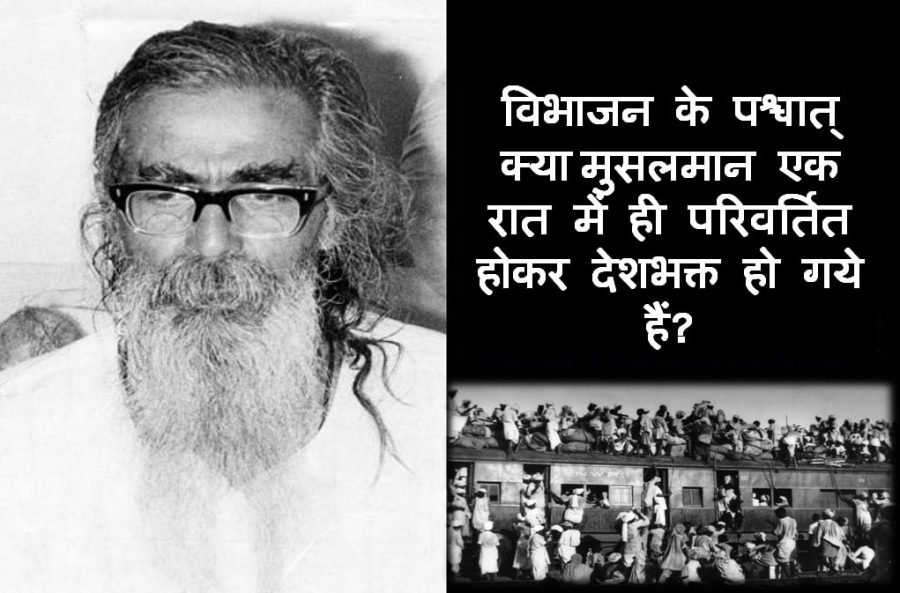
Shri Guruji Golwalkar on the Post-Partition Muslim Crisis
Shri Guruji’s explicit view regarding the inherent disposition of Muslims and the impending national crisis arising therefrom is found in his book *Vichar Navaneet* (*Bunch of Thoughts*); Shri Guruji says, “After Partition, there are many who say that the Muslim problem no longer exists at all. Pakistan
23 October 2026 · 4 min read
The Meaning of Medha, Kautuhala, Jigyasa and Herd Mentality
*Medha* (intellect) and the Herd “He who protects *dharma* (righteousness/cosmic order), *dharma* protects him.” The meaning of *dharma* is Vedic *yajna* (sacrificial ritual), that is, the *karma-kanda* (ritual section) of the Vedas. There are ten characteristics of *dharma* — *dhriti* (fortitude), *kshama* (forgiveness), *dama* (self-control), *asteya* (non-stealing), *shaucha* (purity), *indriya-nigraha* (sensory control), *dhi* (intellect), *vidya* (knowledge), *satya* (truth), and *akrodha* (absence of anger). But these are merely characteristics on the basis of which we can recognize that a particular...
18 October 2026 · 8 min read
What is Theatre Command, why India needs it
On January 1st 2020 when India got its first CDS General Bipin Rawat, Mandate from the government was very clear. He has to bring jointness and Synergy among Army, Navy, and Air Force. Essentially theatre commands are Geographic units where all assets in that particular geographi
5 March 2021 · 3 min read