YugSamvad · Dharma & Culture
Dharma & CultureHistoricity and Authenticity of Shrimad Bhagavata and Puranas
Mudit Agrawal · English edition 18 October 2026 · Hindi original 15 October 2019 · 4 min read
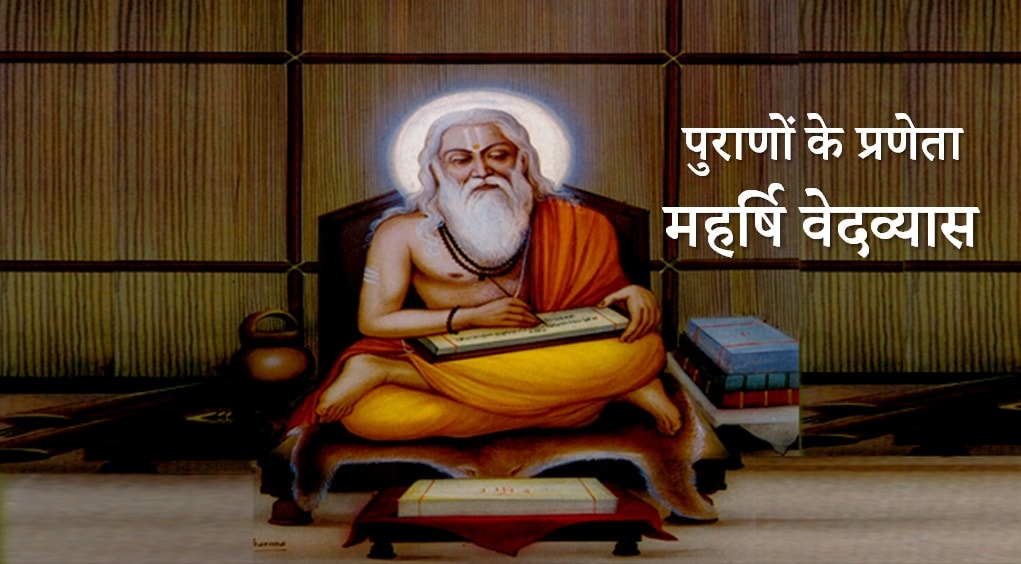
Certain confused individuals motivated by sectarian malice do not accept 'Shrimad Bhagavata', the crest-jewel among the Puranas (ancient texts of sacred lore), as being authored by Maharishi Vedavyasa, claiming instead that Shrimad Bhagavata was written in the 13th century by a scholar named Bopadeva. However, even across several lifetimes, they cannot produce evidence for this. Yet, by weaving meaningless webs of words, they mislead Hindus and sow doubts in the minds of the devout. Therefore, in this article, we present irrefutable evidence of the antiquity of Shrimad Bhagavata and its authorship by Maharishi Vedavyasa...
1. Bopadeva was born in the 13th century, but shlokas (verses) of Shrimad Bhagavata are found in the bhashyas (commentaries) composed prior to him by Shri Madhvamuni; what answer is there to this?
2. How are verses of the Bhagavata found quoted in the bhashya on the Ramatapini and in the Sarasangraha of Shrimad Ramanujacharya Ji, who predates even Shri Madhva?
3. Even prior to them, how did Aadyaguru Bhagavatpada Adi Shankaracharya—whom Swami Dayanand himself dated to the 4th century—quote verses from the Bhagavata at various places in his bhashya on the Shri Vishnu Divya Sahasranama and in his other commentaries?
4. How did Shri Gaudapadacharya Ji, the guru of Adi Shankaracharya himself, quote verses from the Bhagavata in his Panchikarana Vyakhya?
5. An 11th-century manuscript copy of the Bhagavata is preserved in the Saraswati Bhavan of Kashi. Did Bopadeva invent a time machine, travel back into the past, and place that manuscript there? In sum, how are verses of the Bhagavata found in the works of numerous acharyas (revered spiritual teachers) dating up to 2000 years prior to Bopadeva's birth?
6. Kalidasa's plays, written 2000 years ago, are based precisely on the narratives of several Puranas. How did the Puranas reach Kalidasa?
7. Kalidasa's great work is based on the narrative of the Ekadashi vrata (sacred observance) from the Padma Purana. The detractors of the Puranas, such as the Arya Samajis and others, call the Padma Purana modern; in that case, how did Kalidasa travel to the future and bring back the Padma Purana?
8. Bhasa is a poet even more ancient than Kalidasa; even European scholars have accepted his date as 2400 years ago. He wrote the play 'Balacharita' based on Shrimad Bhagavata, and almost all his plays are based on the Mahabharata. What answer will the objectors give to this?
9. The Apastamba Dharmasutra is accepted even by Europeans as dating back 2400 years. Verses from the Padma Purana and Brahmanda Purana are cited in the Apastamba Dharmasutra.
10. 2300 years ago, Acharya Chanakya instructed the king to listen to the Puranas in the Kautiliya Arthashastra (Adhyaya 5, Prose 13–14). The Acharya composed the mangalacharana (auspicious invocation) of Chanakyaniti with a hymn of praise to Shri Vishnu. Will those who call the Puranas modern now brand Chanakya a liar as well?
11. In the 1st century AD, the Greek traveler 'Dion Chrysostom' came to India. In Greek, Greek epic history is called the Iliad. He lived in Malabar, India, and wrote that India too has an Iliad consisting of 100000 shlokas. Iliad means history. This history is none other than the Sata-sahasri Samhita—the Mahabharata. The claim of the Arya Samajis calling 90% of the Mahabharata false is also proven untruthful. From the Mahabharata itself emerged a Purana, the Harivamsa Purana. Swami Dayanand, the very founder of the Arya Samajis, himself wrote that one should read the Ramayana and Harivamsa Purana every morning.
12. Many allegations are leveled against the Bhavishya Purana regarding how details of future kings and so forth appear in advance. To them I say: its very name is Bhavishya Purana. Sanatani jyotisha (traditional astronomy and astrology) can record the account of kalpa (aeon) after kalpa. The word of a rishi (seer) is aghatita-ghatana-pateeyasi (capable of bringing about the impossible). Atheists will now babble about science. The Bhavishya Purana is the foundation of 75% of present-day Sanatana Dharma (eternal tradition). The Veda itself testifies to the Bhavishya Purana: "भविष्यत्प्रति चाहरत्" (Taittiriya 3.12.6.3), meaning that in the Bhavishya Purana, the history of creation is concluded with descriptions of later times.
Apart from these, there are numerous other proofs, but you will find that the objectors are utterly incapable of providing satisfactory answers to any of these questions. Therefore, one should rely solely upon the Sanatana Dharma shastras (sacred scriptures) and acharyas. Shrimad Bhagavata is not distinct from Shri Krishna; Shrimad Bhagavata is Shri Krishna Himself in manifest form.
So what is a Purana for Sanatanis? The Chandogya Shruti (revealed Vedic text) has called the Purana the Veda of the Vedas!! The Purana must be revered on par with the Veda, because before all shastras, Brahma remembered the Purana, and thereafter the Vedas manifested. That is to say, the Purana originated even prior to the Veda. Why? Understand it like this: just as when we want to drink a glass of water, an image of the glass and water first forms in our mind, and only then do we say with our speech, "Give me a glass of water"—that is, the meaning appears prior to the word—similarly, the esoteric meaning of the Veda is inherent in the Purana itself. Therefore, Brahma first remembered the 'meaning', that is, the Purana, and subsequently the Veda manifested in the form of Shabda Brahman (the Divine sound). The names of all 18 Puranas appear in the Vedas. The Purana is eternal, beginningless, the Veda of Vedas, the fifth Veda, the very lifeblood of Hindus. To understand the greatness of the Puranas, read 'Purana Digdarshan', 'Purana Parishilan'.
Read also,
Books to Read to Understand Sanatana Dharma
Sects of Sanatana Dharma and Their Major ‘Mathas’ and ‘Acharyas’
Saga of the Puranas, Part-1: Why are the Puranas Important?
Saga of the Puranas, Part-2: Who is Vedavyasa?
Saga of the Puranas, Part-3: When Romaharshana and Ugrashrava of the Suta Caste Became Brahmanas
Cite this article
Mudit Agrawal. “Historicity and Authenticity of Shrimad Bhagavata and Puranas”. YugSamvad, 18 October 2026. https://yugsamvad.com/en/articles/shreemadbhaagavata-va-anya-puraanon-kee-aitihaasikataa-aura-praamaanikataa
https://yugsamvad.com/en/articles/shreemadbhaagavata-va-anya-puraanon-kee-aitihaasikataa-aura-praamaanikataa · accessed
Related reading
Yudhishthira's Dyuta: The Esoteric Vedic Akshavidya
It is wrong to call Dharmaraja Yudhishthira a gambler. How many times in his life did Dharmaraja Yudhishthira play dyuta (the traditional game of dice)? How many times must one play to be called a vyasani (addict)? It is also wrong to call dyutavidya (the science of dice) gambling. Why did Dharmaraja Yudhishthira have to learn dyutavidya from a rishi (seer)? Why was no teacher to be found other than a rishi? Shaku...
18 October 2026 · 1 min read

Be It Kanyadaan or Vardaan: What Is Wrong with It?
Is *kanyadan* (the ritual offering of the bride) merely charity? Why is *kanyadan* performed, and is it an insult to women? Understand the true meaning of *kanyadan* in the Hindu *vivaha sanskara* (marriage sacrament), along with its cultural and Vedic significance. Read the authentic exposition of *vardan* (boon) versus *kanyadan*, the mystery of *Brahma vivaha* (the Brahma form of marriage), and a definitive response to the fallacies that seek to misrepresent Hindu traditions.
18 October 2026 · 5 min read