YugSamvad · Dharma & Culture
Dharma & CultureThe Truth Behind The Worship of Shiva Linga
Dr. Vineet Aggarwal · 2 March 2019 · 6 min read
On the day of Mahashivratri, you must have observed your parents or grandparents worship the Shiva Linga in the morning. They might have even asked you to come to the temple with them to bathe the linga with water or milk and you may or may not have accompanied them for various reasons. But have you ever wondered why do we worship the Shiva Linga?
What does Shiva Linga represents?
There is a great misconception about the Linga representing the phallus but the truth is, that except in the Tantrik way of worship, the Lingam does not have anything remotely connected with the worship of genitals! The Sanskrit word ‘linga’ means a ‘mark’ or ‘symbol’ and is applied equally to both male and female forms. If you remember any Indian language lessons from school, the male gender is called ‘Pu-linga’ or PurushLinga and the corresponding term for the female gender is ‘Stree-linga’. Here, Streelinga is something that can be symbolized as female. It can be an actual female or a thing that can be considered as a female. like a river etc. Similarly, Pullinga is something that can be symbolized as male. Hence, it can be easily deducted that Shiv Linga is a symbolization of Shiva.
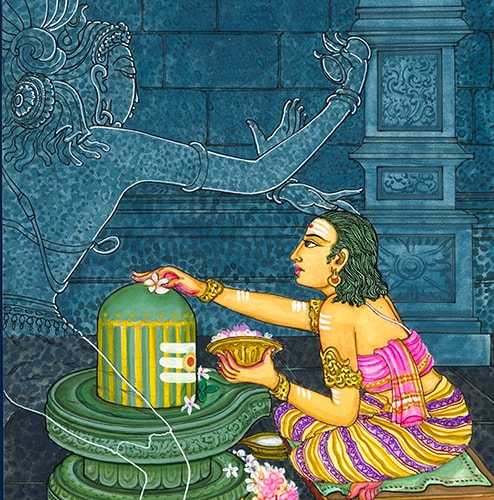
How Shiva Lingam symbolizes Shiva?
Also, contrary to the general belief, it is not just Shiva who is worshipped in this form but many of the Shakti temples also have the deity as small, conical or oval-shaped stones. So how did the identification of Shiva with the stone lingam begin? The Atharvaveda mentions the ‘Skambha’ or pillar as a manifestation of the eternal Brahman. Hymn 7 of Book 10 is dedicated to this Cosmic Pillar that forms the axis of the Universe:
Which of his members is the seat of Fervour?
Which is the base of Ceremonial Order?
Where in him stands Faith? Where Holy Duty?
Where, in what part of him is truth implanted?
Out of which member glows the light of Agni?
From which part proceeds the breath of Mātarisvan?
From which does Chandra measure out his journey, traveling over Skambha's mighty body?
Which of his portions is the Earth's upholder?
Which gives the middle air a base to rest on?
Where, in which member is the sky established?
Where has the space above the sky it's dwelling?
The above verses show us the uncertainty that plagued the mind of the composer which gets further highlighted in the story from the Shiva Puran that co-relates this Skambha with Shiva. This scripture tells us the story of the time when Lord Brahma and Vishnu were debating about which of them was actually greater in position. While they were arguing, a massive pillar of fire (Agni Stambha) emerged between them going deep into the earth as well as rising high into the sky.
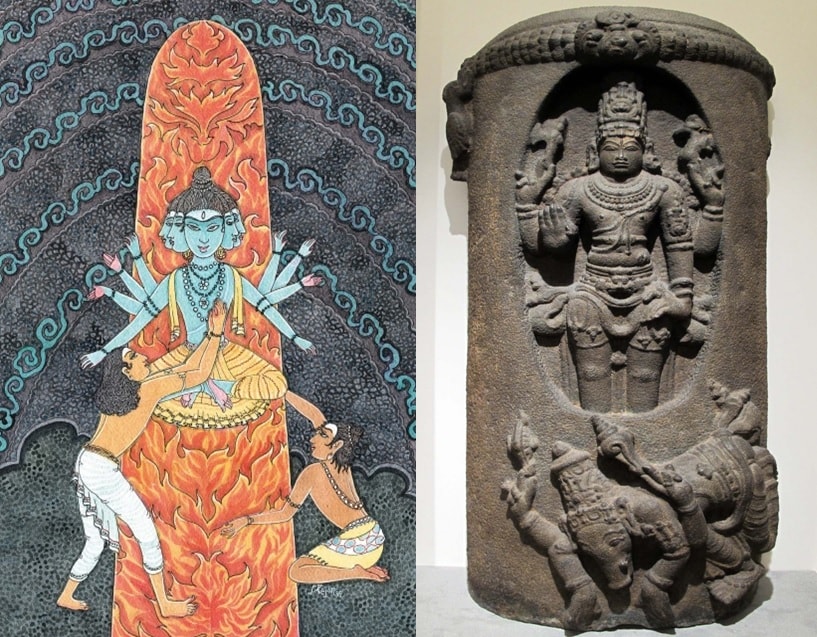
This particular appearance of Shiva from the cosmic pillar of Fire is known as the Ling-odbhava form which means ‘emerging from the lingam’ and this Agni Stambha form of Lord Shiva took the form of a Shiva Linga. Even the Linga Purana describes this as a symbolic representation of God in the Nirguna or aniconic form. Shivalinga is nothing but a representation of that cosmic pillar on which we can concentrate (like on flame) and attribute our Shiva-emotions. That is why it is also called Jyotirlinga. You may have heard about the 12 Jyotirlingas in India. Jyoti is the light that takes away the darkness inside us. The path of enlightenment that leads to divine brilliance. This Jyoti is a representation of that Agni, by which that cosmic pillar was made up of.
Both of them decided that whoever found the end of the ‘Stambha’ or the ‘Lingam’ of fire, would be accepted as the greater one. Lord Vishnu took the form of a Varah or Boar and dug deep into the bowels of the earth while Brahma took the form of a swan and flew high into the sky. It so happened, that neither of them was successful in their quest to find the limits of that endless cosmic fire pillar, but Brahma cheated and said that he had found the end. Finally, Lord Shiva emerged from the lingam telling them that he was the origin of the universe and hence greater than both. He also berated Brahma for lying and told him that henceforth he would not be worshiped anywhere on earth.
This book by Dr. Vineet Aggarwal is a powerful story of a brave but stubborn, haughty yet compassionate, visionary king of Aryavarta, Vishwamitra, who born as a Kshatriya and became a Brahmarishi, and shook the very foundation of the heavens. Click here to buy this amazing book.
For untold thousands of years, the Shiva Linga has represented God in His unmanifest reality, termed Nirguna Brahman. The aniconic form of the Lingam alludes subtly to that which is beyond description or portrayal, which is the core of existence within, not above, the phenomenal world and it's vast, galactic and subatomic contents.
Why Shiva Linga is worshipped with water and milk?
Once we know the story of the emergence of Lord Shiva as the pillar of fire, the worship of the deity with water and cooling substances like milk and Bel fruits also starts to make sense. The Bel is used in many parts of the country to make a drink that can help beat the summer heat and it is clear that its association with Shiva is due to its cooling properties. Shiva is also associated with Bhang that is used in thandai in summer to beat the heat generated in the body. Also, Sandalwood paste is used to anoint the lord in most temples due to its cooling properties.
You can also listen to the author on this topic here,
Before I end this article, let me also mention a very important fact that is relevant for today – it was on the day of Mahashivratri, that the Lord had appeared as the Lingam of Fire! The night of Shivratri also marks the wedding of Lord Shiva and Goddess Parvati and is observed by Yogis by a night long vigil or jaagran. So, on this special occasion, go ahead and worship the coolest lord of the Hindu pantheon in the form that he had first appeared in, without being sidelined by irrelevant discussions.
Har Har Mahadev and Happy Shivratri!
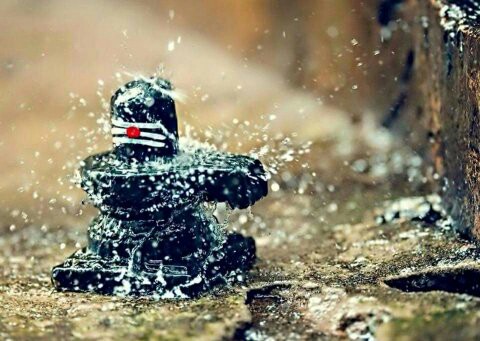
See blissful Shiva Linga Abhishekam from Mahakaaleshwar Jyotirling, Ujjain.
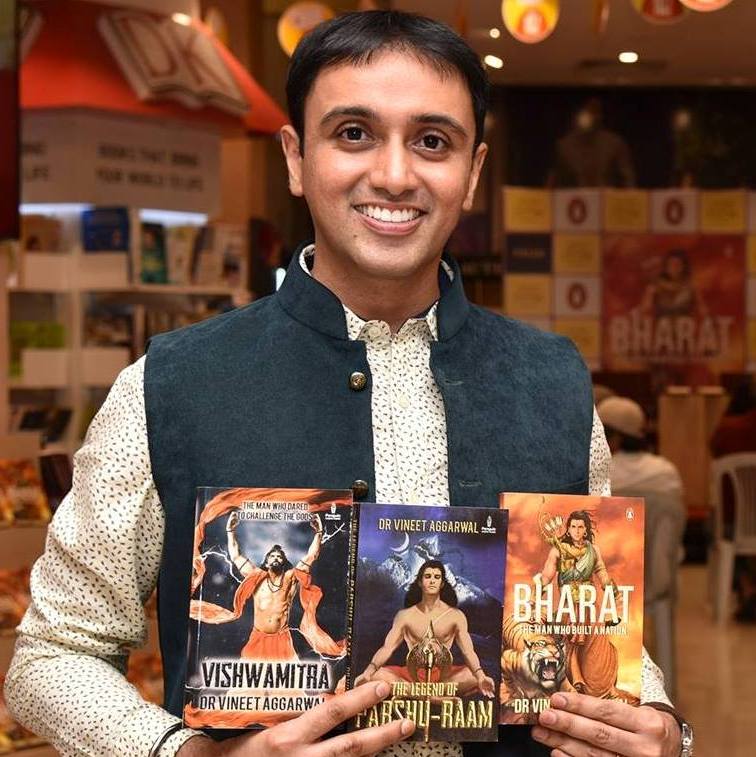
Dr. Vineet Aggarwal is a renowned author based in Mumbai. Dr. Aggarwal is a doctor by qualification, manager by profession and artist by temperament. He writes on Indian literature, arts, and science. His famous books are ‘Bharat‘, ‘Vishwamitra‘ and ‘The Legend of Parshu-Raam‘.
Also read,
Why Science & Religion May Not Be Adversaries!
Know the Mathematics of the Kumbha Mela.
Mathematics of Army Organization in Ancient India
Cite this article
Dr. Vineet Aggarwal. “The Truth Behind The Worship of Shiva Linga”. YugSamvad, 2 March 2019. https://yugsamvad.com/articles/the-truth-behind-the-worship-of-shiva-linga
https://yugsamvad.com/articles/the-truth-behind-the-worship-of-shiva-linga · accessed
Related reading
Determining the Jati of Shabari – Acharya Gangadhar Pathak
'Shri Ram's Devotee Shabari Was Not a Bhilni, But a Brahmani' Author: Pandit Gangadhar Pathak ‘Vedadyacharya’ Chief Acharya – Shri Ram Janmabhoomi Shila Pujan, Ayodhya Advisor: Shri Sarveshwar Jayaditya Panchang (traditional almanac), Jaipur Conducting the shilanyas (foundation stone laying) of the Shri Ram Janmabhoomi Temple in Ayodhya with Prime Minister Shri Narendra Modi m
18 October 2026 · 1 min read
Be It Kanyadaan or Vardaan: What Is Wrong with It?
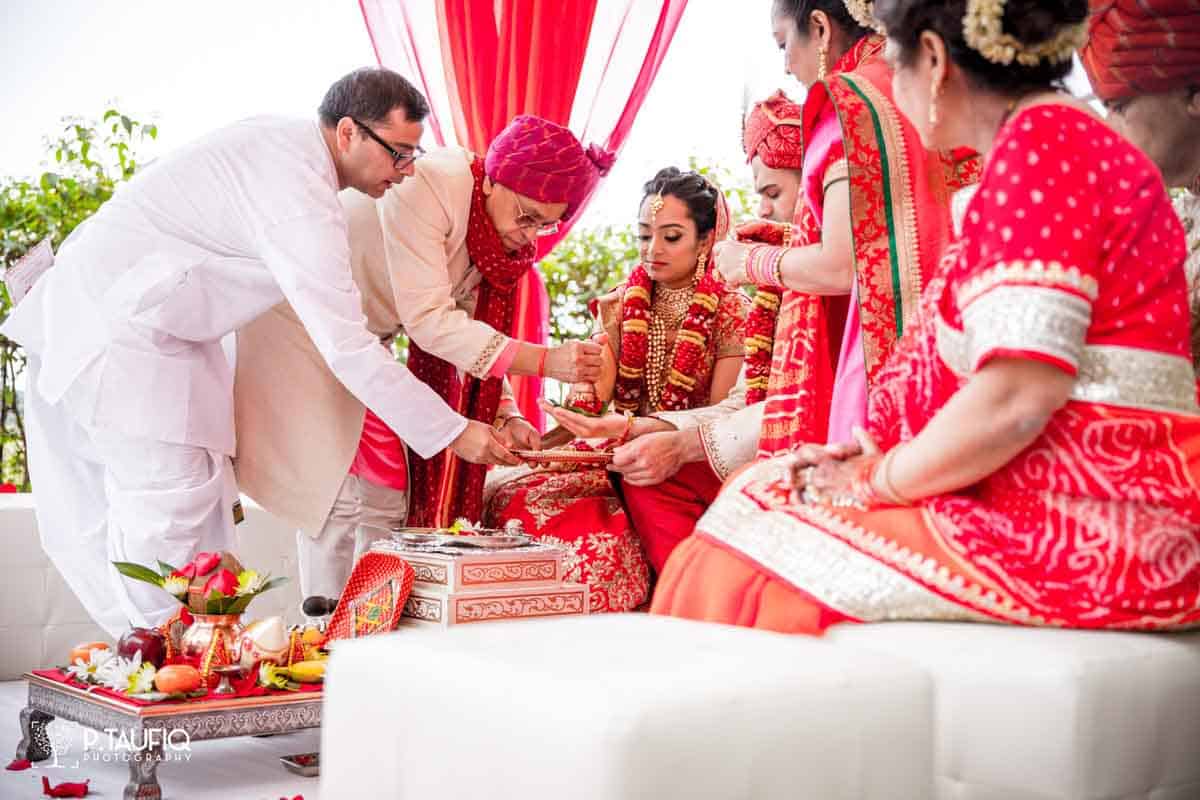
Is *kanyadan* (the ritual offering of the bride) merely charity? Why is *kanyadan* performed, and is it an insult to women? Understand the true meaning of *kanyadan* in the Hindu *vivaha sanskara* (marriage sacrament), along with its cultural and Vedic significance. Read the authentic exposition of *vardan* (boon) versus *kanyadan*, the mystery of *Brahma vivaha* (the Brahma form of marriage), and a definitive response to the fallacies that seek to misrepresent Hindu traditions.
18 October 2026 · 5 min read
Yudhishthira: Sovereign Emperor and Builder of Hindu Rashtra
Given the controversies often seen regarding Yudhishthira and others, we must look to the Mahabharata itself to determine whether Yudhishthira and the other Pandavas were powerful in their own right and embodiments of dharma (righteousness), or if, according to modern propaganda, they were merely dependent on the mercy of Shri Krishna. For the sages repeatedly call him Dharmaraj, and their words cannot be false.
13 September 2026 · 13 min read