YugSamvad · Politics & History
Politics & HistoryAssam Citizenship Crisis from Illegal Infiltration, Part-2
प्रवक्ता · English edition 23 October 2026 · Hindi original 31 July 2018 · 4 min read
Read First: Part - 1
The Complete Story of the Citizenship Crisis Created by Illegal Infiltration in Assam, Part-1
When assembly elections were conducted in Assam in 1983, the Congress secured a majority. Hiteswar Saikia became the Chief Minister of the state. Despite the adoption of the democratic process, it had no effect on the unrest in Assam, and the cycle of violence continued unabated. Meanwhile, Smt. Indira Gandhi was assassinated in 1984, bringing about a transition at the Centre. Rajiv Gandhi became the Prime Minister of the country and took an open-hearted initiative to hold talks for the restoration of peace in Assam. ULFA
On 15 August 1985, the Assam Accord came into being. The date of 25 March 1971 was fixed to define an outsider. The government promised to expel from the state all individuals who had arrived after this date. This accord was reached with the Asom Gana Parishad and the Asom Gana Sangram Parishad. Following this, the leaders of this organization began functioning as the Asom Gana Parishad. ULFA refused to accept this accord. It distanced itself from the Asom Gana Parishad, with whom it had previously walked in tandem. Immediately after, in the general elections of 1985, the Asom Gana Parishad came to power and Prafulla Kumar Mahanta was elected Chief Minister.
ULFA-Sponsored Terrorism and Operation Bajrang
The Central Government continued dialogue with ULFA, but the talks failed every time. ULFA continued to expand and established a nexus with Pakistan's intelligence agency, the ISI, and certain ISI syndicates operating in Bangladesh. Terrorism was unleashed across the state through targeted killings of outsiders, bomb blasts, and guerrilla tactics against security forces. By 1990, terrorism had escalated so drastically that the Central Government was once again compelled to impose President’s Rule in the state. The army launched Operation Bajrang to restore peace, in which a large number of terrorists were eliminated. Army personnel attained martyrdom in this operation, but ULFA was weakened, paving the way for the restoration of peace in the state.
The Struggle Against Insurgency
When ULFA reared its head again in 1991, the army launched Operation Rhino. To shield themselves, ULFA leaders set up camps in Bhutan, Myanmar, and Bangladesh. Top ULFA leaders sought sanctuary in these countries. Under pressure from the Government of India, Bhutan launched Operation All Clear in 2003 to dismantle ULFA's terror camps. Gradually, ULFA's strength dwindled. Its leaders ventured into arms smuggling and built up personal assets in Bangladesh. The Sheikh Hasina government in Bangladesh apprehended several ULFA leaders and handed them over to the Government of India. Some surrendered. Although ULFA has lost its popular support, it still keeps raising the slogan of an independent Assam. Since then, more than half of the year 2018 has passed, yet the problem of outsiders remains without a resolution.
Until the Weak IMDT Act Was Declared Illegal
On 15 October 1993, the Government of India promulgated an ordinance establishing tribunals tasked with expelling illegal immigrants. This ordinance was passed by Parliament on 12 December 1993 and entered into force as law. This law was enforced exclusively in Assam. To deal with this problem across the remaining states, the Foreigners Act, 1946 was made the legal foundation. There was a stark difference between the two statutes. Under the IMDT Act (The Illegal Migrants Determination Tribunal), the entire onus of proving an individual's foreign identity was cast upon the complainant. This law was contradictory. In the absence of evidence, a complainant could not establish his claim because illegal immigrants had manipulated a corrupt apparatus to procure ration cards and enroll their names in the voter lists. This was the Congress's vote-bank politics. The Congress had turned illegal Bangladeshis into its vote bank.
Today's BJP Chief Minister, Sarbananda Sonowal, challenged the IMDT Act before the Supreme Court and questioned its validity. Ultimately, on 12 July 2005, the Supreme Court declared this Act illegal. I shall take up the remaining discussion in the next article. To be continued...
Read Further -
The Complete Story of the Citizenship Crisis Created by Illegal Infiltration in Assam, Part-3
The Complete Story of the Citizenship Crisis Created by Illegal Infiltration in Assam, Part-4
– Manish Prakash, the author is a political analyst and writes on matters of national significance.
Also read,
How to Benefit from the Modi Government's Mudra Yojana?
Cite this article
प्रवक्ता. “Assam Citizenship Crisis from Illegal Infiltration, Part-2”. YugSamvad, 23 October 2026. https://yugsamvad.com/en/articles/asama-men-avaidha-ghusapaitha-dvaaraa-nirmita-naagarikataa-sankata-kee-3686
https://yugsamvad.com/en/articles/asama-men-avaidha-ghusapaitha-dvaaraa-nirmita-naagarikataa-sankata-kee-3686 · accessed
Related reading
Microsoft's step-motherly treatment of Mithilakshara and Indian scripts
Microsoft allows typing in its Mangal font (Devanagari), but neither typing nor copy-pasting is possible in Mithilakshara of the SMP plane, because LOOKUP has been restricted in its Word, without which typing in any Indian script is impossible, because in Indian scripts, mu
23 October 2026 · 10 min read
When a communist said, "Let the people taste blood!"
Just recently, I read Raj Thapar's book *All These Years*. Compiled from her diaries following Raj Thapar's (1926–1987) demise, this memoir was published in 1991. The book contains a total of 24 chapters, and the final chapter remains incomplete, owing to Raj Thapar's untimely death from cancer
23 October 2026 · 5 min read
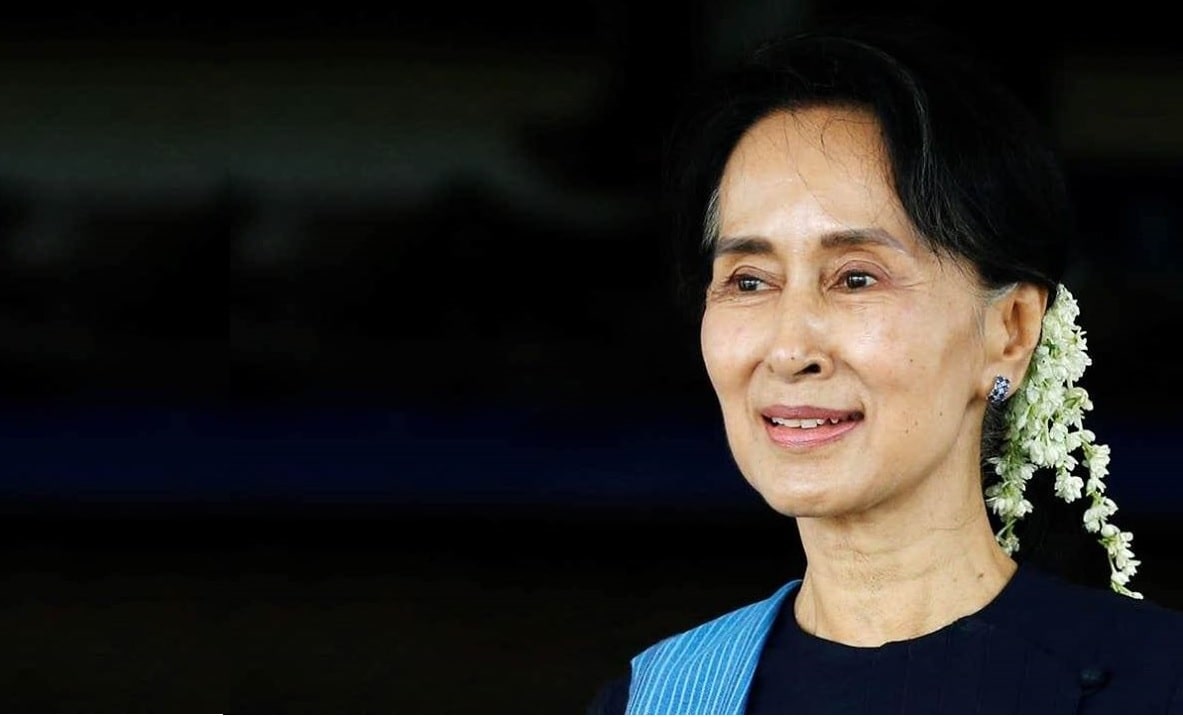
Aung San Suu Kyi: Every Indian's Salute to Myanmar's Mother
Salutations to Myanmar’s Nobel laureate Mother Aung San Suu Kyi, who brushed aside international pressure to stand steadfastly with her nation. Defying the stripping of numerous awards already and the threats of global leftist powers to revoke her Nobel, she stood by her country. Today, every citizen of Brahmadesh (traditional name for Myanmar)
17 October 2026 · 3 min read