YugSamvad · Sanskrit & Shastra
Sanskrit & ShastraThe Swamiji of Datia, Whose Yajna Forced China to Retreat
Abhijeet Singh · English edition 18 October 2026 · Hindi original 20 July 2018 · 4 min read
भद्रं इच्छन्तः ऋषयः स्वर्विदः, तपो दीक्षां उपसेदु: अग्रे ! ततो राष्ट्रं बलं ओजश्च जातम्, तदस्मै देवा उपसं नमन्तु !!
This mantra from the Atharvaveda says, Datia
"The self-realized rishis (sages), desiring the welfare of the world, undertook diksha (initiation) and tap (austerity) at the dawn of creation; from that, the nation was constructed, and national strength and ojas (vital power) were manifested. Therefore, let all bow in humility before this nation and serve it."
Following this command, there arose many such rishis in Bharat who set aside concerns of their own moksha (liberation) and personal gain or loss, dedicating their lives to Bharat. Countless are the rishis who melted their very bones for this nation and this dharma (righteous order), employing the strength of their sadhanas (spiritual practices) and tap for the protection of this nation and dharma. Maharishi Dayananda, Swami Rama Tirtha, the countless revolutionaries of the Sannyasi Rebellion, Ram Singh Kuka, Madhav Sadashiv Golwalkar, and many other rishis chose not the path of the Himalayas, but remained within this society and offered their lives as oblations into the rashtra-yajna (national sacrifice).
Among these rashtra-rishis (national sages) was a young man who took sannyas (renunciation) in 1929 and made his abode in a small place called Datia, located near Jhansi in Madhya Pradesh. Later, by divine command, that sannyasi had the idols of 'Devi Bagalamukhi' and Dhumavati Mai consecrated at that spot. At that very location stands the "Vankhandeshwar Shivlinga," believed to date back to the Mahabharata era, and it is held that even today Ashwatthama comes here to worship this Vankhandeshwar Mahadev of Datia.
Shri Swamiji Maharaj, Pitambara Peeth Datia
A Yajna Performed at Pitambara Peeth in the National Interest
Famous today as the "Pitambara Peeth" of Datia, this place possesses such siddhis (spiritual powers) that people and politicians from across the world come here. Within the courtyard of Pitambara Peeth stands the country's only temple dedicated to Maa Bhagavati Dhumavati Devi. By worshipping both these Devis, a sadhaka (spiritual practitioner) attains victory, and enemies are completely vanquished.
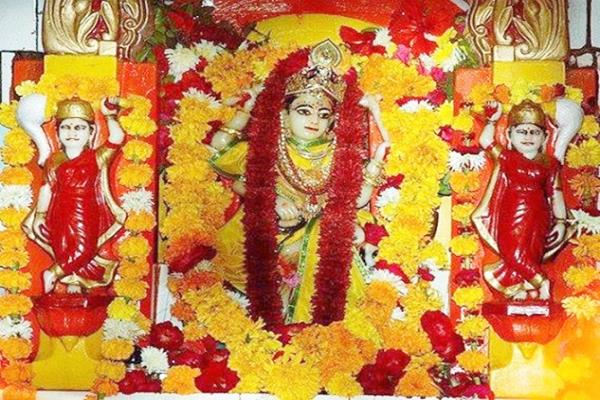 Maa Bagalamukhi
For a long time, the spiritual efficacy of this sacred place remained confined to personal triumphs and defeats, court litigations, and electoral victories. But the spiritual power of this place came into prominent discussion when, in 1946, that sannyasi (whom the world knows as "Pujya Swami Ji Maharaj") conducted a yajna (sacred fire ritual) for "public welfare and national defense," and the very next year after that yajna, the British departed from Bharat. Later, when China attacked Bharat in 1962, "Pujya Swami Ji Maharaj" grew anxious about how a newly independent nation with its limited military resources would confront this asuric (demonic) country. Out of this concern and keeping the broader national interest in mind, Pujya Swami Ji resolved to undertake a massive yajna-anushthan (ritual performance) at that holy site in Datia. He assembled 85 learned pandits from across the country and, performing samputa (encapsulated) recitation of the Durga Saptashati with them, invoked Maa Pitambara and Maa Dhumavati. Entry for any outsider into the entire yajna site was prohibited, nor did Swami Ji accept donations from anyone for this yajna. Pujya Swami Ji forged a path out of this crisis and took the sankalpa (solemn vow) for this ritual performance.
A photograph of Shri Maharaj Ji with the initiated batuks (young brahmacharis) during the collective yajnopavita (sacred thread ceremony) at the ashram
The yajna was initiated by the pandits at Datia Dham. On the ninth day, just as the yajna was concluding and the purnahuti (final offering) was being offered, Nehru Ji received a message from the 'United Nations' that China had halted its aggression and the Chinese army had retreated.
Why China retreated from a war it was winning remains a mystery to this day. After its retreat, its relations even with friendly nations began to deteriorate, and today there is no country in the world that is a true friend or well-wisher of China. That Mata Bagalamukhi and Mata Dhumavati strike their enemies like a thunderbolt and leave them unfit to exist in civilized society—this serves as proof of that.
This news of the yajna and the mysterious retreat of the Chinese army on the day of the purnahuti was also published by a famous Mumbai weekly, the "Illustrated Weekly of India," and following that event, the fame of this temple and Swami Ji spread throughout the world. In the temple courtyard, that yajnashala (hall for fire rituals) still stands today where the yajna was performed that forced the Chinese army to retreat.
Bharat's rise since ancient times has proceeded along the path of spirituality, and the leaders of this resurgence have always been "rashtra-rishis," of which "Pujya Swami Ji Maharaj" of Datia is a living testament.
- Shri Abhijeet Singh, The author is a nationalist writer and a deep scholar of Indian culture, Hinduism, Islam, and Christianity.
Read Also,
Sampradayas (traditions) of Sanatana Dharma and Their Major ‘Mathas’ (monasteries) and ‘Acharyas’ (preceptors)
Vivekananda Rock Memorial-Kanyakumari, a Symbol of Historic Struggle
Cite this article
Abhijeet Singh. “The Swamiji of Datia, Whose Yajna Forced China to Retreat”. YugSamvad, 18 October 2026. https://yugsamvad.com/en/articles/datiyaa-ke-svaameejee-jinake-yajna-se-yuddha-se-peechhe
https://yugsamvad.com/en/articles/datiyaa-ke-svaameejee-jinake-yajna-se-yuddha-se-peechhe · accessed
Related reading
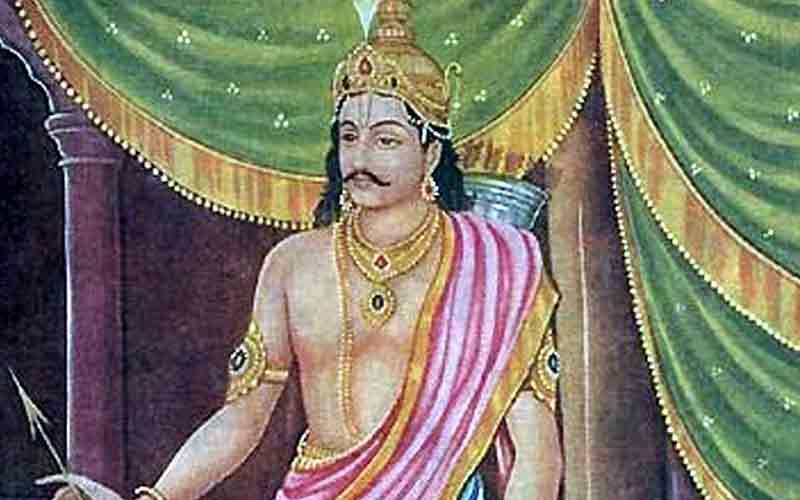
Yudhishthira's Dyuta: The Esoteric Vedic Akshavidya
It is wrong to call Dharmaraja Yudhishthira a gambler. How many times in his life did Dharmaraja Yudhishthira play dyuta (the traditional game of dice)? How many times must one play to be called a vyasani (addict)? It is also wrong to call dyutavidya (the science of dice) gambling. Why did Dharmaraja Yudhishthira have to learn dyutavidya from a rishi (seer)? Why was no teacher to be found other than a rishi? Shaku...
18 October 2026 · 1 min read
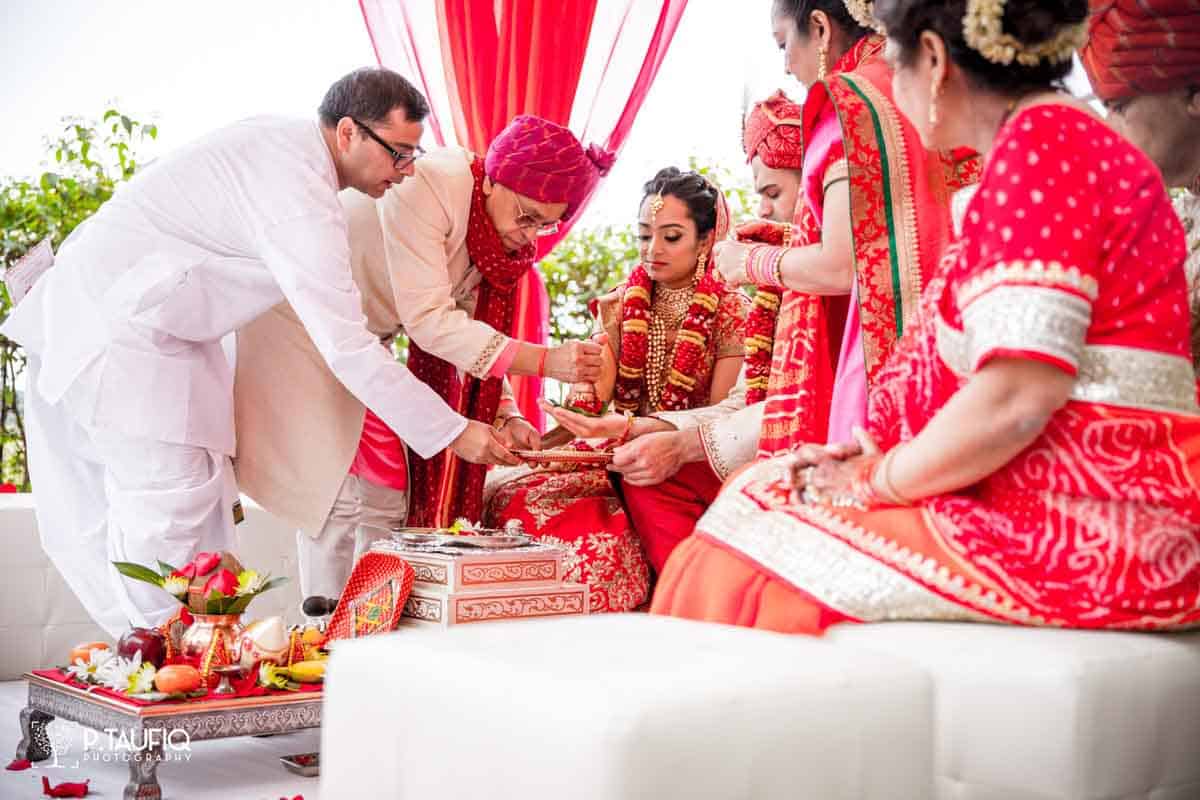
Be It Kanyadaan or Vardaan: What Is Wrong with It?
Is *kanyadan* (the ritual offering of the bride) merely charity? Why is *kanyadan* performed, and is it an insult to women? Understand the true meaning of *kanyadan* in the Hindu *vivaha sanskara* (marriage sacrament), along with its cultural and Vedic significance. Read the authentic exposition of *vardan* (boon) versus *kanyadan*, the mystery of *Brahma vivaha* (the Brahma form of marriage), and a definitive response to the fallacies that seek to misrepresent Hindu traditions.
18 October 2026 · 5 min read