YugSamvad · Dharma & Culture
Dharma & CultureThe Golden Resolve of Hindu Rashtra
Mudit Agrawal · English edition 23 October 2026 · Hindi original 13 January 2019 · 4 min read
Bharat belongs only to Hindus, is only for Hindus, and is only by Hindus—this is our unwavering conviction. And this is also the core concept of our Hindu Rashtra (Hindu nation). When we express this thought, even many Hindus, subjugated by a timidity entrenched over centuries, end up calling this resolve absurd. They hesitate to even state that Bharat belongs only to Hindus.
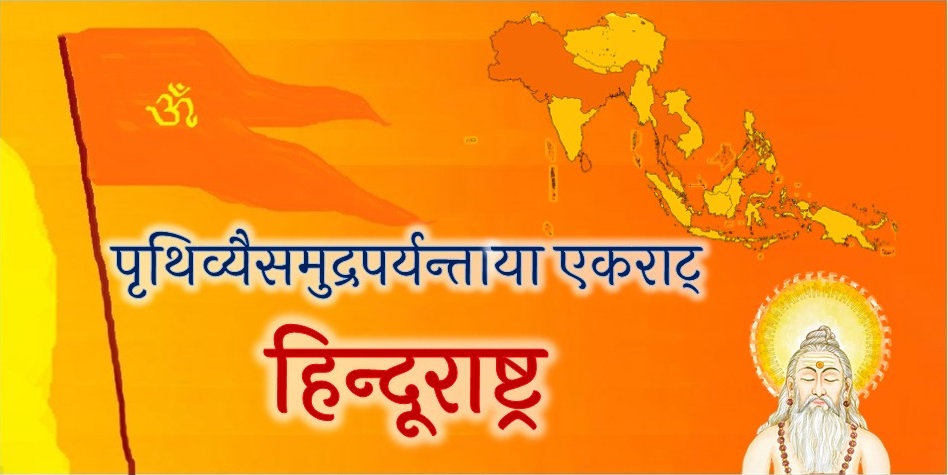
When I speak of Hindu Rashtra, I certainly do not speak merely of this landmass. Rather, a map stretching from Afghanistan, Pakistan, Nepal, Bhutan, Sri Lanka, Bharat, and Myanmar to Laos, Thailand, Cambodia, Vietnam, Indonesia, and Malaysia emerges in my mind, and I am reminded of the great Maurya, Gupta, Chalukya, Rashtrakuta, and Chola empires, all the way to the Champa and Khmer empires whose very names we have forgotten. Revered Shri Guruji Golwalkar declared Hindu Rashtra to be "पृथिव्यैसमुद्रपर्यन्ताया एकराट्" (a single sovereign ruler over the earth extending up to the oceans).
Swami Vivekananda's Book
"O Hindu Rashtra! Arise! Awake!"
To download, click here
My conception of Hindu Rashtra does not call for consolidating this vast region under a single ruler imposed upon it. Rather, Hindu Rashtra is one in which this entire landmass will be governed by a confederation of Hindu polities, where Hindus alone will be primary citizens. There, not even a single symbol of foreign invader culture will remain. Cows with udders like water-jars will roam fearlessly from Kabul to Kanpur and from Kohima to Kuala Lumpur. It will be a realm where Hindus are governed by swarajya (self-rule)—that is, by themselves—and not by foreign alien rulers and mlechhas (barbarians/foreigners). Where Hindus can practice their traditions and svadharma (one's own dharma) freely and without hindrance, and non-religious institutions will hold no power over their temples. This Hindu Rashtra will have a single flag—the Bhagwa Dhwaj (saffron flag)—upon which each state will emblazon symbols such as Garuda, tiger, lion, kalasha (sacred pitcher), Varaha, trident, and the sun.
Nations are forged and dissolved. But it is dharma (cosmic order and righteousness) alone that is Sanatan (eternal). Without dharma, what value does this land possess? It is dharma alone by which one land is called Bharat and another Pakistan. One realm, called Kashi, instills sanctity in the heart, while another, called Karachi, fills the heart with fear, distress, and unrest. It is dharma alone that distinguishes thing from thing and land from land.
Today, even most Hindutva proponents consider this sacred dream of Hindu Rashtra impossible. But how can I consider it impossible when our Veda itself defines our ultimate life purpose as "कृण्वन्तो विश्वमार्यम" ("Make the whole world Arya")? Make the entire world noble. Why have we forgotten that when a Brahmin named Kaundinya arrived in Cambodia from the banks of the Ganga 2000 years ago, he established the Funan Hindu Empire and unfurled the banner of "कृण्वन्तो विश्वमार्यम्"? We are the descendants of Bhagiratha, four generations of whose lineage performed severe tapas (austerities) for thousands of years to grant contentment to their ancestors. We are the descendants of Vishwamitra, who repeatedly performed intense penance for thousands of years to become a Brahmarshi (supreme sage), until smoke began rising from his skull. We are the descendants of Chanakya, who lifted a poor boy and uprooted the mighty Nanda empire to make him emperor. Why has the resolve for Hindu Rashtra come to feel like an impossible burden to the children of Vishwamitra, Bhagiratha, and Chanakya? Why do their hearts falter in declaring, "Bharat belongs only to Hindus"?
The dream of Hindu Rashtra is no small dream. It is that dream for which Godse's soul, renouncing the desire for mukti (liberation), wanders the soil of Bharat because his ashes will be immersed only when the saffron flag flies across both sides of the Sindhu River. For 700 years, sectarians have not abandoned their dream of "Ghazwa-e-Hind" and the "Ummah", remaining steadfast in it even today. Yet why has even the dream of an "Akhand Bharat Hindu Rashtra" (Undivided India Hindu Nation)—let alone "Krinvanto Vishwam Aryam"—come to seem impossible and burdensome to the descendants of the rishis (sages)? Meanwhile, those sectarians rule unhindered across more than 52 countries solely on the strength of a single dream.
The community that dares to dream big is the one that attains victory. He who forgets his history is forgotten by history. If the idea of Hindu Rashtra survives even in a single household, then if not today, tomorrow—after 100 years, or 200 years—Hindu Rashtra will inevitably come into being. Times do not take long to change, and to forge an Akhand Bharat Hindu Rashtra requires only a single chakravarti (universal sovereign)—a moment that could arrive at any time. We must simply protect this dream, keep it awake, hold it in our hearts, and awaken it in the hearts of others.
Yudhishthira – Sovereign Triumphant Creator-Emperor of Hindu Rashtra
6 December 1992, Ayodhya: Political and Cultural Implications
The Extraordinary Tradition Connecting South-East Asia: Shraddha
Thus Should Be the Grand Reconstruction of Shri Ram Temple in Ayodhya…
These Books Must Be Read to Understand Sanatan Dharma
Sampradayas of Hindu Dharma and Their Major 'Mathas' and 'Acharyas'
Murtipuja – An Essential Limb of Sanatan Dharma
The Ancient Art of Sculpting Murthis from Shaligram Stones is Fading Away
Cite this article
Mudit Agrawal. “The Golden Resolve of Hindu Rashtra”. YugSamvad, 23 October 2026. https://yugsamvad.com/en/articles/hindooraashtra-kaa-svarnima-sankalpa
https://yugsamvad.com/en/articles/hindooraashtra-kaa-svarnima-sankalpa · accessed
Related reading
Karpatraratnasamuchchaya and Tradition-ism | Including 'Kutarkakootnashak' (Destroyer of False Logic)
This following essay is written by @RamaInExile.Trad: The events of the past few months have shaken me to my core. I was completely unaware of the true nature of the elements within these events. Like a tadpole, my worldview began to undergo a metamorphosis. In the name of Trad vada (Trad traditionalism), dharma...
18 October 2026 · 63 min read
Be It Kanyadaan or Vardaan: What Is Wrong with It?
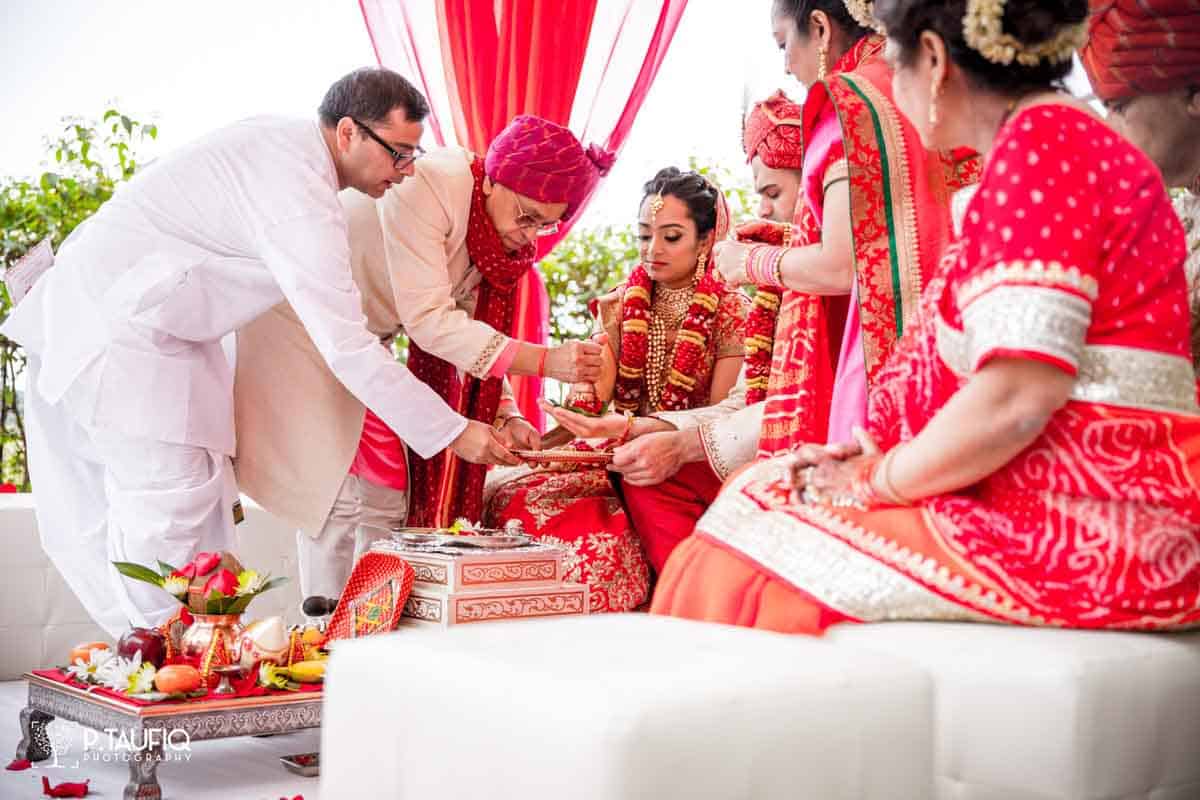
Is *kanyadan* (the ritual offering of the bride) merely charity? Why is *kanyadan* performed, and is it an insult to women? Understand the true meaning of *kanyadan* in the Hindu *vivaha sanskara* (marriage sacrament), along with its cultural and Vedic significance. Read the authentic exposition of *vardan* (boon) versus *kanyadan*, the mystery of *Brahma vivaha* (the Brahma form of marriage), and a definitive response to the fallacies that seek to misrepresent Hindu traditions.
18 October 2026 · 5 min read
Yudhishthira: Sovereign Emperor and Builder of Hindu Rashtra
Given the controversies often seen regarding Yudhishthira and others, we must look to the Mahabharata itself to determine whether Yudhishthira and the other Pandavas were powerful in their own right and embodiments of dharma (righteousness), or if, according to modern propaganda, they were merely dependent on the mercy of Shri Krishna. For the sages repeatedly call him Dharmaraj, and their words cannot be false.
13 September 2026 · 13 min read