YugSamvad · Sanskrit & Shastra
Sanskrit & ShastraNaipaul - Nobel Laureate and Trenchant Hindu Thinker
Abhijeet Singh · English edition 18 October 2026 · Hindi original 13 January 2019 · 4 min read
Vidyadhar Naipaul – Nobel Laureate and Fierce Hindu Thinker
It is said that when your house catches fire, you must step outside to extinguish it. To gauge the true intensity of the fire raging inside, one has to step out—for remaining inside, you can neither see the severity of the blaze nor make adequate arrangements to extinguish it. And in any case, the land of Bharat has now become fertile soil for the progress of dhimmitude (submissive state of non-Muslims under Islamic dominance).
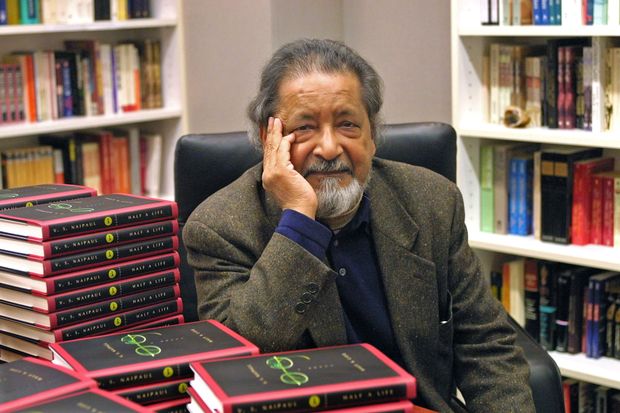
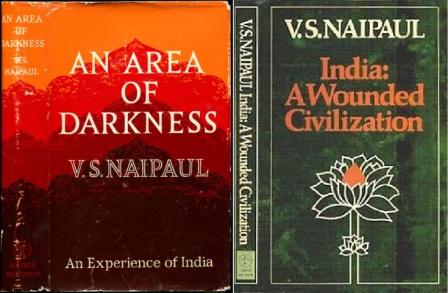
Honored with the Nobel Prize in Literature in 2001, Vidyadhar Surajprasad Naipaul was outside his home; hence, the flames rising in his home, his Bharat, were visible to him with utter clarity. Having observed Bharat from the outside, Naipaul comprehended its history, culture, civilization, and the contemporary Hindu mind in a manner that usually escapes us. He gave voice to his insights by authoring books such as 'An Area of Darkness' and 'India: A Wounded Civilization'.
While self-styled Hindu leaders of India felt penance and guilt over the 6th of December, Naipaul possessed the courage to describe that very 6th of December as "a natural expression of history" and asserted that it was bound to happen.
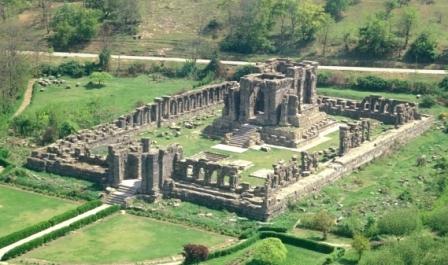
Nestled among the snow-covered mountains of Kashmir, the Martand Temple dedicated to Bhagavan Bhaskara was constructed nearly 1,700 years ago by King Lalitaditya Muktapida of the Surya Vamsha (solar dynasty). This magnificent temple was laid waste in the 15th century by the barbaric Sultan Sikandar of the Shah Mir dynasty. Similarly, Hampi, the glorious capital of the great medieval Hindu empire of Vijayanagara, sits on the banks of the Tungabhadra River in Karnataka. It was destroyed in 1565 after the Battle of Talikota by the combined armies of 4 Muslim sultanates (Golkonda, Ahmadnagar, Bijapur, and Vidarbha). In this war, the great Hindu kingdom of the Vijayanagara Empire suffered defeat, and the city of Hampi was thoroughly plundered by those invaders.
Despite such devastating ruin, the remains of the Martand Temple and the great city of Hampi still proclaim Hindu pride with full resonance. During his tour of India, when Naipaul witnessed the plight of the Martand Temple and Hampi, he stood stunned like a statue, tears welling continuously from his eyes at the sight of this decline of the Hindu jati (community/nation). Naipaul was among those rare individuals who recognized the mindset of the invaders of India most accurately, observing: "This mindset is identical across the world, so let no one harbor the delusion that this destructive mentality could have been lesser in one place or greater in another." (which is unfortunately in the minds of our Hindutvavadis today).
He stated unambiguously that there was no place on the soil of Bharat for the religion of the invaders. In an interview given to the English magazine Outlook in 1999, he identified this very invasive mindset at the root of all of India's misfortunes and had the audacity to declare that a counter-attack is natural following an assault by an aggressive mindset. Therefore, during his 2004 visit to India, he stated at the BJP office: "Ayodhya was a kind of passion, and every passion ought to be encouraged. I always support actions emerging from passion, for it reflects creativity."
Naipaul, who saw creativity in that destruction, said this because he believed that decades of defeat had conditioned Hindus into a mindset of surrender, which now needed to change—and Ayodhya would serve as the vehicle for that transformation.
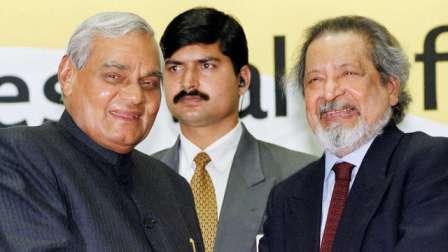
Awarded the Booker Prize in 1971 and the Nobel Prize in Literature in 2001, Naipaul was no ordinary figure. Today, even those published in a trivial newspaper begin mouthing the dialect of secularism and dhimmitude; in such times, a Nobel laureate's courageous proclamation of the Sanatana (eternal) truth renders him great... and immensely noble. He offered the world a key formula to identify the conflict between barbarianism and civilization. Count Naipaul among the heroes of Hindutva (Hindu national consciousness); the world uses his writings for its security and strategic planning, yet it is our misfortune that we Hindus barely know him. Let there be discourse, research, and seminars on his works, and if you feel this is necessary, share this article with joy. The truth is that Nobel Laureate Vidyadhar Surajprasad Naipaul is a thinker and hero of Hindutva.
Read Also,
Swami Shraddhanand is Even More Relevant Today
Devendra Swaroop Passes Away: The Extinction of a Beacon
Sacred Remembrance of Pandit Shripad Damodar Satwalekar
Swami Vivekananda – Through Whom the World Recognizes Bharat
He Who Made the Sangh Nation-Wide: Former Sarsanghchalak (head of the RSS) Balasaheb Deoras
Cite this article
Abhijeet Singh. “Naipaul - Nobel Laureate and Trenchant Hindu Thinker”. YugSamvad, 18 October 2026. https://yugsamvad.com/en/articles/naayapola-nobela-puraskaara-vijetaa-prakhara-hindoo-vichaaraka
https://yugsamvad.com/en/articles/naayapola-nobela-puraskaara-vijetaa-prakhara-hindoo-vichaaraka · accessed
Related reading
Karpatraratnasamuchchaya and Tradition-ism | Including 'Kutarkakootnashak' (Destroyer of False Logic)
This following essay is written by @RamaInExile.Trad: The events of the past few months have shaken me to my core. I was completely unaware of the true nature of the elements within these events. Like a tadpole, my worldview began to undergo a metamorphosis. In the name of Trad vada (Trad traditionalism), dharma...
18 October 2026 · 63 min read

Be It Kanyadaan or Vardaan: What Is Wrong with It?
Is *kanyadan* (the ritual offering of the bride) merely charity? Why is *kanyadan* performed, and is it an insult to women? Understand the true meaning of *kanyadan* in the Hindu *vivaha sanskara* (marriage sacrament), along with its cultural and Vedic significance. Read the authentic exposition of *vardan* (boon) versus *kanyadan*, the mystery of *Brahma vivaha* (the Brahma form of marriage), and a definitive response to the fallacies that seek to misrepresent Hindu traditions.
18 October 2026 · 5 min read
Yudhishthira: Sovereign Emperor and Builder of Hindu Rashtra
Given the controversies often seen regarding Yudhishthira and others, we must look to the Mahabharata itself to determine whether Yudhishthira and the other Pandavas were powerful in their own right and embodiments of dharma (righteousness), or if, according to modern propaganda, they were merely dependent on the mercy of Shri Krishna. For the sages repeatedly call him Dharmaraj, and their words cannot be false.
13 September 2026 · 13 min read