Dharma & Culture'Introduction to Maharshi Valmiki' Author: Pandit Gangadhar Pathak 'Vedadyacharya' Principal: Shri Ram Janmabhoomi Shila Pujan, Ayodhya Guide: Shrisarveshwar Jayaditya Panchang (traditional almanac), Jaipur The chief priest who had Prime Minister Shri Narendra Modi perform the groundbreaking ceremony (shilanyas) for the Shri Ram Janmabhoomi temple in Ayodhya
23 October 2026 · 1 min read
Dharma & Culture'Shri Surabhi Yaga Paddhati'
Author: Pandit Gangadhar Pathak ‘Vedadyacharya’
Chief Acharya — Shri Ram Janmabhoomi Shila Pujan (foundation stone consecration), Ayodhya
Guide: Shri Sarveshwar Jayaditya Panchangam (traditional almanac), Jaipur
Chief Priest Acharya Sh... conducting the shilanyas (foundation stone laying) of the Shri Ram Janmabhoomi Mandir in Ayodhya with Prime Minister Shri Narendra Modi
23 October 2026 · 1 min read
Jyotish॥ नमः प्रकृत्यै ॥ (Salutations to Prakriti)
Author: Pandit Gangadhar Pathak ‘Vedadyacharya’
Mukhya Acharya — Shri Ram Janmabhoomi Shila Pujan, Ayodhya
Advisor: Shri Sarveshwar Jayaditya Panchang (traditional almanac), Jaipur
Chief priest Acharya Shri conducting the shilanyas (foundation stone-laying) of the Shri Ram Janmabhoomi Mandir in Ayodhya with Prime Minister Shri Narendra Modi
23 October 2026 · 13 min read
JyotishIn *Panchasiddhantika*-1/3 1 by Varahamihira, one of the navaratnas (nine gems) of Vikramaditya, the Surya Siddhanta was designated as the “Saura” Siddhanta, and in *Panchasiddhantika*-1/4 2 it was called the “Savitra” Siddhanta. Therefore, according to Varahamihira, Savita—the Vedic deity of the Gayatri Mantra—is himself the exponent of the Surya Siddhanta, and his
23 October 2026 · 5 min read
JyotishHumble Request - Shri Nimbark Parishad is respectfully informed that by the infinite grace of our revered deities Thakur Shri Govinddevji and Thakur Shri Sarasbihariji, Rajasthan's only panchang (traditional almanac) based on the ancient mathematics of the *Surya Siddhanta*, the *Shri Sarveshwar Jayaditya Panchang*, is published from Jaipur by Shri Nimbark Parishad...
23 October 2026 · 6 min read
Sanskrit & ShastraThe World Health Organization has warned that by 2050, one in four people in the world's population will suffer from hearing problems. The first global report on hearing capacity states that the causes of many problems—such as infections, diseases, birth defects, noise, and negative lifestyle changes—
23 October 2026 · 2 min read
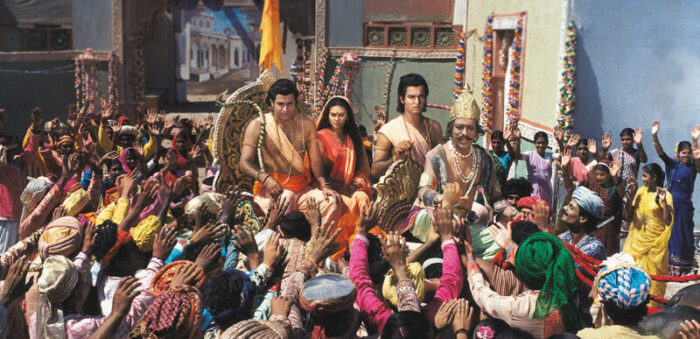
Dharma & CultureWhen Bhagwan Shri Ram was leaving for the forest, all the people of the city began to follow him. Among those people were three types of Brahmanas: some were elders by age (vayovridha), some were elders by knowledge (jnanavridha), and others were elders by austerity (tapovridha). Among the elders by age, some were so old that their heads shook upon their necks. Those Brahmanas were calling out from afar— O swift one!
23 October 2026 · 3 min read
Sanskrit & Shastra“Should today's youth do strength exercises like push-ups, squats, etc., in addition to pranayama (breath control) and asana (yogic postures) to maintain physical strength?” Answer — Strength exercises like push-ups, danda-baithak (traditional Indian push-ups and squats) or weight training increase pressure, which indeed increases muscular strength.
23 October 2026 · 6 min read
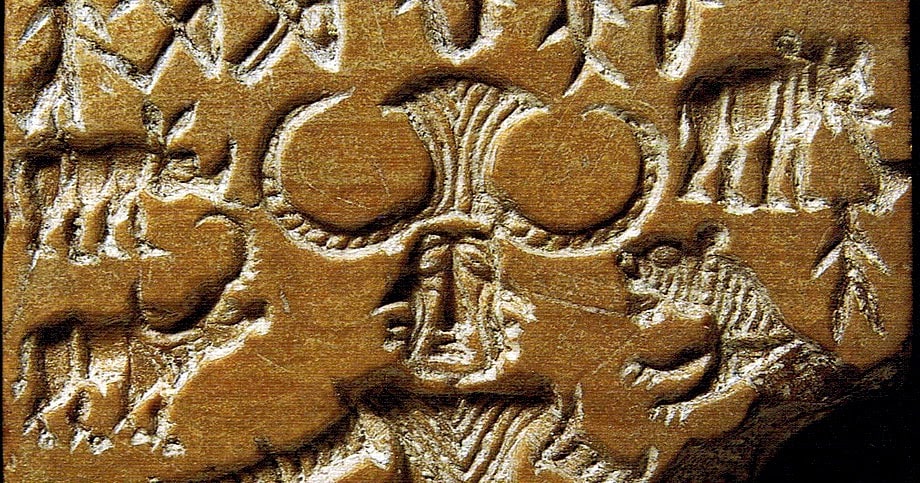
Sanskrit & ShastraThe so-called 'scholars' of Europe characterized the Mohenjo-daro and Harappa 'civilization' as the oldest foundation of Indian civilization and declared it to be more advanced and ancient compared to the Vedic (pertaining to the Vedas) pastoralists—a view that our policy-makers and so-called intellectuals, especially leftist historians, continue to accept to this day. Th
23 October 2026 · 25 min read
Dharma & CultureIt is one hundred percent false propaganda that there was no murtipuja (deity worship) in Sanatana Dharma (eternal cosmic order). India's oldest murtis (sacred images) do not belong to the Jains or the Buddhists. This propaganda was first started by the British—claiming that Greek kings introduced murtipuja in India—and was later carried forward by the pseudo-Christians of the Brahmo Samaj and Arya Samajists like
23 October 2026 · 6 min read
Politics & HistoryThe 'Surf Excel' advertisement is currently a subject of discussion, but amidst that advertisement lies a serious issue about which those who understand and shape human sensibility do not show concern, and their lack of concern is precisely what nurtures separatism, fragmentation, and other such mindsets in India. On 27 February 2018, Surf Ex
23 October 2026 · 5 min read
Sanskrit & ShastraChennai, February 5: A video clip of DMK leader Stalin has surfaced on social media in which he is criticising the Vedic rituals of marriage. In this video, Stalin has insulted Hindu customs and, in particular, the Brahmins chanting the Vedas. Over the past week on social media
23 October 2026 · 6 min read
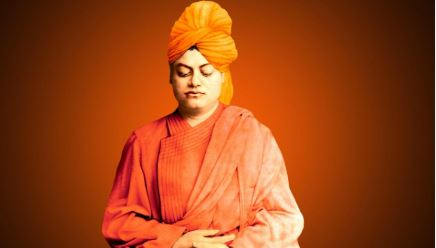
Dharma & CultureIf any saint in modern times has exerted the greatest influence on the public life of India, particularly the youth, it is Swami Vivekananda. Swami Vivekananda, who presented Shankaracharya’s Vedanta philosophy in a modern perspective as Navya Vedanta (neo-Vedanta), was born on 12 January 1863 in Calcutta in a Western
23 October 2026 · 6 min read
Sanskrit & Shastraमाता गुरूतरो भूमेः (The mother is weightier than the earth)—in the Mahabharata, when the Yaksha asks Dharmaraja Yudhishthira, ‘Who is heavier than the earth?’, Yudhishthira replies, ‘माता गुरूतरा भूमेः’ (The mother is weightier than the earth). Yudhishthira’s affirmation of this exalted preeminence of the mother is by no means casual; if you study the Vedas (revelatory canonical scriptures), the Veda, extolling the glory of the mother, proclaims that the mother...
23 October 2026 · 5 min read
Dharma & CultureTo defend Vedic dharma (righteous order), Vedic culture, and the Arya jati (people), to revive it from a moribund state, making it once again vibrant and dynamic, and to raise it to the supreme summit, the Arya Samaj has made hundreds of sacrifices. And the foremost blossom in its front rank is Swami Shraddhanand Saraswati, whose 23 Dec
23 October 2026 · 11 min read
Sanskrit & ShastraIt was in 1999 that my elder brother developed bleeding piles. Despite undergoing every level of treatment, these piles took the form of Hemorrhoids (gudachir). In this condition, the anal canal becomes excoriated. One can well imagine how agonizing an affliction this is. A definitive cure for all manner of anorectal disorders at Delhi’s Unani Tibbia College
23 October 2026 · 5 min read
Dharma & CultureThe Saga of the Puranas, Part 2: A massive propaganda campaign has been spread among Hindus that the Puranas (sacred histories) authored by Veda Vyasa are modern texts. It is evident from the very name *Purana* that it pertains to that which is ancient. Erasing a culture's history in order to destroy it has been an age-old tradition; denigrating the Puranas is an extension of that very practice.
23 October 2026 · 3 min read
Sanskrit & ShastraAnupam Mishra – Father of ponds, wells, and stepwells. Seeking the musk hidden within its own navel, the deer keeps running hither and thither, yet it never finds contentment. In the same way, man keeps running after development, yet his ambition remains unfulfilled. In this frantic race, that very navel in which development lay hidden, man...
23 October 2026 · 5 min read
Sanskrit & ShastraThis was a time when food was eaten at home and bowels were relieved in the open fields; to say nothing of ‘Sheila’s youth’ or ‘Munni’s infamy’, neither had even been born yet. It was during such times that one day, two brothers, Babban and Daddan, set out on a bicycle with a sack of harad (myrobalan) to sell. The whole day passed, and not even a single paseri (traditional measure of five seers) of harad was sold. Night was
23 October 2026 · 8 min read
Sanskrit & ShastraAmong those devoted to the study of *vedavidya* (knowledge of the Vedas), Panditji’s name alone serves as a sufficient introduction. He accomplished the monumental task of bringing Vedic literature and Sanskrit within reach of the common populace, much as Swami Dayanand had once aspired to do. By making Hindi the language of *vedabhashya* (commentary on the Vedas), Swami Dayanand had
23 October 2026 · 4 min read
JyotishThere is a very beautiful mantra(1) in the Yajurveda; it states that *diksha* (initiation) is attained only through *vrata*s (vows) such as *brahmacharya* (celibate studenthood)—that is, one gains entrance into *brahmavidya* (knowledge of Brahman) or any other discipline. Then, from *diksha* comes *dakshina* (sacrificial fee/honorarium), meaning prestige through wealth, prosperity, and the like is attained. Here, receiving *dakshina* implies giving *dakshina*,
23 October 2026 · 6 min read
Sanskrit & ShastraThe Purusha Sukta (hymn to the Cosmic Being) of the Veda is that Manasarovar of Sanatana Sanskriti (eternal culture) from plunging into which our ancestors extracted the finest of gems and jewels. The Vedas manifested upon the earth solely to secure the welfare of all humanity. If Bharat is viewed after excising these very foundational texts of dharma (cosmic and moral order)—the Vedas, Upanishads, Smritis (remembered canon), and Puranas (ancient scriptures)—th
23 October 2026 · 6 min read
Sanskrit & ShastraAlthough descriptions of Brahmanas are found in numerous texts, the finest ones are in the Vedas and smritis (sacred texts outside the Vedas). The right to be a Brahmana belongs to everyone, regardless of caste, region, or sect. However, becoming a Brahmana requires the observance of certain rules. Through the observance of these very rules, eight Brah
23 October 2026 · 3 min read
Dharma & CultureAuthor: Acharya Vasudev Mishra, Veda-vijna (knower of the Veda)
यत्रौषधीः समम्मत राजानः समिताविव ।
विप्रः स उच्यते भिषग् रक्षोहामीवचातनः ॥ ऋग्वेदः १०-९७-६ ॥
(Where herbs gather together like kings in a battle assembly, that learned man is called a physician, a destroyer of rakshas [demons] and dispeller of disease.) – Rigveda 10.97.6
Just as a king shines in battle amidst his soldiers, similarly that learned man who is a master of the eight branches of surgery (shalya-ashta-tantra) and an expert in pulse diagnosis (nadi-vijnana) and various types of medicines
18 October 2026 · 15 min read