Sanskrit & ShastraWhile reading the novel "Doosri Jannat" written by Nasira Sharma, born in DNA Allahabad, I suddenly remembered Allama Iqbal, who in his "Jawab-e-Shikwa" restlessly and immersed in grief says to his co-religionists:
"वज़ह में तुम हो नसारा तो तमद्दुन में हनूद/ ये मुसलमां हैं जिन्हें देख के शर्माये"
(The Christians are [ahead] in reason, and the Hindus in culture; these are Muslims, seeing whom [even Islam] is ashamed.)
18 October 2026 · 5 min read
Dharma & CultureRead both statements on jati (caste) and Hindu organization carefully and understand the difference. 1. "As long as the sense of jati does not end among Hindus, Hindu organization and Hindu awakening are impossible." — Veer Savarkar 2. "If the Hindu becomes awakened, he will automatically become organized and give a fitting response to the challenge of jati-bhed (caste division)..."
18 October 2026 · 1 min read
Politics & HistoryThe great karmayogi (one devoted to selfless action) Dr. Harvanshlal Oberoi was born on October 21, 1925, in Rawalpindi, to a Punjabi Khatri couple, Shri Dharmachandra and Ramkaur Oberoi. Following the partition of the country in 1947, he had to come to India with his entire family. Harvanshlal Oberoi ji was a worker of the Rashtriya Swayamsevak Sangh (RSS). B
18 October 2026 · 5 min read
Politics & HistoryI draw the attention of scholars affiliated with Kashi Hindu Vishwavidyalaya who are conducting research on the persona and works of Mahamana Malaviya Ji, as well as history enthusiasts, toward a matter of utmost importance. That matter is this: for some time now, it has been repeatedly observed and read that the Darbhanga royal family and Mithi...
18 October 2026 · 6 min read
Politics & HistoryThis following essay is written by @RamaInExile.Trad: The events of the past few months have shaken me to my core. I was completely unaware of the true nature of the elements within these events. Like a tadpole, my worldview began to undergo a metamorphosis. In the name of Trad vada (Trad traditionalism), dharma...
18 October 2026 · 63 min read
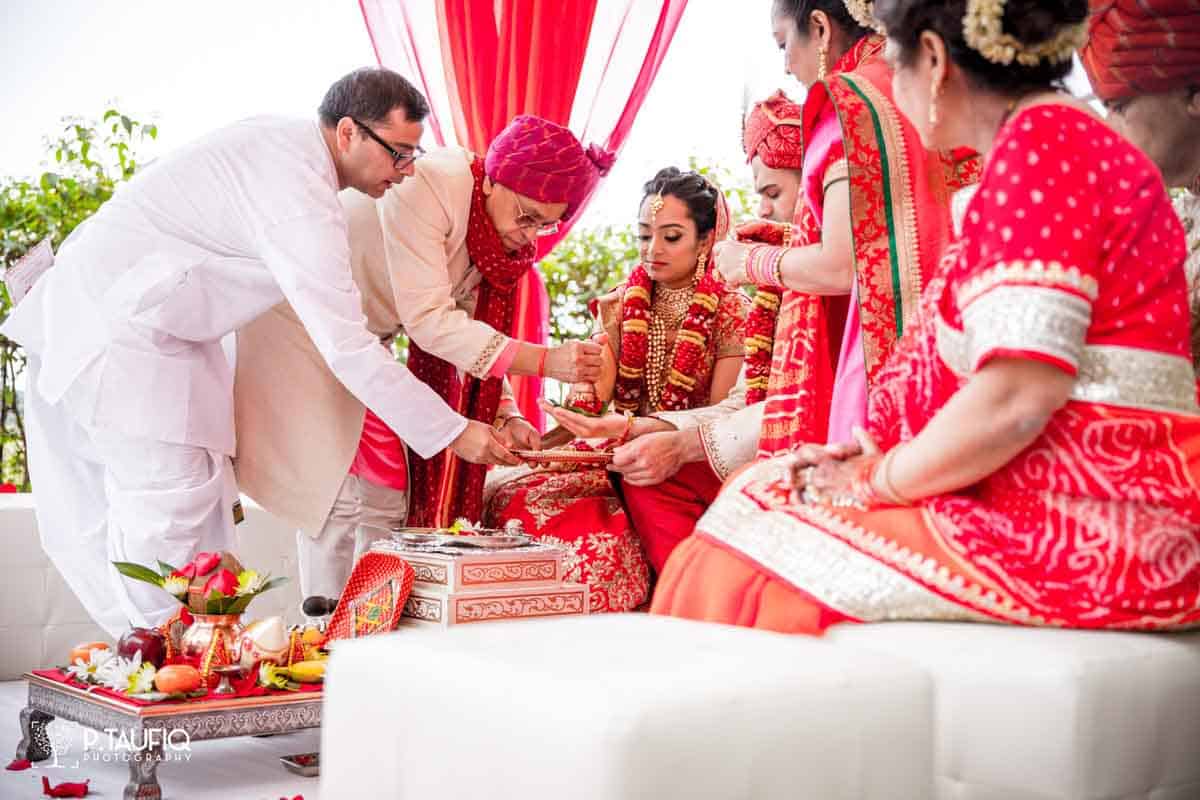
Dharma & CultureIs *kanyadan* (the ritual offering of the bride) merely charity? Why is *kanyadan* performed, and is it an insult to women? Understand the true meaning of *kanyadan* in the Hindu *vivaha sanskara* (marriage sacrament), along with its cultural and Vedic significance. Read the authentic exposition of *vardan* (boon) versus *kanyadan*, the mystery of *Brahma vivaha* (the Brahma form of marriage), and a definitive response to the fallacies that seek to misrepresent Hindu traditions.
18 October 2026 · 5 min read
Sanskrit & ShastraIn the fourth chapter of the Chhandogyopanishad, we find the narrative of Jabala, Satyakam, and Maharshi Gautama, the son of Haridrumata. Jabala represents that Bharat where woman in every form is Narayani (the divine feminine), while Satyakam stands as the sentinel of truth who declares that the wise person who never deviates from the path of truth is alone Brahma
18 October 2026 · 4 min read
Sanskrit & ShastraThe opposition to the film *Padmavati* by the entire Hindu society is a matter of great delight. For this vehement protest against the film, along with the Shri Rajput Karni Sena and Rajput organizations, Bajrang Dal, Vishwa Hindu Parishad, other Hindu organizations, Aggarwal Mahasabha, Brahmin Mahasabha, Vaishya Mahasabha and 36 other communities (caste groups) have come together.
18 October 2026 · 5 min read
Sanskrit & ShastraThe Saga of the Puranas (ancient chronicles), Part-1
The banyan tree of Hindu Dharma (cosmic and moral order), with its myriad branches laden with leaves, flowers, and fruits, rests upon roots that extend deep into the Vedas (sacred scriptures). But what is its trunk? Its trunk is the Puranas. If Hindu Dharma is likened to a grand multi-storeyed building, the Vedas would be called its foundation, and the 'Puranas' its pillars.
18 October 2026 · 4 min read
Sanskrit & ShastraGenerally, we consider someone a Brahmin, Kshatriya, Vaishya, or Shudra solely on the basis of jati (birth-caste), but according to Hindu dharmagranthas (sacred texts), a person's karma (actions) is of greater importance than their birth. It is only on the basis of karma that one can truly be called a Brahmin or anything else. Here, we shall see that Hindu sha...
18 October 2026 · 4 min read
Politics & HistoryFollowing the Bulandshahr incident, anti-national elements of leftist ideology are exultant. The joint endeavor of both is to defame Hindus once again after the Akhlaq episode. In this effort, they have already secured the support of the leftist media. This news aimed at maligning Hindus, beyond the borders of the country, across the seven seas
18 October 2026 · 6 min read
Dharma & CultureA Sangh karyakarta (worker) was murdered along with his family—in Murshidabad. A total of 4 murders, extremely gruesome and agonizing. Why does the Sangh not retaliate? This is by no means the first incident. Numerous innocent swayamsevaks (volunteers) have been murdered. Even the founders of the party currently in power were assassinated. Deendayal Upadh...
18 October 2026 · 5 min read
Dharma & CultureIn the ruthless, empty sky of Hindu Rashtra (Hindu nation), clouds of many hues have suddenly emerged in the Paridhavi samvatsara (year of the sixty-year astrological cycle). A formidable grand transformation has begun. First, the uprooting of the fierce impediment named 370 by the *Sarvaraja Samrat Paramabhattaraka* (supreme sovereign emperor) Shri Narendra Modi and *Sarvadhyaksha Mahadandanayaka* (supreme commander) Shri Amit Shah, then Shri Ram Janmabhoomi...
18 October 2026 · 3 min read
Sanskrit & ShastraTales from the Puranas (sacred texts), Part 3: When Romaharshana and Ugrashrava of the Suta jati (bardic order) became Brahmanas. "Breaking India" powers attack Hindu culture in order to break India; after all, Hindu culture is indeed Indian culture. Part of that very conspiracy is attempting to prove the casteism that emerged in the medieval period to be ancient, and the so-cal...
18 October 2026 · 6 min read
Sanskrit & ShastraNowadays, a falsehood has been very cleverly circulated among Hindus that Ravana never touched any woman, that if he had lust he also had self-restraint, and so on—all to prove Ravana to be a man of character and to draw people away from Shri Ram, bringing them close to the demon Ravana. But is this actually true?
18 October 2026 · 4 min read
Sanskrit & ShastraWhat is varna (traditional social order)? Who is foremost among the four varnas? In contemporary times, the Shudra (service and artisan order) varna is perhaps assumed to be impoverished people clad in wretched clothes; that is why many jatis (lineage-based communities) take issue with being designated as Shudra varna. Before I offer my view on what follows, let me clarify one thing: if tomorrow someone presents me with my true history and th—
18 October 2026 · 4 min read
Sanskrit & ShastraShudras (the fourth varna) lived on the outskirts of the village and protected it. Working on the land of farmers, demarcating village boundaries, providing security to merchants as they moved from place to place, protecting agricultural yields and the state treasury, and safely transporting them from one place to another—all these were the duties of the Shudras.
18 October 2026 · 10 min read
Sanskrit & ShastraAn important book written by Sita Ram Goel, *History of Hindu Christian Encounters* (A. D. 304 to 1996), was first published in 1986, with an expanded second edition appearing in 1996. After reading the book, Koenraad Elst met Goel in 1989 and, regarding the book, his re...
18 October 2026 · 13 min read
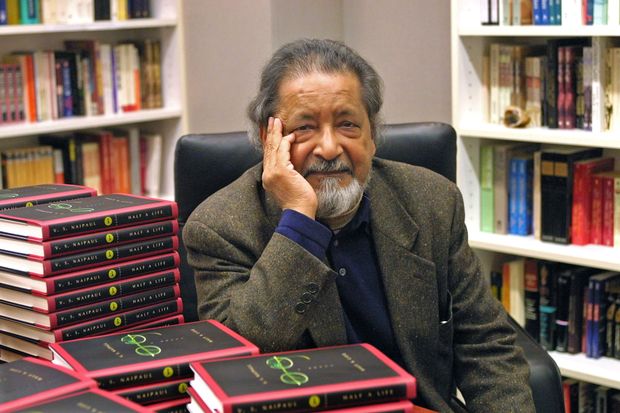
Sanskrit & ShastraVidyadhar Naipaul—the Nobel laureate and sharp Hindu thinker—says that when a house catches fire, one has to step outside to extinguish it. To see just how intense the fire in the house is, one must step outside, because by remaining inside, you cannot see the intensity of the fire...
18 October 2026 · 4 min read
Sanskrit & ShastraShraddha (rites for the ancestors) is a symbol of true devotion towards one's forebears. That rite which is performed methodically with devotion for the sake of the pitrus is precisely what is called 'shraddha'. According to Hindu dharma, it is our duty to offer salutations to our parents and ancestors at the beginning of every auspicious act. Our ancestors
18 October 2026 · 4 min read
Politics & HistoryPrime Minister Narendra Modi writes on Israel in his book 'Setubandh', "Two thousand years ago, invaders devastated Israel. Some of its people had been scattered across different parts of the world, yet, filled with their sense of self-pride, taking advantage of the circumstances of the First and Second World Wars...
17 October 2026 · 3 min read
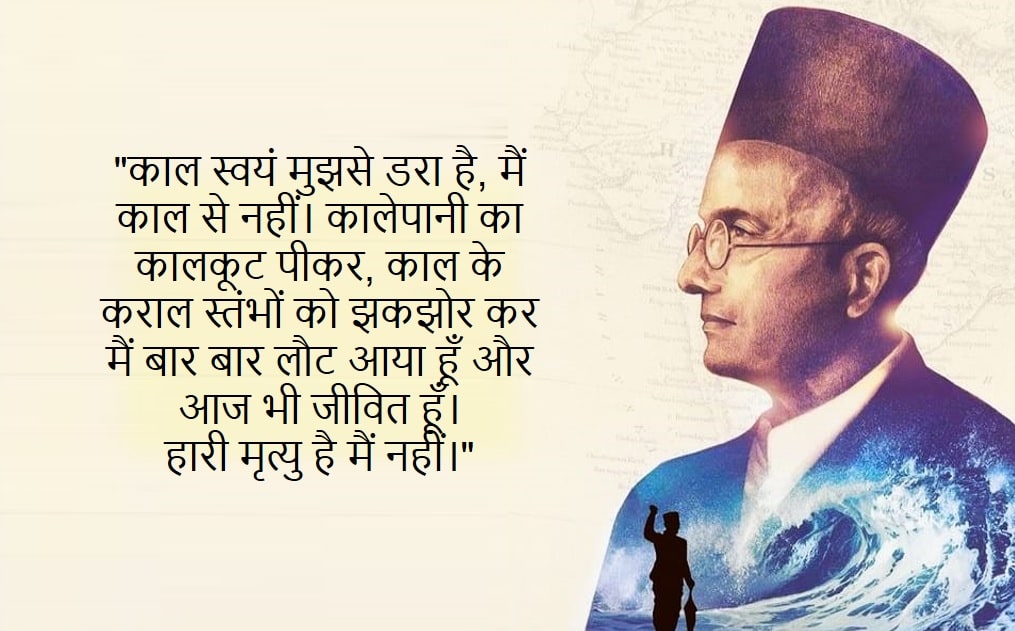
Politics & History"Come, Death... come... do come." At the age of 83, Veer Savarkar, adopting the ancient tradition of Hindu sadhus (ascetics), renounced food, water, and medicines on 1 February, on the tithi (lunar day) of Magha Shukla Ekadashi (eleventh day of the waxing fortnight in the month of Magha). He maintained, "When life's mission is fulfilled, and the strength to serve society no longer remains, one should embrace death oneself."
17 October 2026 · 3 min read
Sanskrit & ShastraIn Hindu Dharma, based on Vedanta thought, there are five major Vedic sampradayas (traditions). 1) The "Shankara-sampradaya", based on the "Advaita" (non-dualism) doctrine of Shrimad Adi Shankaracharya. 2) The "Shri Sampradaya", based on the "Vishishtadvaita" (qualified non-dualism) doctrine of Shrimad Ramanujacharya. It was within the Shri Sampradaya itself that Shrimad Ramanandacharya emerged, and Shri Sam...
17 October 2026 · 7 min read
Dharma & CultureGiven the controversies often seen regarding Yudhishthira and others, we must look to the Mahabharata itself to determine whether Yudhishthira and the other Pandavas were powerful in their own right and embodiments of dharma (righteousness), or if, according to modern propaganda, they were merely dependent on the mercy of Shri Krishna. For the sages repeatedly call him Dharmaraj, and their words cannot be false.
13 September 2026 · 13 min read